Lower label spend by engineering specifications, order structure, production routing, inventory and delivery – without cutting critical performance. Philiton reviews labels, SKU mix and annual demand before recommending changes. Around 500 pcs is workable for many standard projects, while the same manufacturing system scales into repeat mass production.
| Cost Layer | What It Includes | Typical Cost Leak | Philiton Review Focus |
| Purchase Cost | Unit price, setup, dies, plates, foil or emboss tooling | Repeated setup, unnecessary premium structure | Quantity, tooling reuse, material and process route |
| Application Cost | Manual labor, applicator setup, downtime, roll changes | Wrong roll direction, unstable liner, poor die-cut release | Core, roll direction, gap, pitch, liner and application method |
| Quality Cost | Rejects, rework, reprints, inspection and complaint handling | Color drift, weak adhesion, unreadable codes | Approval standards, IQC/IPQC/FQC/OQC and verification |
| Inventory Cost | Storage, cash tied up, obsolete artwork, slow-moving stock | Over-ordering, too many unique materials, frequent artwork changes | MOQ, SKU structure, forecast and stock strategy |
| Logistics Cost | Packing, freight, rush replenishment and handling | Low roll density, excessive cartons, emergency shipments | Roll count, packing format, carton efficiency and delivery plan |
| Risk Cost | Failed adhesive, compliance gaps, inconsistent repeat orders | Specification changes without validation | Engineering review, sampling, testing and change control |

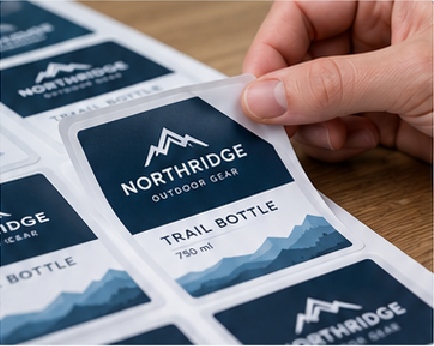

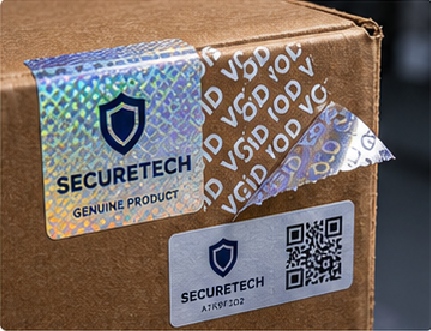
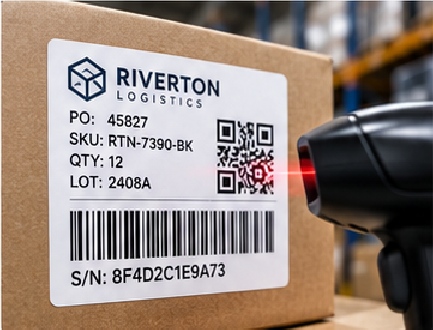
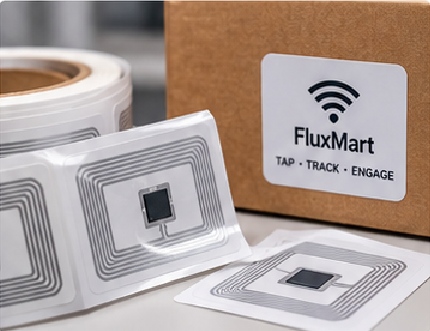






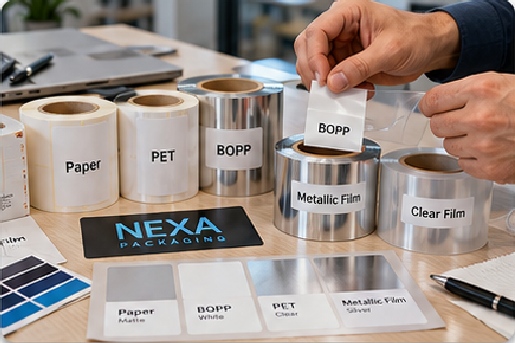
Material cost should be judged against appearance, application, durability, printing and supply conditions. Philiton sources base materials externally and controls selection, converting and validation in-house.
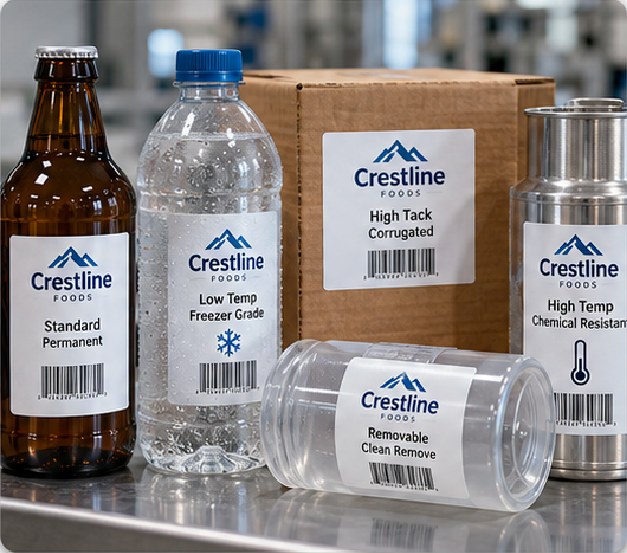
Adhesive is one of the fastest ways to turn a cheap label into an expensive failure. General permanent, stronger permanent, removable, freezer and specialty structures are selected according to the real substrate and environment. Rough corrugated surfaces, low-surface-energy plastics, cold containers, condensation, oils and curved bottles behave differently. Philiton therefore reviews surface condition and application temperature before considering a lower-cost adhesive.
The cost goal is a fit-for-purpose adhesive – strong enough for the job, but not an unnecessarily expensive construction selected without real use conditions. Procurement teams should also consider whether one adhesive is being used across unrelated product families only for administrative convenience. Standardization is useful when surfaces and environments are genuinely compatible; otherwise it can create hidden failure cost.
Lamination, varnish, clear films, opaque white, metallized effects and protective layers can serve real functions, but every layer adds material, process and handling. Philiton separates protection from decoration before proposing a reduction. A clear overlaminate may be justified for abrasion, chemicals or heavy handling, while a varnish may be sufficient for lighter use. A premium transparent film may be essential for a no-label look, while another SKU in the same range may not need the same construction.
A material stack review should therefore identify the function of every layer. Philiton can mark each layer as required for adhesion, protection, appearance, printing or handling. Layers with no clear role become candidates for simplification, while layers tied to durability or brand presentation remain protected until an approved alternative is proven.
Philiton uses different printing routes because run length, version count, color, finishing and repeat frequency change the cost equation. No single process is cheapest for every job.
| Production Route | Best Fit | Cost Strength | Watch Before Changing |
| Digital Printing | Short to medium runs, frequent artwork changes, multi-SKU launches | Low plate dependence, fast version switching, efficient short runs | Unit economics at stable high volume, material and finishing compatibility |
| Flexographic Printing | Stable repeat programs, medium to high volume, common roll production | Strong run-rate economics after setup, scalable repeat production | Plate/setup cost, color count, change frequency, SKU fragmentation |
| Screen Printing | Opaque whites, specialty inks, tactile or heavy ink effects | Adds targeted functional or visual effects | Use only where the effect is required; extra passes add cost |
| UV / Specialty Printing | High-impact graphics, selected coatings and specialty effects | Combines visual enhancement with controlled surface treatment | Avoid stacking effects that add little brand or functional value |
| Variable Data Production | Barcodes, QR, serial numbers, changing text or controlled versions | Reduces need for separate preprinted inventories | Data preparation, verification and traceability must remain controlled |
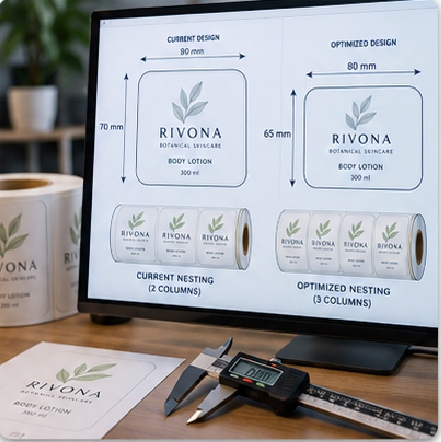
Label dimensions influence material yield, die layout, roll width, packing and application. A small size change can sometimes improve nesting or press utilization, but it must be checked against container coverage, legal text, barcode quiet zones, decoration and applicator settings. Philiton does not recommend shrinking labels only to save substrate. The review asks whether unused area, excessive bleed, unusually large backing or inefficient shape geometry is creating recurring conversion waste.
The commercial benefit should be measured over repeat volume, not only on the first run. A small geometry improvement may reduce material usage, tool count or roll width across every reorder. Philiton compares the saving against redesign effort, sample validation and any required applicator adjustment before recommending the change.
Premium finishing can be commercially important. The cost question is not whether foil, embossing, lamination or specialty varnish is “expensive,” but whether each effect contributes enough visual or functional value to justify repeated production cost. Philiton can prepare alternatives that preserve one strong visual cue while simplifying secondary operations.
For established brands, a finish review can be organized by SKU tier. Core products may keep the full premium treatment, while secondary or promotional SKUs use a simplified but visually consistent route. The goal is controlled differentiation, not a blanket removal of finishing from the entire portfolio. Philiton can sample the revised visual route before a brand commits it to the next production cycle.
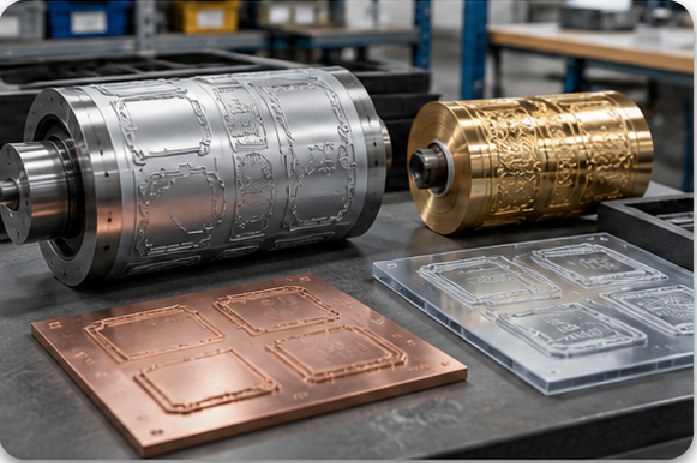
Custom dies, flexographic plates, foil dies and emboss tooling are project-specific preparation costs. Hiding them inside a unit price makes cost comparison difficult. Philiton prefers to explain which tooling is required, why it is required, whether an existing tool can be reused and which design changes would trigger new tooling. Reuse is conditional on design, size, process route, tool condition and storage arrangement; no tool should be described as reusable forever.
Tooling records are most useful when linked to artwork version and applicable SKU. Philiton can check whether an existing die or finishing tool still matches the released design before quoting a repeat run. Clear tooling visibility helps procurement distinguish true new-project cost from avoidable duplicate setup.
Philiton uses sample development to check appearance, construction and application before a cost alternative moves into repeat manufacturing. Sample timing is quoted by project, not forced into one universal promise.
A useful cost-down sample starts with the existing specification or a physical label whenever possible. Philiton compares the current construction with the intended alternative and records what must remain unchanged: size, artwork, key color, adhesive performance, protection, roll parameters, barcode or security function. If no existing specification is available, the project is built from container, surface, environment, artwork, quantity and application information.
Philiton maintains an approximately 350 m² sampling and development area for digital proofing, material/process confirmation and sample development. Sample lead time is confirmed after the structure is defined because a simple printed proof and a multi-process functional sample do not carry the same preparation work. The quotation should therefore show the sample route and approval purpose, not only a date.
The sample stage should end with a clear production decision, not an informal looks fine. Philiton can use approved artwork, physical samples, color targets and Golden Sample references to define the production baseline. When a cost-saving change touches material, adhesive, printing, finishing, barcode or application behavior, the approved version becomes the reference for mass production and later reorders.
Production and delivery timing are then quoted against the approved specification, quantity, material availability, finishing and destination. Philiton avoids publishing one fixed lead time that would be misleading across very different label structures. For repeat orders, previously approved artwork, tools and production records can shorten the decision path even when the actual manufacturing schedule still depends on current capacity and material availability.
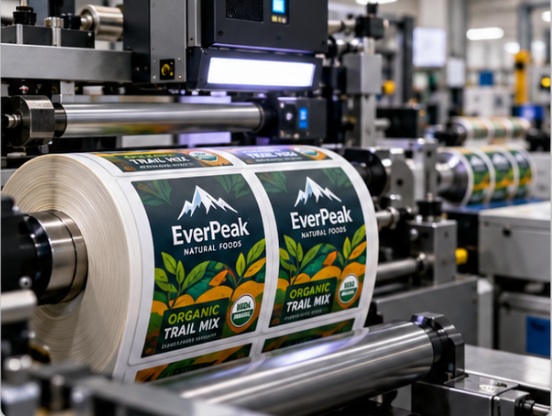
Philiton operates production across Shenzhen and Dongguan, with approximately 7,200 ㎡ of core production, processing, sampling and packing areas inside a 12,000+ ㎡ manufacturing and operating footprint. The route for a label depends on the approved specification rather than a fixed factory recipe. Artwork and prepress are prepared first, followed by the selected print process, specialty finishing where required, die cutting, waste stripping, slitting or rewinding, inspection and final packing.
Key production lines can operate on a two-shift basis, with capacity scheduled around material, equipment, staffing and delivery requirements. The value for procurement is not “more machines”; it is having enough process depth to change the manufacturing route when the cost model changes. Production planning also considers whether compatible SKUs can share material preparation or scheduled windows without losing individual version control.
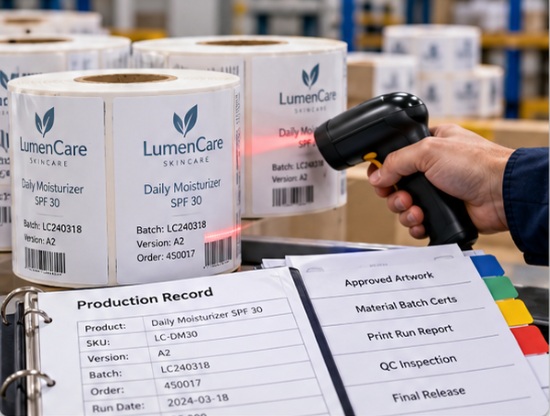
A reduced-cost specification can lose its value if repeat orders drift. Philiton treats approved production information as a controlled package: artwork version, material route, process, tooling, color target, roll specification, packing and QC requirements remain linked to the order. Repeat production can refer back to approved records rather than relying on verbal instructions.
Controlled repeat production matters because a one-time saving is not enough. The commercial benefit becomes meaningful when the optimized specification can be reproduced consistently across future purchase orders. Philiton can also use repeat-order history, annual estimated volume and forecast information to decide when a previously suitable route should be reviewed again as quantities or SKU mix change over time across repeat programs.
Philiton uses incoming, in-process, final and outgoing checks to keep the approved cost route from creating expensive defects, returns, line problems or repeated production.
Philiton’s quality workflow covers IQC, IPQC, FQC and OQC, supported by an approximately 450 ㎡ QC and laboratory area. Incoming material identity, appearance, dimensions and relevant characteristics are checked before release. During production, print registration, color direction, text, die cutting, waste stripping, finishing and roll formation are monitored against the approved job information. Final inspection confirms order-specific requirements before packing and shipment.
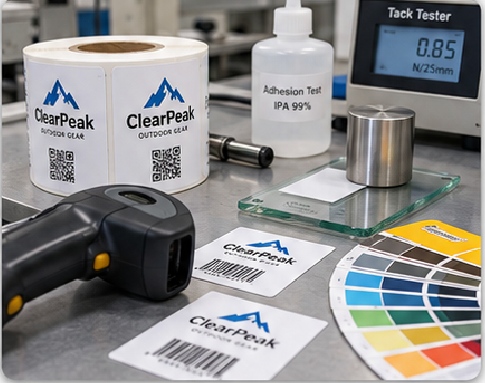
Automatic vision inspection is available for appropriate label jobs, while laboratory capabilities include color evaluation, barcode/QR verification, peel or tack testing, abrasion testing and environmental checks. Test scope depends on product, material and agreed requirement; internal testing is not presented as third-party certification. Inspection records should follow the released specification so a cost change can be traced back to the exact material and production route that was approved. If a defect trend appears, the team can compare the affected batch with the approved baseline instead of treating every complaint as an isolated event.
Not every project needs the same inspection intensity. A decorative promotional sticker, a high-speed beverage roll label and a serialized industrial label carry different failure consequences. Philiton aligns inspection and verification with the real risk so quality control supports cost reduction instead of becoming a generic layer of paperwork.
A low unit price combined with unstable QC is not a cost reduction. Stable quality protects material already purchased, production time already booked and inventory already committed. For recurring programs, the same critical checks should remain visible in the repeat-order record so procurement does not receive a cheaper reorder created by quietly removing controls that were part of the approved specification. Quality scope should remain visible in the quotation and production record so commercial changes do not silently redefine acceptance.
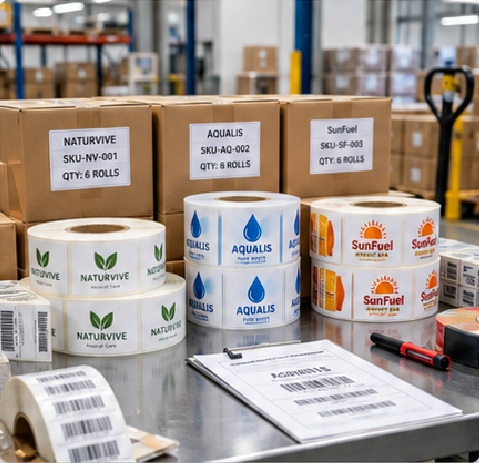
Philiton has an approximately 700 m² finished packing area supporting roll, sheet, individual-piece, SKU-separated and export-ready packing. The packing plan is built around label format and downstream handling rather than one standard carton rule. For roll labels, labels per roll, core, finished diameter, winding direction and carton count can affect warehouse space, line change frequency and freight volume. For multi-SKU orders, clear separation prevents picking errors after arrival.
Packing should never be optimized by compressing labels until rolls deform or surfaces mark. The objective is lower handling and transport cost with usable goods at destination. For repeat programs, the approved packing specification can be standardized by SKU so receiving teams know what quantity, roll format and carton identification to expect on each shipment.
A factory price, FOB price and delivered price do not represent the same cost boundary. Philiton separates product manufacturing from freight and import responsibilities so procurement teams can compare offers fairly. International logistics planning should account for shipment size, destination, urgency, delivery term, customs responsibility and whether the order is routine or an emergency replenishment.
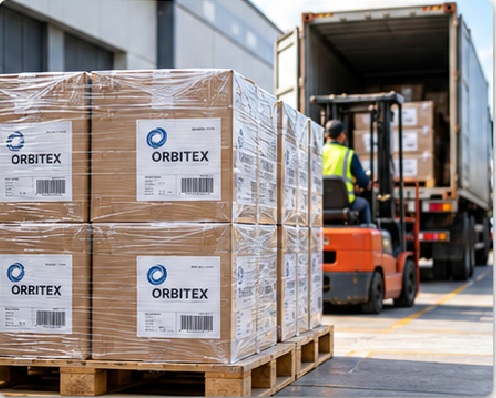
Philiton therefore treats freight as part of landed-cost review rather than hiding logistics inside a headline unit price. Scheduled sea or consolidated freight may suit planned repeat demand, while urgent launches can justify faster modes. Procurement should compare equivalent delivery terms and shipment assumptions before deciding which quotation is actually lower in landed annual cost over the full purchase cycle.

Philiton operates manufacturing facilities in Shenzhen and Dongguan with a combined 12,000+ ㎡ manufacturing and operating footprint. Approximately 7,200 ㎡ is assigned to production and engineering activities, about 2,100 ㎡ to warehousing, about 450 ㎡ to QC and laboratory work, and about 350 ㎡ to sampling and development. The structure supports small-run, multi-SKU and scalable repeat production inside one managed system.
Philiton can review an existing label program before asking you to redesign everything. Send the information already available: a physical label photo or current specification, artwork or dieline, annual volume, quantity per SKU, material and adhesive if known, printing and finishing, roll or sheet format, application surface, service environment, packing preference, destination and any recurring problem such as peeling, high MOQ, frequent artwork changes, excessive inventory, high freight, line stops or inconsistent reorders.
Useful files and data include:
Philiton will review what must stay fixed, where cost may be removed, which alternatives require validation and what information is still missing before quotation.
For all inquiries, please feel free to reach out at:
Our team will answer your inquiries within 12 hours.
Your information will be kept strictly confidential.
We will contact you within 24 Hours, please pay attention to the email with the suffix“@philiton.com”.
For all inquiries, please feel free to reach out at:
We will contact you within 24 Hours, please pay attention to the email with the suffix“@philiton.com”.
For all inquiries, please feel free to reach out at:
We will contact you within 24 Hours, please pay attention to the email with the suffix“@philiton.com”.