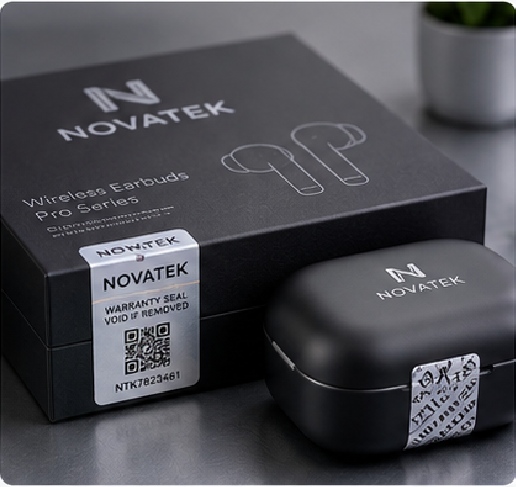
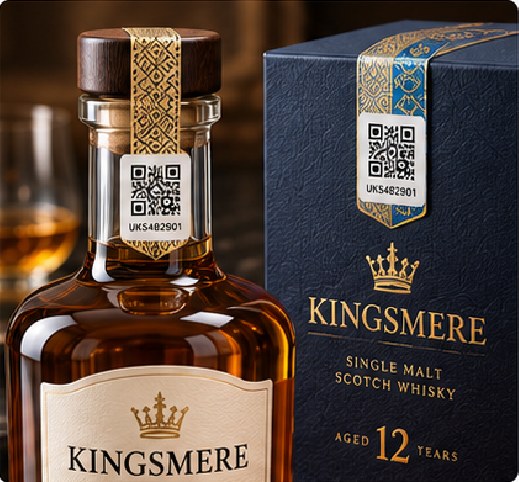
Your Trusted Labels & Stickers Manufacturer from China!

Anti-Counterfeit Label Upgrade Manufacturer

Strengthen existing labels with layered physical and digital security without rebuilding the entire packaging system.
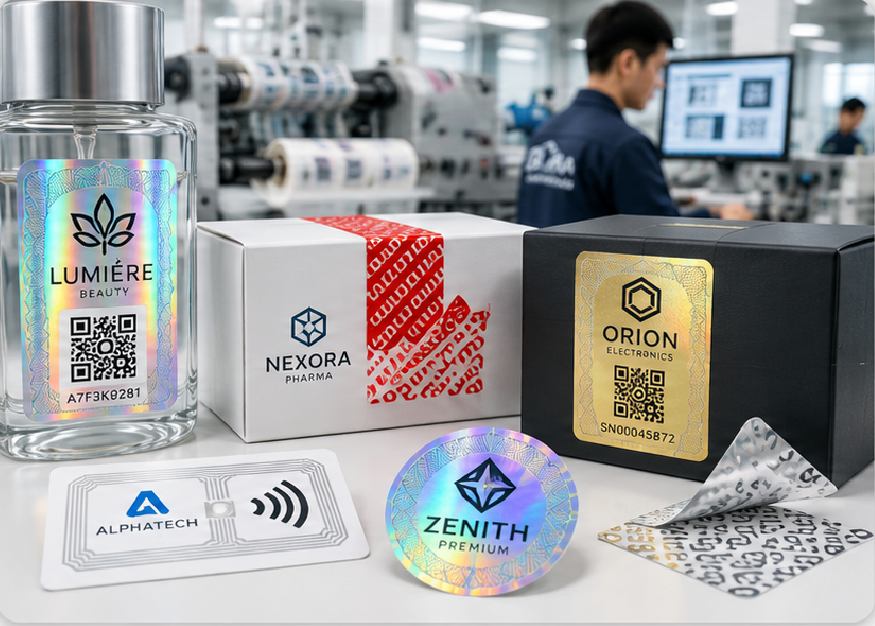
  • Founded in 2016 with 12,000+ m² manufacturing operations in Shenzhen and Dongguan.
  • 200+ employees, including 91 technical, skilled production and quality professionals.
  • Tamper-evident, VOID, destructible, holographic, variable-data, QR, RFID/NFC and inspection capabilities in one manufacturing system.
Anti-Counterfeit Label Upgrade Manufacturer

Who Usually Needs an Anti-Counterfeit Label Upgrade

An upgrade becomes relevant when the existing label still looks acceptable but no longer controls copying, transfer, tampering, verification or channel risk across growing markets, channels and product volumes.

Growing Consumer Brands

A growing brand may begin with a logo sticker, generic hologram or static QR and later discover that scale creates new exposure. More distributors, more markets and more online listings make copied graphics easier to circulate. Philiton can review the present construction and convert the new risk into material, tamper, variable-data or smart-label requirements before artwork is rebuilt.

Packaging and Engineering Teams

Packaging teams often need stronger security without changing bottles, cartons, pouches or automated labeling equipment. Label thickness, adhesive, die line, roll direction, core size and application position therefore matter as much as the visible security feature. Philiton supports engineering review across face material, adhesive, converting, variable data, RFID/NFC and production format so the upgrade can fit existing packaging operations.

Quality and Compliance Teams

Quality teams usually become involved after a failure is found: a label peels cleanly, a code scans after copying, a seal opens without clear evidence or different lots show inconsistent security effects. Philiton can build inspection and internal test points around approved samples, dimensional requirements, print quality, barcode or QR readability, tamper behavior and applicable RFID/NFC verification instead of relying on appearance alone during release.

Procurement and Sourcing Teams

Procurement needs more than a list of security features. Material availability, minimum quantity, tooling, special finishing, code data, repeat-order control and supply continuity all affect total cost. Many standard Philiton label projects can start from around 500 pieces, while complex anti-counterfeit, special-material and RFID/NFC programs are quoted by construction, component and process requirement.

Brand Protection Programs

Brand protection work usually begins with a threat: counterfeit substitution, refill, label transfer, duplicate code, unauthorized distribution or warranty misuse. Each threat calls for a different combination of physical and digital controls. Philiton can manufacture layered structures using tamper-evident materials, holographic effects, unique serialization, QR, security printing and smart-label elements while keeping software-platform responsibilities clearly defined by project.

OEM and Packaging Partners

Contract manufacturers, packaging companies, print brokers and regional converters may need a manufacturing partner able to execute a security specification across multiple SKUs. Philiton supports artwork and prepress, material sourcing, printing, finishing, die cutting, variable data, RFID/NFC processing, inspection, packing and global shipment preparation, allowing one approved construction to be managed across repeat production and version changes.

Start With the Threat Before Choosing Security Features

A stronger label begins by defining what must be stopped, who verifies authenticity, where failure can occur, and how the security function must behave across packaging, distribution and product use.

ThreatWhat Goes WrongUpgrade DirectionPhiliton Manufacturing Focus
Counterfeit reproductionGraphics and visible marks are copied onto fake goodsAdd harder-to-reproduce visual features plus unique identityHolographic effects, specialty printing, serialization, variable QR
TamperingPackage is opened or altered without obvious evidenceAdd opening evidence at the closure or access pointTamper-evident, VOID, destructible or security-seal construction
Label transferGenuine label is removed and placed on another productMake removal leave damage, residue pattern or label destructionAdhesive selection, VOID behavior, destructible face material, die-cut design
RefillGenuine container is reused with non-genuine contentsCombine opening evidence with item identitySecurity seal plus serialized QR, RFID or NFC where suitable
Duplicate codeOne valid code is copied across many fake unitsMove from static codes to unique variable identityUnique QR, serial number, Data Matrix, variable-data verification
DiversionGenuine goods move into unauthorized channelsAdd item-level or batch-level traceable identitySerialization, QR, RFID/NFC integration and controlled data printing
Warranty misuseLabels or codes are reused to support false claimsTie physical evidence to unique identificationTamper construction plus unique code or smart-label option

Map the Existing Label to the Next Upgrade Step

Replacing everything is rarely the first move. A better route identifies the present weakness, keeps useful parts of the existing construction, and adds only the security layer needed for the new risk.

Current LabelCommon WeaknessUpgrade RouteKey Inputs Needed
Plain printed labelEasy visual reproduction and no authenticity checkAdd security print, holographic effect, tamper function or unique identityArtwork, packaging surface, risk type, quantity
Generic hologram onlyVisible deterrence but limited item-level verificationAdd custom security design, serialization, QR or tamper layerExisting hologram, verification user, package material
Static QR codeSame code can be copied repeatedlyConvert to unique QR or serialized Data MatrixData format, code size, destination URL/system, scan rules
Ordinary permanent sealMay peel or transfer without useful evidenceEvaluate VOID, destructible or tamper-evident structureClosure design, surface, peel direction, use temperature
Serial number onlyManual checking is slow and difficult at scaleAdd machine-readable variable code or RFID/NFCNumber logic, database responsibility, scan/read method
RFID/NFC without physical evidenceDigital identity may not show package opening or label transferCombine smart identity with tamper constructionInlay/chip requirement, placement, package material, read environment

Build Security in Four Complementary Protection Layers

Philiton treats anti-counterfeit upgrades as a combination of functions. A single effect is selected only when it matches the threat, verification method, package construction and required manufacturing control.

Visible Authentication

Holographic effects, specialty foils, controlled print details and distinctive security graphics help staff, distributors or end users identify an expected visual feature quickly. Visible authentication works best as an immediate screening layer rather than the sole proof of authenticity. Artwork, print registration, finishing tolerance and repeat-lot consistency should be defined before mass production.

Tamper and Transfer Evidence

VOID, destructible and tamper-evident constructions are designed around what should happen during removal. The label may separate, fracture, reveal a message or leave evidence on the package. Surface energy, coating, curvature, application pressure and dwell time influence real behavior, so the final construction should be tested on the actual bottle, carton, cap, pouch or device surface.

Unique Item Identity

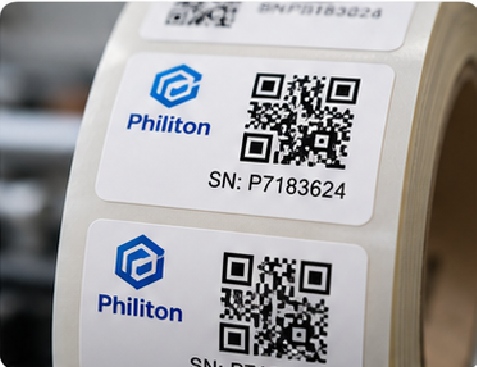
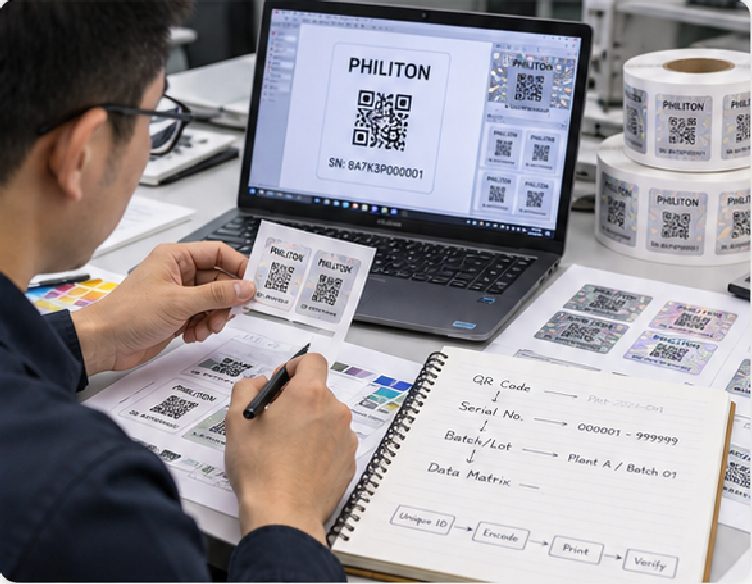
Variable numbers, barcodes, Data Matrix and unique QR give individual labels different identities. Philiton can print changing data in production and perform applicable scan or visual verification. Code size, quiet zone, print contrast, data source, numbering rules and duplicate control need to be locked before release, especially when the identity connects to an external brand-protection system.

Smart Connected Security

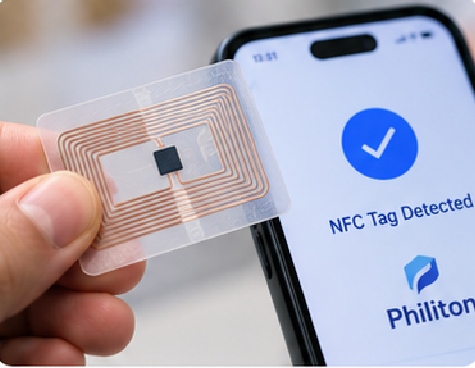
RFID and NFC add electronic identity where scan speed, non-line-of-sight reading, near-field interaction or connected packaging is required. Philiton has dedicated RFID/NFC converting, encoding and verification capability. Chip, inlay, frequency, memory, encoding structure, metal or liquid interference and authentication logic are confirmed by project rather than assumed from a generic smart-label specification.

Anti-Counterfeit Label Constructions Available for Upgrade Programs

Choose the construction by removal behavior, verification method, package surface, application process and production format rather than selecting a security effect mainly for appearance or decoration.
Tamper-Evident Labels

Tamper-Evident Labels

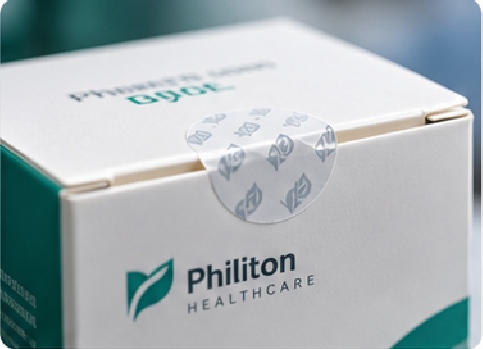
Designed to show opening or interference at a closure, cap, carton edge or access point. Construction can be adapted around the package surface, die line and peel direction. Philiton reviews face material, adhesive and converting method together because a tamper function that works on smooth glass may behave differently on coated paperboard, textured plastic or curved packaging.
VOID Security Labels

VOID Security Labels

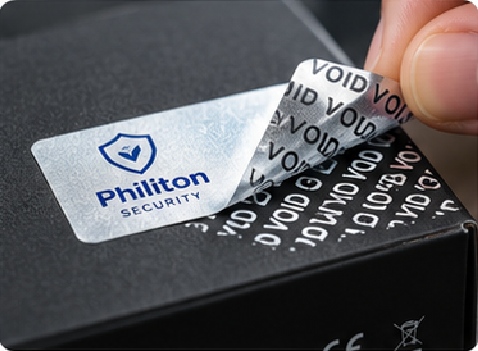
VOID structures create visible evidence after removal and can be useful where transfer risk matters. Full-transfer, partial-transfer and project-specific constructions depend on the selected material system and substrate. Philiton confirms actual removal behavior through sample evaluation rather than promising one universal result across every surface, temperature, storage condition or package coating.
Destructible Labels

Destructible Labels

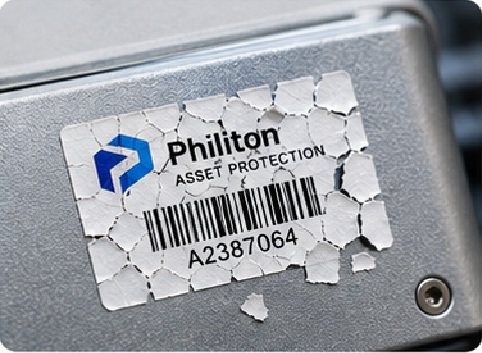
Destructible materials break into pieces during attempted removal, making intact transfer difficult. They can suit electronics, components, warranty seals, assets and selected packaging applications. Die-cut geometry, face-material brittleness, adhesive bond and application area must work together, especially on small labels or curved surfaces where edge lift, handling or dispensing can compromise performance.
Holographic Security Labels

Holographic Security Labels

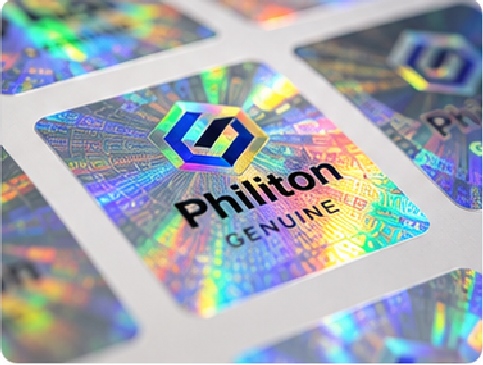
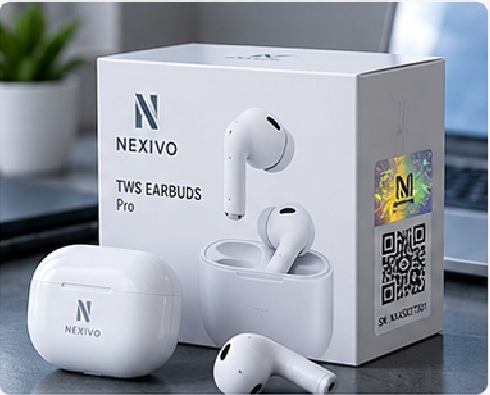
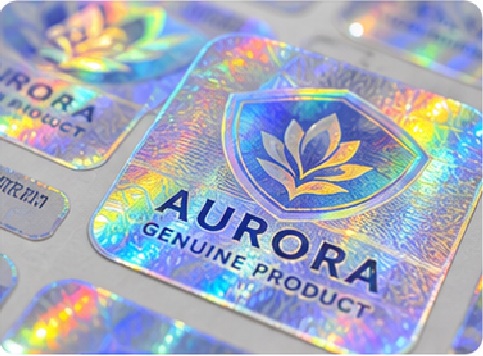
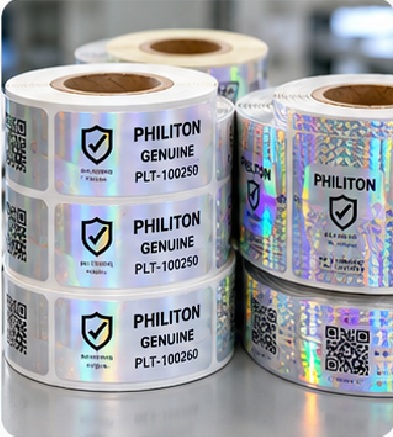
Holographic or laser effects provide recognizable visual complexity and can be combined with printed graphics, serialization, QR or tamper structures. Philiton supports holographic and security-related processing as part of its specialty finishing capability. The final design should reserve enough area for the security effect without reducing mandatory information, brand legibility or machine-readable code quality.
Serialized QR Labels

Serialized QR Labels

Every label can carry different data such as a unique QR, serial number, batch reference, barcode or Data Matrix. Philiton supports variable-data printing and applicable scan verification in production. If codes connect to a cloud authentication portal, consumer query system or external database, software ownership, data transfer and verification rules are confirmed separately before production.
RFID and NFC Labels

RFID and NFC Labels

Smart labels can combine printed graphics with an RFID or NFC inlay for identification, interaction or authentication workflows. Philiton supports converting, printing, encoding and functional verification. Package contents, metal, liquid, curvature, read distance, chip type, inlay size and data structure influence design, so smart-label upgrades require a project-specific feasibility review.

Match the Upgrade to Real Product and Distribution Conditions

Security design becomes useful only when the label survives application, transport, storage, handling and verification in the environment where the product is sold, opened, scanned, returned or inspected.
Cosmetics and Skincare

Cosmetics and Skincare

Glass, PET, PP and coated containers can carry different surface energy, curvature and exposure to oils or moisture. A premium pack may need security without losing shelf appearance. Philiton can combine discreet tamper evidence, holographic effects, unique QR or NFC-related labeling with material and adhesive selection based on the actual bottle, jar, cap or carton construction.
Wine and Spirits

Wine and Spirits

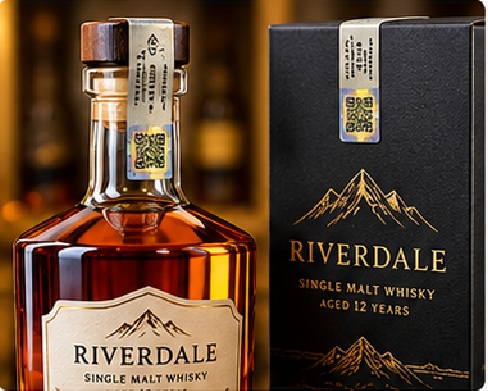
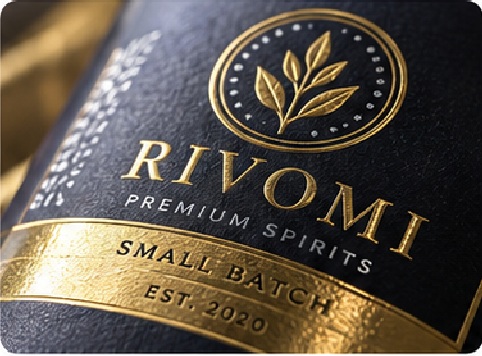
High-value bottles face refill, closure tampering, grey-market movement and counterfeit presentation. Security may need to sit across a cap, neck, carton or primary label while preserving decoration. Philiton can evaluate tamper seals, holographic effects, serialized identity and smart-label options alongside textured papers, films, foils, finishing, bottle-surface adhesion and downstream labeling requirements.
Electronics and Components

Electronics and Components

Warranty misuse, label transfer and serial-number duplication are common concerns for devices and components. Small dimensions increase the importance of die-cut precision, code readability and edge adhesion. Philiton can combine destructible or VOID structures with serial numbers, QR, Data Matrix, barcode, RFID or NFC where the component size and application surface allow reliable converting and verification.
Supplements and Packaged Goods

Supplements and Packaged Goods

Cartons, bottles, jars and pouches may require opening evidence plus unit identification. Brand teams often want a visible deterrent while operations need codes that remain readable through distribution. Philiton can integrate tamper-evident structures, security printing and variable identity while keeping mandatory product information and packaging graphics separated from security layers.
Industrial and Asset Identification

Industrial and Asset Identification

Industrial applications may prioritize transfer evidence, durability, serial control and readable identification over decoration. Surface condition, chemicals, abrasion, temperature and cleaning procedures can change label performance. Philiton uses project-specific material selection and internal testing for adhesion, peel, abrasion, color, thickness and applicable barcode, QR or RFID checks before approving a production structure.
Logistics and Channel Control

Logistics and Channel Control

Serialized labels and RFID can support channel visibility when products move through warehouses, distributors or regional networks. Physical security can be added where cartons or units may be opened or relabeled. Philiton can manufacture variable-data and smart-label formats, manage SKU-separated production and packing, and prepare rolls or other delivery formats around downstream scanning and labeling operations.

Engineer Removal Behavior Before Approving the Security Label

Tamper evidence is a physical event. The desired result must be defined on the actual package, under the real removal direction, dwell time, handling conditions and use environment.

Define the Evidence You Need After Removal

A security label should have a clear removal objective before material is selected. Some programs need the face material to break. Others need a VOID message, visible residue pattern, delamination, opening evidence across a carton flap or a seal that cannot be returned to its original state. Philiton translates the desired failure mode into a combination of face material, adhesive, release structure, die line and placement.
  • Package surface: glass, PET, PP, PE, metal, coated carton or another substrate.
  • Application geometry: flat panel, small radius, cap edge, carton flap, bottle neck or recessed area.
  • Removal direction: peel from an exposed edge, pull across a closure, twist with a cap or lift from a corner.
  • Evidence requirement: fracture, VOID transfer, adhesive residue pattern, surface marking or clear opening damage.
  • Use condition: room temperature, cold storage, moisture, oils, cleaning agents, outdoor exposure or repeated handling.
Sample approval should include removal trials on the actual substrate because adhesive bond develops differently across surfaces and dwell times. A label that tears during a quick bench test may still lift cleanly after transport, or a strong adhesive may damage a premium package more than intended. Philiton can support adhesive and peel testing internally, but final acceptance criteria should be written into the approved specification.

Control Transfer Risk Without Creating Application Problems

Aggressive security structures can create new production problems if release force, stiffness, die-cut depth or label geometry is ignored. A fragile face material may break during matrix stripping or automatic dispensing. A thick holographic construction may affect tight-radius application. A strong adhesive may cause edge ooze or excessive residue. Philiton reviews converting and application requirements before production release.

  • Die-cutting: security materials need controlled cutting without damaging the liner or functional layer.
  • Dispensing: roll direction, core size, label gap and release behavior must match the labeling equipment.
  • Label shape: rounded corners, narrow bridges and small dimensions can change removal and dispensing behavior.
  • Packaging finish: varnish, coating, mold-release residue, dust or oil can reduce bond strength.
  • Security plus code: enough flat printable area must remain for QR, Data Matrix, barcode or readable serial numbers.

The approved sample becomes the physical reference for appearance, structure and expected removal behavior. Production inspection then focuses on measurable points such as print registration, die cut, code readability, roll format and visible construction consistency. Destructive performance testing is carried out according to the agreed sampling method rather than on every label, with acceptance limits documented before batch release. Retention samples can also support repeat-order comparison when required.

Select Material and Adhesive Around the Actual Package Surface

Philiton sources qualified labelstocks and adhesives externally, then matches face material, adhesive, print, security function, package surface and converting route to the application instead of using one universal stock.

Application ConditionMaterial / Structure DirectionAdhesive ConsiderationValidation Focus
Smooth glass or coated metalFilm, paper or specialty security construction depending on designBond strength and clean application on low-contamination surfacePeel behavior, tamper evidence, edge lift, visual finish
PET / PP / PE containersFilm or security stock selected for curvature and surface energyAdhesive chemistry matched to plastic and use environmentInitial tack, dwell, curved-surface lift, moisture or oil exposure
Coated carton or paperboardPaper, film, VOID or destructible structureCoating compatibility and fiber tear / transfer behaviorOpening evidence, print quality, carton damage level
Small curved caps or necksThin, flexible face stock with suitable die geometryStrong enough to hold radius without uncontrolled liftingMandrel behavior, edge lift, removal evidence, placement tolerance
Electronics / assetsDestructible, VOID, durable film or smart-label constructionLong-term bond to plastic, metal or coated housingTransfer resistance, serial readability, abrasion, RFID/NFC function where used
Cold, wet, oily or chemical exposureMaterial and adhesive selected from actual service conditionApplication temperature and contamination control are criticalAdhesion, peel, rub, scratch, color and agreed environmental tests


Add Security Effects Without Losing Print or Code Performance

Special effects should strengthen recognition or copying resistance while leaving enough controlled area for branding, mandatory information, serialization, machine-readable data and reliable downstream converting or application.
Holographic Effects

Holographic Effects

Holographic and laser-related effects add a visible security cue that is difficult to reproduce with ordinary printing. Philiton can combine holographic processing with conventional graphics, die cutting and variable identity. Position, viewing area, repeat consistency and code clearance should be set during artwork review so decorative security does not interfere with QR or small text.
Foil and Metallic Details

Foil and Metallic Details

Hot foil, cold foil and metallic effects can create controlled visual elements for premium packs and security designs. Foil registration, line width and substrate compatibility influence repeatability. For anti-counterfeit use, Philiton treats foil as one layer within a broader construction rather than as independent proof of authenticity, especially where copied appearance remains a known risk.
Screen and UV Effects

Screen and UV Effects

Screen printing, UV printing and raised or spot effects can add tactile or localized visual differences. White ink, varnish, specialty ink and surface contrast can be used selectively around security graphics. Ink adhesion, curing, overprint order and downstream lamination or die cutting need to be planned together so the effect survives conversion and use.
Special Security Printing

Special Security Printing

UV or other specialty inks, scratch-off layers and controlled print details can support concealed or interactive checks when the specification calls for them. Exact ink system, visibility, exposure method and durability are confirmed by project. Philiton does not treat every specialty ink as equal; sample verification is needed before the feature becomes part of an approved security specification.
Variable Data Printing

Variable Data Printing

Changing text, numbers, barcodes, Data Matrix and unique QR can be integrated into the printed design. Data fields must be placed with sufficient contrast and quiet area, and duplicate rules must be resolved before production. Philiton supports variable-data production and applicable scanning or verification within the manufacturing workflow before rewinding, packing and shipment release.
Complex Die Cutting

Complex Die Cutting

Security labels often use custom shapes, bridges, tabs, perforations or closure geometry to control removal. Precision die cutting also affects matrix stripping and automatic application. Philiton can handle roll, sheet and custom-shape converting, but narrow features, fragile materials and smart inlays should be reviewed together before tooling is released for production.

Upgrade Static Codes to Controlled Unique Product Identity

Unique identity adds value only when code generation, print quality, data ownership, scanning, duplicate handling and the responsibility for any external authentication system are defined before production begins.
Design the Data Structure

Design the Data Structure

Philiton can produce changing text, serial numbers, Batch/Lot information, barcodes, Data Matrix and unique QR. The production file must define which fields change, the permitted range, sequencing rules, duplicate policy, human-readable text, code size and target scan device. Brand-owned or third-party authentication systems should provide the required code list, generation rule or interface specification before final prepress approval.
  • Static QR: suitable for a shared destination but not unique item identity.
  • Unique QR: gives each label a different machine-readable identity.
  • Serial plus QR: supports both visual reference and fast scanning.
  • Data Matrix: useful where compact code density is important.
  • Batch/Lot plus unique item code: separates production traceability from unit-level identification.
Artwork review checks contrast, quiet zone, code size, background interference and finishing overlap. Foil, holographic effects, varnish or heavy texture should not cross a machine-readable area unless verified. Philiton can print and perform applicable scan checks during manufacturing, while cloud authentication logic, consumer portals and database hosting are confirmed separately according to the software scope of the project.
Control Variable Production

Control Variable Production

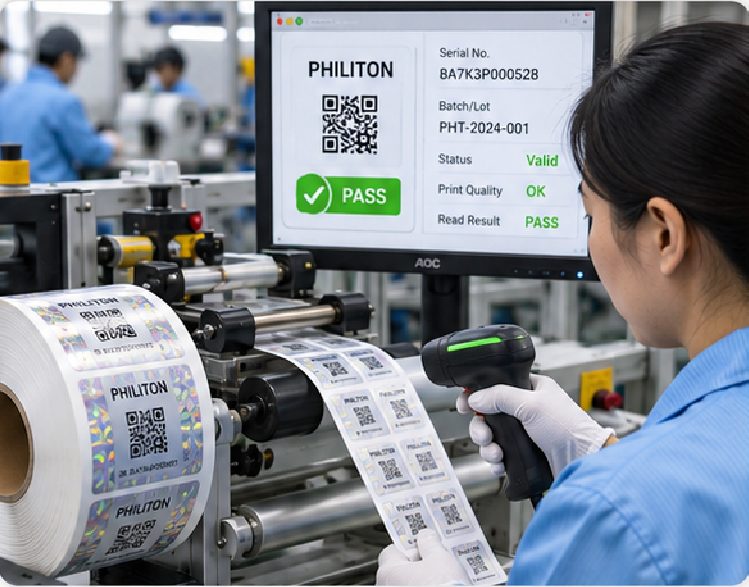
Variable-data projects create risks that ordinary repeat artwork does not: missing codes, duplicate codes, wrong sequence, unreadable print, mixed SKU data and file-version errors. Philiton links artwork, data file, SKU and production instructions before release, then uses applicable print inspection and scan verification to control output.
  • Prepress: lock data source, field mapping, code symbology and artwork version.
  • First article: verify readable code, correct human-readable content and expected destination or data value.
  • Production: monitor print quality, registration and variable content according to the approved inspection plan.
  • Rewinding and packing: keep SKU, sequence, roll quantity and shipping identification under control.
  • Records: retain agreed production and quality records when required by the project.
For external authentication platforms, Philiton can manufacture the physical serialized labels while the brand or designated software provider controls user authentication, scan analytics and back-end rules. Defining that boundary early prevents a printed-code project from being mistaken for a complete software security service.

Add RFID or NFC When Printed Identity Is Not Enough

Philiton has dedicated smart-label converting, encoding and verification capability, but the electronic design must be matched to package material, read method, data requirement, inlay geometry and final converting format.
Choose RFID or NFC

Choose RFID or NFC

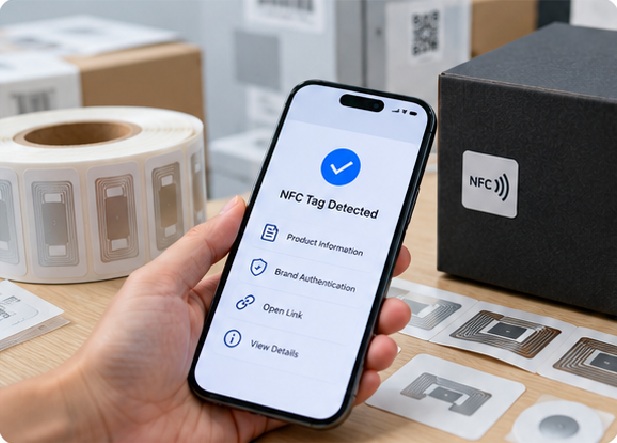
RFID and NFC solve different identification tasks. UHF/HF RFID can support inventory, logistics, asset or operational workflows where suitable readers are used. NFC can support near-field interaction, product information, brand engagement or authentication-oriented workflows through compatible devices. Selection starts with the required interaction, not with the chip name.
  • Read method: handheld reader, fixed reader, compatible smartphone or another device.
  • Package construction: metal, liquid, foil, glass, plastic and carton can affect antenna behavior differently.
  • Label space: inlay dimensions, printed graphics, die line and tamper structure need enough physical area.
  • Encoding: EPC, UID, NDEF or another data structure must be supplied or defined by the project specification.
  • Security logic: encryption, protected memory, anti-cloning or cloud authentication features depend on the selected chip and software architecture.
Philiton can process, print, convert, encode and functionally verify RFID/NFC labels. Specific chip brand, inlay, frequency, read distance, memory configuration and security capability are confirmed during engineering review instead of being generalized across all smart-label products.
Integrate Smart Components

Integrate Smart Components

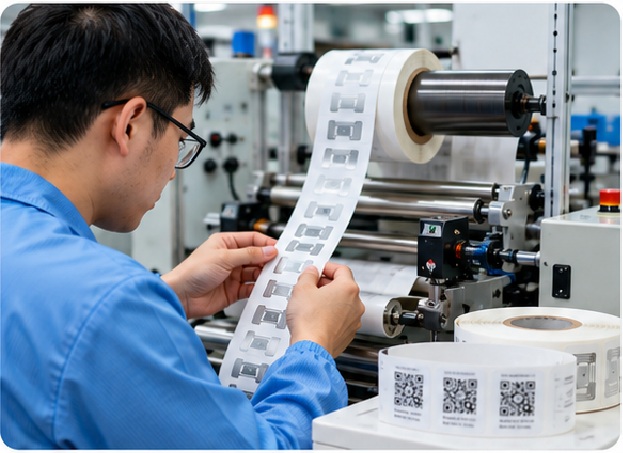
Electronic performance is only one part of a finished security label. Inlay placement, adhesive coverage, face material, die-cut clearance, antenna protection, roll tension and rewind conditions can affect conversion and use. When a smart label also needs VOID, destructible or tamper evidence, the physical and electronic structures must be engineered together.

  • Inlay position: keep critical die cuts and security cuts away from antenna or chip areas unless designed for the purpose.
  • Material stack: face stock, adhesive, inlay carrier and liner influence thickness and dispensing.
  • Encoding control: data assignment and read-back verification are defined before production.
  • Functional inspection: agreed read/write or presence checks are carried out within the manufacturing plan.
  • Packing: roll direction, core size, roll quantity and handling protection are matched to downstream equipment.

Philiton operates a dedicated RFID/NFC converting, encoding and verification area of approximately 350 ㎡ within its manufacturing system. Smart-label approval should include both print/appearance review and functional testing under the application conditions relevant to the final product.
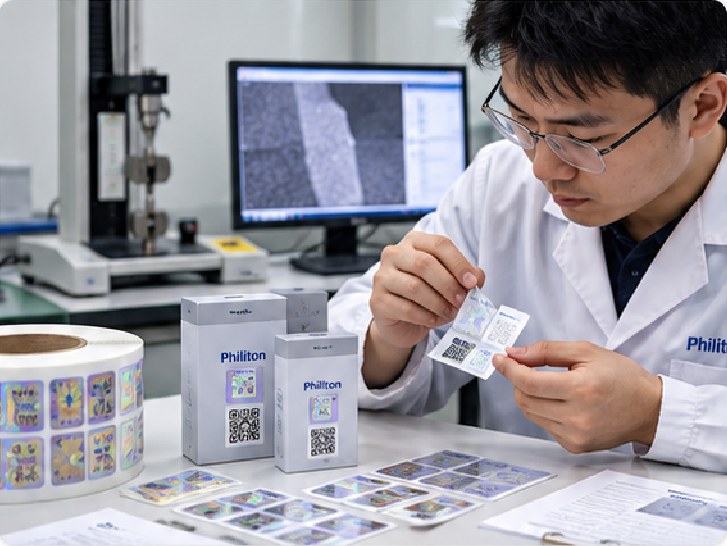
Prepare Artwork and Data Before Security Development Starts

A complete input pack shortens engineering review and prevents security functions from being added after the die line, code area, packaging position, data rules or downstream application method is already fixed.

Current Label Files

Provide AI, PDF, EPS, PSD, CDR or another available production file together with the current die line. Philiton prepress can check size, bleed, color mode, Pantone references, white-ink layers, foil or emboss layers, barcode or QR placement and manufacturing notes. A photo of the existing applied label is also useful when transfer, tamper or edge-lift problems are involved.

Package and Surface Details

Send the bottle, jar, cap, carton, pouch, device or component material and identify the exact labeling area. Surface coating, curvature, texture, contamination, application temperature and storage conditions can change adhesive and tamper behavior. Physical samples are preferred for security constructions where removal evidence, adhesion and transfer behavior are central to approval.

Security and Data Rules

Describe the present security feature, known weakness and required verification user. For variable data, supply numbering logic, code format, data file rules and the destination system. For RFID/NFC, identify the intended read device, data structure, frequency or chip/inlay requirement if already specified, and any external software or authentication platform involved.

Production and Packing Inputs

State the target quantity, number of SKUs, label size, application method and required delivery format. For rolls, include roll direction, core size, labels per roll, maximum roll diameter or downstream equipment limits when known. Security materials and smart labels may need different converting settings from a standard pressure-sensitive label, so packing specifications should be part of engineering review rather than added at shipment.

Develop the Upgrade Through Samples Before Releasing Mass Production

Philiton uses a dedicated sampling path to validate material, size, security effect, data, converting, application behavior and smart-label function before the final construction is released for repeat production.
Build the Right Sample

Build the Right Sample

Sampling begins with the present label, package surface and upgrade objective. A generic sample can demonstrate appearance, but transfer resistance, VOID behavior, destructibility, curved-surface adhesion, variable-code readability or RFID/NFC performance must be checked on the intended package. Philiton can use digital printing, sampling equipment, available materials, specialty finishing and internal testing to shorten development without waiting for a full mass-production run.
A typical development sequence can include:
  • Review current label, failure evidence, package and verification method.
  • Select one or more candidate material, adhesive and security constructions.
  • Prepare artwork, variable-data area, die line and smart-label layout where applicable.
  • Produce samples for appearance, peel/tamper behavior, scan/read function and handling review.
  • Freeze the approved construction, artwork and packing specification before production release.
Sampling time is confirmed after materials, tooling, security finishing and RFID/NFC components are reviewed. Philiton does not apply one fixed sample-day promise to every security program because custom materials, special dies and smart-label components can change the schedule.
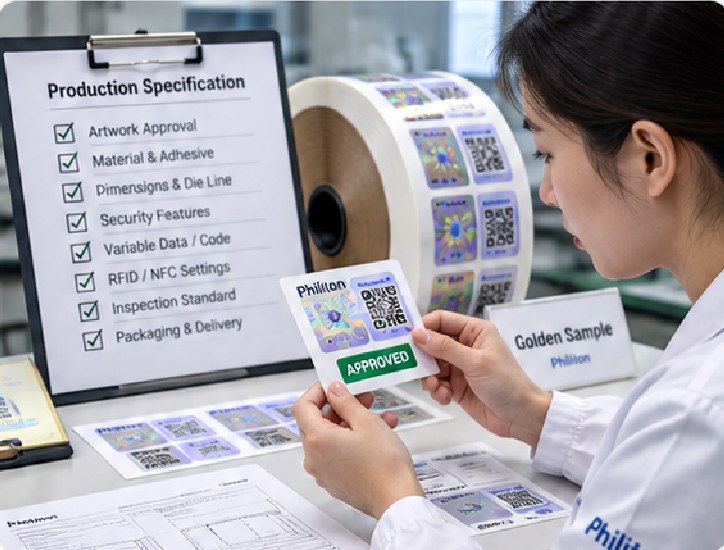
Freeze the Production Specification

Freeze the Production Specification

A security sample is useful only when its critical details are documented for repeat manufacturing. Approval should identify what is visual, what is functional and how each point will be checked later. Philiton can convert the approved sample into production instructions covering material, adhesive, dimensions, print, security finish, variable data, die cutting, roll format, RFID/NFC settings where applicable, inspection and packing.

  • Visual reference: approved color, print registration, holographic or foil position, surface finish and overall appearance.
  • Functional reference: removal behavior, QR/barcode scan, RFID/NFC read or other agreed security response.
  • Dimensional reference: label size, die line, gap, margins and permitted manufacturing tolerance.
  • Data reference: file version, code logic, sequence and SKU mapping.
  • Delivery reference: roll direction, core size, labels per roll, SKU separation and carton identification.

For enterprise programs, Golden Sample, batch control, quality records and project-specific documentation can be included when required. Production lead time is confirmed after sample approval and material readiness, with complex security and smart-label programs scheduled according to their actual process chain.

Control Anti-Counterfeit Production Across Every Manufacturing Stage

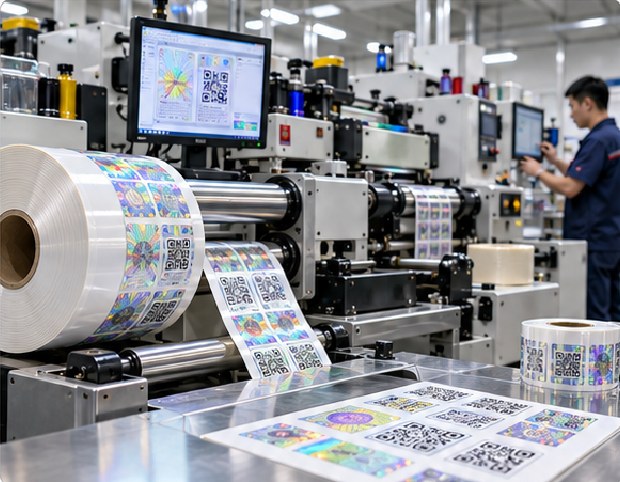
Philiton keeps core converting stages within its manufacturing system so security artwork, variable data, special finishing, die cutting, smart-label processing, rewinding and inspection can be coordinated as one controlled job. Philiton operates approximately 7,200 ㎡ of core production and converting space within a 12,000+ ㎡ manufacturing system. The scale supports both flexible development runs and repeat production without treating anti-counterfeit work as a separate outsourced step. Standard printed labels and highly complex security programs do not share one fixed production time. Philiton confirms lead time after material, tooling, data, smart-component and approval requirements are clear, helping procurement teams plan from an executable process route rather than a generic delivery promise.
Materials to Security Converting

Materials to Security Converting

Base labelstocks, films, adhesives, foils, RFID/NFC materials and related substrates are sourced from qualified external suppliers. Incoming material is identified and inspected before release. Production then follows the route required by the approved specification: digital, flexographic, screen, UV or other applicable printing, followed by holographic or specialty finishing, lamination, variable data, smart-label processing and converting.
  • IQC: confirm supplier, specification, batch, appearance, dimensions and required material documentation.
  • Printing: control artwork version, color, registration, white ink and security print elements.
  • Security finishing: manage foil, holographic, UV, specialty ink or related effects according to approved references.
  • Variable data: link changing codes and serial content to the correct SKU and production file.
  • RFID/NFC: convert, encode and verify according to the project specification.
  • Die cutting: control die position, liner condition, security cuts, matrix stripping and final label geometry.
Rewind, Inspect and Pack

Rewind, Inspect and Pack

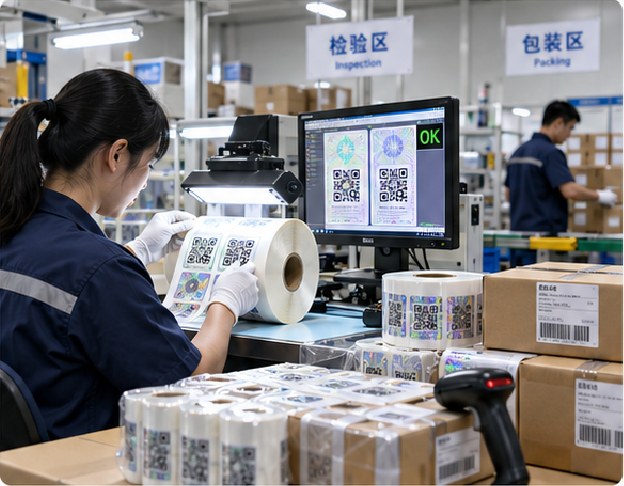
Security labels can fail operationally even when printing looks correct. Wrong roll direction, mixed sequences, damaged smart inlays, incorrect core size or poor rewind tension can stop downstream labeling or break traceability. Philiton therefore includes rewinding, inspection, packing and outgoing quality control in the production route.
  • Rewinding: execute specified roll direction, core size, labels per roll and roll-diameter requirements.
  • Inspection: use applicable visual inspection, manual QC and barcode/QR/RFID verification.
  • Laboratory checks: perform agreed adhesion, peel, rub, scratch, color, thickness or environmental verification when relevant.
  • Packing: separate SKUs, protect security surfaces or smart components, apply carton identification and prepare export packing.
  • OQC: confirm PO, SKU, quantity, packing, roll information, shipping marks, documents and release status.

Quality Control Must Verify More Than Visual Appearance

Philiton combines incoming, in-process, final and outgoing inspection with vision inspection, internal laboratory capability, documented release checks and project-specific functional checks for security, variable-data and smart-label programs.

Incoming Material Control

IQC checks externally sourced face materials, adhesives, liners, films, inks, foils, RFID/NFC materials and packing supplies against the purchase and project requirement. Supplier, batch, appearance, size and relevant documents are reviewed before release. Security performance can only be consistent when the incoming material matches the construction approved during development and sample release.

In-Process Print Control

IPQC follows printing, screen, foil, lamination, die cutting, RFID processing and slitting/rewinding. First-article confirmation is used to catch artwork version, color, registration, security-effect position, dimensions, code content, die-cut and roll-format errors before the entire batch is completed. Problems can be stopped and corrected during production instead of being discovered after packing.

Variable-Code Verification

Serialized QR, barcode, Data Matrix and changing text require both print quality and content control. Philiton can perform applicable scanning and visual verification to identify unreadable print, missing fields or obvious sequence issues according to the approved inspection plan. External authentication logic remains governed by the brand or designated software platform when the project connects to an outside database.

RFID and NFC Checks

Smart-label projects can include encoding, read-back or functional verification according to the approved chip, inlay and data specification. Philiton’s RFID/NFC engineers support inlay matching, converting, encoding, serialization and reading verification. Acceptance criteria are project-specific because chip type, frequency, package material, read method and use environment can change functional performance.

Internal Laboratory Testing

Philiton maintains internal test capability for label performance and print quality, including applicable adhesion/peel, rub, scratch, color, thickness, environmental, barcode/QR and RFID checks. The laboratory supports material selection, sample confirmation and quality analysis. It is an internal manufacturing and application-test resource rather than a blanket claim of third-party laboratory accreditation.

Final and Outgoing Control

FQC reviews finished quality and batch status before packing. OQC checks the completed shipment against PO, SKU, quantity, packing method, roll direction, core size, carton marks, documents and release status. The quality organization includes 13 dedicated quality personnel within Philiton’s broader group of 91 technical, skilled production and quality professionals.

Pack Security Labels for Production Lines and Controlled Distribution

Packing must protect the security construction, preserve SKU and sequence control, and arrive in a format compatible with manual application, automatic labeling equipment, warehouse handling and international shipment.
Roll Format

Roll Format

Rolls can be prepared around specified roll direction, core size, labels per roll and downstream equipment limits. Philiton’s rewinding operators control tension, joints and appearance while OQC checks roll information before shipment. Variable-code and smart-label programs may also require sequence or handling rules so identification remains aligned with the packing plan.
Sheet or Individual Format

Sheet or Individual Format

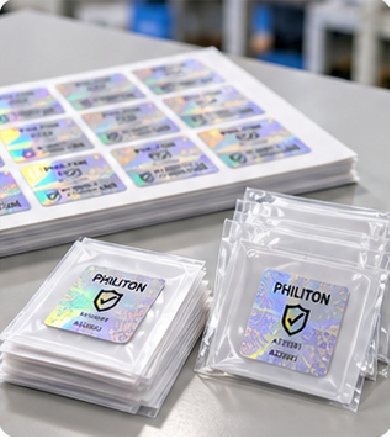
Sheet, single-label or custom-cut formats can suit manual application, sample programs, low-volume security seals or products without roll-fed equipment. Face protection and release handling are considered according to the security material. Fragile destructible constructions or raised effects may need packing that limits rubbing, bending, compression or uncontrolled contact during transportation.
SKU-Separated Packing

SKU-Separated Packing

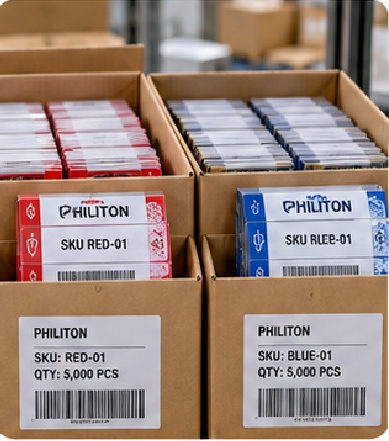
Multi-SKU programs can be separated by artwork, code range, market, product version or batch. Philiton can identify inner packs and cartons according to agreed shipping instructions so production teams receive the correct version at the correct location. Clear SKU control is especially important when language, regulatory text, serialization or different security levels vary across markets.
Export-Ready Packing

Export-Ready Packing

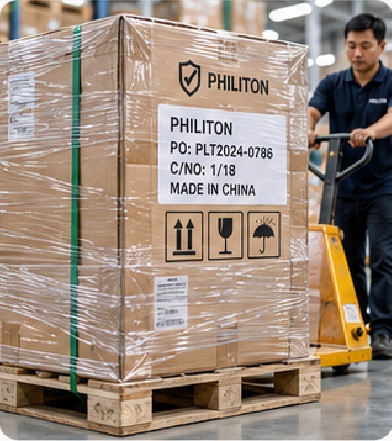
Philiton supports international express, air, sea and designated-forwarder arrangements for samples and mass shipments. Export packing can include inner bags, cartons, pallets and project-specific shipping marks. Final packing method is matched to roll or sheet format, weight, handling sensitivity, destination and logistics route rather than applying one carton rule to every security label.

Keep Compliance Claims Tied to Materials and Project Evidence

Security features do not replace market compliance. Philiton separates company facts, material evidence, project testing, approved regulatory content and software responsibility so unsupported certification or legal claims are not created.

Material-Level Evidence

Labelstocks, films, adhesives, inks, foils and smart-label materials are externally sourced. Where a project requires FDA-related, FSC-related, RoHS, REACH or other material documentation, the applicable supplier or material records must be checked for the exact construction. Philiton does not present every material document as a universal company certification covering all products.

Project-Specific Testing

Durability, adhesion, chemical exposure, environmental performance, barcode/QR readability and RFID/NFC function depend on the selected material and use condition. Philiton can perform relevant internal tests and can manufacture to approved project criteria. Specific standards, third-party laboratory reports or certification requirements are confirmed only when the corresponding documents and test scope are available.

Regulatory Artwork Control

Mandatory statements, languages, warnings, market-specific information and legal claims remain subject to the brand’s approved regulatory content. Philiton prepress can reproduce and control the approved artwork, variable fields and versioning, but printing execution should not be presented as independent legal approval of wording, claims, warnings or market compliance decisions.

Security Data Responsibility

Serialized codes, RFID/NFC data and authentication workflows may involve brand-owned databases, third-party platforms or protected business information. Data source, software responsibility, access method and retention requirements should be defined before production. Confidential artwork, unique-code files and smart-label specifications can then be handled within the project controls and any agreed confidentiality requirements.

Three Representative Anti-Counterfeit Label Upgrade Cases

The profiles below are anonymized representative project structures built around Philiton’s confirmed manufacturing capabilities. Numerical and market details are illustrative planning data and should be replaced with verified order records before public publication.
U.S. Skincare Brand Upgrade

U.S. Skincare Brand Upgrade

A premium skincare brand in California planned an 18,000-piece launch after finding that its existing static QR could be copied from product photography. The proposed upgrade kept the current bottle label dimensions, added unique QR codes with human-readable serial references, and reserved a separate area for a visible holographic feature. Philiton’s workflow covered artwork separation, variable-data setup, film and adhesive review, sample scanning, finishing, die cutting, roll-direction confirmation and production inspection. The brand’s external platform remained responsible for online authentication and scan analytics.
German Electronics Warranty Seal

German Electronics Warranty Seal

A German electronics accessories company planned 12,000 warranty seals for devices sold through distributors. The earlier permanent label could sometimes be removed intact, creating transfer risk during warranty claims. The upgrade direction used a destructible or VOID-type construction selected after testing on the actual plastic housing, together with a serialized Data Matrix and printed serial number. Philiton’s engineering review focused on small label dimensions, die-cut geometry, adhesive bond, code readability and roll dispensing. Production planning also separated serial ranges by SKU and packing batch.
U.K. Spirits Packaging Program

U.K. Spirits Packaging Program

A U.K. spirits brand planned a 30,000-label program covering bottle-neck security and carton identification across several SKUs. The upgrade goal combined opening evidence with unit-level identity while preserving premium decoration. Philiton proposed sample routes using tamper-evident neck seals, holographic or foil security details and unique QR/serial content, then reviewed bottle glass, closure geometry, carton artwork, code area and roll format. Sampling included peel behavior, visual approval and code scanning before the final construction moved into printing, finishing, converting, inspection and SKU-separated export packing.

Manufacturing Depth for Security and Smart Label Upgrades

Philiton combines flexible project development with in-house printing, converting, inspection, laboratory support and smart-label capability so an approved security construction can move from sampling into controlled repeat production.

12,000+ ㎡ Manufacturing System

Philiton operates manufacturing facilities in Shenzhen and Dongguan with more than 12,000 ㎡ of combined manufacturing space. Approximately 7,200 ㎡ is dedicated to core production and converting, supported by warehouse, sampling, QC, laboratory, RFID/NFC, UV/UV DTF, packing and finished-goods areas. Base raw materials are externally sourced from qualified suppliers rather than claimed as in-house raw-material production.

200+ People, 91 Core Professionals

More than 200 employees support the operation. The confirmed core group includes 91 technical professionals, skilled machine operators and quality personnel responsible for print execution, color, finishing, die cutting, rewinding, smart labels, inspection and testing. The dedicated quality organization includes IQC, IPQC, FQC, OQC and laboratory roles for project and shipment control.

Security and Variable Data Capability

Philiton’s confirmed manufacturing scope includes tamper-evident, VOID, destructible, hologram, security seal, scratch-off, UV/specialty ink, serial number, QR and multi-technology anti-counterfeit labels. Variable-data capability covers changing text, numbers, Batch/Lot, barcode, Data Matrix and unique QR with applicable scan or verification during production, rewinding, packing, sequence control, batch review and final shipment release.

Dedicated Smart Label Area

A dedicated RFID/NFC converting, encoding and verification area of approximately 350 ㎡ supports smart-label work. Philiton can handle RFID/NFC printing, converting, encoding and functional verification according to project specifications. Specific chip, inlay, frequency, read distance, memory structure and encryption capability are confirmed for each program rather than presented as fixed across all smart-label applications.

Anti-Counterfeit Label Upgrade Frequently Asked Questions

Yes, when the package, label area and application method can support the new structure. Philiton first reviews the current die line, substrate, closure, label position and production format. An upgrade may keep the original size while changing material, adhesive, tamper behavior, security finishing, variable data or smart-label content. RFID/NFC or stronger tamper structures can require additional space or construction changes, so final feasibility depends on the physical package.
Tamper evidence shows that a package or label has been opened, removed or altered. Authentication helps determine whether an item or identifier is genuine. A VOID seal may show removal but does not automatically prove product identity. A unique QR or NFC identity can support verification but may not show physical opening. Stronger programs often combine both functions around the actual threat.
Yes. Philiton can combine holographic or security-related finishing with variable-data elements such as unique QR, serial numbers, barcode or Data Matrix. Artwork must reserve a clean machine-readable area with adequate contrast and quiet zone. The holographic or foil effect should not interfere with scanning. External authentication portals or databases remain subject to the defined software scope of the project.
Philiton manufactures tamper-evident, VOID and destructible security labels. The final removal behavior depends on material structure, adhesive, package surface, coating, curvature, dwell time and environment. Samples should therefore be tested on the real substrate. The required result – fracture, VOID message, transfer pattern or other visible evidence – should be defined before material selection.
Upgrade when item-level identity, duplicate detection, warranty control, traceability or individual verification is required. A static QR sends every unit to the same content and can be copied easily. Unique QR or Data Matrix gives each label a different identity. Philiton can print variable codes and perform applicable scan checks, while back-end authentication rules are confirmed with the brand or software provider.
RFID is useful where reader-based operational identification, inventory or non-line-of-sight workflows are required. NFC suits near-field interaction with compatible devices and connected packaging experiences. QR remains simple and widely scannable. Package material, metal or liquid content, label size, read distance, data requirement and system architecture should be reviewed before choosing a smart-label route.
Send the current artwork or label file, product and package photos, label size, package material, known security weakness, intended verification user, target quantity, SKU count and application method. For variable data, include code rules and system responsibility. For RFID/NFC, include known chip, inlay, frequency, data or reader requirements if already specified. Physical packaging samples are valuable for tamper and adhesive evaluation.
Many standard Philiton custom label and sticker projects can start from around 500 pieces. Complex anti-counterfeit, special-material, custom-die, RFID/NFC or special-structure projects are quoted by material availability, process, tooling and component requirements. Philiton does not apply the standard 500-piece starting point as a universal MOQ for every security construction.
Philiton has a dedicated rapid sampling path using digital printing, sampling equipment, available materials, finishing and internal testing. A fixed number of days is not applied across every security program. Timing is confirmed after materials, tooling, special effects, variable data and RFID/NFC components are reviewed. Production timing is then confirmed after sample approval and material readiness.
Applicable controls can include incoming material inspection, first-article confirmation, print and registration checks, variable-code scanning, die-cut review, roll direction and core checks, visual inspection, RFID/NFC verification and internal adhesion, peel, rub, scratch, color, thickness or environmental tests. The exact inspection plan is defined from the approved sample, security function and shipment specification.

Send Your Current Label for an Upgrade Review

Send Philiton the existing label, packaging details and the weakness you need to solve. Our team can review whether the next step should focus on tamper evidence, transfer resistance, holographic or specialty security printing, unique QR and serialization, RFID/NFC, material and adhesive changes, or a combination of layers. The review is most useful when the current package and production method are included, because security performance depends on the real surface, label position, removal direction and downstream application. Many standard label projects can start from around 500 pieces, while complex anti-counterfeit and smart-label programs are confirmed by material, tooling, component and process requirements. Please also identify who will verify authenticity, whether codes connect to an external platform, and whether the finished labels must run on existing automatic equipment. Sampling and production timing are quoted after the construction is defined rather than forced into one generic schedule. Once the specification is clear, Philiton can organize artwork, sampling, manufacturing, inspection, packing and global shipment preparation through one coordinated project flow.

Please include:

  • Current label artwork or clear photos
  • Product and packaging material
  • Main counterfeit, tamper or transfer problem
  • Label size, quantity and SKU count
  • Application method and required roll format
  • Existing QR, serial, RFID or NFC requirements
  • Target market and documentation needs

For all inquiries, please feel free to reach out at:

Get In Touch

  • Our team will answer your inquiries within 12 hours.

  • Your information will be kept strictly confidential.

Get a Fast Quote for Custom Labels & Stickers

We will contact you within 24 Hours, please pay attention to the email with the suffix“@philiton.com”. 

For all inquiries, please feel free to reach out at:

Ask For A Quick Quote

We will contact you within 24 Hours, please pay attention to the email with the suffix“@philiton.com”. 

For all inquiries, please feel free to reach out at:

Get a Quote Today!

We will contact you within 24 Hours, please pay attention to the email with the suffix“@philiton.com”.