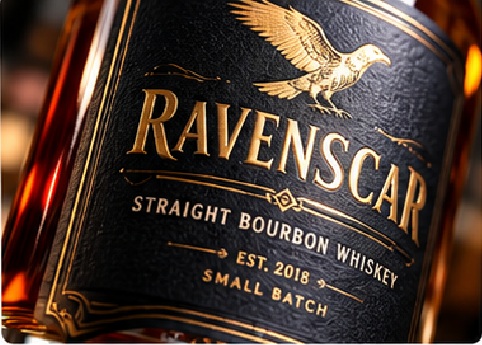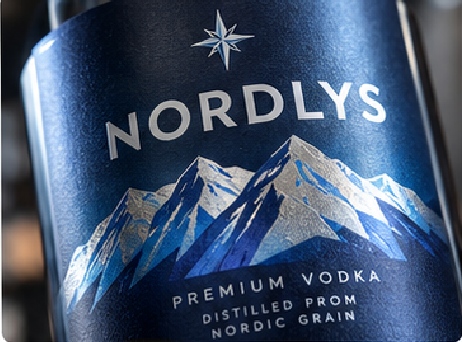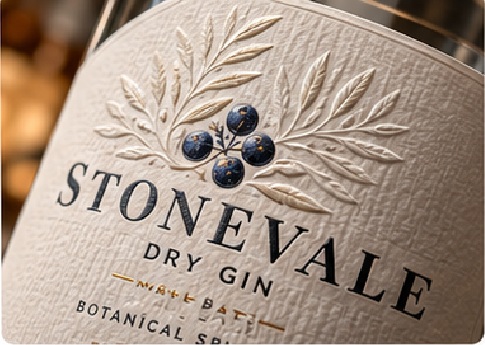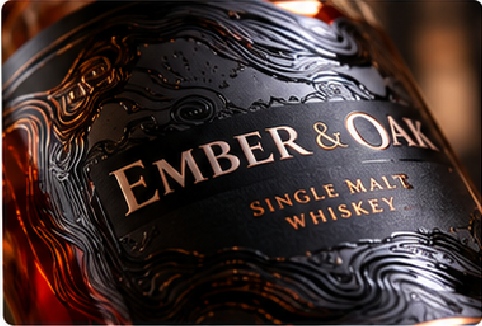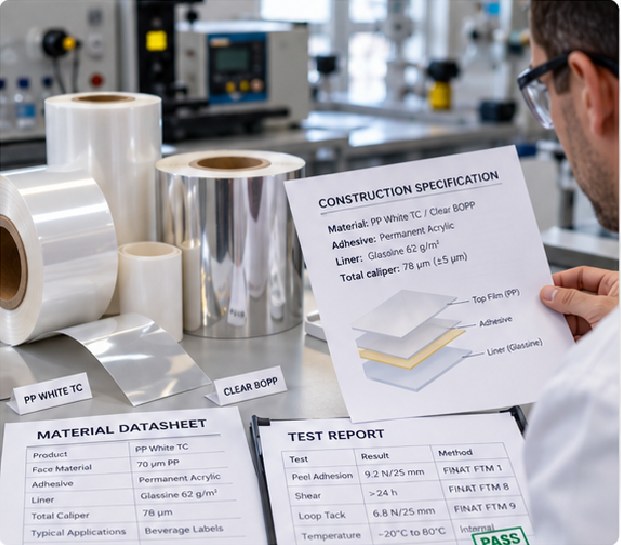

Your Trusted Labels & Stickers Manufacturer from China!

Custom Spirits and Liquor Labels Manufacturer

Premium bottle labels engineered for shelf impact, glass application, multi-SKU production, and repeat manufacturing.
  • Founded in 2016 with 12,000+ m² manufacturing and operating space across Shenzhen and Dongguan.
  • 200+ employees, including 91 technical, skilled production, and quality personnel.
  • MOQ starts from approximately 500 pcs for many standard custom label projects.
  • Digital, flexographic, screen, UV, foil, embossing, die cutting, rewinding, inspection, and in-house testing.
Custom Spirits and Liquor Labels Manufacturer

Spirits Label Manufacturing Built Around Real Production Decisions

Philiton combines material selection, print planning, finishing, converting, inspection, and export packing so spirits programs can move from artwork review into controlled repeat production.

Premium Bottle Decoration

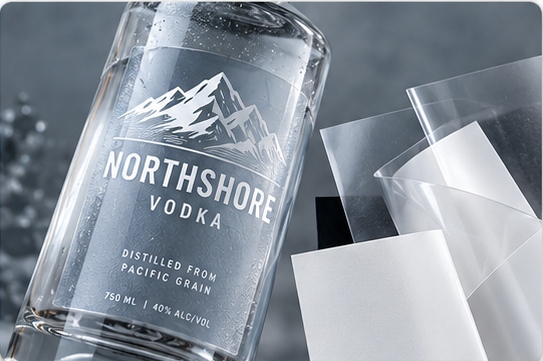
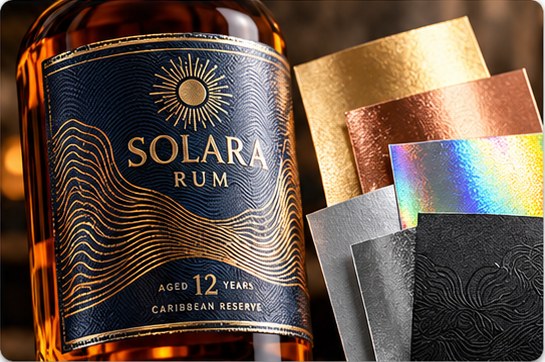
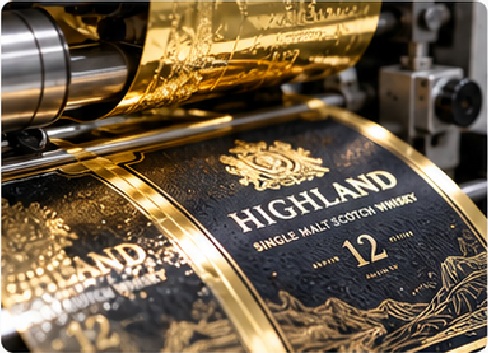
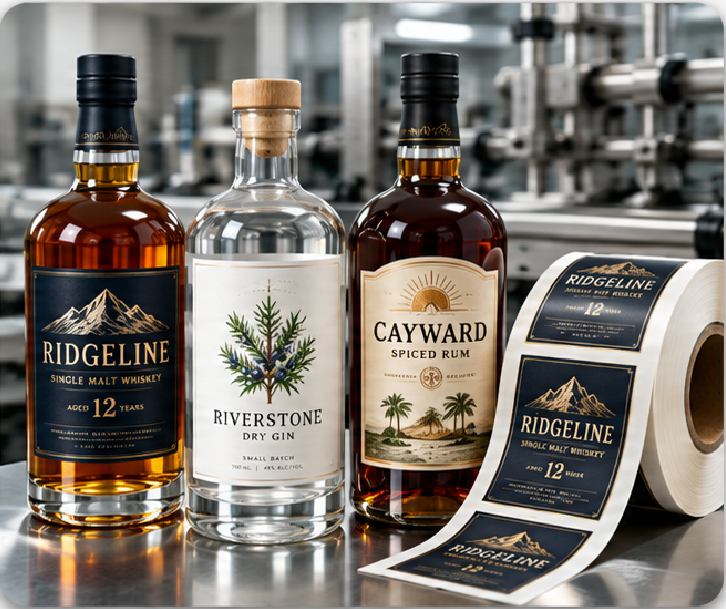
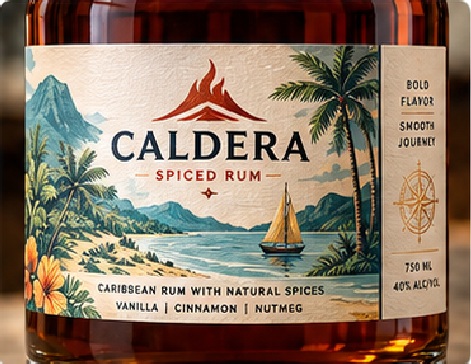
Philiton produces pressure-sensitive spirits labels for whiskey, vodka, gin, rum, tequila, liqueur, and related bottled products. Projects can combine coated or textured papers, clear or white films, metallic effects, opaque white, foil, embossing, varnish, and other decorative treatments. Material and process choices are reviewed against bottle surface, artwork, run size, finish sequence, and final application rather than selected only for appearance.

Roll-Ready Label Supply

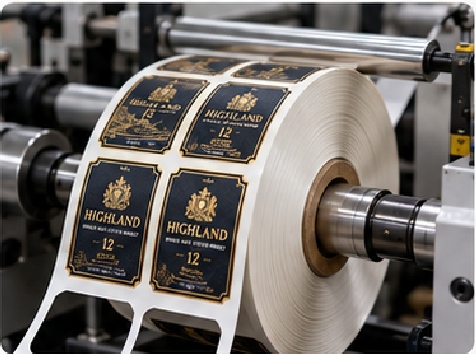
Roll labels can be converted for hand application, dispensing, or automatic labeling. Philiton confirms finished size, shape, gap, roll direction, core requirement, labels per roll, and packing method before release. Slitting, rewinding, visual inspection, and final packing are handled within the manufacturing system, reducing handoffs between printing, converting, checking, and shipment preparation.

Multi-SKU Production Control

Spirits programs often contain different flavors, ages, bottle sizes, regions, or limited editions. Philiton can organize artwork versions, SKU identification, material use, print routes, finishing sequences, inspection, and SKU-separated packing under one project plan. Digital production supports shorter versions and development runs, while flexographic and other production routes can be evaluated as repeat volumes increase.

Flexible to Scalable Manufacturing

Many standard custom label projects can begin from approximately 500 pieces, while special materials, tooling, structures, or finishing combinations are confirmed separately. Philiton is built for more than trial quantities: the same project can move from sample validation into repeat production through controlled artwork, approved materials, process settings, inspection criteria, and packing instructions.

Built for Spirits Brands With Different Production Pressures

Established brands, growing distilleries, packaging partners, and print channels arrive with different risks. Philiton structures development and production around the commercial reality behind each program. Philiton can also organize sample and bulk shipments through international express, air, sea, or a nominated forwarder according to the project. Start Supplier Review

Established Spirits Brands

Mature spirits portfolios usually require consistency across repeat orders, several bottle sizes, multiple SKUs, promotional releases, and region-specific artwork. Philiton supports released artwork control, material identification, print and finishing coordination, approved-sample reference, inspection, and SKU-separated packing. The objective is not simply to reproduce one attractive label, but to protect brand appearance when the same construction returns across scheduled production cycles.
  • Repeat color and finish control
  • Multiple artwork versions
  • Roll specifications for existing labeling lines
  • Batch and packing instructions maintained by project

Craft Distilleries

Craft whiskey, gin, rum, vodka, and liqueur programs often need premium decoration without committing every SKU to a large first run. Philiton can evaluate digital printing, shorter production paths, textured papers, foil, embossing, specialty varnish, and variable information according to the actual launch plan. Many standard label projects can begin from approximately 500 pieces, helping new releases enter professional manufacturing before volumes justify a different production route.
  • Lower inventory exposure
  • Small-batch release support
  • Physical finish sampling
  • Scale-up path for successful SKUs

Packaging Companies

Packaging suppliers need a converter that can work from technical specifications, bottle drawings, dielines, approved color references, roll requirements, and delivery schedules without competing with the packaging program itself. Philiton supports OEM and project-based manufacturing, including material sourcing, printing, converting, inspection, and export packing. Clear version control and documented production inputs help packaging partners coordinate labels with bottles, closures, cartons, and filling schedules.
  • OEM production
  • Technical file review
  • Neutral or agreed packing
  • Shipment to nominated warehouse or forwarder

Print Brokers and Distributors

Trade partners often manage end-client artwork, pricing, confidentiality, and multiple orders at once. Philiton supports private-label and white-label manufacturing structures, with project communication focused on specifications, proofs, samples, production status, QC, and packing. Materials are externally sourced from qualified suppliers while printing, converting, finishing, inspection, and testing are coordinated through Philiton’s production system.
  • Confidential project handling
  • Multi-SKU order organization
  • Direct-to-designated destination options
  • Scalable repeat manufacturing

Label Formats for Bottles, Necks, Sets, and Editions

Different bottle zones solve different branding and information tasks. Philiton develops each format around available panel area, decoration, application method, and production sequence.
Front and Back Sets

Front and Back Sets

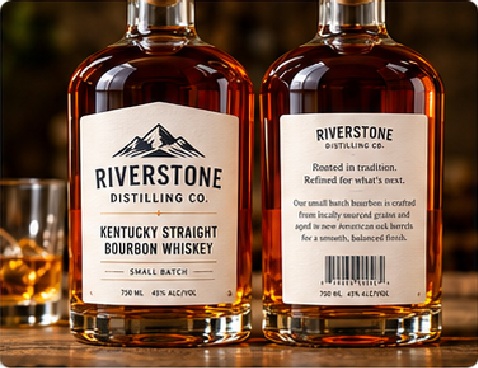
Front labels carry the strongest brand and product identity, while back labels usually hold descriptive, market, or variable information. Philiton can manufacture coordinated front-and-back sets with controlled color, shared materials, matched finishing, and roll specifications. Artwork versions are separated before production so different SKUs or markets do not become mixed during converting and packing.
Neck Labels and Seals

Neck Labels and Seals

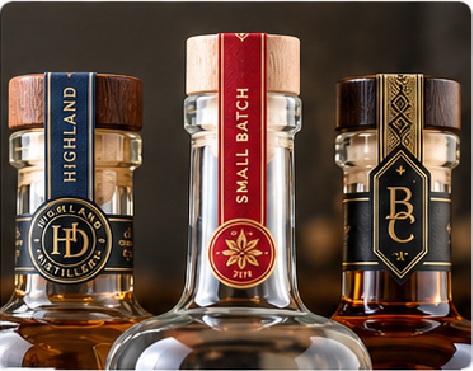
Neck labels, neck bands, and decorative seals add tamper communication, premium detail, or a secondary brand element around the closure area. Narrow geometry and curved surfaces require careful size, material, adhesive, and die-cut review. Philiton checks the intended bottle zone and application method before finalizing production files and converting instructions.
Textured Paper Labels

Textured Paper Labels

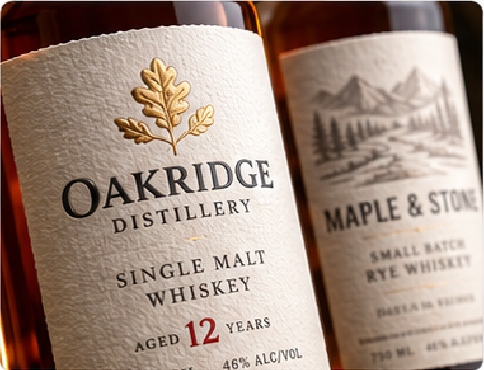
Textured papers are used when the brand needs tactile depth, a craft presentation, or stronger compatibility with foil and embossing. Philiton reviews artwork coverage, fine text, solid areas, foil position, emboss detail, varnish, and bottle exposure before recommending a construction. Physical material and finishing samples are useful when texture is central to approval.
Clear Film Labels

Clear Film Labels

Clear film can create a low-visibility edge and a clean “printed-on-bottle” appearance. Successful production depends on transparent artwork planning, white ink where opacity is required, bottle color, adhesive clarity, and surface cleanliness. Philiton can combine clear film with screen or UV white, color printing, selected finishes, roll converting, and application-focused sample checks.
Wrap-Around Labels

Wrap-Around Labels

Wrap constructions are useful when a larger visual or information area is needed around the bottle. Philiton checks bottle diameter and taper at the label zone, finished label width and height, overlap or gap requirement, grain or film behavior, and application method before releasing the dieline. Sampling helps confirm visual alignment around curved surfaces.
Limited Edition Labels

Limited Edition Labels

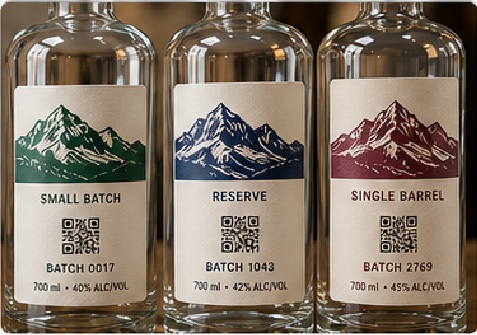
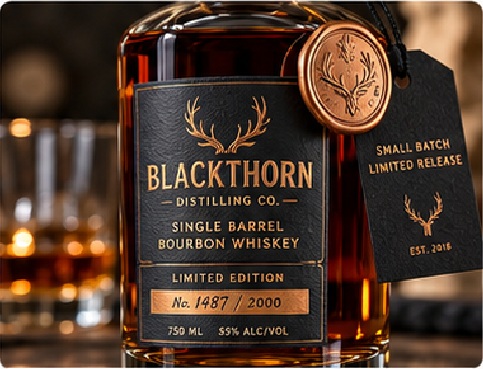
Single-barrel, anniversary, gift, seasonal, and regional releases may require smaller version quantities, numbering, QR codes, variable data, or special decoration. Philiton can combine digital production, variable information, foil or other finishes, die cutting, inspection, and SKU-separated packing so limited editions remain controlled without being treated like unrelated one-off orders. Roll and carton identification can follow the released version list so receiving teams can keep closely related editions separated.

Spirits Label Risks We Resolve Before Mass Production

Premium decoration has little value if the label lifts, scuffs, shifts, or varies across SKUs. Philiton reviews the failure points most likely to affect real bottles.

Condensation and Chilling

Cold bottles can develop condensation, and some products may be refrigerated or placed in ice during service. Philiton does not treat a “water-resistant” face material as a complete solution. The face stock, adhesive, coating or laminate, bottle surface, application temperature, and expected exposure are reviewed together.
  • Confirm storage and service conditions
  • Identify paper or film construction
  • Review adhesive suitability
  • Use physical application testing when required
Where exposure is uncertain, Philiton can compare candidate constructions on the actual bottle before final material release.

Curved or Tapered Glass

A label that looks flat on a drawing may bridge, wrinkle, or lift when applied to a tapered or strongly curved bottle. Philiton reviews the available label panel, bottle diameter at relevant points, finished label dimensions, material stiffness, corner shape, and application direction before tooling or final production is released.
  • Request bottle drawing or physical bottle when needed
  • Check front, center, and edge contact
  • Reduce avoidable edge stress
  • Validate difficult geometries with samples

Scuffing and Surface Damage

Foil, dark solids, uncoated papers, and high-build effects can be sensitive to rubbing during bottling, packing, transport, retail handling, or bar use. Philiton evaluates varnish, lamination, ink and foil compatibility, surface finish, and packing method according to the desired appearance.
  • Match protection to finish
  • Review carton contact points
  • Check abrasion on critical decoration
  • Avoid unnecessary overprotection that changes texture
High-contact neck, shoulder, and carton-contact areas can receive separate protection review when handling creates concentrated rubbing.

Dark Artwork and Fine Detail

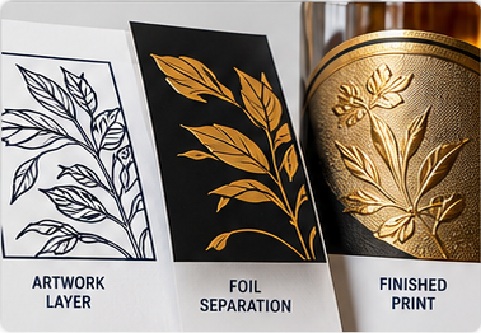
Deep backgrounds, small reverse text, hairline borders, metallic elements, and textured stocks can create production conflicts. Philiton’s prepress review checks trapping, ink coverage, white underprint, foil separation, small text, barcode or QR clarity, and finishing tolerances before release.
  • Separate decorative layers clearly
  • Confirm color reference
  • Protect fine text readability
  • Adjust artwork before tooling where necessary
Prepress can also flag heavy ink coverage or reverse-detail combinations that may lose definition on highly textured stocks.

Foil and Emboss Registration

Foil and embossing add depth only when decorative elements align with the printed design. Multiple finishing passes increase the need for controlled registration, stable materials, correct dies, and approved reference samples. Philiton plans the sequence before production and inspects alignment during finishing.
  • Define foil artwork separately
  • Define emboss/deboss area separately
  • Approve physical effect where appearance is critical
  • Inspect registration during production
Tooling position is checked against the released dieline so decorative passes remain clear of trim and critical text.

Cross-SKU Consistency

A spirits range may place six bottles together on the same shelf. Small differences in color, foil tone, paper, varnish, label position, or die-cut shape can become obvious across the family. Philiton organizes common specifications, SKU-specific artwork, approved references, and packing identification so a portfolio is managed as a family rather than as disconnected files.

  • Shared construction where appropriate
  • Controlled version naming
  • Golden-sample reference when required
  • SKU-separated final packing

Common specifications are recorded once, while version-specific quantities and artwork remain separately identified through production and packing.
Choose Label Materials by Appearance and Bottle Conditions

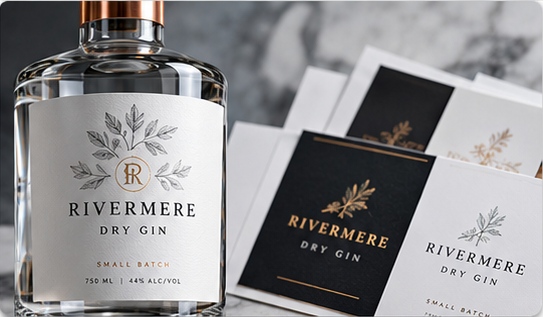
Philiton sources label materials from qualified external suppliers, then matches face stock, adhesive, print process, finishing, bottle surface, exposure, and run size to the project.
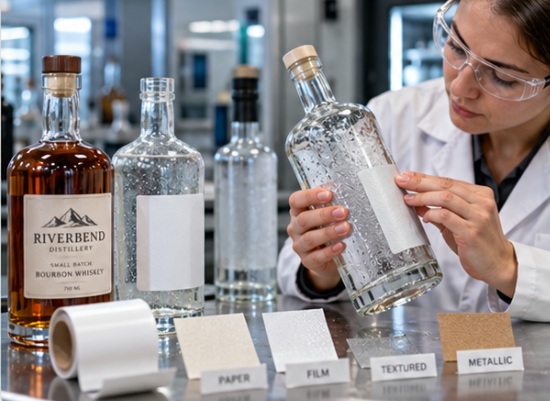
Textured Premium Papers

Textured Premium Papers

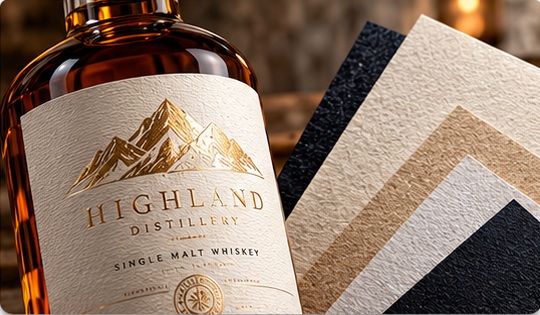
Textured and uncoated papers create the tactile feel associated with craft and premium spirits. They can work especially well with foil, embossing, restrained graphics, and traditional bottle aesthetics. Philiton evaluates texture depth, ink holdout, dark coverage, fine detail, varnish, and moisture exposure before selecting a construction.
  • Best for: tactile premium presentation
  • Review carefully: condensation and wet exposure
  • Useful finishes: foil, emboss/deboss, selective varnish
  • Approval: physical stock and finish samples recommended
Coated Label Papers

Coated Label Papers

Coated papers provide a smoother printing surface and a broad range of finish options while retaining the familiar feel of a paper bottle label. They can support detailed graphics, solid colors, foil, embossing, varnish, and lamination. Philiton selects gloss, matte, or specialty constructions according to artwork and use conditions.
  • Best for: balanced print quality and paper appearance
  • Review carefully: surface protection and moisture requirement
  • Useful finishes: foil, emboss, varnish, laminate
  • Approval: color and finishing sample where appearance is critical
Clear and White Films

Clear and White Films

BOPP, PET, and other film constructions are considered when durability, moisture resistance, clarity, opacity, or a no-label look matters. Clear film may require white ink under selected graphics; white film can support stronger opacity and color. Philiton checks bottle color, adhesive appearance, label edge visibility, stiffness, and print/finish compatibility before release.
  • Best for: clear looks and moisture-prone use
  • Review carefully: adhesive clarity and bottle cleanliness
  • Useful finishes: white ink, UV, foil, laminate
  • Approval: apply samples to the actual bottle when possible
Metallic and Specialty Stocks

Metallic and Specialty Stocks

Metallic, holographic, security, and other specialty stocks can create visual depth without relying only on surface foil. Results depend on artwork separation, opaque white, transparent inks, coating, finishing sequence, and how the material behaves on the bottle. Philiton confirms availability and MOQ with the selected material supplier before quotation.
  • Best for: distinctive limited or premium editions
  • Review carefully: supplier MOQ and lot availability
  • Useful finishes: selective white, foil, UV, die cutting
  • Approval: material sample before scale production

Engineer Adhesive and Bottle Fit Before Labels Reach Filling

Bottle labels behave as a construction, not as artwork alone. Philiton reviews surface, geometry, temperature, exposure, label stiffness, and application method before production settings are locked.
Match Adhesive to Glass, Temperature, and Moisture

Match Adhesive to Glass, Temperature, and Moisture

Glass seems simple until coatings, mold-release residue, condensation, cold filling, chilled storage, surface treatments, or textured bottle areas are involved. Philiton asks where the label will be applied, what the bottle surface is, how clean and dry it will be, the temperature during application, expected storage conditions, and whether the bottle may face refrigeration or ice exposure. Those inputs guide the shortlist of face stock and adhesive constructions sourced from qualified material suppliers. For a new spirits program, the strongest input is an actual bottle or a complete bottle drawing plus the planned label zone. Philiton can then review material flexibility, edge stress, adhesive contact, clear-label appearance, and finishing compatibility. When the use environment is demanding, material datasheets alone are not treated as final proof; sample application and internal performance checks can be added before mass production.
  • Provide bottle material and surface description.
  • State application temperature and expected service conditions.
  • Share any washing, condensation, chilling, oil, or abrasion exposure.
  • Identify hand application, semi-automatic, or automatic labeling.
  • Confirm whether the same label construction will serve multiple bottle sizes.
Philiton can also compare two candidate constructions when the visual choice and the application requirement point in different directions. A textured paper may provide the preferred shelf feel, while a film construction may better tolerate heavy moisture exposure. Sampling makes the tradeoff visible before a full production quantity is committed.
Validate Geometry Before Releasing the Dieline

Validate Geometry Before Releasing the Dieline

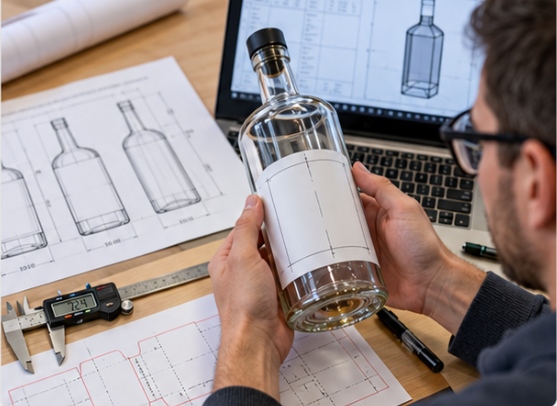
A strong spirits design can fail when the label panel narrows, the bottle tapers, the shoulder begins too close to the graphic, or a rigid paper fights the curve. Philiton reviews finished label width × height, corner radius, bottle diameter or panel dimensions at the intended position, the distance from shoulder and base transitions, and the intended application direction. Physical bottles are useful when geometry is complex or the available panel is uncertain. Front-and-back sets also need spacing logic. A filling line may require a defined gap, unwind direction, core, and roll diameter, while manual application may prioritize handling and visual positioning. Philiton therefore links dieline approval with converting specifications instead of treating die cutting as a final isolated step. Before mass production, difficult bottle geometries can be tested with printed or material samples. The goal is to identify edge lift, wrinkling, bridging, position drift, or unwanted visual distortion before tooling and repeat production become expensive.
  • Send bottle drawings in mm or inches.
  • Mark the exact label zone.
  • Provide a physical bottle when the surface or taper is difficult.
  • Confirm finished label size and orientation.
  • Approve the applied result, not only a flat PDF.
For automatic labeling, Philiton also connects bottle geometry with web direction, gap, pitch, and roll configuration. A correct label shape can still create line problems if the roll specification conflicts with the applicator. Converting inputs are therefore captured before production rather than after finished rolls have already been wound.

Premium Finishing Designed as a Controlled Production Sequence

Philiton combines printing and decoration around artwork hierarchy, material behavior, registration, handling, and cost rather than adding every available effect to one label.
Hot Foil Stamping

Hot Foil Stamping

Hot foil creates a crisp metallic or pigmented accent through heat, pressure, foil, and tooling. Philiton uses the process for logos, borders, names, crests, medals, signatures, and selected details on premium spirits labels. Foil choice is reviewed against paper texture, printed background, embossing, die-cut layout, and run quantity.
  • Suitable for strong premium highlights
  • Requires dedicated foil artwork
  • Tooling and material are confirmed before quotation
  • Physical approval is recommended for critical metallic appearance
Cold Foil

Cold Foil

Cold foil can integrate metallic areas into a print workflow and can suit broader graphics or production routes where the design benefits from overprinting and controlled metallic coverage. Philiton reviews substrate, artwork density, color overprint, protective coating, finishing sequence, and quantity before choosing cold foil instead of hot foil.
  • Useful for larger metallic areas
  • Supports color-over-metal design possibilities
  • Process choice depends on construction and run size
  • Registration is checked during production
Emboss and Deboss

Emboss and Deboss

Embossing raises selected elements while debossing presses them below the surrounding surface. Spirits labels often use these effects on crests, names, borders, seals, numerals, or tactile patterns. Philiton checks stock thickness, texture, artwork scale, tooling, foil interaction, and die-cut position so the effect remains visible without weakening fine detail.
  • Works best with deliberate, readable shapes
  • Can be paired with foil
  • Requires separate tooling artwork
  • Depth and alignment should be approved physically
Spot and Raised UV

Spot and Raised UV

Selective UV can change gloss, texture, or height on logos, patterns, varnished backgrounds, and tactile brand elements. Philiton evaluates ink or coating compatibility, cured surface, detail size, substrate, foil adjacency, and abrasion exposure before production. Raised effects are used selectively so a premium label stays refined rather than becoming visually overloaded.
  • Adds localized gloss or tactile contrast
  • Useful on dark or minimalist graphics
  • Requires clear spot separation in artwork
  • Surface durability is reviewed for handling conditions
Screen and Opaque White

Screen and Opaque White

Screen printing is valuable when higher opacity, specialty inks, or selected tactile effects are needed. On clear films or metallic stocks, an opaque white layer can control color appearance and create defined windows. Philiton separates white ink from CMYK or spot colors during prepress and confirms the required coverage before printing.
  • Supports strong white underprint
  • Useful for clear and metallic constructions
  • Can add selected tactile or specialty effects
  • White areas must be defined in production artwork
Holographic and Specialty Foils

Holographic and Specialty Foils

Holographic foils and specialty materials can support limited editions, anti-counterfeit cues, gift releases, or highly distinctive shelf presentation. Philiton can combine holographic elements with printing, varnish, die cutting, variable data, or other decoration when the construction remains manufacturable. Availability, minimum material purchase, tooling, and visual approval are confirmed for each project.
  • Suitable for selective premium or security cues
  • Material availability is project-specific
  • Artwork should reserve visual hierarchy
  • Sample review helps prevent excessive effects

Select Printing Routes by Volume, Versions, and Decoration

One production method does not fit every spirits program. Philiton selects the route after reviewing material, artwork, SKU count, run quantity, color, finishing, and repeat-order expectations.

Production RouteBest FitMain StrengthConfirm Before Release
Digital label printingSamples, shorter runs, multiple versions, launch quantitiesFast file changes, economical versioning, variable data supportMaterial, color target, finish compatibility, version count
Flexographic printingRepeat runs, higher quantities, stable recurring constructionsEfficient roll production and strong integration with convertingPlate/tooling needs, ink system, material lot, repeat standards
Screen / UV specialty printingOpaque white, tactile layers, selected specialty effectsHigher opacity and localized functional or decorative layersInk thickness, curing, surface compatibility, sequence
Combined production sequencePremium labels using print + foil + emboss + varnish + die cuttingIntegrates several visual effects under one controlled jobRegistration tolerance, tooling, order of operations, approved sample

Prepress Protects Color, Decoration, and Every Artwork Version

A strong production file prevents expensive changes after tooling starts. Philiton reviews dielines, colors, white ink, finishing layers, fine detail, codes, and version control before release.
Dieline and Bottle Panel

Dieline and Bottle Panel

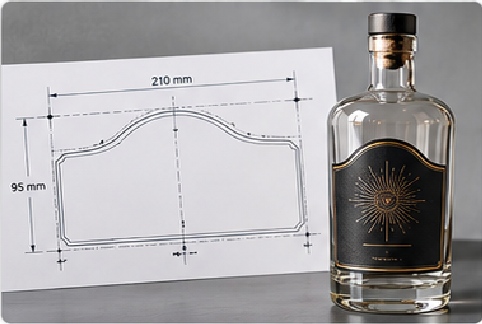
The cutting shape must fit the real bottle zone and the planned application method. Philiton checks finished width and height, shape, corners, bleed, safe area, front/back spacing, and orientation against bottle information before final tooling. For tapered or unusual glass, a physical bottle or reliable drawing is preferred.
  • Separate dieline from print art
  • State final dimensions
  • Mark front/back relationship
  • Keep critical text away from trim
The review also checks whether foil, emboss, or varnish passes create additional registration space around the cutting line and small details.
Color References

Color References

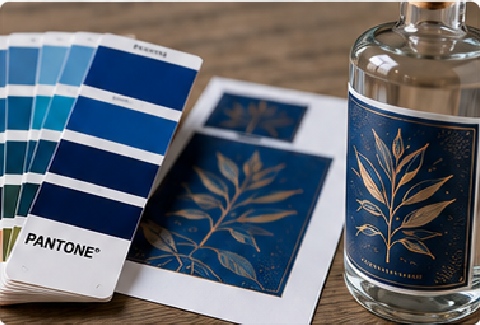
Spirits ranges often depend on a dark hero color, metallic accent, cream stock, or a family of related SKU colors. Philiton asks for Pantone references, approved printed samples, or other usable color standards when exact appearance matters. Screen color alone is not treated as a production target.
  • Supply Pantone or physical reference where available
  • Identify common colors across SKUs
  • Flag colors that must match existing packaging
  • Confirm substrate because stock changes appearance
White Ink Layers

White Ink Layers

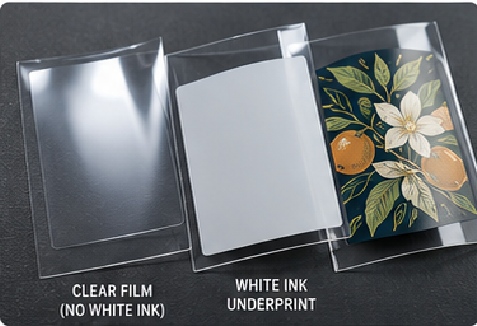
Clear and metallic constructions frequently require white ink behind selected graphics to control opacity and color. Philiton separates white underprint from normal color artwork and checks whether areas should be opaque, transparent, or intentionally show the substrate.
  • Use a dedicated white-ink layer
  • Name knockout and solid areas clearly
  • Review bottle color under clear labels
White density and the boundary between opaque and transparent areas are checked on the selected film because the bottle itself becomes part of the finished visual result.
  • Confirm white registration with printed graphics
Foil Separation

Foil Separation

Foil artwork should be intentional, not converted from a visual mock-up at the last moment. Philiton reviews foil coverage, minimum detail, nearby print, substrate texture, tooling position, and interaction with embossing or die cutting before production.
  • Provide vector foil layer
  • Identify foil color or reference
  • Avoid uncontrolled hairline detail
  • Approve metallic appearance physically when critical
When foil sits over a textured or dark printed area, Philiton also reviews whether the selected stock and print sequence support clean edge definition.
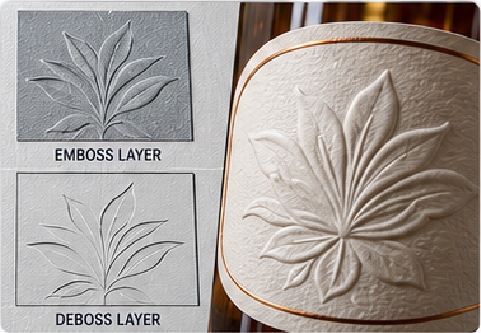
Emboss and Deboss Layers

Emboss and Deboss Layers

Embossing needs clear production artwork separate from printed graphics. Philiton checks the area, scale, line detail, distance from trim, paper behavior, foil relationship, and tooling needs. Complex combinations may require a physical sample before mass production.
  • Separate emboss/deboss artwork
  • Define raised versus recessed areas
  • Protect small text and sharp corners
  • Check registration against print and foil
Tooling position is reviewed against trim, small type, and neighboring decoration so pressure and alignment do not compromise readability.
Version and Variable Data

Version and Variable Data

Multiple proofs, markets, ages, barrel numbers, batch codes, QR codes, or serialized fields can create costly mix-ups. Philiton organizes each version under controlled filenames and production quantities, then links printing, inspection, roll labels, cartons, and SKU identification to the released file set.

  • Supply a SKU/version list
  • Lock variable-data rules before printing
  • Verify QR, barcode, or serial content where required
  • Keep obsolete files outside the released production set

For mixed quantities, Philiton can pair the version list with roll and carton identification so later warehouse handling follows the same file logic.

Sampling Closes Appearance and Application Risk Before Production

Philiton operates a dedicated approximately 350 ㎡ sampling and prototype-development area. Sample timing is confirmed after material, tooling, finishing, and bottle-test requirements are reviewed.

Build the Sample Around the Decision You Need

Not every spirits project needs the same sample. A digital color proof can answer layout and color questions quickly, while textured stock, foil, embossing, clear film, white ink, difficult bottle geometry, or a special adhesive may require a physical construction sample. Philiton first identifies what must be approved: artwork position, color, material feel, metallic effect, emboss depth, label fit, roll specification, or a combination of these.
The sampling route is then built around available material, required dies or plates, foil and finishing tools, and whether an actual bottle must be tested. Standard constructions using available materials can follow a shorter path; unusual papers, imported specialty stocks, custom tooling, complex foil/emboss sequences, or smart-label components require more preparation. Philiton therefore confirms the sample schedule during quotation rather than applying one fixed day count to every label.
  • Artwork and dieline review
  • Material shortlist or swatch confirmation
  • Digital or physical sample route
  • Bottle application check when required
  • Written revision list before the next sample
A sampling review can also include the intended pack and application context. If a label has heavy foil, deep embossing, or a sensitive uncoated surface, Philiton can inspect how finished samples behave when stacked, wound, handled, or placed against the bottle. The aim is to approve a manufacturable construction rather than a one-off appearance that cannot be repeated economically. A clear approval record also shortens the path for later SKUs that reuse the same material and finishing system.

Turn an Approved Sample Into a Production Reference

Approval should create a usable production standard, not just an email saying “looks good.” Philiton can record the released artwork version, material, adhesive, color references, foil or emboss specification, die-cut shape, roll requirements, and key inspection points before mass production. For repeat programs, an approved physical sample can be kept as a Golden Sample reference when the project requires it.
Review should focus on what the production team can reproduce: print color on the actual stock, metallic effect under normal viewing, emboss alignment, label dimensions, edge quality, adhesion to the intended bottle, and roll format. Any approved deviation should be written into the release record instead of remaining in a chat thread.

  • Approve artwork version and SKU list
  • Approve material and adhesive construction
  • Approve color and decorative effects
  • Approve applied fit on difficult bottles
  • Approve roll direction, core, quantity per roll, and packing
  • Release mass production only after open issues are closed

When a revision changes material, adhesive, bottle size, foil area, emboss tooling, or other functional details, Philiton treats it as a new production input rather than a cosmetic note. The updated sample or proof is linked to the released version so operators, QC, and packing teams work from the same standard. This is especially important for multi-SKU spirits ranges where small artwork differences can otherwise create incorrect combinations.

Manage MOQ, Multi-SKU Orders, and Cost Without Guessing

Philiton quotes around the real construction: material, adhesive, dimensions, SKU count, printing route, colors, special finishing, tooling, testing, packing, and required schedule.

Flexible Starting Quantities

For many standard custom label and sticker projects, Philiton can start from approximately 500 pieces. The figure is a manufacturing starting point rather than a universal rule. Specialty papers, custom foils, special adhesives, unusual structures, security materials, RFID/NFC, or supplier minimum purchases can require a different MOQ.
  • Standard projects: often from approximately 500 pcs
  • Special materials: MOQ confirmed after sourcing
  • Tooling: quoted where foil, emboss, or custom die requirements apply
  • Repeat orders: reviewed for a more efficient production route as volume grows

Multi-SKU Planning

Several small versions should be planned as one portfolio, not quoted as unrelated labels without considering shared materials and processes. Philiton reviews each SKU quantity, common size, common stock, shared colors, common foil or finish, and packing requirement to determine whether digital, flexographic, or mixed scheduling makes more sense.
  • Submit one SKU list
  • Show quantity per SKU
  • Identify common construction
  • Separate region, language, flavor, age, or bottle-size versions
Shared tooling and common material can also be reviewed together so version flexibility does not automatically create unnecessary setup duplication.

What Changes Unit Cost

Unit cost is shaped by material yield, finished size, quantity, number of artwork versions, print method, colors, foil coverage, emboss tooling, varnish or laminate, die cutting, inspection, packing, and special testing. A visually simple label can cost more than a complex-looking one if the material is difficult to source or wastes stock.
  • Size and material utilization
  • Version count and run quantity
  • Tooling and finishing passes
  • Inspection and packing requirements
Freight mode and delivery destination can influence packing, roll protection, palletization, and the final landed-cost comparison.

Scale Without Rebuilding the Program

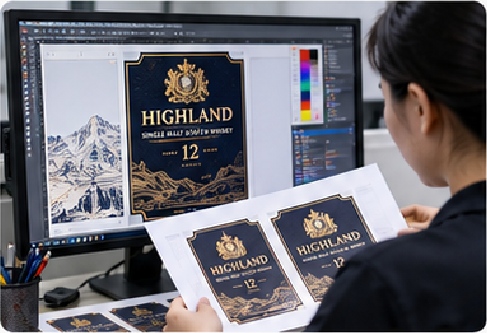
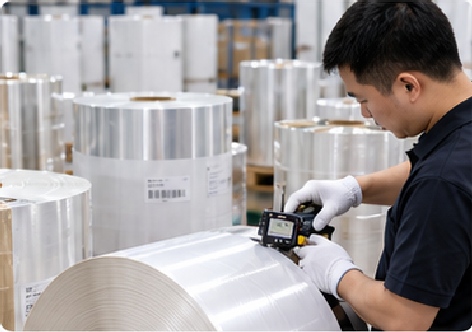
A launch SKU that begins with digital production may later justify a different route when repeat volume becomes stable. Philiton can reassess printing, material purchasing, tooling, roll configuration, and scheduling while keeping the approved visual and technical requirements as the reference. Scaling is therefore treated as a controlled manufacturing change, not a reset of the brand.
  • Keep released artwork controlled
  • Maintain approved construction
  • Review economics at higher quantities
  • Reconfirm any process change before production

Production Moves From Released Artwork to Inspected Finished Rolls

Each production stage closes a specific risk before the next operation. Philiton coordinates printing, decoration, converting, inspection, and packing within one manufacturing system.
Released Artwork

Released Artwork

Only approved artwork, SKU quantities, dielines, color references, finishing layers, and roll instructions enter the production file set. Obsolete versions are separated from released files so last-minute edits do not move into printing by accident. Complex projects receive cross-process review before material and tooling are committed.
Material and IQC

Material and IQC

Externally sourced papers, films, adhesives, foils, inks, and other materials are identified and controlled after arrival. Philiton performs incoming checks appropriate to the material and project before it enters production. Lot information and storage control help reduce unplanned substitutions during repeat spirits programs. Material identity is linked to the job before printing so a similar-looking stock is not introduced without review.
Printing

Printing

Digital, flexographic, screen, UV, and related print processes are selected according to quantity, material, artwork, opacity, versioning, and finishing sequence. Operators follow the released production standard and compare critical color or content against the approved reference during the run. SKU identifiers and version quantities are checked before each file change to reduce mix-up risk.
Finishing

Finishing

Foil, emboss/deboss, varnish, lamination, specialty UV, holographic elements, and other surface treatments are performed in the required sequence. Registration and surface appearance are checked while the job is running so alignment problems are found before all material has passed through later operations. Process sequence is controlled so one decorative pass does not damage or obscure another.
Die Cutting and Rewinding

Die Cutting and Rewinding

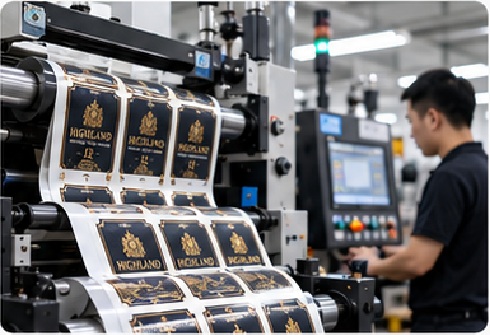
Labels are die cut, waste stripped, slit, and rewound to the agreed finished format. Philiton checks dimensions, edge condition, label gap, roll direction, core requirement, roll quantity, and winding quality according to the approved converting specification. Finished rolls are identified before packing to keep similar SKUs separated. Roll leaders or carton labels can carry agreed SKU references for receiving control.
Inspection and Packing

Inspection and Packing

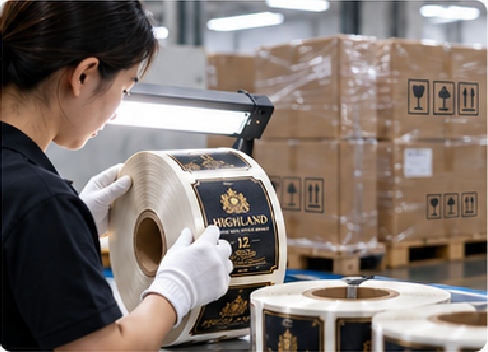
Applicable roll projects can use 100% automatic vision inspection alongside manual and final QC. Finished labels are then counted, separated by SKU, packed as rolls, sheets, or individual pieces, and prepared for export according to the confirmed carton, pallet, and shipment instructions. International express, air, sea, or nominated-forwarder arrangements are confirmed according to destination and order size.

Quality Control Focused on What Spirits Labels Must Reproduce

Philiton combines incoming, in-process, final, outgoing, visual, and laboratory checks. Inspection points are selected around the risks created by each material, decoration, bottle, and application.

Print and Color Control

Color is reviewed on the actual substrate because textured, cream, metallic, clear, and white materials can produce different visual results from the same file. Philiton checks print content, registration, solid areas, small text, white ink, and critical color against the approved standard during production.
  • Approved proof or physical reference where required
  • SKU text and artwork verification
  • Color and density review
  • Defect detection during the print run
Color-sensitive projects can retain an approved physical reference so repeat production is judged against a real printed standard rather than only a monitor image.

Foil and Emboss Registration

Premium spirits labels often place foil or embossing directly over a printed name, border, crest, or pattern. Philiton checks tooling position, registration, missing areas, pressure-related defects, surface damage, and consistency before later converting steps hide the source of a problem.
  • Print-to-foil alignment
  • Emboss/deboss position
  • Surface cleanliness
  • Repeated visual checks through the run
Pressure and tooling condition are monitored because excessive or uneven force can change both appearance and material behavior across the batch.

Dimensions and Die Cutting

Finished labels must fit the bottle and the labeling process, so die cutting is checked for size, shape, corner condition, trim position, matrix removal, and roll consistency. Special shapes receive extra attention where narrow bridges, sharp details, or small gaps could affect stripping or application.
  • Width × height verification
  • Shape and edge check
  • Gap and pitch confirmation
  • Roll winding review
Critical dimensions are checked again after converting because web tension, waste stripping, and rewinding can expose issues not visible at the printing stage.

Adhesion and Performance Checks

Philiton operates an in-house testing laboratory of approximately 150 ㎡ for label performance and print-quality verification. Depending on the project, internal checks can cover adhesion, peel, rub or scratch resistance, color, thickness, environmental reliability, barcode/QR verification, and other relevant properties.

  • Test scope defined by application risk
  • Actual bottle testing when available
  • Material data reviewed alongside physical checks
  • External certification claims are not inferred from internal testing

Test conditions, sample identity, and acceptance criteria are recorded around the actual construction so results remain connected to the project being produced.

Vision and Variable Data Inspection

Philiton has 100% automatic vision-inspection capability for applicable roll-label projects. The system can support detection of print and die-cut defects and, for suitable projects, verification around variable data or codes. Inspection settings are agreed according to artwork and defect criteria rather than described as a universal guarantee for every construction.
  • Roll inspection where technically applicable
  • Variable content checks by project
  • Abnormal areas flagged or removed through inspection/rewind
  • Manual QC remains part of final review

Final and Outgoing QC

The final release checks the items that matter at receipt: correct SKU, quantity, label appearance, finishing, dimensions, roll direction, core, labels per roll, carton identification, and packing condition. Philiton’s dedicated QC area is approximately 300 ㎡ and covers IQC, IPQC, FQC, OQC, sampling, visual checks, and outgoing verification.

  • SKU and quantity confirmation
  • Roll and carton labeling
  • Packing condition
  • Shipment release only after final checks

Cartons can also be separated by SKU, roll count, destination, or other agreed handling instructions when the receiving warehouse needs controlled staging.

Pack Rolls for the Way Labels Will Be Applied

Philiton’s approximately 700 m² packing area supports roll, sheet, individual-piece, SKU-separated, carton, and pallet packing. Converting details are confirmed before finished labels reach shipment.

Application / Delivery NeedSpecifications Philiton ConfirmsPacking Approach
Automatic bottling lineFinished size, gap/pitch, unwind direction, core, maximum roll diameter, labels per rollConsistent rolls, identified by SKU and production instruction
Semi-automatic dispenserRoll direction, manageable roll diameter, core, quantity per rollSmaller working rolls where specified, protected in cartons
Hand applicationFinished shape, easy handling, sequence, SKU identificationRolls, sheets, or individual pieces according to handling plan
Multi-SKU export orderSKU code, artwork version, quantity per SKU, carton identification, destinationSKU-separated inner packs/cartons, palletization when required
Premium finished labelsFoil/emboss/tactile surface protection, inter-roll pressure, carton contactProtective wrapping and carton arrangement selected around finish sensitivity

Compliance Support Starts With the Market and Released Artwork

Philiton supports manufacturing documentation and project checks, while alcohol-label legal approval remains separate from printing. Requirements are confirmed by destination market, material, construction, and client specifications.
Separate Manufacturing Control From Alcohol Label Approval

Separate Manufacturing Control From Alcohol Label Approval

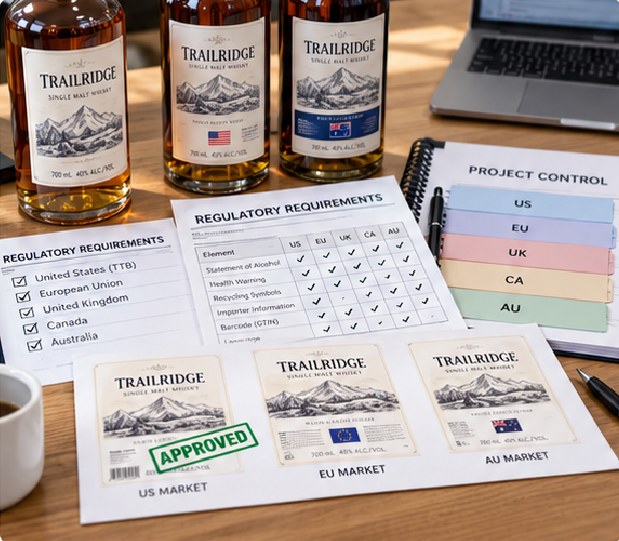
Philiton manufactures labels to released artwork and agreed technical specifications. For spirits sold in the United States, Europe, the United Kingdom, Canada, Australia, or other markets, required alcohol statements, warnings, product classification, importer information, language, barcode content, recycling information, and approval procedures can differ. Philiton does not treat print capability as legal approval of the finished alcoholic beverage label.
The strongest workflow is to close regulatory content before mass production. Brand owners, importers, legal advisers, or appointed regulatory specialists provide the approved wording and market requirements; Philiton then checks whether the released artwork is technically manufacturable. Prepress review can identify issues such as text too close to trim, unreadable reverse type, blocked barcode zones, foil over critical information, or version-mixing risk, but it does not replace regulatory approval.
  • Supply destination market for each SKU.
  • Provide released legal text and approved artwork.
  • Identify mandatory barcode, QR, serialization, or importer fields.
  • Keep market-specific versions under controlled filenames.
  • Reapprove artwork whenever regulated content changes.
If a spirits range serves several countries, Philiton can organize separate released files by market while keeping common production elements such as size, stock, foil, and die-cut shape aligned where possible. Market versions are not merged from email comments during production; the final released artwork set becomes the manufacturing reference. This reduces the risk of pairing one market’s legal panel with another market’s front-label artwork, especially when several SKUs share similar visual design.
Build Material and Test Documentation Around the Actual Construction

Build Material and Test Documentation Around the Actual Construction

Philiton sources papers, films, adhesives, foils, and specialty stocks from external qualified suppliers. Material declarations, FSC-related evidence, RoHS/REACH reports, migration or food-contact information, and other documents are not assumed to apply to every label simply because a similar material exists in the supply chain. Availability is confirmed against the exact material, supplier, order, and destination-market requirement.
Internal testing supports manufacturing decisions but is not presented as third-party laboratory certification. When a project requires a specific external test, certificate, audit file, or customer standard, the requirement should be stated during quotation so the material and testing route can be evaluated before production.
  • State the required document or standard by name.
  • Link evidence to the selected material and supplier.
  • Avoid substituting documents from unrelated constructions.
  • Confirm whether third-party testing is required before shipment.
  • Keep regulatory approval and manufacturing quality records as separate responsibilities.
When documents are required before shipment, Philiton can build the request into the project checklist so sourcing and testing are not left until finished labels are already packed. If a requested certificate does not exist for the selected construction, the material or documentation path can be reconsidered before production. This prevents a visually approved label from reaching final inspection with unresolved paperwork that affects the intended market.

Three Representative Spirits Projects Showing Philiton’s Working Method

Client identities and artwork remain confidential. The quantities below are representative anonymized order figures for illustrating how Philiton manages spirits projects above 1,000 pieces from development through production.
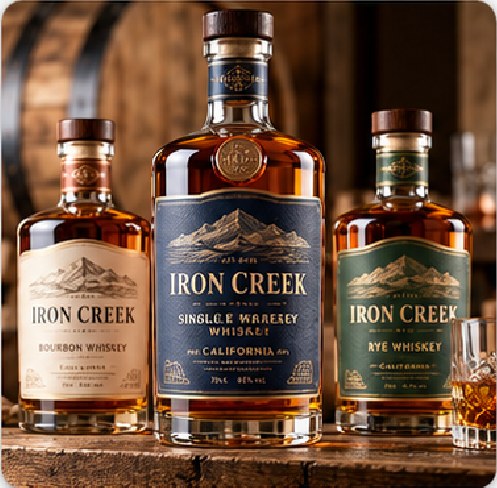
California Whiskey Range

California Whiskey Range

  • Region: California, USA
  • Background: craft whiskey brand with three related releases
  • Representative quantity: 12,000 labels total
  • Key work: texture + foil + emboss + SKU control
A California craft whiskey program is represented as three coordinated SKUs at 4,000 labels each, 12,000 labels total. The brief called for a warm textured paper, dark ink coverage, metallic brand details, and an embossed crest on cylindrical glass. Philiton’s development route began with dieline and bottle-zone review, followed by paper and foil selection, separation of print/foil/emboss layers, and physical sampling. The applied sample was checked for edge contact and visual alignment before release. Production then used SKU-controlled artwork, matched construction, finishing registration checks, roll converting, inspection, and SKU-separated cartons for one consolidated shipment.
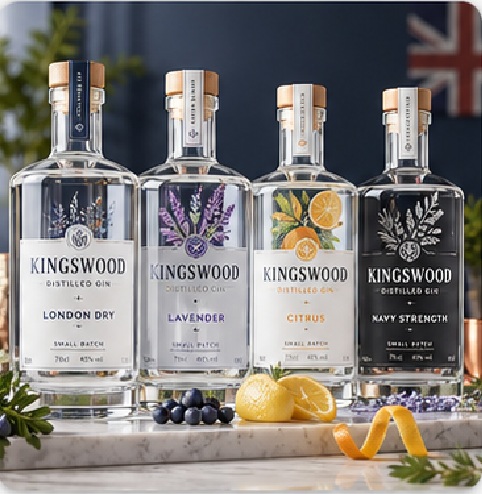
United Kingdom Gin Portfolio

United Kingdom Gin Portfolio

  • Region: United Kingdom
  • Background: premium gin range with four variants
  • Representative quantity: 10,000 labels total
  • Key work: clear film + white ink + version control
A UK gin portfolio is represented as four 2,500-piece versions, 10,000 labels total, sharing one clear-film construction while changing flavor graphics and variable back-label information. Philiton’s prepress team separated white ink from transparent areas so the bottle remained visible without weakening logo opacity. Version files were locked before printing, and each SKU received defined quantities and carton identification. Sampling focused on white opacity, color appearance on glass, edge visibility, and finished roll direction. After approval, printing, UV/surface finishing, die cutting, 100% vision inspection where applicable, rewinding, and export packing were organized as one portfolio rather than four unrelated jobs.
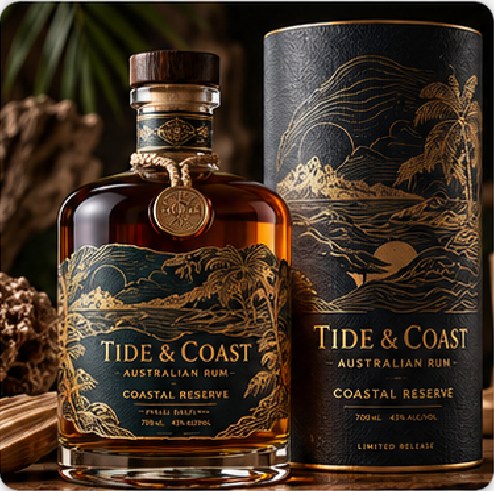
Australian Rum Gift Release

Australian Rum Gift Release

  • Region: Australia
  • Background: premium rum gift and seasonal release
  • Representative quantity: 15,000 labels
  • Key work: coordinated bottle + neck labels, premium finishing, protected packing
An Australian premium rum gift program is represented as 15,000 labels across a core bottle label and a coordinated neck seal. The visual direction used a dark coated stock with selective metallic decoration and tactile contrast. Philiton reviewed the bottle and neck dimensions separately because the two zones created different curvature and handling conditions. Artwork was adjusted so foil, tactile elements, and small text did not compete near trim. Physical samples were reviewed before production, then the approved construction moved through printing, decoration, die cutting, roll inspection, and protective packing. Core and neck SKUs were identified separately so the filling team could stage them without mixing.

Manufacturing Depth Behind Every Spirits Label Production Program

Philiton combines flexible quantities with a factory system built for printing, finishing, converting, inspection, testing, and export preparation instead of outsourcing every critical production step.

12,000+ ㎡ Manufacturing Footprint

Philiton operates manufacturing bases in Shenzhen and Dongguan with more than 12,000 ㎡ of integrated manufacturing and operating space. Approximately 7,200 ㎡ is dedicated to core production, converting, sampling, and packing activities. The footprint supports digital and flexographic printing, screen and UV work, finishing, die cutting, rewinding, smart-label processing, inspection, and shipment preparation under coordinated production management.

200+ People, 91 Core Specialists

More than 200 employees support production and operations. Within the team, 91 technical personnel, experienced machine operators, and quality-related staff form the core group responsible for process execution, equipment operation, finishing, consistency, testing, and inspection. The staffing structure allows Philiton to handle samples, multi-SKU runs, repeat programs, and larger orders without positioning flexible MOQ as a retail-only service.

Dedicated Development and QC Areas

Spirits projects benefit from dedicated spaces beyond the printing line. Philiton maintains approximately 350 ㎡ for sampling and prototype development, about 300 ㎡ for QC, and approximately 150 ㎡ for in-house testing. These areas support color and material samples, production approvals, incoming/in-process/final/outgoing inspection, adhesion and durability checks, code verification, and release decisions tied to the approved project specification.

Integrated Premium Finishing

Philiton’s finishing system includes lamination, varnishing, foil stamping, cold-foil related processes, embossing/debossing, spot UV, holographic effects, slitting, rewinding, and other specialty treatments. Dedicated foil and embossing capability supports premium wine and spirits, cosmetics, fragrance, and branded packaging programs. Materials are sourced externally, while value is created through selection, print execution, finishing integration, converting, inspection, and production control.

Spirits & Liquor Labels Frequently Asked Questions

For many standard custom label and sticker projects, production can start from approximately 500 pieces. Specialty papers, custom foils, unusual adhesives, complex tooling, smart-label components, or supplier material minimums can change the starting quantity. Philiton confirms MOQ after the construction and finish are defined.
Yes. Philiton can source and convert textured, coated, and specialty papers for spirits projects. Selection depends on print coverage, foil or embossing, bottle exposure, adhesive needs, and availability. Physical stock or finished samples are recommended when tactile appearance is important.
Yes. Clear-film constructions can be printed with transparent areas and opaque white where needed. Philiton reviews bottle color, adhesive clarity, white-ink coverage, label edge visibility, finishing, and application conditions before approving the construction.
Yes, when the material, artwork scale, tooling, registration, and production sequence support the combination. Philiton separates print, foil, and embossing layers during prepress and normally recommends a physical sample for premium labels where alignment and tactile depth are important.
There is no single fixed sample time for every construction. Philiton confirms the schedule after reviewing material availability, dieline/tooling, foil or embossing requirements, special adhesives, bottle testing, and other processes. Standard digital or available-material routes can move faster than complex specialty constructions.
Send the label dimensions, shape, quantity per SKU, number of SKUs, artwork or reference design, preferred material, finishing, bottle information, application method, destination market, and delivery location. If a bottle is tapered or unusual, include a drawing or physical sample when possible.
Yes. Roll labels can be produced to agreed converting requirements. Philiton confirms unwind direction, core, maximum roll diameter, label gap or pitch, labels per roll, finished dimensions, and SKU identification according to the equipment or co-packer specification.
Yes. Philiton can organize shared materials, common finishes, artwork versions, variable information, quantities, inspection, roll labels, and SKU-separated packing under one project. A complete SKU list helps determine the most efficient print and scheduling route.
Philiton manufactures to released artwork and agreed technical specifications but does not replace legal or regulatory approval for alcoholic beverage labeling. Brands or appointed specialists should provide approved market content. Philiton can support production-readiness checks and project-specific material documentation.
Inspection can include incoming material checks, print and color review, foil/emboss registration, dimensions, die cutting, adhesion or durability checks, variable-data verification, roll specification, final QC, and outgoing inspection. Applicable roll projects can use 100% automatic vision inspection in addition to manual QC.

Send Your Spirits Label Specification for a Manufacturing Review

Philiton can prepare a quotation and development route once the construction is clear enough to price materials, printing, finishing, tooling, inspection, packing, and shipment. A complete RFQ prevents repeated questions and makes material alternatives easier to compare. For difficult bottles or premium decoration, include a bottle drawing, physical bottle, approved reference label, or finish sample when available. Sample timing and mass-production scheduling are confirmed after material availability and process complexity are reviewed rather than quoted as one fixed number for every spirits label.

Please send:

  • Finished label width × height and shape
  • Quantity per SKU and total number of SKUs
  • Artwork, dieline, PDF, AI, or reference design
  • Bottle material, label zone, diameter/taper information, or bottle sample
  • Preferred paper, film, metallic, clear, or textured appearance
  • Foil, emboss/deboss, UV, varnish, laminate, holographic, or other finishes
  • Hand, semi-automatic, or automatic application requirements
  • Roll direction, core, roll diameter, labels per roll, and packing instructions
  • Destination market and any required material or test documents
  • Delivery country, postal code, and requested in-hand schedule

For all inquiries, please feel free to reach out at:

Get In Touch

  • Our team will answer your inquiries within 12 hours.

  • Your information will be kept strictly confidential.

Get a Fast Quote for Custom Labels & Stickers

We will contact you within 24 Hours, please pay attention to the email with the suffix“@philiton.com”. 

For all inquiries, please feel free to reach out at:

Ask For A Quick Quote

We will contact you within 24 Hours, please pay attention to the email with the suffix“@philiton.com”. 

For all inquiries, please feel free to reach out at:

Get a Quote Today!

We will contact you within 24 Hours, please pay attention to the email with the suffix“@philiton.com”.