Your Trusted Labels & Stickers Manufacturer from China!

custom Industrial Label Manufacturer

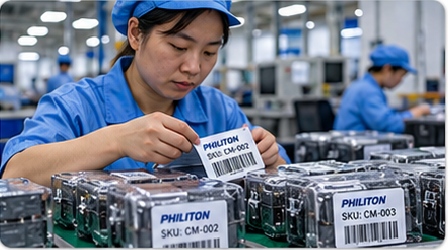
Engineered labels for machinery, electronics, chemicals, assets and traceability, produced from prototype through repeat industrial-scale orders.
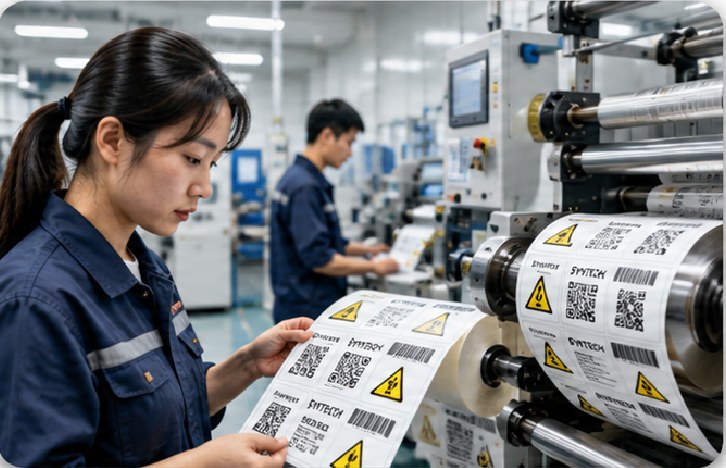
  • Founded in 2016 with manufacturing operations in Shenzhen and Dongguan.
  • 12,000+ m² manufacturing and operations footprint, 200+ staff, including 91 technical, skilled production and quality personnel.
  • Many standard projects can start around 500 pcs; printed and finished samples commonly take 3-5 business days after specifications are confirmed.
custom Industrial Label Manufacturer

Industrial Manufacturing Facts Procurement Teams Can Qualify Quickly

Philiton combines flexible entry quantities with engineering, printing, converting, inspection, testing and production resources for industrial identification programs, technical validation, repeat orders and long-term supply planning.

Manufacturing Since 2016

Philiton has manufactured custom labels, stickers, tags and specialty printed products since 2016. Industrial programs are supported through manufacturing operations in Shenzhen and Dongguan, covering artwork and prepress, digital and conventional printing, converting, specialty finishing, inspection, testing, packing and shipment preparation. The operating model is designed for projects that must move from development samples into controlled repeat production without changing the manufacturing partner.

12,000+ ㎡ Footprint

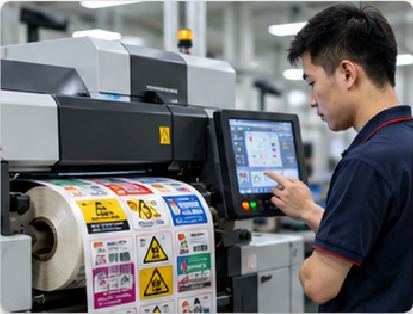
Philiton operates more than 12,000 m2 of combined manufacturing and operations space across Shenzhen and Dongguan. The footprint supports printing, die cutting, finishing, smart-label work, inspection, testing, warehousing and packing. Industrial programs can therefore be planned as a production system rather than a single print job, with material receipt, controlled processing, inspection and final packing managed through connected internal functions.

200+ People

More than 200 employees support Philiton operations. Among them, 91 are technical personnel, experienced machine operators and quality-related staff. Industrial labels often require more than good graphics: material selection, adhesive review, variable data, controlled die cutting, roll configuration and functional checks all need people who understand how the final label will be applied and used. Philiton assigns technical and quality resources according to project risk.

Flexible Starting Quantities

Many standard custom label projects can begin from around 500 pieces, subject to material, adhesive, printing, finishing, tooling and SKU structure. Industrial programs using special films, dedicated adhesives, security constructions, RFID inlays or custom tooling may require different starting quantities. The advantage is a workable route from engineering validation and pilot runs into larger repeat orders instead of forcing an oversized first production batch.

Defined Sample Routes

Philiton uses different sample routes for different validation goals. Blank material swatches commonly take 1-2 business days, digital samples 1-3 business days, and printed or finished samples 3-5 business days after artwork and construction are confirmed. Complex finishing usually requires 5-7 business days, while RFID, security or special-structure samples commonly require 5-10 business days. Shipping time is additional.

Production Built to Scale

Production timing depends on locked artwork, available materials, tooling, quantity, finishing and QC requirements. Repeat orders without specification changes can often move faster, while large or multi-SKU programs need planned material and inspection capacity. Philiton supports digital production for flexible runs and multi-SKU work, then evaluates more efficient conventional or flexographic routes as quantities increase and the approved construction becomes stable.

Industrial Programs Philiton Is Structured to Support

Industrial label programs are usually managed by engineering, quality, operations or procurement teams, each needing clear specifications, controlled production, functional evidence and reliable repeat-order execution.

Equipment Manufacturers

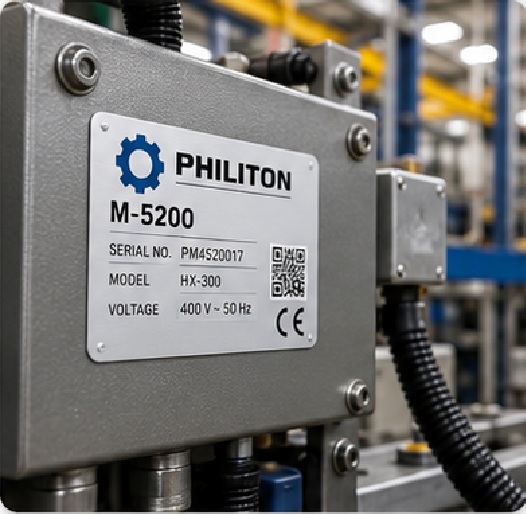
Machinery and equipment teams usually need durable identification, serial numbers, ratings, safety information, QR codes and model differentiation across multiple assemblies. Philiton reviews the actual mounting surface, exposure to oil or cleaners, expected handling, label dimensions, data structure and application method before locking a construction.
  • Common needs: PET identification, warning labels, serialized labels, QR codes.
  • Key risk: loss of adhesion or readability after installation.
  • Useful input: panel material, coating, environment and drawing.

Electronics Manufacturers

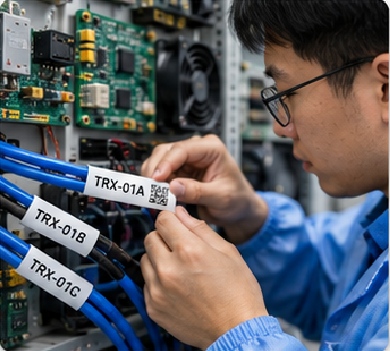
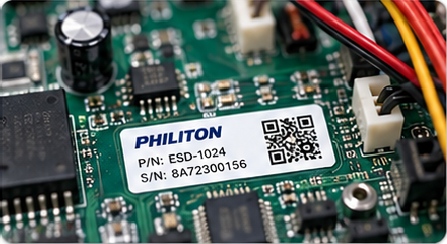
Electronics programs often combine small label sizes, dense information, barcode or QR requirements, durable films and tight dimensional control. Labels may be applied to metal, ABS, PC, PET or coated components, and some projects involve PCB, cable, battery or electrical identification. Philiton can coordinate artwork, white or silver PET constructions, variable data, thermal-transfer compatibility and precision converting according to the application.
  • Common needs: serial labels, PCB/electronics IDs, cable marks, battery labels.
  • Key risk: poor scan quality, edge lift or label stiffness on small parts.
  • Useful input: substrate, label area, code specification and service temperature.

Automotive And Lubricant Brands

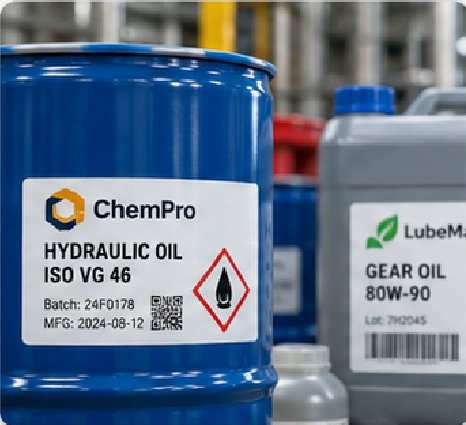
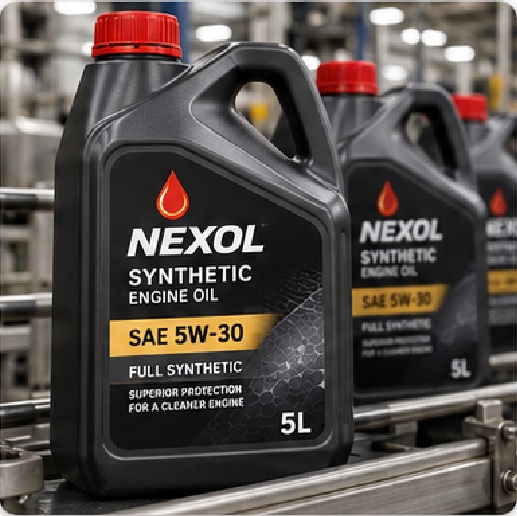
Automotive fluids, lubricants, parts and workshop products expose labels to oil, plasticizers, storage temperature changes, handling and rough HDPE surfaces. Philiton evaluates film choice, adhesive tack, protective lamination or varnish, print rub resistance and actual-container testing rather than treating “oil resistant” as a generic material claim.
  • Common needs: drum labels, bottle labels, part IDs, batch codes.
  • Key risk: oil migration, adhesive weakening and print abrasion.
  • Useful input: container resin, fluid exposure and warehouse conditions.

Chemical And EHS Teams

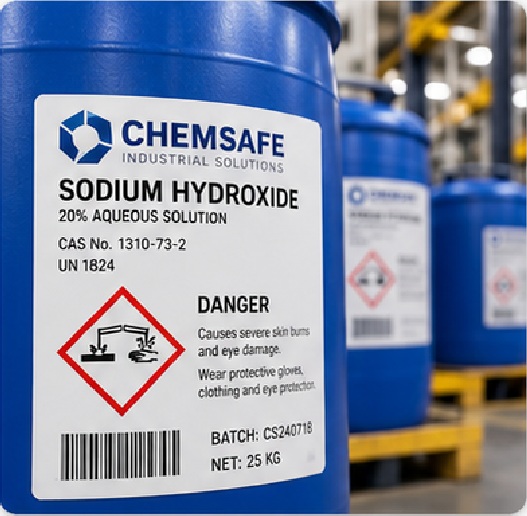
Industrial chemical programs often need warning information, hazard communication, batch identification, durable barcodes and labels that remain legible after contact with specific cleaning agents, oils, alcohols or process chemicals. Philiton builds the evaluation around named media, concentration, exposure method and contact duration so material, ink, laminate and adhesive can be tested against defined conditions.
  • Common needs: warning labels, drum labels, chemical IDs, variable data.
  • Key risk: overgeneralizing one chemical test to unrelated solvents.
  • Useful input: chemical list, exposure method, substrate and compliance text.

Warehouse And Asset Teams

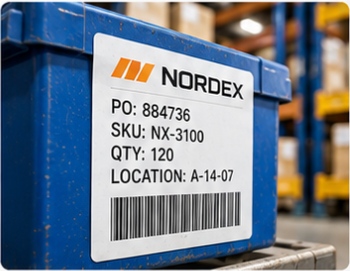
Warehouses, maintenance departments and asset-management programs need labels that remain scannable and identifiable through receiving, storage, handling and repeated inventory checks. Philiton supports barcode, QR, serial, thermal-transfer and durable film constructions in roll, sheet or individual formats. Roll direction, core, gap and label orientation can be matched to printers or applicators used on site.
  • Common needs: asset labels, inventory labels, rack labels, barcode rolls.
  • Key risk: scan failure, abrasion or incorrect roll configuration.
  • Useful input: printer model, ribbon type, code data and surface.

Enterprise And OEM Programs

Large manufacturers and contract-production groups often manage many SKUs, plants, product revisions and recurring demand. Philiton can separate artwork control, material specification, variable-data rules, tooling, roll configuration, packing and batch identification so repeat orders are not rebuilt from memory. Project coordinators can support multi-SKU and technically demanding programs across engineering, production, QA and logistics.
  • Common needs: multi-SKU control, repeat production, confidentiality, traceability.
  • Key risk: version mix-ups and uncontrolled specification changes.
  • Useful input: annual forecast, SKU list, revision control and receiving rules.

Industrial Labels Fail for More Than One Reason

Philiton evaluates every industrial label as a complete construction because adhesion, print durability, data accuracy, converting, application setup and traceability can fail independently during service.

Adhesion Failure

A durable face film cannot compensate for the wrong adhesive. Powder coating, low-surface-energy plastics, oily metal, rough texture, contamination, cold application or tight curvature can reduce effective bonding. Philiton reviews substrate type, surface condition, application temperature, service temperature and required lifetime before selecting a high-tack, permanent, removable, low-temperature or other project-specific adhesive route.

Legibility Failure

Warnings, model numbers, serial data and barcodes are only useful while they remain readable. Abrasion, cleaners, oils, moisture, UV exposure and handling can damage ink or surface decoration. Philiton can combine film selection, ink system, varnish or lamination with defined rub, chemical or environmental checks when the service condition requires more than ordinary packaging-label durability.

Data Failure

Variable information introduces a second quality layer beyond print appearance. Duplicate numbers, missing numbers, incorrect database mapping, weak barcode contrast or insufficient quiet zones can make a visually acceptable label unusable. Philiton controls variable-data files, production batches, code printing and verification according to the agreed data rules, with scan checks added where barcode or QR performance matters.

Converting Failure

Die cutting, matrix stripping, liner damage, edge quality and dimensional drift can affect dispensing and placement. Small labels, tight corners, thin liners or dense layouts require controlled converting parameters. Philiton reviews finished size, shape, gap, pitch, liner and release behavior as part of production engineering rather than treating die cutting as an invisible final step.

Application Failure

A correct label construction can still fail when roll direction, core size, roll diameter, gap, sensor marks or orientation do not match the printer or automatic applicator. Philiton can lock roll specifications before mass production and prepare roll samples for line trials when needed. Hand-applied projects are reviewed differently from high-speed automated applications.

Traceability Failure

Industrial programs often depend on the ability to connect a finished label to an artwork version, material, batch, code file or production record. Philiton uses approved artwork and specification control as the production reference. Repeat orders are reviewed against retained project information so changed quantities, surfaces, compliance requirements or data rules can be identified before release.

Industrial Label Types Manufactured for Functional Identification

Philiton manufactures industrial labels around the function each label must perform, covering equipment identification, warnings, asset tracking, variable data, security, smart traceability and production-line use. Explore Label Options
Equipment Identification Labels

Equipment Identification Labels

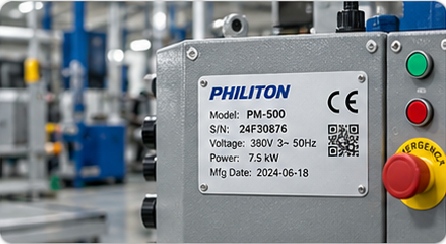
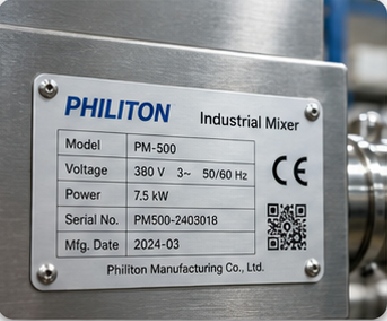
White PET, silver PET and other durable film constructions can be developed for model information, equipment IDs, ratings and permanent markings. Projects can include fixed text, logos, QR codes or serial fields. Adhesive selection is matched to metal, powder-coated panels, plastics or other equipment surfaces, while protective lamination or varnish can be added when abrasion, cleaners or handling create a higher durability requirement.
Safety And Warning Labels

Safety And Warning Labels

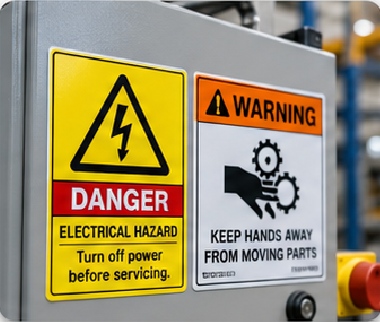
Warning labels need clear text, controlled color, reliable adhesion and legibility throughout the intended service condition. Philiton can manufacture warning and instruction labels in rolls, sheets or individual pieces, with film or paper selected according to exposure. The legal content and required warning standard are supplied or approved by the responsible organization; Philiton controls reproduction, printing, converting and project-specific manufacturing requirements.
Barcode And QR Labels

Barcode And QR Labels

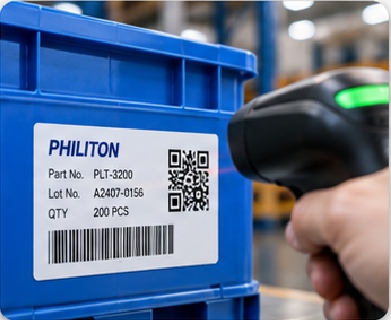
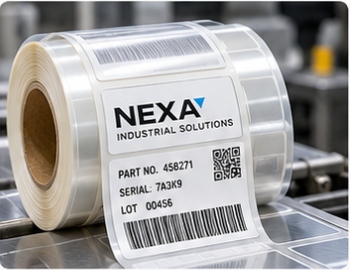
Barcode and QR labels can be preprinted, variable-data printed or supplied for on-site thermal-transfer printing. Philiton reviews code size, quiet zone, contrast, substrate, print method, laminate and curvature because scan performance is not determined by artwork alone. Industrial programs can include batch numbers, serial numbers, asset IDs or database-linked codes with verification rules defined before production.
Serial Number Labels

Serial Number Labels

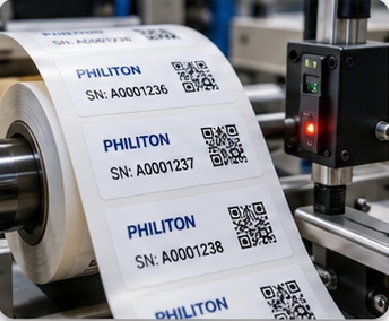
Sequential numbers, randomized IDs, alphanumeric strings and other variable fields can be integrated with fixed artwork. Philiton manages variable-data import or generation according to the agreed rule, then connects printing, inspection, waste control and replacement logic to the production batch. Serial projects can be combined with barcode, QR, security or RFID functions where a stronger traceability structure is required.
Asset And Inventory Labels

Asset And Inventory Labels

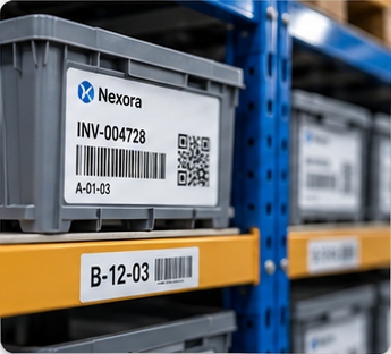
Asset labels support tools, instruments, racks, containers, machinery and internal tracking. Material and adhesive choice depends on the asset surface, handling frequency and environment rather than the word “asset.” Philiton can produce durable PET, thermal-transfer compatible film, tamper-evident structures or standard warehouse labels, with roll configuration matched to manual use, desktop printing or automatic application.
Electronics And Cable Labels

Electronics And Cable Labels

Electronics identification may require compact dimensions, dense text, serial information, QR codes and durable face materials. Philiton can support labels for electronic housings, PCBs, cables, batteries and electrical components when substrate and service conditions are defined. PET and other specialty constructions can be paired with high-performance adhesives, opaque white, variable data or thermal-transfer printing according to the assembly and identification method.
Chemical And Lubricant Labels

Chemical And Lubricant Labels

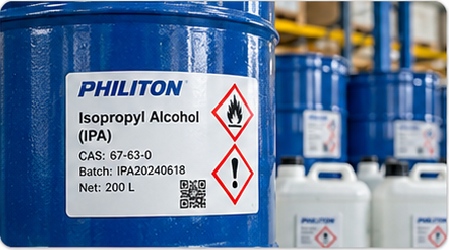
Chemical drums, lubricant bottles and industrial-fluid containers can expose labels to oils, cleaners, alcohols, moisture and surface contamination. Philiton evaluates BOPP, PET or chemical-resistant film constructions with compatible adhesive and surface protection. Testing is defined around actual fluids or representative exposure conditions, because one “chemical resistant” statement cannot cover every solvent, concentration, contact method and dwell time.
Security And Smart Labels

Security And Smart Labels

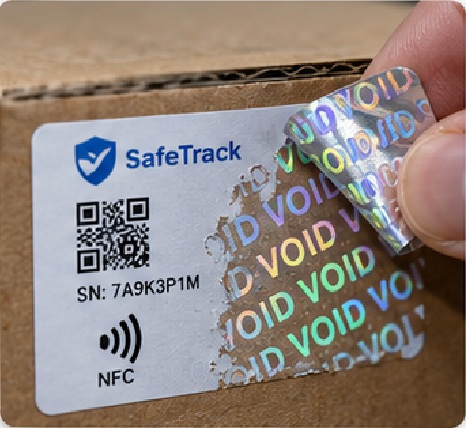
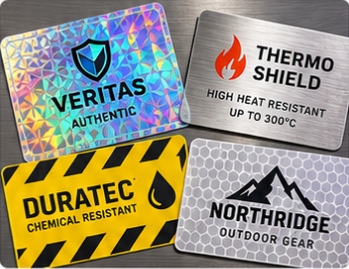
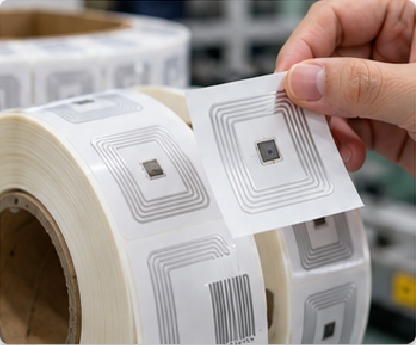
Tamper-evident, VOID, destructible, holographic, RFID and NFC structures can add evidence, authentication or digital identification to industrial programs. Philiton evaluates the required tamper behavior, code structure, inlay or chip configuration, encoding rule and verification plan before production. Security artwork, variable-code files, samples and production waste can be managed as restricted project materials when confidentiality is part of the program.

Industrial Applications Built Around Real Operating Conditions

Philiton adapts materials, adhesives, print methods, protection and delivery formats to the actual operating environment instead of applying one label construction across unrelated industrial sectors.
Machinery And Equipment

Machinery And Equipment

Machine panels, housings, tools and production equipment may need model plates, safety information, service labels and serial tracking. Philiton evaluates metal, painted metal, powder-coated surfaces and engineering plastics, then selects a durable face material and adhesive route. Lamination, varnish and variable data can be added according to abrasion, cleaner exposure and traceability requirements.
Electronics And Electrical

Electronics And Electrical

Electronics programs often combine compact spaces, dense data and long-term identification. Philiton supports electronics, PCB, cable, battery and component labels using PET and other compatible films, variable data, barcodes, QR codes and thermal-transfer routes. Surface energy, curvature, operating temperature, dimensional tolerance and scan verification are reviewed before the final construction is approved.
Automotive And EV

Automotive And EV

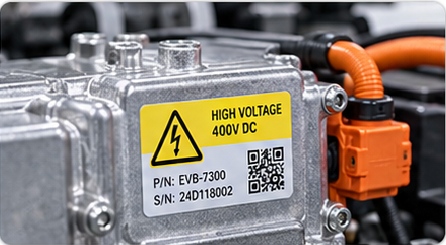
Automotive parts, lubricant containers, workshop products and EV-related components can require durable identification across oils, handling and temperature changes. Philiton supports part labels, warning labels, serialized IDs, battery-related labels and fluid-container labels. Material and adhesive choices are evaluated against the actual part or container, with oil or rub testing added when the service condition requires it.
Industrial Chemicals

Industrial Chemicals

Drums, bottles, IBC-related packaging and process containers need clear hazard, batch and identification information. Philiton can manufacture chemical labels using durable films, high-performance adhesives, protective finishing and variable data. Chemical resistance is handled as a defined test problem: named chemical, concentration, contact method and exposure time should be agreed before performance conclusions are made.
Warehousing And Logistics

Warehousing And Logistics

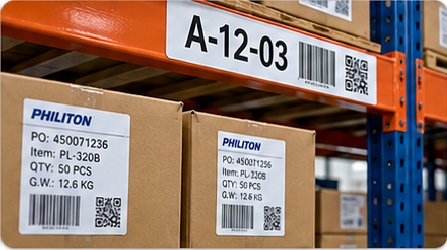
Warehouse operations use thermal, thermal-transfer, barcode, QR, inventory and rack labels at high repetition. Philiton can manufacture blank or preprinted roll labels for desktop printers, industrial printers or application equipment. Core size, roll direction, roll diameter, gap, liner and ribbon compatibility can be included in the specification so labels arrive ready for the intended operating process.
Contract Manufacturing

Contract Manufacturing

OEM and contract manufacturers often need labels across multiple brands, revisions and product families. Philiton can control separate artwork files, materials, quantities, variable data, roll configurations and packaging instructions by SKU. Confidentiality, revision management and repeat-order traceability are important because an incorrect label version can stop assembly or create rework far beyond the value of the label itself.

From Service Conditions to an Approved Label Construction

Philiton engineering starts with operating conditions, converts them into a manufacturable label construction, validates the main risks, then locks approved specifications before repeat production begins.

Define the Surface, Environment and Functional Duty First

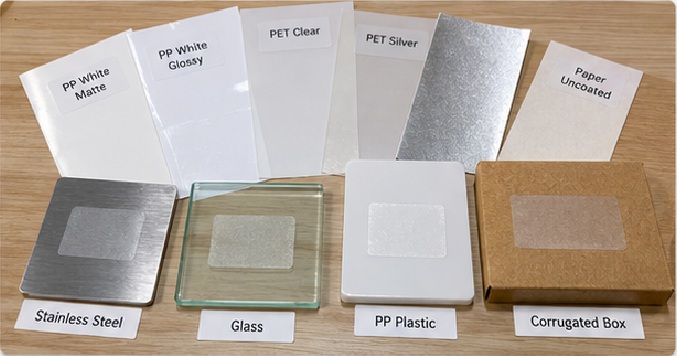
Industrial label development begins with where the label will be applied and what it must continue doing after installation. Philiton asks for the substrate – such as stainless steel, aluminum, powder-coated metal, ABS, PC, PET, PP, PE, HDPE, glass or another engineered surface – along with the surface condition, curvature and available label area. Temperature at the moment of application is recorded separately from service temperature because an adhesive can fail during initial bonding even when it is rated for colder service after dwell. Operating exposure is then defined in concrete terms. Water, condensation, oil, alcohol, cleaner, weak acid or alkali, outdoor UV, abrasion and repeated handling are treated as separate inputs. A statement such as “chemical resistant” is not enough for engineering work; the named medium, concentration, contact method and duration provide a usable test target. Functional requirements are added at the same stage: fixed identification, safety text, serial number, barcode, QR code, RFID, tamper evidence or on-site thermal-transfer printing. Philiton also records order quantity, number of SKUs, application method and expected reorder pattern. These commercial details influence digital versus flexographic production, tooling, material planning and roll format. A complete intake reduces sample cycles because material, adhesive, print and converting decisions are made against the actual operating problem rather than a generic label category.

Build the Material, Adhesive, Print and Protection Stack

After the service condition is clear, Philiton converts the requirement into a label construction. The face material is chosen for dimensional stability, conformability, moisture resistance, printability and durability. PET is often considered for long-term industrial identification; BOPP or other films may fit containers and moisture exposure; synthetic papers and specialty stocks are evaluated where tear resistance, handling or printing method drive the choice. Material names remain only the starting point because coating, thickness and supplier grade can change performance. Adhesive is selected against the actual surface and environment. Metal, powder coating, low-surface-energy PP or PE, rough HDPE, curved plastics and oily surfaces can require different tack, coat weight or adhesive chemistry. Philiton can evaluate permanent, high-tack, removable, low-temperature, heat-resistant and low-surface-energy solutions sourced through qualified material suppliers. Actual substrate samples are preferred whenever the surface is difficult or the cost of failure is high. Printing and data layers are then defined. Digital, flexographic, screen, UV, thermal-transfer compatible printing or variable-data methods are selected according to quantity, color, durability and code requirements. Lamination or protective varnish is added when rub, oil or chemical exposure requires a protected surface. Die cut, gap, liner, roll direction, core and roll diameter are locked at the same time so the construction can move through both Philiton production and the final application process without a separate redesign.

Sample, Verify and Freeze the Production Specification

Philiton uses samples to close identified risks instead of treating every sample as a small version of mass production. Blank material or adhesive swatches can validate surface bonding before full print work. Digital samples are useful for artwork, dimensions and early color review. Printed and finished samples confirm die cut, surface appearance and basic finishing. Production or PP samples are more suitable when roll configuration, special materials, variable data or higher-risk service conditions must be checked before bulk release.
Verification follows the project requirement. Adhesion may be checked on the actual part or container; oil or chemical programs can use representative media; barcodes and QR codes can be scanned and compared with data rules; roll samples can be run through the intended printer or applicator. Aesthetic approval alone does not replace functional validation for labels carrying safety, traceability or durable identification duties.
Once approval is complete, Philiton locks the production artwork and agreed specification. The reference can include size, shape, face material, adhesive, printing method, color target, surface protection, variable-data rule, die-cut parameters, roll direction, core, gap, quantity per roll and packing instructions. Repeat orders are reviewed against the retained specification rather than released blindly. Any change in substrate, service condition, code logic, quantity or compliance requirement is treated as a new input that may require revalidation.

Match Industrial Surfaces With the Right Validation Route

Surface chemistry, texture, contamination, temperature and service exposure often decide label performance. Philiton uses the actual substrate and operating profile to narrow materials, adhesives, protection and validation methods.

Application Surface / ConditionMain RiskPhiliton Construction DirectionRecommended Validation
Stainless steel / smooth metalCleaner exposure, abrasion, oil filmPET or durable film with permanent or high-tack adhesive; protective surface when requiredCleaned and uncleaned surface comparison, rub test, named-fluid exposure
Powder-coated metalTexture reduces real contact areaFlexible durable film with higher-tack adhesive selected for coating textureActual coated panel test, edge-lift check after dwell
PP / PE / HDPELow surface energy, curvature, contaminationFilm with adhesive formulated for lower-surface-energy plasticsActual molded part or bottle, dwell test, temperature cycle if relevant
ABS / PC housingsSurface treatment, curvature, cosmetic finishPET or compatible film with controlled permanent adhesiveSurface compatibility, removal impact where cosmetic appearance matters
Oily container surfaceAdhesion loss and print degradationOil-resistant film, high-tack adhesive, protective lamination or varnishReal container, oil wipe or exposure, print-rub and edge-lift checks
Chemical handling areaInk, film or adhesive attackPET / chemical-resistant film with project-specific protectionDefined chemical, concentration, contact method and duration
Cold application / cold storagePoor initial bond or edge liftLow-temperature adhesive route chosen separately from service-temperature needsApply at real application temperature, then condition in service environment
Automatic labeling lineDispensing or sensor failureConstruction locked with correct liner, gap, pitch, roll direction and coreTrial roll through the intended printer or applicator

Industrial Label Materials Selected for the Service Condition

Philiton sources label papers, films, adhesives and liners from qualified suppliers, then converts, finishes, inspects and tests the selected construction through its own manufacturing and quality-control system.
PET Polyester Film

PET Polyester Film

PET is one of Philiton’s main routes for durable industrial identification because it offers strong dimensional stability, water resistance and a firmer surface for long-term printing. White, clear, silver and brushed-silver appearances can be evaluated. PET suits equipment, electronics, assets, automotive parts, batteries and chemical identification when paired with the right adhesive and protection.
  • Strength: stability, durability, print clarity and thermal-transfer options.
  • Watch point: stiffness can matter on tight curves or flexible packaging.
  • Best validation: actual surface, temperature and chemical exposure where required.
PP And BOPP Film

PP And BOPP Film

PP/BOPP films provide moisture resistance, good print appearance and broad use on containers, packaging and industrial consumables. White and clear constructions can support durable product information without the stiffness of some PET structures. Philiton evaluates BOPP where water, oil or general handling exposure is higher than ordinary paper can tolerate, while adhesive selection still depends on the surface below.
  • Strength: moisture resistance, visual quality and flexible converting.
  • Watch point: film durability does not automatically solve low-energy adhesion.
  • Best validation: bottle or container surface plus expected fluid exposure.
PVC And Vinyl Film

PVC And Vinyl Film

PVC/Vinyl can provide conformability and durable graphic performance for decals, equipment marks, outdoor identification and irregular surfaces. The appropriate grade depends on expected flexibility, outdoor exposure, chemical contact and removability. Philiton treats vinyl as a material family rather than a universal outdoor guarantee because film formulation, adhesive, ink and protective layer all influence service performance.
  • Strength: conformability and durable graphic applications.
  • Watch point: material selection must match temperature and compliance requirements.
  • Best validation: actual surface, curvature, exposure and required removal behavior.
Synthetic Paper

Synthetic Paper

Synthetic papers combine a paper-like printing surface with improved tear and moisture resistance. They can suit warehouse, logistics, industrial documentation, durable tags and applications needing more handling strength than conventional paper. Philiton evaluates synthetic stocks according to print method, adhesive structure and converting behavior, especially when the project includes variable information or repeated handling.
  • Strength: tear resistance with a familiar print surface.
  • Watch point: not every synthetic stock has the same chemical or temperature capability.
  • Best validation: print, die cut, handling and application trials.
Thermal Transfer Films

Thermal Transfer Films

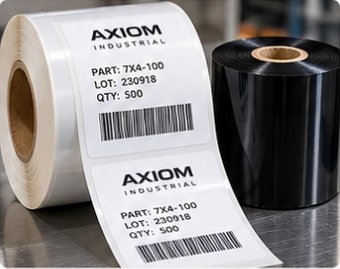
Thermal-transfer compatible PET, BOPP and other durable films allow Philiton to supply blank or preprinted labels that receive serial numbers, barcodes or changing data at the manufacturing site. Ribbon compatibility is part of the construction: wax, wax/resin and resin systems behave differently on paper and film. Industrial identification normally favors a durable combination when abrasion or chemical exposure is important.
  • Strength: on-demand variable data and strong barcode clarity.
  • Watch point: incorrect ribbon and coating combinations can rub or print poorly.
  • Best validation: intended printer, ribbon and scan process.
Specialty Durable Stocks

Specialty Durable Stocks

Projects involving higher heat, special chemical exposure, tamper evidence, holographic security, electronics or unusual substrates may require specialty films beyond standard PET or BOPP. Philiton sources these materials according to the engineering requirement and available supplier documentation. Specific material brands, temperature limits, compliance claims and service life are confirmed project by project rather than treated as automatic properties of an entire material family.
  • Strength: targeted performance for difficult environments.
  • Watch point: procurement lead time and material minimums can be higher.
  • Best validation: supplier data, sample construction and defined application testing.

Adhesive Selection Starts With the Actual Industrial Surface

Philiton matches adhesive behavior to substrate chemistry, texture, temperature, contamination, curvature, dwell and required lifetime instead of assigning one generic “industrial adhesive” to every application.

Smooth Metal Surfaces

Stainless steel, aluminum and smooth painted metal often provide good bonding potential when surfaces are clean, but oils, release agents, corrosion inhibitors or cleaning residues can change the result. Philiton evaluates the real installation condition and can select permanent or higher-tack acrylic adhesive routes according to service exposure. A wiped laboratory panel is not always representative of a production-floor part.
  • Check: surface cleanliness and coating.
  • Check: oil, cleaner and temperature exposure.
  • Validate: actual panel or finished component.

Powder-Coated Metal

Powder coating creates texture, surface chemistry and effective contact-area differences that can reduce adhesive wet-out. Philiton treats powder-coated metal as its own substrate rather than assuming it behaves like bare metal. Higher tack, more conformable face materials or a different adhesive coat may be evaluated depending on texture and service condition. Label corner shape and available bonding area are also reviewed when the coating is coarse or uneven.
  • Check: coating texture and cure.
  • Check: label size and corner geometry.
  • Validate: actual powder-coated panel after sufficient dwell.

PP PE And HDPE

PP, PE and HDPE are lower-surface-energy plastics and can be more difficult to bond than glass or many metals. Bottle curvature, molded texture, plasticizers, contamination and filling-line temperature add further variables. Philiton can source adhesive constructions designed for lower-surface-energy surfaces and compare alternatives before production. Where possible, samples are applied to the real molded part because resin grade, surface treatment and texture can change bonding performance.
  • Check: exact resin and molded texture.
  • Check: application and service temperatures.
  • Validate: real bottle, housing or molded part.

Oily Or Contaminated Surfaces

Some industrial environments cannot guarantee a perfectly clean surface at installation. Oil films, dust, mold release or process residue can sharply reduce adhesion. Philiton first determines whether surface preparation can be improved; where contamination remains unavoidable, higher-tack or specialty adhesive options can be evaluated. No adhesive should be presented as universally tolerant of unlimited oil or dirt.
  • Check: contamination type and severity.
  • Check: installation procedure.
  • Validate: samples under representative production conditions.

Curved And Small-Diameter Parts

Curved housings, tubes, cables and small-diameter containers create continuous peel stress at the label edge. A stiff film can lift even when the adhesive itself is strong. Philiton balances face-material stiffness, label shape, corner radius, adhesive tack and available bonding area. Narrow wrap labels may require a different construction from a flat equipment plate.
  • Check: diameter and wrap percentage.
  • Check: label length and edge position.
  • Validate: full-size applied sample after dwell.

Removable Or Controlled Release

Some industrial processes need temporary identification, clean removal, repositioning or residue control. Philiton can evaluate removable adhesive constructions when the substrate, dwell time and temperature are known. Clean removal is never judged only on day one because adhesive behavior can change with aging, heat and surface chemistry. Surface staining, residue and damage are reviewed against the agreed removal expectation.
  • Check: required dwell period.
  • Check: acceptable residue and surface sensitivity.
  • Validate: removal after representative aging and temperature exposure.

Printing and Data Methods Chosen Around Industrial Function

Philiton combines digital, flexographic, screen, UV, thermal-transfer compatible and variable-data processes according to order volume, material, color, durability, code quality and traceability requirements.
Digital Printing

Digital Printing

Digital printing suits prototypes, multiple SKUs, changing versions and flexible production quantities. Philiton can use digital routes to reduce plate-related setup when artwork varies frequently or when a program needs launch quantities before scaling. Material, white ink, color expectations and protective finishing still need project review because the best print route depends on the face stock and final environment.
Flexographic Printing

Flexographic Printing

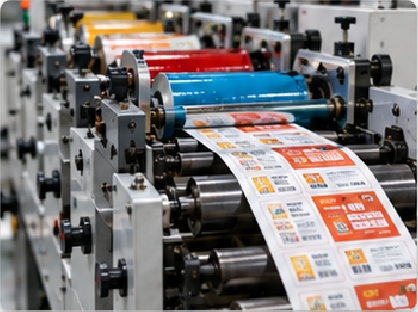
Flexographic production becomes attractive when a stable construction moves into larger recurring volumes. Philiton can use multi-color flexographic equipment for roll labels, durable films and industrial programs requiring efficient repeat manufacturing. Plates, color setup and material planning create more front-end preparation than digital printing, so the method is evaluated against annual volume, SKU stability and cost structure rather than quantity alone.
Screen Printing

Screen Printing

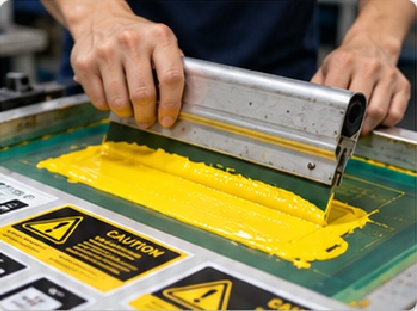
Screen printing is useful when opaque white, thicker ink deposits, spot colors or special functional effects are more important than high-speed photographic reproduction. Philiton can combine screen printing with PET, PVC/Vinyl, BOPP and other compatible stocks. Industrial identification can benefit from strong opacity or selected durable ink systems, while each extra screen color adds setup and process time.
Thermal Transfer

Thermal Transfer

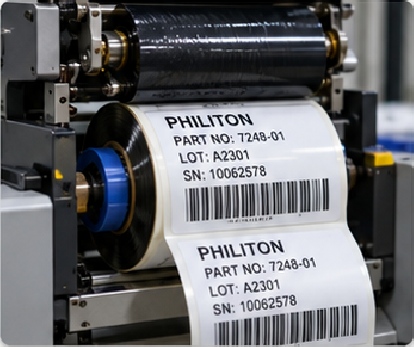
Philiton can supply blank or preprinted roll labels for later thermal-transfer printing of dates, serial numbers, barcodes and changing production data. Paper, PET, BOPP and synthetic stocks need to match the selected ribbon type. Resin ribbon on a compatible durable film can improve rub and chemical resistance compared with basic paper-and-wax combinations, subject to actual printer and application testing.
Variable Data

Variable Data

Variable-data production can combine fixed artwork with sequential numbers, random IDs, barcodes, QR codes or database-linked fields. Philiton controls the source file, print batch, inspection and replacement logic according to agreed rules. Data quality is reviewed separately from graphic quality because one duplicate, omission or incorrect mapping can create a traceability problem even when print color looks correct.
RFID And NFC

RFID And NFC

RFID and NFC projects add inlay or chip selection, encoding, position, read performance and data rules to normal label manufacturing. Philiton can support printed RFID/NFC label constructions where identification, inventory or authentication requires a smart layer. Chip/inlay availability, frequency, encoding logic, lock rules and read verification are confirmed for the project rather than presented as one standard RFID specification.

Finishing and Converting Protect Function Through Final Use

Industrial finishing is chosen to preserve readability, surface durability, liner integrity, dispensing and installation through the intended service condition, rather than simply adding decorative effects.

Protective Lamination

Lamination adds a physical protective film over printed graphics and can improve resistance to abrasion, water, oil and handling when the laminate is compatible with the base construction. Philiton evaluates laminate type, thickness, transparency and edge behavior against the label size and application. Chemical resistance still depends on the named medium and full construction, not on the presence of laminate alone.

Protective Varnish

A varnish can provide surface protection with less added film thickness than lamination. Philiton can use project-appropriate coatings where print rub, moisture or handling need improvement. The right route depends on ink, face stock, exposure and production method. Heavy solvent or chemical contact may require a stronger construction and specific testing instead of relying on a general protective coating.

Precision Die Cutting

Industrial labels may include small corners, cable shapes, windows, holes or compact dimensions that make die-cut control important. Philiton manages size, shape, die line, liner condition, stripping and edge quality as production specifications. The cutting process is reviewed with the material and applicator requirement so labels can dispense and position correctly instead of being judged only by appearance on a sample sheet.

Slitting And Rewinding

Roll width, web tension, roll diameter and winding quality influence storage, printing and automatic dispensing. Philiton slits and rewinds industrial labels according to the agreed roll format, then protects rolls against telescoping, edge damage and unwinding during shipment. Multi-SKU programs can be separated and identified by roll, carton or batch according to receiving requirements.

Security Converting

Tamper-evident, destructible and VOID labels need converting that preserves the intended evidence behavior. Philiton reviews the substrate, adhesive, die cut and removal mechanism together because the same security film can behave differently on glass, metal, coated surfaces or low-energy plastic. Final tamper performance should be checked on the actual product surface before a security claim is locked.

Variable Code Control

Unique-code and serialized products require controlled handling during finishing because waste, rework and replacement can affect sequence integrity. Philiton connects data production with converting, inspection and waste control according to agreed project rules. When code uniqueness is commercially critical, the specification can define replacement handling, verification method, retained records and disposal requirements for rejected labels.

Sample Routes Designed to Close Specific Industrial Risks

Philiton selects each sample route according to what must be approved: material, adhesion, artwork, dimensions, finishing, production parameters, variable data, roll format or functional performance.
Material And Adhesive Swatches

Material And Adhesive Swatches

Blank material or adhesive swatches can often be prepared in 1-2 business days after the target surface and material direction are clear. They are useful before expensive print work when the primary risk is adhesion, transparency, stiffness or surface feel. Philiton recommends applying swatches to the real panel, bottle, component or container and allowing suitable dwell before comparing edge lift, removal behavior or surface compatibility.
  • Typical purpose: material shortlist and adhesive screening.
  • Best input: actual substrate samples.
  • Limitation: no confirmation of final print or converting behavior.
Digital Development Samples

Digital Development Samples

Digital samples commonly require 1-3 business days after artwork, material and dimensions are confirmed. Typical sample quantities are around 10-50 pcs per design. The route is useful for artwork, size, version control and early color review, especially across multiple SKUs. A digital development sample may not reproduce every later flexographic, screen, foil or special-material step, so known production differences are identified during review.
  • Typical purpose: fast visual and dimensional approval.
  • Best input: production-ready artwork and dieline.
  • Limitation: special processes may require separate validation.
Printed And Finished Samples

Printed And Finished Samples

Printed or finished samples commonly require 3-5 business days for standard constructions and 5-7 business days when complex foil, emboss, screen, special die cutting or similar processes are included. Typical quantities are around 10-100 pcs. Philiton uses these samples to verify print, die cut, surface finish and basic application before bulk production, with actual media or environmental checks added where industrial performance is a key requirement.
  • Typical purpose: full appearance and basic function approval.
  • Best input: final material route and finished artwork.
  • Limitation: long-term service life still needs defined testing.
PP And Golden Samples

PP And Golden Samples

Production or PP samples are suited to larger, repeated or higher-risk programs where final production parameters, roll setup, variable data or line compatibility need confirmation. PP samples commonly take about 3-7 business days depending on the project, while Golden Samples are retained alongside approval for batch consistency. Philiton can lock approved artwork, material, adhesive, print route, finishing and roll specification before full production begins.
  • Typical purpose: production-reference approval.
  • Best input: final quantities, roll specification and QC plan.
  • Limitation: later specification changes can reopen validation.

Industrial Quality Control Covers Print, Data and Function

Philiton separates incoming-material control, print inspection, dimensional checks, data verification, application testing and final release so visual appearance is never mistaken for complete industrial validation.

Incoming Material Control

Industrial performance starts before printing. Philiton checks incoming labelstock, adhesive-backed materials, liners and special components according to project requirements and supplier documentation. Material identity, appearance, dimensions or other defined attributes can be reviewed before release to production. Special films, adhesives, RFID components or security materials receive added attention because an incorrect incoming lot can affect every downstream process.
  • Focus: correct material and lot identification.
  • Records: project specification and incoming checks.
  • Escalation: quarantine and review when defined requirements are not met.

Print And Color Control

Artwork version, text, registration, color and print condition are checked during production according to the approved standard. Industrial work often includes small warnings, dense technical text, white ink, spot colors or long repeat runs, so press approval and in-process comparison matter. Philiton can use approved artwork, printed samples or defined color targets as references while recognizing that substrate, white ink, laminate and process influence final appearance.
  • Focus: content, registration, readability and color consistency.
  • Reference: approved artwork or sample.
  • Risk controlled: wrong version, missing text or visible print drift.

Die Cut And Dimension Control

Finished size, shape, corner quality, gap, pitch and liner condition affect both installation and automatic dispensing. Philiton checks die-cut output against the approved construction and roll specification. Small industrial labels, dense layouts and automatic application require particular attention because a minor dimensional shift can create dispensing problems even when the printed image remains centered enough to look acceptable during a casual visual check.
  • Focus: size, die line, liner and spacing.
  • Reference: released drawing or specification.
  • Risk controlled: poor dispensing, placement or edge integrity.

Variable Data Verification

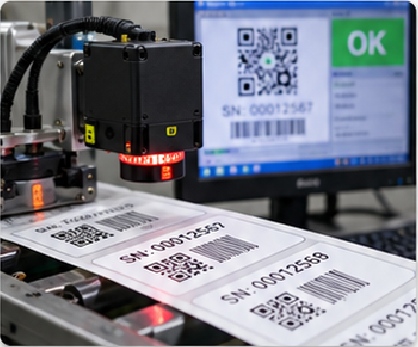
Serialized labels, QR codes and barcodes are checked as data products as well as printed graphics. Philiton can verify sequence logic, presence, duplicates, database mapping and scan behavior according to agreed project rules. A phone successfully scanning one code does not replace formal industrial barcode-quality requirements when a defined grading or verification standard is specified, so the required method must be agreed before production.
  • Focus: data correctness and code readability.
  • Reference: source data and generation rules.
  • Risk controlled: duplicates, omissions and unreadable codes.

Adhesion And Durability Checks

Adhesion, rub, oil, moisture, chemical or temperature checks are selected according to actual service conditions rather than automatically applied as one universal test package. Philiton can use actual panels, containers or representative substrates for application trials. When a project requires a specific external standard, laboratory method or acceptance limit, the method and responsibility are confirmed before testing so results have a clear meaning.
  • Focus: service-condition performance.
  • Reference: named surface, medium and exposure condition.
  • Risk controlled: unsupported durability assumptions.

Final Inspection And Release

Finished labels can pass through FQC and OQC controls before packing, with automated or vision inspection called on projects where print defects, data, registration or high-volume consistency justify it. Final release also checks packing identification, quantity and SKU separation according to the order. Large programs benefit from connecting final inspection records with batch, carton and shipping information for clearer receiving and repeat-order traceability.
  • Focus: finished quality, count and identification.
  • Reference: approved production specification.
  • Risk controlled: mixed SKUs, damaged rolls or unapproved defects.

Compliance Support Starts With the Exact Industrial Requirement

Philiton supports project-specific material, manufacturing, testing and documentation requirements without turning an unverified certificate, isolated test report or regulatory reference into a blanket compliance claim.

Requirement Review

Compliance work begins by identifying the destination market, application, material construction and document required. A request for “RoHS,” “REACH,” “UL,” chemical labeling or another standard can refer to very different obligations. Philiton asks for the exact requirement, part specification or requested evidence before confirming a route, so sourcing and testing can be aligned with the real program.

Material Documentation

Material declarations, supplier documents and test reports need to match the material actually used in production. Philiton sources papers, films, adhesives and liners externally and can coordinate available documentation for the selected construction. A document for one material grade is not presented as proof for every paper, film, adhesive or label structure produced by Philiton.

Controlled Artwork

Philiton reproduces approved regulatory text, warnings, symbols, barcodes and technical content through controlled artwork and prepress. The brand, manufacturer or responsible regulatory organization remains responsible for determining legally required wording and market-specific obligations. Philiton’s manufacturing role is to maintain the approved content, print legibility, version control and production specification.

Project Testing

When a project requires chemical, adhesion, temperature, durability, RFID, barcode or other functional verification, Philiton can coordinate internal checks and, where necessary, third-party testing. Test method, sample construction, exposure condition and acceptance criteria need to be defined before results are treated as evidence. A test on one construction is not generalized to unrelated materials or service environments.

Traceable Production Records

Industrial supply programs can require production artwork, material references, tooling data, variable-data files, inspection records and packing identification to be retained for repeat work and investigation. Philiton can establish project-level record and traceability rules according to commercial and technical requirements. Retention periods and any special documentation package are confirmed with the project rather than assumed to be unlimited.

Confidentiality And NDA

Philiton can work under a client NDA or mutually agreed NDA for confidential designs, new product launches, anti-counterfeit programs, RFID/data projects and other sensitive developments. Branded samples, factory photography and case-study details are not automatically published. Security artwork, code rules and related production materials can be handled under project-specific access, waste and retention requirements.

Production Moves From Pilot Runs to Repeat Industrial Supply

Philiton combines digital flexibility, conventional production, locked specifications and repeat-order records so approved industrial constructions can move from pilot quantities into stable, higher-volume supply programs.

Launch With a Controlled Quantity Instead of Excess Inventory

Many standard label projects can enter formal production from around 500 pieces, while the actual minimum depends on material, adhesive, printing method, finishing, tooling and SKU count. Industrial brands often use a first production run to verify application, packaging lines, regional versions or a new supplier before committing to annual volume. Philiton can use digital printing and flexible converting routes to support these controlled launches without removing access to the same engineering and quality infrastructure used for larger programs.
A first run should still be treated as production, not a casual sample. Artwork version, material, adhesive, size, die cut, variable data, roll direction, core, quantity per roll and packing method can be locked in the order specification. Multi-SKU jobs can share compatible material and production setups, but every artwork remains separately approved and identified for QC.
Where special adhesives, custom security structures, dedicated tooling, RFID inlays or uncommon materials are involved, supplier minimums and procurement time can raise the workable starting quantity. Philiton identifies these constraints before release rather than presenting 500 pcs as a universal rule. Forecast information is useful because the launch method can be chosen with later scale-up in mind. A program expected to reorder every month may justify a different tooling, material-buying and print strategy from a one-time engineering batch, even when the first order quantity is identical.

Scale the Manufacturing Route as Volumes Become Stable

Once a label construction and demand pattern are stable, Philiton evaluates whether digital, flexographic, letterpress, screen or combined processes offer the best balance of setup, unit cost, durability and repeatability. A growing program might move from a 500-5,000 pcs launch stage into 5,000-50,000+ pcs per SKU growth orders, then into 50,000-500,000+ pcs or repeated scheduled batches where conventional roll production becomes more efficient.
Scale-up is not only a press decision. Material purchasing, tooling, roll planning, inspection capacity, packaging and freight also change with volume. Large or multi-SKU orders commonly require about 7-15 business days after specifications, materials and production plans are locked, while highly complex or very large programs may require 10-20 business days or staged delivery. Repeat orders without specification changes can often be completed in about 3-7 business days when materials and equipment capacity are available.
Philiton reviews larger programs around total label area, roll count, SKU changes, finishing steps and final inspection. The goal is to preserve the approved construction and data logic while selecting a more efficient production route rather than redesigning the label merely to chase a lower unit price. Any process change that could alter color, durability, adhesive performance, code quality or dispensing is reviewed before it becomes the repeat-production standard.

Keep Repeat Orders Controlled Through Records and Change Review

Industrial labels often become recurring consumables. A repeat order is safer when the approved artwork, material, adhesive, tooling, roll configuration, color target, variable-data rule and packing instructions are retained as a controlled specification. Philiton reviews previous project records before production and checks whether the new order changes quantity, substrate, operating environment, artwork revision, barcode data, compliance requirement or application equipment.
Unchanged repeat orders can move faster because prepress files, tooling and production parameters may be reused, but they are not released without review and QC. Changed requirements are flagged before manufacturing. A switch from hand application to an automatic line, for example, may require a new core, roll direction, gap or liner even when the printed design stays identical.
For longer-term supply, annual forecasts and expected reorder frequency help Philiton plan material, capacity and process selection. Project coordinators can support complex, multi-SKU, RFID, security and enterprise programs across engineering, production, QA and logistics. The result is a supply path built around controlled repetition, not a one-off print job followed by manual reconstruction on every reorder. When forecasts, material availability or application equipment change, the retained specification provides a clear baseline for deciding whether the next order can repeat unchanged or needs a new sample and approval cycle.
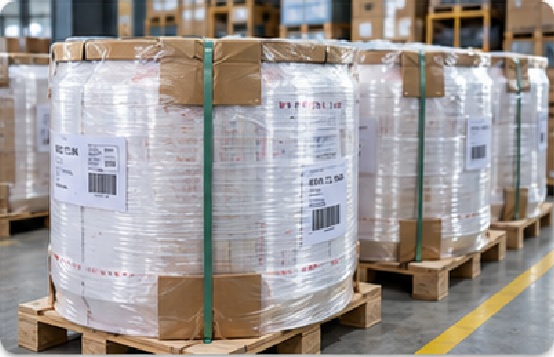
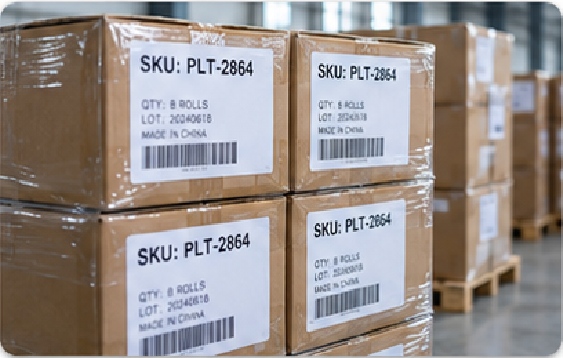
Roll Specifications Engineered for Printers and Labeling Lines

Philiton controls roll direction, liner, core, gap, pitch, web width and roll diameter so finished labels can move directly into the intended printer, dispenser or automatic application process.

Roll Direction

Label orientation on the web affects how text, graphics and shape enter a printer or automatic applicator. Philiton confirms unwind direction before production instead of relying on visual assumptions. Photos, equipment diagrams or a marked sample can be used to define orientation when the line specification is unclear. The approved direction is recorded with the production specification so later repeat rolls do not rely on verbal instructions or memory.
  • Input needed: applicator or printer direction.
  • Control point: label head/foot and leading edge.
  • Risk avoided: labels dispensing rotated or reversed.

Core Size

Core diameter must match the printer, rewind stand or applicator. Philiton records core size as part of the roll specification together with web width and roll diameter. Changing core size after production can force rewinding or make the roll unusable on site, so the dimension should be confirmed before final packing.
  • Input needed: equipment core requirement.
  • Control point: core diameter and width.
  • Risk avoided: roll cannot mount on the machine.

Maximum Roll Diameter

Industrial users often limit roll diameter because of machine guards, unwind space, operator handling or printer design. Philiton can control quantity per roll and rewind diameter according to the equipment requirement. Smaller rolls may increase roll changes and packaging count; larger rolls may exceed line limits, so the target should be defined from operations data.
  • Input needed: maximum outside diameter.
  • Control point: quantity per roll and winding tension.
  • Risk avoided: oversized rolls or unnecessary changeovers.

Gap And Pitch

Gap and pitch influence sensors, dispensing accuracy and print registration in thermal or automatic systems. Philiton locks the required spacing with the die-cut specification and liner. Small labels or high-speed applications can be sensitive to minor changes, so the line requirement should be treated as a technical dimension rather than a packaging preference.
  • Input needed: equipment sensor and spacing requirement.
  • Control point: gap, pitch and web direction.
  • Risk avoided: missed feeds or incorrect placement.

Liner And Release

The liner must survive printing, rewinding, shipping and dispensing while releasing the label consistently. Philiton reviews liner choice together with adhesive, die cutting and application method. Excessive die strike, damaged liner or unsuitable release can cause web breaks and dispensing problems even when the label face and print appear acceptable.
  • Input needed: manual, printer or applicator use.
  • Control point: liner integrity and release behavior.
  • Risk avoided: web breaks, premature release or poor dispensing.

Trial Roll Approval

For new automatic applications, a short trial roll can confirm roll direction, core, label spacing, sensor response and dispensing before the full order is completed. Philiton can combine line-trial approval with material and print approval when the project risk justifies it. A trial under real equipment conditions is more informative than measuring the roll format from a photograph alone.
  • Input needed: equipment access or test feedback.
  • Control point: full roll configuration.
  • Risk avoided: mass-produced rolls requiring rework after arrival.

Packaging Protects Rolls, SKUs and Traceability in Transit

Philiton packs industrial labels according to roll, sheet or individual format, with SKU identification, batch control and freight method planned around shipment size, destination and receiving requirements.
Protected Roll Packing

Protected Roll Packing

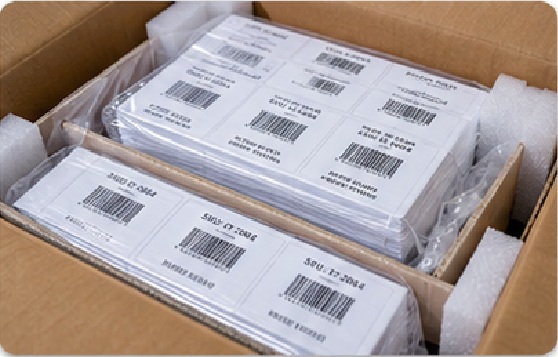
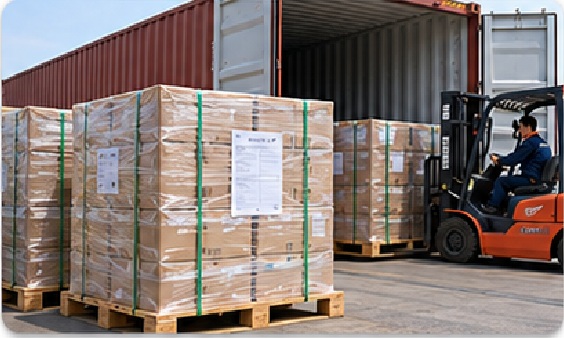
Rolls are packed to reduce crushing, telescoping, moisture exposure and unwinding during transport. Philiton can separate rolls with protective material and place them in cartons sized for the roll dimensions and shipment method. Heavy or large-volume shipments may use stronger outer packing or palletization according to freight requirements and receiving conditions.
SKU Identification

SKU Identification

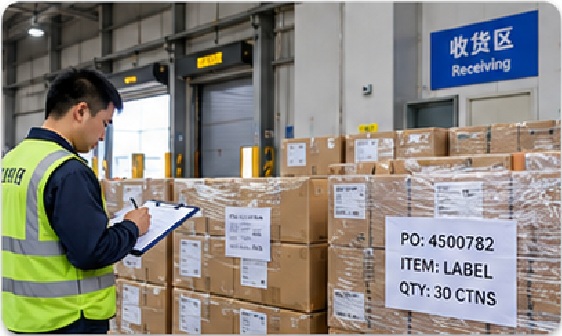
Multi-SKU industrial programs need clear separation at packing. Philiton can identify rolls, inner packs, cartons or pallets with SKU, quantity, batch or other agreed information so receiving teams can verify deliveries without opening every package. Mixed-SKU cartons can be arranged when permitted, but separation rules should be defined before final packing.
Sheet And Individual Packing

Sheet And Individual Packing

Some equipment labels, nameplate-style labels, security pieces or hand-applied items are more suitable in sheets or individual pieces. Philiton selects packing that reduces scratching, edge damage and contamination while keeping counts manageable. Individual packing requirements are quoted separately when they add labor, protective materials or serial-level organization. Packing quantity per bundle or inner pack can also be defined for assembly stations or controlled receiving.
Courier And Air Freight

Courier And Air Freight

Samples, engineering trials, urgent replenishment and moderate-volume shipments can move by international courier or air freight. Philiton can prepare export packing and shipment information, while transit time depends on destination, service level, customs and carrier conditions. Production lead time and transportation time are treated separately so project schedules remain realistic.
Sea Freight And Pallets

Sea Freight And Pallets

Large recurring orders can move by sea when transit time allows a lower freight cost per unit. Philiton can arrange cartons and pallets according to quantity, roll dimensions, destination and trade terms. Shipping preparation commonly requires 1-2 business days for standard orders and around 2-4 business days for large or multi-SKU programs after final QC release.
Warehouse Delivery Rules

Warehouse Delivery Rules

Direct delivery to a warehouse, fulfillment center or manufacturing plant can be arranged when receiving instructions are supplied. Philiton records carton labels, pallet marks, appointment rules, shipping documents and destination details according to the agreed Incoterm. DDP, DAP, FOB and EXW allocate freight, customs, duties and local responsibilities differently, so the commercial term is written in the quotation.

Industrial Label Project Cases From Philiton Manufacturing Programs

The following anonymized case records follow Philiton’s internal project fact structure. Brand names, original feedback and production photos remain undisclosed unless public-use authorization has been granted.
Germany Machinery Program - Durable PET Equipment Identification

Germany Machinery Program - Durable PET Equipment Identification

  • Region: Germany. Project profile: industrial machinery manufacturer, engineering and quality functions. Order scale: 5,000-50,000 pcs across multiple equipment models. Philiton evaluated white and silver PET for model plates and durable identification applied to metal, powder-coated panels and selected plastics. The project needed long-term readability, optional serial or QR data, resistance to normal handling, cleaners and occasional oil exposure.
  • Engineering started with the mounting surface and service environment. A high-tack permanent adhesive route was paired with PET, then abrasion-resistant lamination or a chemical-resistant varnish was considered according to the final exposure. UV, flexographic or digital printing could be selected according to volume and version structure, with variable data added where the model required serialized identification. Engineering samples and substrate-application tests were used before the construction was released.
  • QC covered print, variable data, barcode/QR readability where present, adhesion, surface condition, dimensions and die cut. Finished pieces could be supplied in rolls, sheets or individual format according to assembly-station needs. The approved construction created a controlled equipment-identification route while keeping lifetime and chemical-resistance claims tied to the tested material and service conditions rather than a generic permanent statement. For later repeat orders, the approved material, adhesive, data structure and packing format provide the reference point for reviewing any change in equipment surface or operating environment.
United States Lubricant Program - Oil-Resistant Container Labels

United States Lubricant Program - Oil-Resistant Container Labels

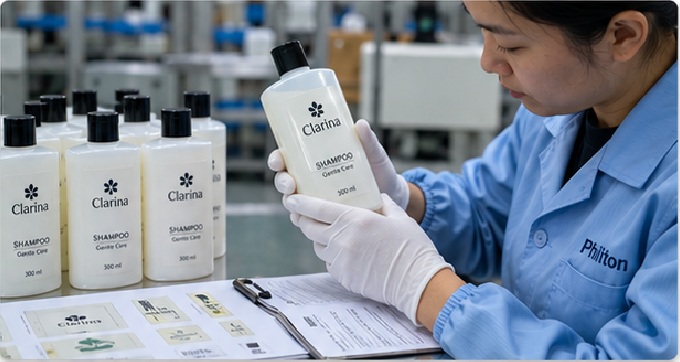
  • Region: United States. Project profile: automotive and lubricant brand managed by purchasing and product functions. Order scale: 20,000-200,000 pcs with 5-20 SKUs. The labels were intended for lubricant bottles or containers where oil, plasticizers, rough HDPE, warehouse temperature changes and frequent handling could weaken ordinary packaging labels. Philiton considered BOPP and PET constructions with an oil-resistant high-tack adhesive matched to HDPE, metal or other actual container surfaces.
  • The development route used real containers and representative oil exposure instead of relying on material datasheets alone. Adhesion, edge lift, print-rub behavior and protective finishing were reviewed after contact with the intended medium. Flexographic or digital printing could be chosen according to SKU count and volume, while lamination or protective varnish was added when printed graphics required additional protection.
  • QC focused on oil resistance, adhesion, print rub, surface quality, die cut and finished size. Roll delivery was packed with contamination protection before final cartons. Special films or adhesives could extend material procurement time, so larger orders were planned around material lots and press capacity. The resulting structure was intended to maintain identification and adhesion under the agreed oil-exposure condition, with performance limits defined by the actual test rather than a universal oil-resistance claim.
Sweden Chemical Program - Warning and Identification Labels

Sweden Chemical Program - Warning and Identification Labels

  • Region: Sweden. Project profile: industrial chemical organization involving quality, EHS and procurement functions. Order scale: 10,000-100,000 pcs across multiple chemical products. The requirement combined warning information, product identification and optional variable data with exposure to cleaners, alcohols, oils, weak acids, alkalis or other defined media. Philiton evaluated PET and chemical-resistant film structures with high-performance permanent adhesive and chemical-resistant lamination or varnish.
  • Development began by building a target chemical list with concentration, contact method and exposure duration. The construction was then sampled and tested through representative wipe, wetting or exposure conditions to check print readability and adhesion. UV or flexographic printing could be used according to volume and artwork, with variable data added where batch or traceability fields were required.
  • QC covered chemical exposure results, print, adhesion, barcode/QR performance where used, finished size and die cut. Labels could be delivered in rolls or sheets with export packing protected against moisture and identified by batch. The project principle was deliberately narrow: performance confirmed under the validated media conditions was not generalized to every solvent or concentration. That approach gave the quality and EHS functions a clearer basis for approving the label construction and controlling later repeat orders. If the chemical list, concentration or container surface changes, Philiton treats the change as a new engineering input rather than assuming the earlier test automatically remains valid.

Industrial Label Manufacturer Frequently Asked Questions

Many standard label projects can start from around 500 pieces, but industrial MOQ depends on material, adhesive, printing method, finishing, tooling, number of SKUs and whether special films, security structures or RFID components are required. Standard digital constructions usually support lower starting quantities than projects needing custom materials, dedicated tooling or supplier minimum purchases. Philiton confirms a workable launch quantity after the specification is reviewed.
No single material is best for every industrial environment. PET is often used for durable equipment, electronics and asset identification because of its stability and strength. BOPP, vinyl, synthetic stocks and specialty films can be better for other surfaces or exposures. Philiton selects the face material together with adhesive, ink, protection, substrate and service environment, then validates the construction when the performance requirement is important.
Yes. PP, PE and HDPE are lower-surface-energy plastics and may require higher-tack or specially formulated adhesives. Mold texture, contamination, bottle curvature, filling temperature and label stiffness also affect performance. Philiton prefers testing on the actual molded part or container because a construction that bonds well to one HDPE grade or surface finish may perform differently on another.
Philiton asks for the named chemical, concentration, contact method and exposure time before recommending a construction. PET or another chemical-resistant film can be combined with a compatible adhesive and protective laminate or varnish, then tested through representative wipe, wetting or exposure conditions. A successful test against one cleaner or solvent is not presented as proof against every chemical, concentration or temperature.
Yes. Fixed artwork can be combined with sequential, randomized or database-linked variable data. Philiton can manage variable-data printing, batch control and verification according to the agreed rules. Barcode and QR performance depends on size, quiet zone, contrast, print gain, material, curvature and protection. If a formal barcode verification grade is required, the method and acceptance criteria should be specified before production.
Yes. Philiton can manufacture blank or preprinted roll labels for later thermal-transfer printing. Paper, BOPP, PET, synthetic paper and other compatible stocks can be evaluated with wax, wax/resin or resin ribbons. The final combination should be tested with the intended printer and ribbon, especially when abrasion, chemicals or high-density barcodes require stronger durability than standard warehouse labeling.
Blank material or adhesive swatches commonly take 1-2 business days. Digital samples commonly take 1-3 business days, standard printed or finished samples 3-5 business days, and complex finishing 5-7 business days after artwork and construction are confirmed. RFID, security or special-structure samples commonly require 5-10 business days. International courier time is separate from sample production time.
Philiton normally needs finished label size and shape, unwind direction, core size, maximum roll diameter, gap or pitch, quantity per roll, web width and any sensor requirement. Photos or equipment drawings can help confirm orientation. For new or sensitive applications, a trial roll can be produced so the line can check dispensing, sensor response and placement before the full quantity is released.
Philiton can coordinate material documentation, controlled artwork, internal checks and project-specific third-party testing where required. The exact standard, market, test method and required evidence must be identified first. Philiton does not treat one certificate or report as a blanket approval for every label construction. Regulatory text and legal obligations remain subject to approval by the responsible brand, manufacturer or regulatory organization.
Philiton packs rolls to reduce crushing, telescoping, moisture exposure and unwinding, while sheets or individual pieces receive suitable protective packing. SKU, quantity and batch identification can be added to inner packs, cartons or pallets. Courier, air and sea freight can be arranged according to shipment size, urgency and destination. The final quotation records the Incoterm and associated freight, customs and duty responsibilities.

Send Your Industrial Label Specification for Engineering Review

Philiton can quote more accurately when the request describes the operating condition, not only the artwork. Send the drawing or label size, expected order quantity and SKU count, application surface, indoor or outdoor use, application temperature, service temperature, exposure to water, oil, cleaners or chemicals, expected abrasion, required lifetime, and whether labels are applied by hand or through a printer or automatic labeling line. For barcode, QR, serial, RFID or NFC programs, include the data format and verification requirement. If a roll format is needed, add core size, unwind direction, maximum roll diameter, gap, quantity per roll and equipment information. Existing labels, failed samples, container parts or substrate panels are also useful for material and adhesive review. A target delivery date, destination country and expected repeat volume help Philiton separate development time, active production time and freight planning. With these inputs, Philiton can recommend a material and adhesive route, sample plan, printing method, finishing, validation points, roll configuration, QC controls, packing format and realistic lead-time range before the order is released.

  • Artwork or drawing, finished size and shape
  • Quantity, SKU count and expected repeat volume
  • Application surface and surface condition
  • Application and service temperatures
  • Water, oil, chemical, UV or abrasion exposure
  • Barcode, QR, serial, RFID or other data requirements
  • Manual, printer or automatic application method
  • Roll direction, core, gap and roll diameter when applicable
  • Compliance, documentation or test requirements
  • Target delivery date and destination country

For all inquiries, please feel free to reach out at:

Get In Touch

  • Our team will answer your inquiries within 12 hours.

  • Your information will be kept strictly confidential.

Get a Fast Quote for Custom Labels & Stickers

We will contact you within 24 Hours, please pay attention to the email with the suffix“@philiton.com”. 
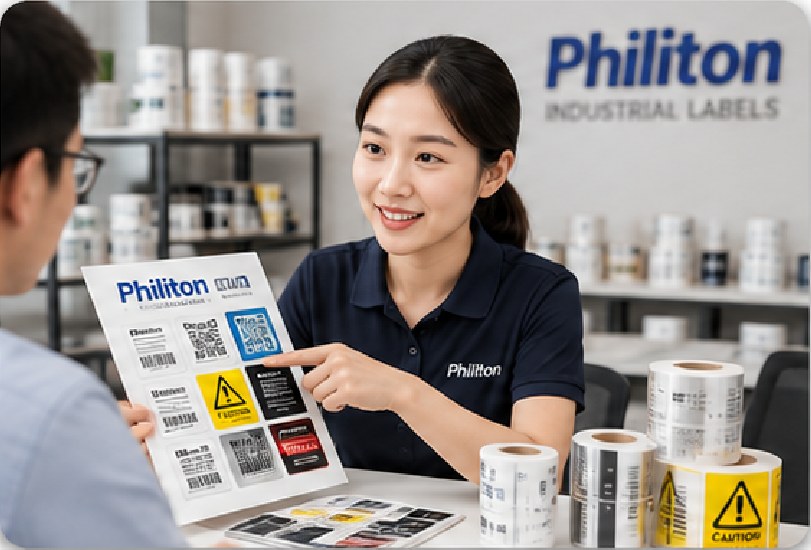
For all inquiries, please feel free to reach out at:

Ask For A Quick Quote

We will contact you within 24 Hours, please pay attention to the email with the suffix“@philiton.com”. 

For all inquiries, please feel free to reach out at:

Get a Quote Today!

We will contact you within 24 Hours, please pay attention to the email with the suffix“@philiton.com”.