Your Trusted Labels & Stickers Manufacturer from China!

Label Redesign and Artwork Change

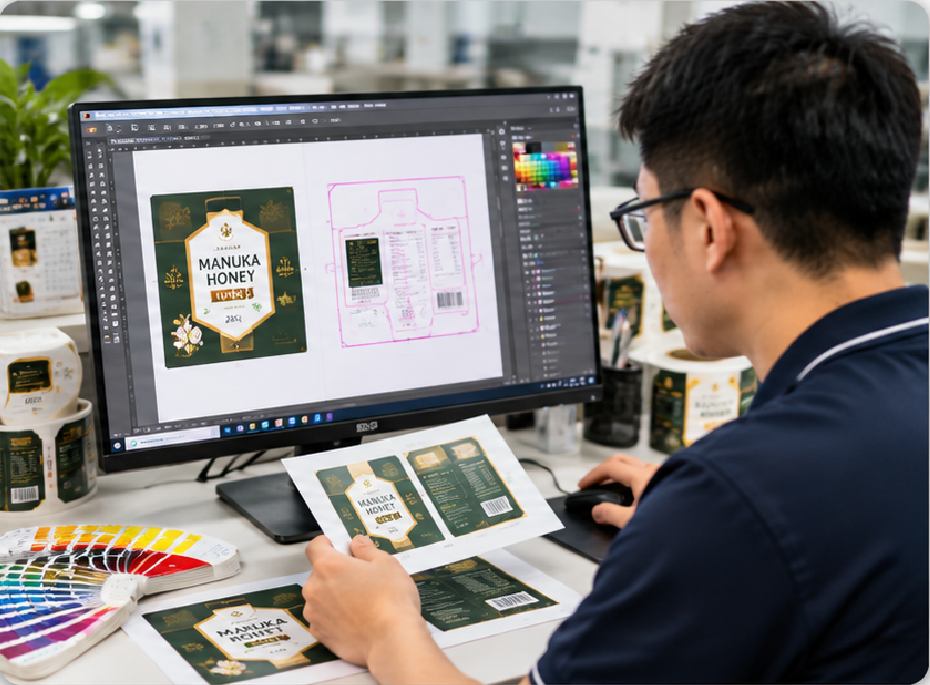
Update existing label artwork without losing control of print, version, material or production requirements. Philiton reviews existing files, rebuilds incomplete artwork and carries approved revisions into sampling and manufacturing.

  • Founded in 2016 with Shenzhen and Dongguan manufacturing operations
  • 12,000+ m² manufacturing footprint, 200+ employees and 91 technical, skilled production and quality personnel
  • Around 500 pcs starting quantity for many standard custom label and sticker projects
  • Digital, flexographic, screen, UV, foil, embossing, die cutting, inspection and testing capabilities
Label Redesign and Artwork Change

Choose the Right Level of Label Change

A small text edit, a brand refresh and a full artwork rebuild create very different prepress, proofing and production work. Philiton separates the scope before quoting or releasing files.

Minor Artwork Update

Use a minor update when the existing layout, dieline, material and manufacturing route remain valid. Typical changes include product names, addresses, approved copy, barcode numbers, QR codes, contact details or a logo replacement. Philiton checks whether the edited element affects safe areas, barcode quiet zones, spot-color definitions, white-ink masks, foil layers or other production data. Even a simple content change receives a new revision reference before proof approval, preventing an old file from returning to production during reorder handling.

Label Refresh

A refresh keeps the core brand system but improves visual hierarchy, typography, color balance, claim placement, information grouping or SKU consistency. Philiton can work from the existing artwork and reorganize elements around the current label size and production limits. The review also checks whether the revised design still fits the same material, print method and finishing route. If a brand color, white-ink area, foil position or image coverage changes materially, proofing or a printed sample can be added before the new version is released.

Full Label Redesign

A full redesign is appropriate when the previous label no longer supports the current brand, product range or retail presentation. Work may involve a new visual system, larger information hierarchy, new graphics, new SKU architecture or a different size and shape. Philiton treats the redesign as a manufacturing project, not only a graphic exercise. Dielines, bleed, print layers, special finishing, material interaction and label application conditions are reviewed before the artwork becomes a production file. Major structural changes can trigger new tooling, samples or application validation.

Artwork Recreation

Artwork recreation is used when editable source files are missing or unusable. Philiton can evaluate a high-resolution PDF, old print file, raster image, physical label photo, dieline or existing label sample and rebuild the production structure. Text, logos, vector elements, cut paths, white ink, spot colors and finishing layers are recreated only from available approved references. The rebuilt file is returned for proof approval before production. Recreation does not guess missing legal copy, claims or regulated information; brand teams remain responsible for providing approved content.

Built for Teams Managing Live Label Versions

Label changes usually involve more than a designer. Philiton structures revision work so brand, sourcing, quality and production teams can approve the same controlled version.

Brand and Packaging Teams

Brand and packaging teams need visual changes to survive real manufacturing. Philiton reviews hierarchy, color references, image resolution, white-ink requirements, foil or emboss layers and dieline compatibility before release. Multi-SKU programs can keep shared brand elements consistent while allowing product names, flavors, sizes or language blocks to change by SKU.

Procurement and Sourcing

Procurement teams need a revised label to be quotable, repeatable and ready for production. Philiton connects artwork changes with material, quantity, tooling, print method, finishing, roll specification and packing requirements. Existing specifications can be compared with the new revision so sourcing teams can see which changes affect cost, MOQ or lead time before issuing a production order.

Quality and Regulatory Teams

Quality and regulatory teams often manage high-risk copy changes such as ingredients, warnings, symbols, product codes or market-specific text. Philiton can control file versions, proof status, barcode or QR placement and production release records. Philiton does not approve legal content on behalf of the brand; manufacturing follows the version and information formally approved for production.

Operations and Reorder Teams

Operations teams need the correct version to arrive in the correct roll, pack and shipment. Philiton can retain approved artwork references, roll specifications, packing instructions and SKU identification for repeat programs. When a reorder includes a change, the new artwork is treated as a revision rather than silently replacing the old file, reducing the risk of mixed versions during transition.

Label Formats We Can Redesign and Rebuild

Artwork-change support covers common packaging, identification, premium-finish and smart-label formats. Final material and process choices still depend on the application, quantity and approved specification.
Product Packaging Labels

Product Packaging Labels

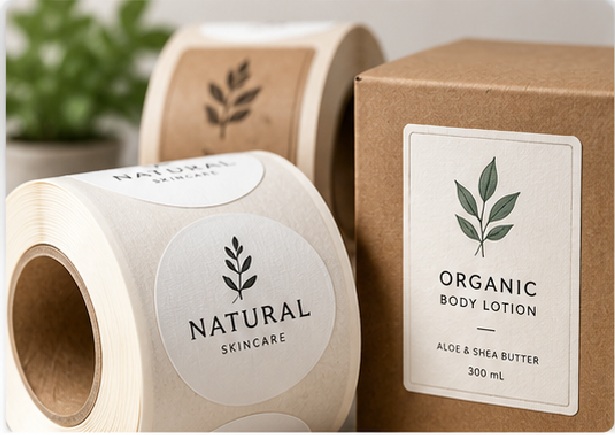
Philiton supports redesign and artwork updates for food, beverage, cosmetic, skincare, supplement, candle, household and other product packaging labels. Common work includes brand refreshes, new claims supplied by the brand, revised product names, new ingredient or information blocks, barcode changes, resized panels and multi-SKU extensions. Paper and film structures, transparent designs, white ink and protective finishes can be reviewed together with the new layout so visual changes remain compatible with the intended packaging surface and use environment.
Roll Labels

Roll Labels

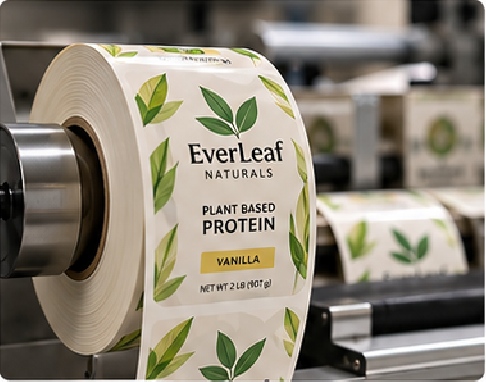
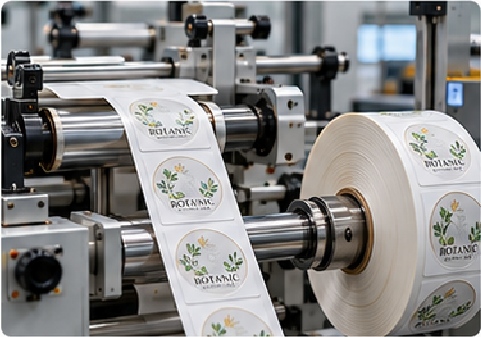
Roll-label artwork must work with both the printed design and the dispensing format. Philiton can review label size, gap or pitch, liner width, roll direction, inside or outside winding, core size, maximum roll diameter and labels per roll where required. A redesign that changes orientation, dimensions or shape can affect automatic application even when the graphics look correct on screen. Production release therefore connects the revised artwork with the approved roll configuration and packing instruction.
Clear and Film Labels

Clear and Film Labels

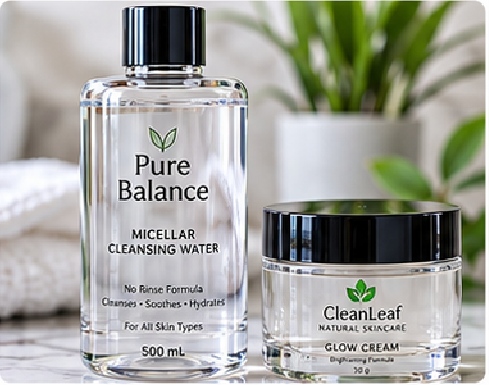
Clear BOPP, white BOPP, PET and other film labels need artwork prepared around transparency, white ink, image density and finishing. A logo or color change can require a new white-ink mask, revised opacity, different overprint behavior or a new proof to confirm the no-label look. Philiton can review the revised file together with the intended bottle, jar or packaging surface so the design is not approved only as a flat digital image while behaving differently on the final container.
Premium Foil and Emboss Labels

Premium Foil and Emboss Labels

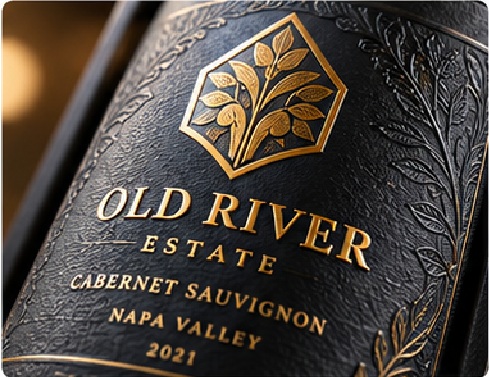
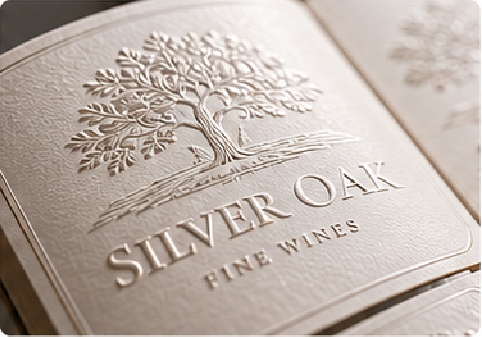
Foil, embossing, debossing, spot UV and similar finishes require controlled production layers rather than visual mockups alone. Philiton checks whether the revised foil area remains manufacturable, whether fine details are suitable for tooling, and whether registration between print and finishing remains realistic. Moving a logo, changing a decorative frame or increasing a metallic area can trigger new plates or tooling. A production-oriented sample is recommended when the effect is important to brand approval.
Barcode, QR and Variable Labels

Barcode, QR and Variable Labels

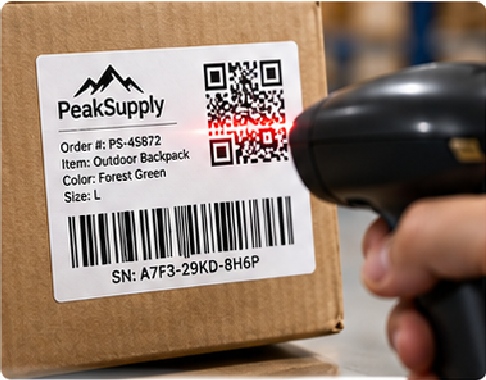
Barcode and QR updates are treated as functional changes, not simple graphic replacements. Philiton reviews code size, quiet zones, contrast, placement and the relationship between human-readable text and encoded data. Variable-data programs can also require source-file control, uniqueness checks, reprint logic and final verification. When only one SKU or data field changes, the revised artwork still needs a separate version reference so the previous file is not accidentally reused during production or replenishment.
Security and Smart Labels

Security and Smart Labels

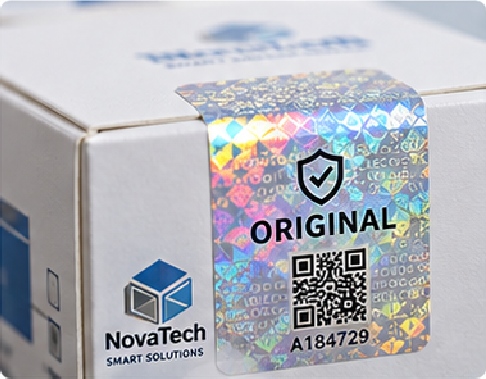
Tamper-evident, VOID, destructible, holographic, RFID and NFC labels may combine artwork changes with structural or data requirements. Philiton can support projects where the new design must align with security patterns, visible codes, inlay position, encoding fields or verification steps. Exact RFID chip, inlay, read range, data logic and security construction are confirmed by project rather than assumed from artwork alone. Major changes normally require engineering review before proof or sample release.

Decide Whether a New Sample Is Needed

The same artwork change can require a simple proof, a printed sample or a full production review. Use the change scope to select the lowest-risk approval route.

Change RequestedArtwork RevisionNew ProofPrinted SampleTooling ReviewMaterial Review
Text or address updateRequiredRequiredDepends on riskUsually noUsually no
Logo replacementRequiredRequiredDepends on color/finishUsually noUsually no
Barcode or QR updateRequiredRequiredValidation recommendedUsually noUsually no
Pantone or major color changeRequiredRequiredOften recommendedUsually noPossible
Foil, emboss or spot-UV area changeRequiredRequiredRecommendedOften requiredPossible
Label size or shape changeRequiredRequiredRecommendedOften requiredPossible
Material or adhesive changeRequiredRequiredRequired for application reviewPossibleRequired
Full redesign with multiple changesRequiredRequiredUsually recommendedDepends on structureDepends on structure

Start With the Files and Labels You Already Have

A redesign project moves faster when the existing production history arrives with the artwork. Philiton can begin from complete source files or reconstruct a controlled starting point from limited references.

Philiton prefers editable vector artwork such as AI, EPS or production-ready vector PDF because text, paths, spot colors and technical layers can be reviewed directly. High-resolution raster files can still be evaluated when original source files are unavailable. A previous dieline, label specification, roll drawing, approved proof, printed label sample or clear photo can help identify the existing size, layout and production intent.

For a clean review, send the current artwork together with a short change list. Mark exactly what remains unchanged and what needs replacement. Include final label size, number of SKUs, quantity per SKU, intended packaging surface, current material if known, finishing, roll or sheet format, destination and required delivery date. If material, adhesive or roll details are unknown, describe the product, container, application method and use environment instead of guessing technical codes.

Philiton compares the submitted references before starting the revision. Conflicting files, missing fonts, different dielines or multiple “final” versions are flagged before production work continues. The goal is to establish one controlled current version, one clear change request and one approval path. A physical sample is especially useful when artwork files do not show actual color, finish, transparency, texture or roll configuration.

Prepress Checks Before a Revised Label Goes to Print

Artwork can look finished on screen and still fail in print. Philiton checks the technical file structure before a revised version becomes a production reference.

Turn the New Design Into a Production File

  • Philiton reviews finished dimensions, bleed, safe areas, dieline alignment, fonts, image resolution, linked graphics and vector quality before proof release.
  • Spot colors and Pantone references are checked against the intended printing route.
  • Clear or metallic labels may need a separate white-ink layer.
  • Foil, embossing, debossing, spot UV, varnish, security features or cut lines should be supplied as clearly named production layers rather than flattened visual effects.

Barcode and QR areas receive additional attention because moving a code can affect quiet zones, edge clearance, finishing overlap or scanning orientation. Small text is checked for realistic reproduction based on material and print method. If a redesign changes the label size or shape, the dieline is treated as a manufacturing input and not merely a decorative border. Roll projects may also require confirmation of orientation, pitch, liner width, core and winding direction before release.

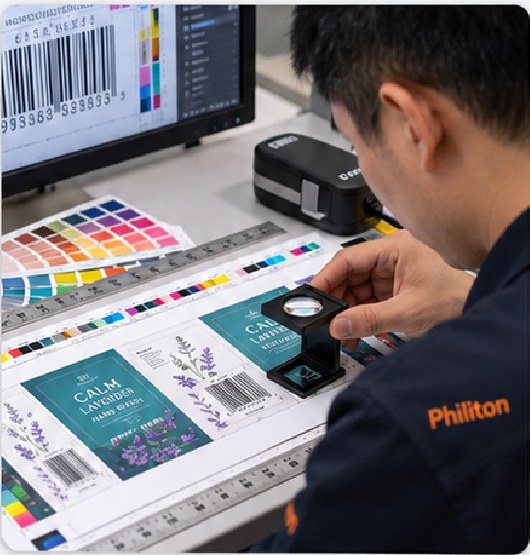
Philiton returns a proof or production file for approval after technical corrections are completed. The proof should be reviewed for content, spelling, SKU, version, dimensions, color references, code data, finishing positions and cut shape. Approval freezes the released revision for the next production step. Later changes are opened as a new revision so previous and current files remain distinguishable during production, packing and reorder management.
Printing and Finishing Choices Change With the Artwork

Artwork edits can alter print setup, tooling, color control and finishing registration. Philiton selects the production route after reviewing quantity, SKU structure, material and effect requirements.
Digital Printing

Digital Printing

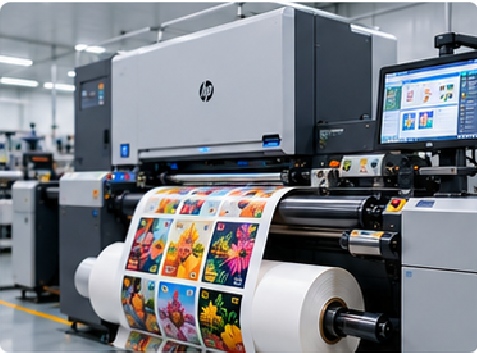
Digital printing supports many short-run, multi-SKU and frequently changing label programs because separate artwork versions can be handled without conventional printing plates. It is useful for launches, seasonal versions, language changes and smaller revision batches. Philiton still checks color targets, white ink where applicable, variable content, finishing compatibility and repeat-order expectations. If a revised SKU later grows into a much larger stable volume, the production route can be reviewed again for flexographic efficiency.
Flexographic Printing

Flexographic Printing

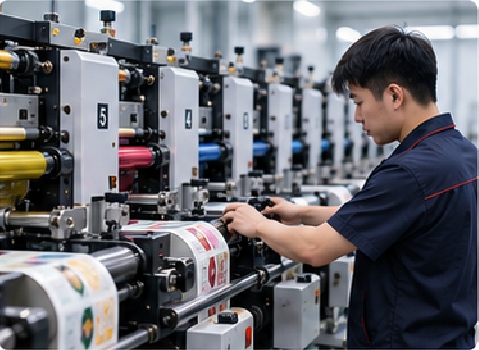
Flexographic printing is well suited to stable roll-label programs and repeat production at larger volumes. Artwork changes may require new plates, revised color separations or setup adjustments, depending on which elements move or change. A minor text revision can have a different cost impact from a complete redesign. Philiton reviews SKU quantity, label size, material width, color structure and finishing before deciding whether an existing flexographic setup can be reused or should be rebuilt.
Screen and UV Printing

Screen and UV Printing

Screen printing and UV-related processes can add opacity, texture, strong spot color or specialized surface effects. Revised artwork must define the exact areas requiring these processes. Fine lines, small reverse text and registration between layers need manufacturing review before approval. Philiton can combine screen or UV work with other print and converting steps when the project requires it. A change in coverage or layer position can alter setup and sample requirements even if the base label size remains unchanged.
Foil Stamping

Foil Stamping

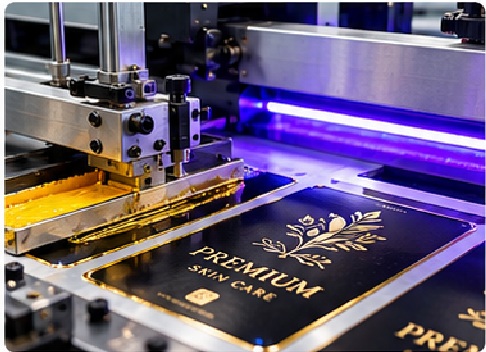
Foil stamping depends on a dedicated artwork layer, foil selection, tooling and registration to the printed image. Moving a foil logo, expanding a border or changing fine metallic details can require new tooling or a revised sample. Philiton checks whether the proposed line weight, spacing and registration are realistic before production. Foil should be approved on a physical reference when the metallic effect is central to brand appearance because a monitor cannot reproduce the final reflective surface accurately.
Embossing and Debossing

Embossing and Debossing

Embossing and debossing add a physical relief to selected artwork areas. A redesign can change the tooling geometry, pressure area and relationship between the raised or recessed detail and printed graphics. Philiton reviews element size, spacing, material suitability and registration before release. Fine details may need simplification to produce a cleaner result. When a previous tool no longer matches the revised design, new tooling is quoted rather than forcing an old production setup onto the new artwork.
Die Cutting and Rewinding

Die Cutting and Rewinding

A revised label size, corner radius, shape or orientation can affect die cutting, waste stripping, web layout, slitting and rewinding. Philiton reviews the new dieline together with material width, gap, roll direction, core and packing requirements. Existing tooling can only be reused when the new specification remains compatible and the tool condition is acceptable. For automatic application, artwork orientation and roll construction are checked together so the revised label reaches the applicator in the required direction.

Material Changes Need More Than a New Artwork File

A redesigned label can remain on the existing construction or move to a new material. Philiton connects artwork appearance with surface, environment, durability and application requirements.
Paper Labelstocks

Paper Labelstocks

Coated, uncoated, kraft, textured and specialty papers can support natural, premium or traditional label aesthetics. A refresh that introduces finer typography, heavy solids, foil or embossing should be reviewed against the paper surface because texture and absorbency affect print appearance. Paper labels also respond differently to moisture, oil and abrasion than films. Philiton selects paper constructions from qualified suppliers and confirms protective varnish or lamination where the use environment requires additional surface protection.
BOPP and Other Films

BOPP and Other Films

White, clear and specialty BOPP films are widely used for packaging that needs moisture resistance, flexibility and clean graphics. Clear designs may require white ink to create opacity under brand colors or text. A redesign that changes transparent zones, reverse printing, image coverage or white-ink masks should be technically rebuilt rather than flattened into one graphic layer. Adhesive selection still depends on the container surface, application conditions, curvature and use environment, not on film appearance alone.
PET and Durable Materials

PET and Durable Materials

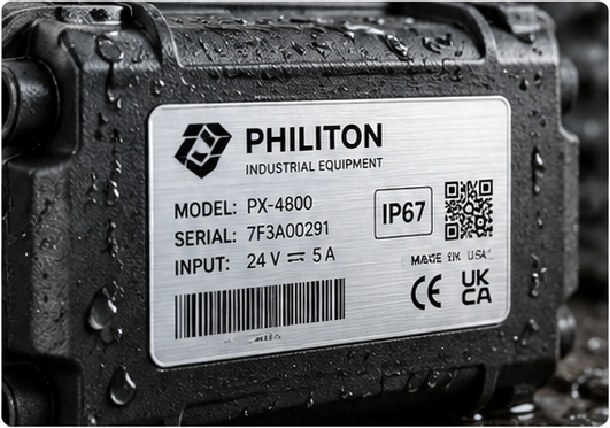
PET and other durable film constructions are suited to labels needing higher dimensional stability or tougher service conditions. Artwork updates for electronics, industrial identification, durable QR codes and equipment labels often need careful small-text, barcode and finish review. Chemical, temperature, UV or abrasion claims are not assumed from the material name alone. Philiton confirms the specific material structure and validation requirements for the project, using supplier information, samples or testing when the application carries higher performance risk.
Clear, Metallic and Holographic Structures

Clear, Metallic and Holographic Structures

Clear, metallic and holographic materials can change how colors, gradients and white areas appear after printing. A design transferred from plain white paper may need a new white base, different opacity or revised finishing separation to keep the intended visual hierarchy. Philiton can combine these materials with digital, flexographic, screen, foil, lamination and die-cut processes where suitable. Holographic and security effects are reviewed as production structures, not generic visual backgrounds, especially when authentication or tamper evidence is involved.

Common Reasons Brands Change Existing Label Artwork

Artwork revisions usually start from a commercial or operational event. Philiton maps the reason for change to the level of proof, sampling and manufacturing review required.

Brand Refresh

A logo, typography, color system or visual hierarchy is updated while the underlying package remains similar. Philiton checks whether the refreshed artwork can stay on the current size, material and production route or whether new color targets, white ink or finishing layers require additional proofing.

New SKU or Flavor

A product family grows from one design into several related SKUs. Philiton can organize shared elements and SKU-specific fields, then track quantity and approval separately for each version. Keeping size, material and finishing standardized can simplify production planning without removing the identity of each SKU.

Information Update

Approved ingredients, warnings, directions, claims, addresses or product codes change. Philiton treats supplied legal or regulated text as controlled content and checks placement, legibility and production fit. Responsibility for legal accuracy remains with the brand or responsible regulatory party supplying the approved wording.

New Market or Language

A label may need translated or market-specific content while keeping the same brand system. Different text lengths can affect hierarchy, font size, spacing and barcode placement. Philiton can create or adapt version files from approved translations and keep each market revision separately identified for production and packing.

Container or Size Change

A new bottle, jar, pouch, carton or pack size can force a label dimension or shape change. Philiton reviews the new dieline, curvature, material, adhesive, roll orientation and application method. A size change commonly requires more engineering review than a simple visual update.

Supplier Migration

A brand moving production from another printer may have incomplete source files, old proofs, physical rolls or an outdated specification. Philiton can rebuild the production file, confirm material and roll details, create a controlled proof and establish a new approved reference before repeat manufacturing begins.

Control Multi-SKU Artwork Without Mixing Old and New Versions

Large artwork-change programs need a version matrix rather than a folder full of files named “final.” Philiton records the key release points for each SKU before production.

Control PointWhat Philiton RecordsWhy It Matters
SKU identityProduct name, code and quantity per SKUPrevents one total quantity from hiding different artwork versions
Artwork revisionRevision number, date and file referenceSeparates approved files from superseded artwork
Shared elementsCommon logo, color, size, material and finishKeeps family consistency and identifies reusable setup
SKU-specific fieldsFlavor, size, language, barcode, QR or approved copyHighlights the areas most likely to be mixed
Dieline and geometrySize, shape and cut referencePrevents an old die or wrong dimensions from following new artwork
Approval statusProof date, approver and released versionDefines which file can enter production
Production releaseApproved specification and job referenceConnects artwork to material, print and converting instructions
Packing identificationRoll, pack, carton and SKU markingsKeeps finished versions separated through shipment and inventory

Use the Right Sample for the Change

Sampling should answer a defined risk. Philiton uses digital, printed or production-intent samples according to what changed in the artwork, material, finish and application.

Use Digital Samples for Fast Visual Review

A digital sample is useful when the main question is visual: layout, spacing, hierarchy, text size, image clarity, general color direction or SKU differentiation. Philiton can review artwork, prepare prepress files and produce a digital sample before the full manufacturing route is locked. For many standard projects, digital sample planning is commonly around 1-3 working days after artwork, material direction and required output are confirmed. Digital samples are especially useful for new SKUs, language versions, brand refreshes, copy updates and early-stage redesigns. They reduce the cost of discovering obvious layout problems after tooling or special finishing has already been prepared. A digital sample is not automatically the final reference for every color, metallic effect, white ink, adhesive or durability requirement. Printing method, substrate, coating, foil, embossing and production speed can change the appearance or performance of the mass-produced label. Philiton therefore records what the digital sample is approving. If the purpose is only layout and content, the approval should not silently become a universal color or performance guarantee. A clear approval scope makes the next revision easier to manage and protects the integrity of the production file.

Use Production Samples When Manufacturing Risk Changes

A production sample is more appropriate when the revision affects material, adhesive, Pantone control, white ink, foil, embossing, spot UV, unusual die cutting, automatic-application geometry, barcode performance or other manufacturing variables. Standard printed or finished samples are commonly planned around 3-5 working days, while more complex finishing often requires around 5-7 working days. RFID, security structures or special constructions can require roughly 5-10 working days, subject to material and tooling availability. Philiton uses production-oriented samples to confirm the aspects that cannot be judged reliably from a screen: opacity, gloss, texture, metallic reflection, emboss depth, die-cut result, material feel, roll construction and application behavior. Approval can be separated by dimension so a team can sign off layout, color, finish, code, material and roll details without treating the entire sample as one vague “OK.” Changes made after a production sample is approved are opened as a new revision. If the change touches material, size, tooling or critical finish, revalidation may be required before mass production. The goal is to release a stable specification rather than rush an uncertain file into a larger order. 

What Happens After the New Artwork Is Approved

Approval is the point where creative work becomes a controlled manufacturing specification. Philiton locks the released version, then coordinates materials, printing, finishing, converting, inspection and packing.

Artwork Freeze

The approved artwork receives a controlled revision reference before production. Philiton keeps the released file distinguishable from older versions and links it to the final size, SKU, finishing and other agreed specifications. A later change does not overwrite the file silently; it starts a new revision and, when needed, a new proof or sample cycle. This control is especially important for repeat orders, multi-language programs and phased brand transitions.

Material and Tooling Check

Philiton confirms the selected facestock, adhesive, liner, foil, laminate or other required material against the approved project specification. Existing dies, plates or special tooling are reviewed for compatibility when reuse is planned. A change in size, shape, foil area or embossed detail can make old tooling unsuitable even if the brand identity remains similar. Materials are sourced from qualified external suppliers and checked before they move into production.

Prepress Release

Final production files are prepared with the approved dieline, color separations, white ink, special finishing layers, variable content and technical marks required by the selected process. Prepress verifies that the released file matches the approved revision before plates, digital setup or other production preparation begins. Barcode, QR or variable-data programs receive the required file and data controls according to the agreed project specification.

Printing and Finishing

Production follows the selected digital, flexographic, screen, UV or combined route, followed by lamination, varnish, foil, embossing, debossing or other finishing where specified. Standard production for compatible custom labels is commonly planned around 5-10 working days after artwork approval, materials and production conditions are ready. Larger, highly finished or multi-SKU orders may require a broader 7-15 working-day planning window or project-specific scheduling.

Converting and SKU Sorting

Printed webs or sheets move through die cutting, waste stripping, slitting, rewinding or individual cutting according to the delivery format. Roll direction, core, maximum diameter, labels per roll, perforation and other application specifications are followed when included in the approved order. Multi-SKU jobs are kept identifiable during converting and packing so the artwork revision remains connected to the correct finished quantity.

Packing and Reorder File

Finished labels are packed by roll, sheet, stack or agreed custom format, with SKU and carton identification matched to the order. Philiton retains the approved production reference, allowing a later repeat order to begin from a known artwork and specification rather than reconstructing the job from email history. If the next order includes a change, the new revision is compared against the stored reference before release.

Quality Checks Focus on the Approved Revision

A redesign introduces version risk as well as print risk. Philiton combines file control, production inspection and functional checks around the version formally approved for manufacturing.

Revision Verification

Before production release, Philiton verifies that the job uses the approved artwork revision and matching specification. File names alone are not treated as sufficient control. SKU identity, revision, size and production instructions are connected so an old version cannot be selected only because it remains in an archived folder. Revision control becomes especially important when a product family changes in stages or old inventory is still being consumed.

Text and SKU Check

Critical visible information is compared with the approved production reference during file preparation and quality review. Product names, SKU identifiers, supplied copy, symbols and version-specific elements must match the released file. Philiton does not independently certify the legal accuracy of brand-supplied claims or regulated text; the manufacturing responsibility is to reproduce the approved content correctly and maintain the right version through production.

Color Control

Brand colors, Pantone references and important visual elements are controlled against the approved target and selected printing method. A redesign that changes ink coverage, material or finish can alter perceived color, so approval references should match the new construction rather than relying only on the previous label. Philiton has color-management and inspection capabilities within its technical organization and can use physical samples or defined standards where the project requires tighter control.

Barcode and QR Verification

Barcode and QR revisions are checked for data, size, placement and print quality according to the agreed project requirement. Variable-data programs can also include uniqueness and reprint controls. Scanning performance can depend on code design, contrast, substrate, finish, curvature and application conditions, so functional validation is planned according to risk rather than assuming every code will behave identically after a layout change.

Die-Cut and Finish Registration

Die-cut position, foil, embossing, spot UV, white ink and other registered effects are inspected for alignment with the printed design. A revised layout can move a critical feature closer to the cut edge or shift finishing into a tighter tolerance area. Philiton reviews these relationships during prepress and production rather than waiting for final packing to discover that the new artwork no longer matches the converting setup.

Final Packing and OQC

Final inspection and outgoing quality control check finished quantity, appearance, SKU identification and packing against the approved order. Roll projects can include roll direction, core, roll diameter, count and carton marking requirements. Philiton has IQC, IPQC, FQC, OQC, visual inspection and in-house laboratory testing capabilities; the exact inspection plan is matched to the product, risk and agreed specification rather than presented as one identical test plan for every label.

Controlled Artwork Changes for Regulated Label Information

Some label edits involve information with legal, regulatory or market significance. Philiton separates manufacturing control from the brand owner’s responsibility for approved content and market authorization.

Content Responsibility

Philiton can place and manufacture approved ingredients, warnings, directions, claims, product identifiers, barcodes, importer details, language blocks and similar content supplied for production. Philiton does not replace the brand owner, legal counsel or responsible regulatory party in deciding what wording is legally required or whether a final product may be sold in a target market. When content changes, the correct approach is to submit the approved wording and identify the affected SKUs and markets before artwork release.

Evidence and Documentation

Material declarations, third-party test reports, certificates or other compliance documents are handled according to the exact material and project scope. FSC, RoHS, REACH, food-contact, UL or other claims are not presented as universal coverage across every Philiton label. Where documentation is required, the specific substrate, adhesive, supplier evidence, test method and validity range should be confirmed before the claim appears in a production specification or commercial document.

Change Approval

A compliance-related artwork change should carry a clear revision, approval date and production release. If a market-specific warning, language block, barcode or regulated field changes, the new file is separated from the previous version and packed according to the agreed SKU or market identification. Philiton’s responsibility is controlled execution of the approved specification, including print, finishing, verification and traceability steps within the manufacturing scope agreed for the project.

Pack Revised Labels to Keep Versions Separated

Artwork control continues after printing. Philiton packs rolls, sheets and SKU groups so the released version remains identifiable through receiving, storage and production use.

Roll Packaging

Roll labels can be supplied by agreed core size, winding direction, labels per roll, maximum roll diameter and carton quantity. Automatic-labeling projects should provide equipment requirements before production because orientation and roll construction affect use at the line. Revised artwork and roll specifications are linked so a visual update does not accidentally ship in the wrong application format.

Sheet and Stack Formats

Sheeted labels, individual pieces and stacked labels can be packed according to handling, counting and downstream-use requirements. A redesign that changes size or shape can also change the most efficient packing arrangement. Philiton confirms the finished format during quoting so packing is planned with the production specification rather than decided only after printing is complete.

SKU Segregation

Multi-SKU orders are identified by SKU, quantity and revision during sorting and packing. Separate rolls, inner packs, carton marks or packing-list references can be used according to the agreed plan. Clear segregation is important during brand transitions where old and new versions may exist at the same time in warehouses or co-packer operations.

Export Cartons and Logistics

Philiton prepares finished goods for international shipment using the agreed carton and shipment requirements. Courier, air and sea options can be discussed according to order size and deadline. EXW, FOB, DAP or DDP arrangements are quoted project by project; DDP availability depends on destination and logistics conditions rather than being treated as a universal promise.

What Can Change Cost, MOQ and Lead Time

Many standard Philiton label projects start around 500 pcs, but revised artwork can change setup, tooling, sampling and material requirements. Exact commercial terms are calculated from the released specification.

Artwork or Specification ChangeMain Commercial ImpactTypical Review Path
Text or logo update onlyPrepress and proofing; limited manufacturing impact when structure stays unchangedArtwork check → proof → release
Barcode or QR updateFile revision plus code verification; sample depends on riskPrepress → proof → validation
Pantone or major color changeNew color target and possible physical proofColor review → sample → approval
Foil, emboss or spot-UV changeNew plate/tooling or registration setup may be neededLayer review → tooling → sample
Size or dieline changeMaterial usage, die/tooling, web layout and packing can changeEngineering → dieline → sample
Material or adhesive changeNew sourcing, application review and performance validationMaterial review → sample/test → approval
Multi-SKU revision programSeparate artwork approvals, sorting and version control add setup workSKU matrix → proof set → staged release
RFID or security structure changeInlay, encoding, security construction and verification may add sourcing and testing timeEngineering → sample → verification

Representative Label Change Workflows for Brand Programs

The scenarios below are planning examples built from Philiton’s documented production capabilities. They illustrate realistic order structures without presenting unverified client identities, testimonials or performance claims.
United States Supplement SKU Update

United States Supplement SKU Update

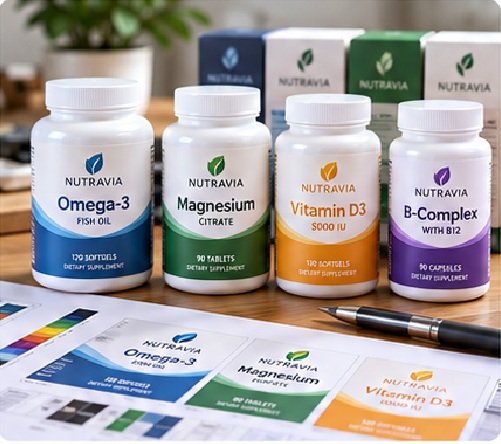
A representative U.S. supplement program can involve eight SKUs at 2,500 labels per SKU, for a 20,000-label revision order. The brand supplies approved copy changes, updated barcodes and a revised logo while keeping the label size and material unchanged. Philiton would first build an eight-SKU revision matrix, check every file for dieline, fonts, code placement and version identity, then return a proof set for approval. A printed sample can be added for the new brand color before release. Production would keep each SKU separately identified through printing, converting, packing and the repeat-order file.
Germany Skincare Brand Refresh

Germany Skincare Brand Refresh

A representative German skincare refresh can cover six SKUs at 3,000 labels per SKU, totaling 18,000 labels. The redesign keeps the existing containers but changes typography, hierarchy, brand color and selected clear areas on a transparent film label. Philiton would rebuild white-ink masks, review color references and check whether the new graphics remain suitable for the existing dieline and material. A production-oriented sample would be used to evaluate opacity, transparency and finish before approval. After release, the six artwork versions would be produced under separate revision references and packed by SKU for easier receiving and inventory control.
Australia Beverage Supplier Migration

Australia Beverage Supplier Migration

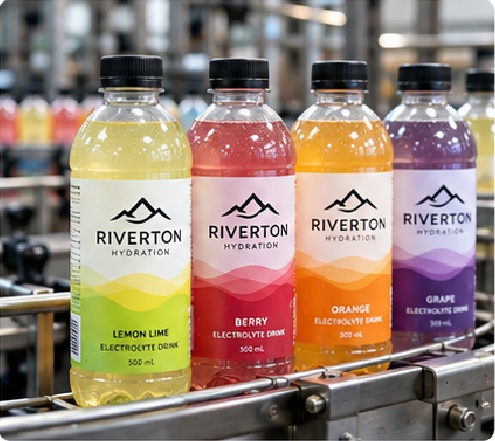
A representative Australian beverage migration can involve four SKUs at 7,500 labels per SKU, totaling 30,000 labels. The brand may provide a previous supplier’s PDF, a physical roll and the automatic-labeler requirements rather than a complete editable production package. Philiton would recreate the dieline and production layers, confirm label size, roll direction, core and material construction, then compare the rebuilt proof with the physical reference. Barcode placement and scanning would be reviewed before release. Once approved, the new Philiton production file becomes the controlled reference for the first order and later replenishment, reducing dependence on incomplete legacy files.

Label Redesign Frequently Asked Questions

Yes. Philiton can review minor edits, brand refreshes, full redesigns and artwork recreation as separate scopes. If the current size, material and production route remain valid, only the artwork and proof may need revision. Changes to size, material, adhesive, special finishing or roll specification can require engineering review, new tooling or a new sample before production.
Vector PDF, AI and EPS files are preferred because technical layers, fonts, paths and spot colors can be reviewed more reliably. High-resolution raster files can also be evaluated. When source files are missing, a previous proof, dieline, physical label or clear image can help rebuild the production artwork. Fonts should be outlined or supplied, and linked images should be embedded or packaged where possible.
Yes, when the available reference contains enough reliable information. Philiton can recreate vector elements, dielines, text supplied in approved form, white-ink areas and production layers. Missing legal wording, unconfirmed colors or unknown technical specifications are not guessed. A rebuilt file is returned for proof approval before it becomes a production reference.
Not always. A text-only change can often be approved through a controlled proof when size, material, color and finishing remain unchanged. A printed sample becomes more useful when the revision affects brand color, small text, barcode performance, white ink, foil, embossing, die cutting, material or application conditions. Philiton recommends the approval route according to the risk created by the change.
The new code is treated as a functional artwork revision. Philiton checks size, placement, quiet zones and print suitability and can include scanning verification according to the agreed project plan. Variable-data programs may require additional uniqueness and reprint controls. The old and new versions remain separately identified so a previous code is not reused during later production.
Yes. Philiton can manage multi-SKU programs using a version matrix that records artwork, quantity, shared specifications, SKU-specific fields and approval status. Similar SKUs may share material or setup, but every design still needs clear identification and approval. Quote and production planning should include quantity per SKU rather than only one combined total.
Usually. A size or shape change can affect material usage, die tooling, web layout, gap, roll yield, slitting, packing and automatic-application compatibility. Philiton reviews the revised dieline before confirming price and production route. Existing tooling can only be reused when the new dimensions remain compatible and the tooling condition is suitable.
Typical planning ranges are around 1-3 working days for digital samples, 3-5 working days for standard printed or finished samples, 5-7 working days for more complex finishing, and roughly 5-10 working days for RFID, security or special structures. Timing starts after the required artwork, material direction and process information are sufficiently confirmed.
Yes. Approved artwork and production specifications can be retained as repeat-order references. A reorder with no specification change can move through a faster review path, subject to material availability and production scheduling. If artwork, material, size, tooling, color, roll format or other critical inputs change, the order is treated as a new revision rather than an unchanged repeat.
Philiton can manufacture approved content and help control versions, legibility, production fit, barcode placement and related technical requirements. Legal accuracy, regulated claims, mandatory wording and market authorization remain the responsibility of the brand owner or designated regulatory party. Project-specific certificates or material documents are confirmed only when the relevant evidence applies to the selected material and scope.

Send the Current Label and the Change List

Philiton can review a small artwork edit, a multi-SKU refresh, a supplier migration or a full production-file rebuild. The fastest starting point is the material already available: current artwork, previous proof, dieline, printed label, roll sample or clear photos. Add the requested changes in plain language and identify which elements must remain unchanged.

For quotation and technical review, include:

  • Current artwork or physical-label reference
  • Exact label size and shape
  • Number of SKUs and quantity per SKU
  • Change list: logo, text, barcode, color, size, material or finishing
  • Packaging surface and application environment
  • Roll direction, core or labeler details when applicable
  • Target market and approved market-specific content
  • Required delivery date and destination country

Unknown material or adhesive codes do not need to be guessed. Describe the container, surface, storage conditions and application method, and Philiton can review suitable production options. After file review, the project can move into proofing, sampling, quotation and production planning with one controlled revision path.

For all inquiries, please feel free to reach out at:

Get In Touch

  • Our team will answer your inquiries within 12 hours.

  • Your information will be kept strictly confidential.

Get a Fast Quote for Custom Labels & Stickers

We will contact you within 24 Hours, please pay attention to the email with the suffix“@philiton.com”. 

For all inquiries, please feel free to reach out at:

Ask For A Quick Quote

We will contact you within 24 Hours, please pay attention to the email with the suffix“@philiton.com”. 
For all inquiries, please feel free to reach out at:

Get a Quote Today!

We will contact you within 24 Hours, please pay attention to the email with the suffix“@philiton.com”.