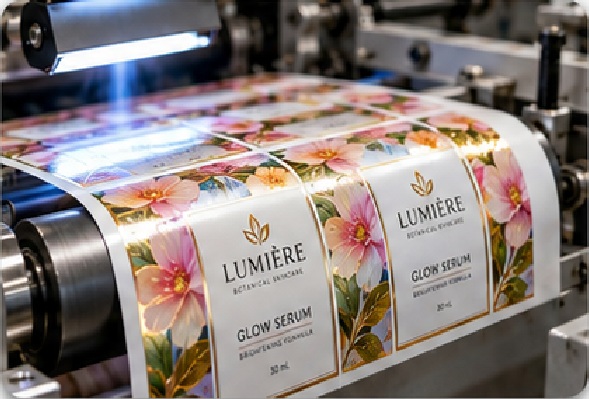
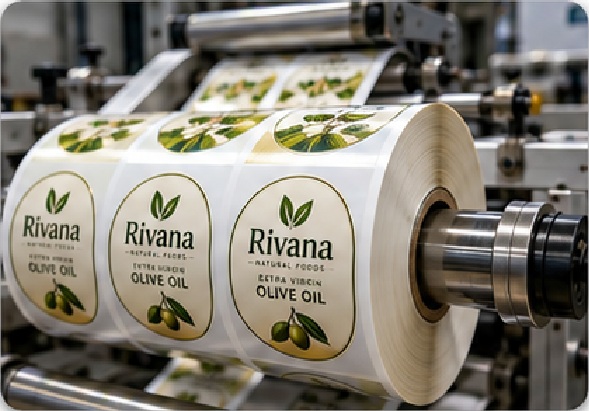
Launch labels built for first runs, multi-SKU releases, brand validation, and a controlled path into repeat production. Philiton supports launch programs from artwork review and material selection through sampling, printing, finishing, inspection, packing, and scale-up.

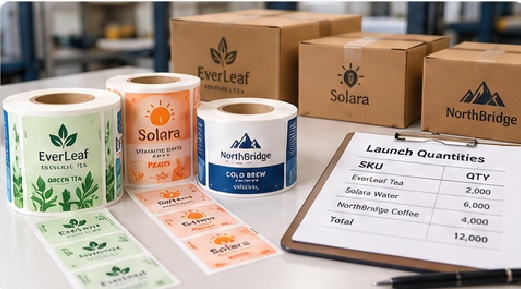
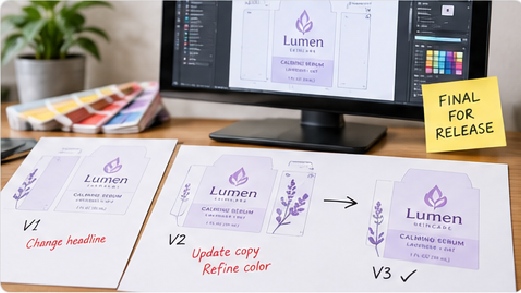

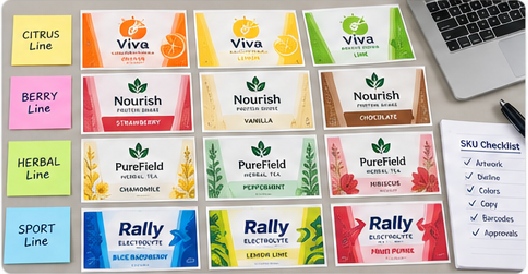
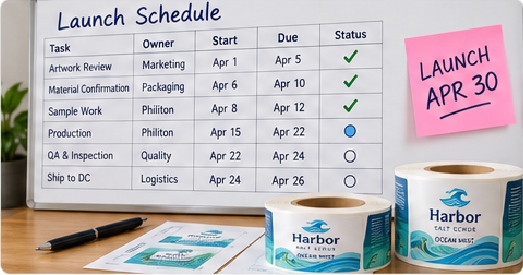
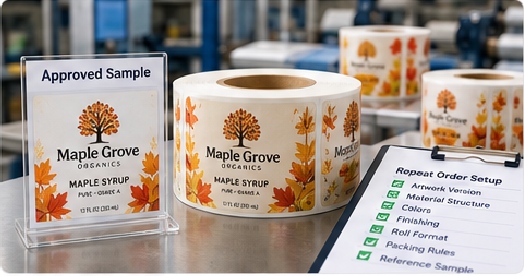
A launch label should match the maturity of the product. Philiton changes the validation depth, production route, and control points as a SKU moves from concept to repeat supply.
| Launch Stage | Typical Situation | Philiton Route | Confirm Before Release |
|---|---|---|---|
| Concept | Packaging and artwork still evolving | Material swatches, artwork review, digital proof or sample | Package surface, size, visual direction, key claims |
| Prototype | Physical pack needs evaluation | Digital sample or production-style sample | Fit, color, opacity, finish, adhesive direction |
| First Run | Market launch with controlled inventory | Digital or suitable short-run production | Approved artwork, quantity per SKU, packing format |
| Multi-SKU Launch | Several flavors, scents, languages, or sizes | Shared material platform with SKU-specific artwork control | Version matrix, per-SKU quantity, roll and carton ID |
| Growth | Reorders become larger and more predictable | Digital retained or flexographic route reviewed | Golden sample, repeat tolerances, tooling, QC points |
| Repeat Supply | Stable SKUs with regular replenishment | Controlled repeat production and batch records | Current revision, material status, forecast, delivery plan |
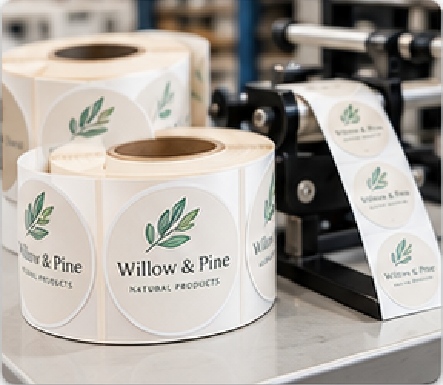




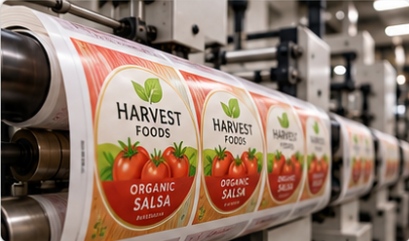




Philiton uses different sample routes for appearance, material, finishing, function, and production release so each launch spends development effort where risk is highest.
Sampling begins with the product and application, not with a machine. Philiton reviews package material, label size, quantity, SKU count, artwork status, desired finish, application method, service environment, compliance needs, and target launch date. The review determines whether the project needs a material swatch, digital print sample, production-style sample, finishing sample, security or RFID sample, or a more complete pre-production approval sample.
A simple visual check may only need a digital sample on the intended face material. A premium paper label with foil and embossing needs the actual finishing route to judge registration and tactile effect. A freezer label needs package-level adhesion and environmental validation. A roll label for an applicator needs winding, core, roll diameter, gap, pitch, liner, and sensor requirements confirmed before the bulk format is frozen. Choosing the right sample avoids spending time on a beautiful proof that does not test the real launch risk.
Philiton can also review available material alternatives before a formal sample is made. Early material comparison is useful when the design direction is still open or when specialty stocks carry supplier minimums. Development moves faster when the brief clearly states what must be proven: shelf appearance, color, opacity, adhesion, code readability, finishing, machine feeding, or a combination of those items.
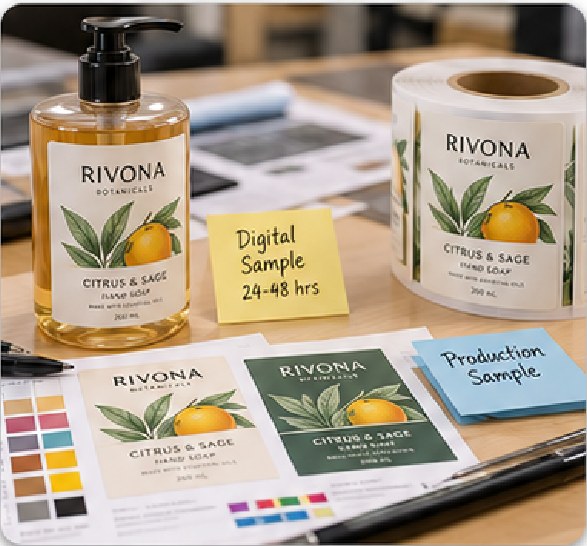
Straightforward digital samples using available materials can be handled on a rush basis as fast as 24-48 hours after artwork and specifications are confirmed, subject to machine load and project conditions. More complex samples take longer because special material sourcing, plate or tooling preparation, foil, embossing, holographic structures, security elements, RFID inlays, testing, or outside processes may be required. Philiton confirms the sample route and schedule before work starts rather than applying one lead time to every label.
Digital samples are useful for graphics, size, color direction, multi-SKU review, and early market presentation. They can expose copy errors, version issues, or basic layout problems before higher-cost finishing begins. Production-style samples become more important when final appearance depends on the real print method, tooling, finish registration, adhesive, roll construction, or functional performance.
The sample plan should match the decision still open. If color is approved but adhesive is not, the next sample should focus on the package and bonding conditions instead of repeating a full visual review. Philiton keeps the development path tied to unresolved risks so revisions have a clear purpose and approval can move toward production release. Sample records should also identify the artwork revision, material used, finish sequence, and date, so later feedback refers to the correct physical version rather than a photo or an earlier prototype that no longer matches the release direction.
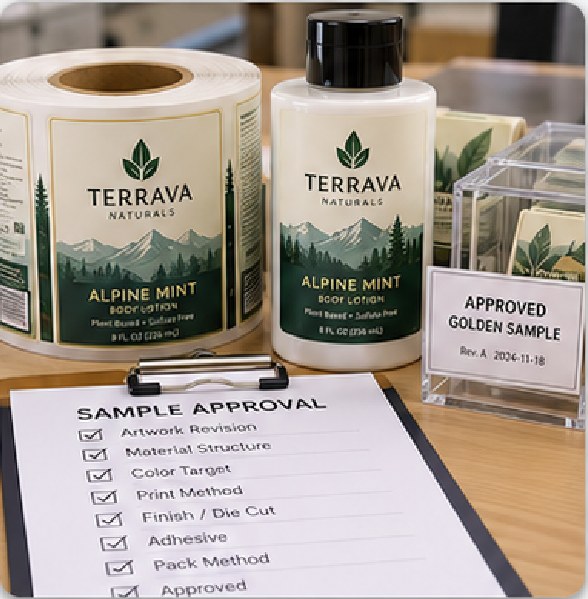
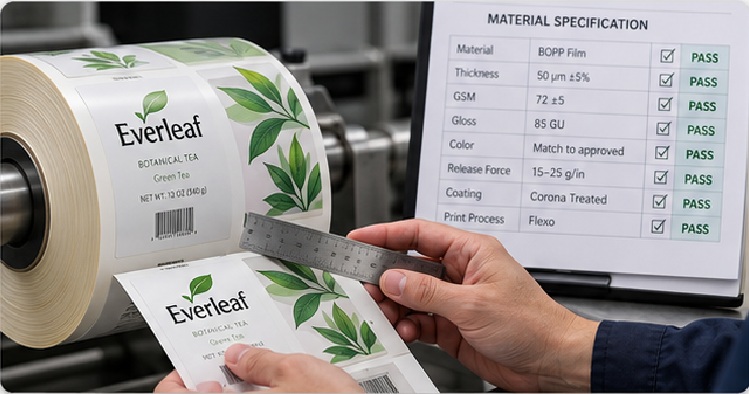
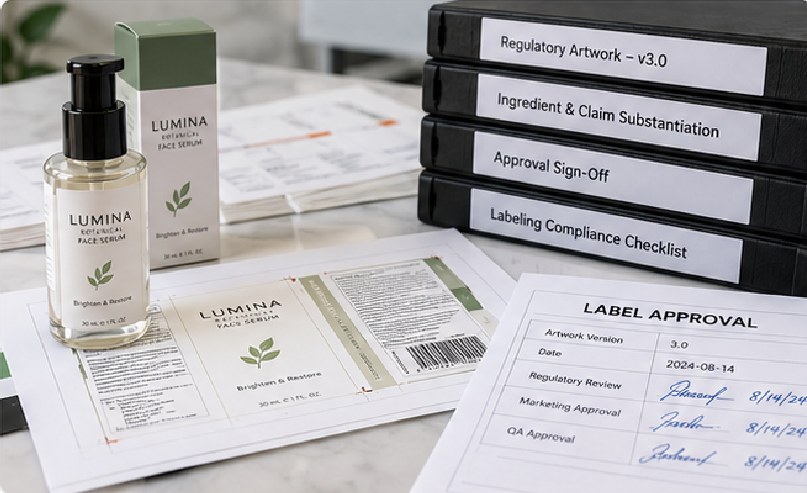
A launch sample becomes useful only when approval is linked to a defined specification. Philiton records the approved artwork revision, material structure, adhesive direction, print method, color target, white ink, finishing, die cut, roll format, packing method, and any agreed test or inspection requirement. Stable programs can retain an approved reference or golden sample so later batches are compared against a known physical outcome rather than memory or screenshots.
Approval should also record what remains project-dependent. A brand may approve visual appearance while waiting for final legal copy, a retailer barcode, or the co-packer’s roll specification. Philiton separates those open items from finished approvals so production is not released prematurely. When the final specification changes after sampling, the team decides whether the change is low risk or whether a new sample, test, or production check is needed.
Once the release package is complete, production receives the approved version rather than the full history of rejected alternatives. That handoff reduces version confusion during printing and converting. The same controlled reference supports repeat orders, especially when a launch grows from a few thousand labels into regular replenishment across several SKUs. When several SKUs share one construction, Philiton can keep common material and roll specifications together while maintaining separate approved artwork and quantities, making later replenishment easier to schedule without weakening version control.
Philiton can keep a stable product specification while changing the most efficient print route as quantity, SKU mix, finishing, and reorder behavior become clearer.
| Decision Factor | Digital Printing | Flexographic Printing |
| Launch quantity | Strong fit for samples, short runs, and flexible opening inventory | Stronger fit when stable roll volumes justify setup |
| Multi-SKU | Efficient for many artworks using a shared construction | Efficient when artwork mix and production plan are stable |
| Artwork changes | Lower friction for revisions and version updates | Plate and setup changes require more planning |
| Color | Strong CMYK and version flexibility; spot targets reviewed by process | Strong repeat spot-color and large-roll production capability |
| Finishing | Can combine with selected foil, varnish, lamination, die cutting, and other steps | Can integrate roll-to-roll finishing and converting efficiently |
| Unit economics | Attractive before long-run setup is justified | Unit cost becomes stronger as stable volume increases |
| Scale-up decision | Can remain the best route for long-tail SKUs | Often reviewed for hero SKUs with larger repeat demand |
Philiton handles core converting and manufacturing steps through its production system, while base labelstocks, films, papers, adhesives, foils, and specialty substrates are sourced to project requirements.
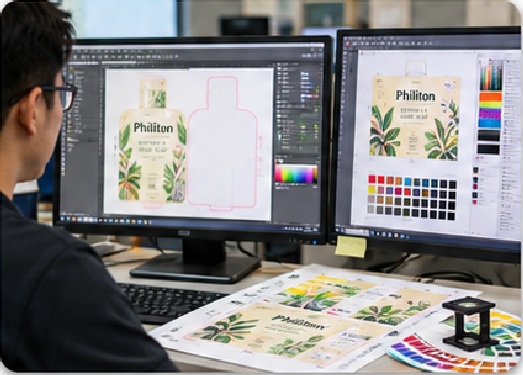
Production starts with controlled information. Philiton checks the released artwork against the approved dieline, size, SKU identity, color targets, white ink, foil or emboss layers, variable data, barcode or QR areas, and revision status. Print-ready files are prepared for the selected digital, flexographic, screen, UV, variable-data, or specialty process rather than sending the same artwork blindly to every machine.
Prepress also connects design choices to manufacturing tolerances. Fine reversed text, tight borders, very small foil details, clear-film opacity, metallic windows, die-cut position, and code zones can all require adjustment before printing. For multi-SKU programs, common dimensions and structures are separated from artwork-specific elements so every version is released against the correct quantity and production route.
Philiton was founded in 2016 and operates manufacturing in Shenzhen and Dongguan. The wider manufacturing system covers more than 12,000 ㎡ and employs more than 200 people, including 91 technical, skilled production, and quality personnel. Those resources support parallel artwork, printing, finishing, inspection, testing, and repeat-order work without turning a launch program into a purely outsourced coordination exercise. Prepress files, production instructions, and approval references move forward together, so the released specification can be checked again when artwork, quantities, or manufacturing routes change on later orders.
Philiton selects digital, flexographic, letterpress, screen, UV, variable-data, and related processes according to material, quantity, graphics, color, finish, and repeat needs. Printing is only one stage. Launch labels may continue through white ink, varnish, lamination, foil, embossing, debossing, holographic effects, coating, security features, or other approved finishing before the final label shape is created.
Each added process creates another control point. Foil needs position and coverage checks. Embossing requires tooling and registration. Lamination changes surface appearance and durability. Variable data requires source-data control and verification. Holographic or security work may need stricter material, waste, or confidentiality handling. Philiton keeps the production route tied to the released specification so a decorative feature is not substituted simply because another material or process is easier to run.
When launch quantities grow, the team can review whether a different print route improves economics without changing the approved appearance or function. A route change is evaluated against material, ink system, color, white ink, finishing, tooling, die cutting, roll format, and reference sample before being adopted for repeat supply. First-article checks are especially useful after a route or tooling change because they confirm the new setup still matches the approved visual and functional target before the full repeat quantity is completed.
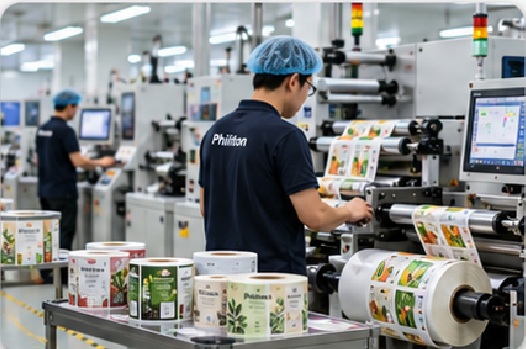
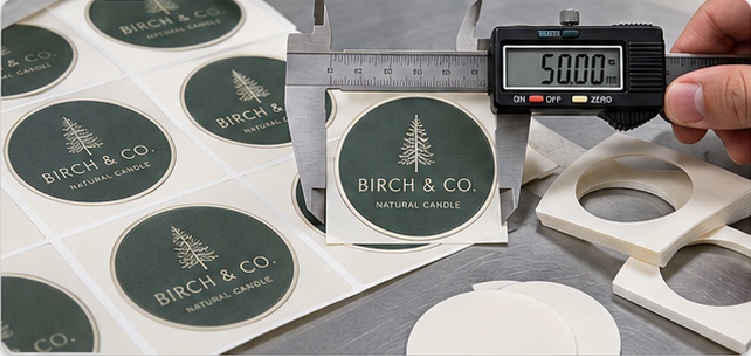
After printing and finishing, labels move through die cutting, waste stripping, slitting, rewinding, inspection, sorting, and packing according to the required delivery format. Die cutting controls final shape, corner radius, gap, pitch, and liner integrity. Slitting and rewinding control roll width, direction, diameter, tension, core, and quantity per roll. Sheet or individual formats follow their own cutting and packing rules.
Automatic or semi-automatic labeling projects receive additional roll-spec review. Philiton confirms label size, roll direction, inside or outside wound construction, core, maximum roll diameter, gap or pitch, liner width, number across, perforation or black mark, and sensor needs before mass production. Those fields matter because a visually correct label can still stop a packaging line if the roll cannot feed or index correctly.
Final inspection and packing connect the physical label back to the project record. SKU, quantity, batch, roll or pack identity, and carton marks can be controlled according to the order. Repeat production then begins from retained specifications and approved references rather than rebuilding the entire launch setup. For split deliveries, co-packer shipments, or warehouse programs, packing instructions can be released with the same production package so the correct SKU and roll configuration reach the intended receiving point without a separate interpretation step at dispatch.

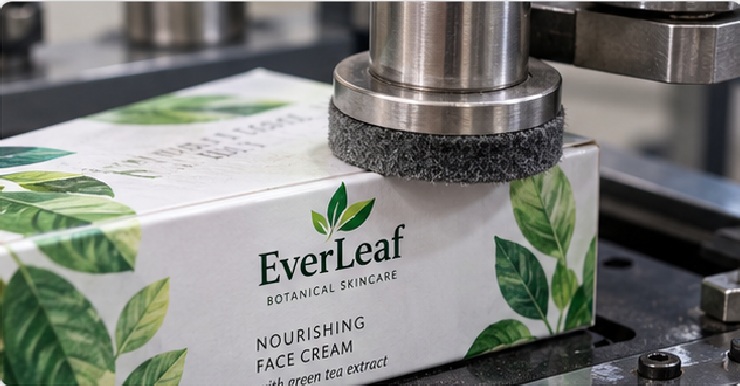
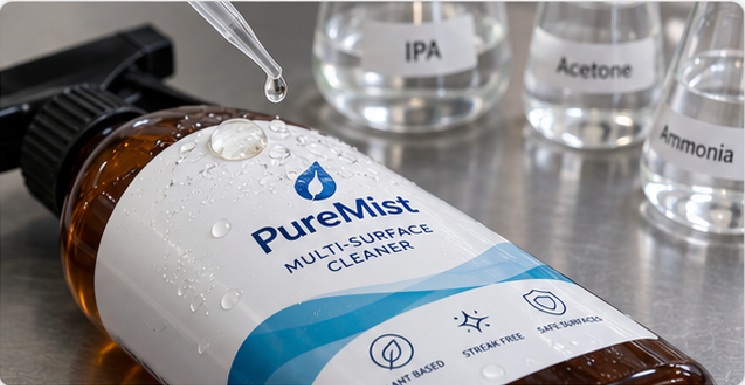
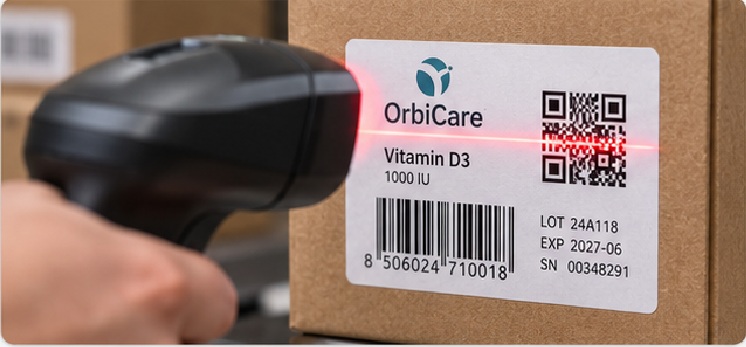
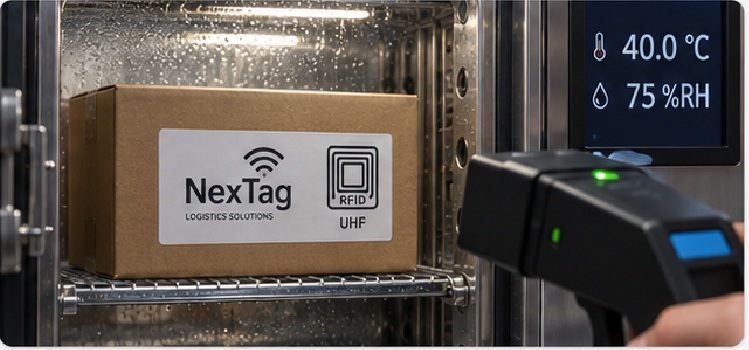


For many standard custom label and sticker projects, the starting quantity is around 500 pieces per design or SKU. Actual MOQ depends on material availability, tooling, finishing, special adhesive, custom holographic work, RFID or security components, and the number of SKUs. Philiton reviews the whole launch mix before confirming the commercial minimum.
Start from the real packing plan, quantity per SKU, expected launch buffer, and reorder timing rather than a large sales forecast. A first order should protect the packing schedule without creating excessive obsolete stock if artwork or packaging changes. Philiton can review total quantity and per-SKU quantity together because one design at 12,000 pieces differs from twelve designs at 1,000 each.
Yes. Multi-SKU programs work best when variants share size, material, adhesive, liner, roll format, finishing, and packing logic. Artwork, flavor, scent, color, language, or variable data can remain different. Philiton separates files and quantities by SKU while looking for shared specifications that reduce unnecessary setup and make repeat ordering easier.
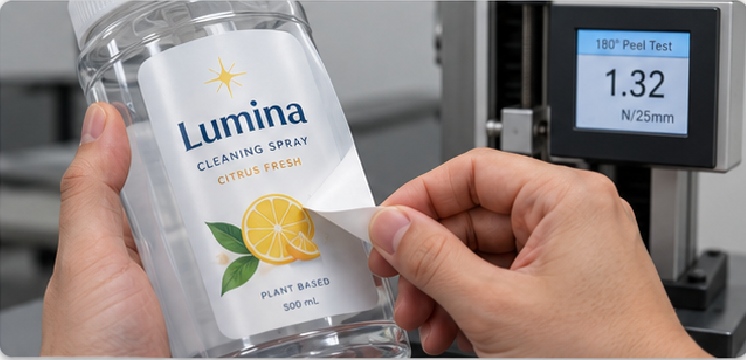
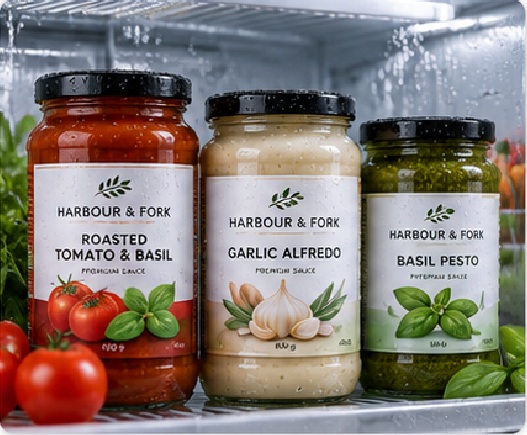
Yes. Material selection is based on the package surface, container geometry, moisture, oil, alcohol or chemical exposure, application temperature, service temperature, handling, desired life, visual target, and application method. Philiton can narrow the material family and arrange samples or testing before the final construction is released.
Straightforward digital samples using available materials can sometimes be handled on a 24-48 hour rush basis after artwork and specifications are confirmed. Complex finishing, special materials, tooling, security structures, RFID components, functional testing, or outside processes require more time. Philiton confirms the sample route and schedule against the actual project instead of applying one fixed lead time to every label.
Digital printing is often strong for samples, smaller runs, multiple SKUs, version changes, and variable artwork. Flexographic printing becomes attractive when stable repeat volume justifies setup and roll-to-roll efficiency. Philiton reviews material, colors, finishing, tooling, SKU mix, quantity, and reorder pattern before recommending a route or changing an approved SKU from digital to flexographic production.
Pantone or spot-color targets can be managed as controlled production references, and a physical color sample can also be used for visual or instrumental comparison where appropriate. Final appearance depends on the base material, transparency, white ink, ink system, laminate, varnish, and finish. The approved physical label is the strongest reference when repeat color matters.
Provide label size, roll direction, inside or outside wound requirement, core specification, maximum roll diameter, gap or pitch, liner width, number across, perforation or black-mark requirements, labels per roll, and available applicator information. Philiton reviews those fields before mass production so the finished roll matches the packing line rather than only the artwork.
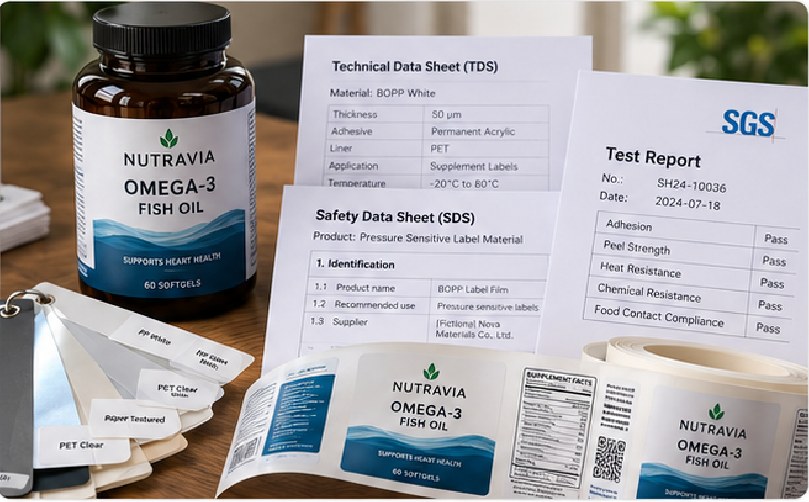
Philiton can support material documentation, supplier declarations, project testing, and third-party testing coordination for specified materials and requirements. Evidence must match the actual material, construction, market, and intended use. The brand or responsible legal party confirms final labeling obligations and market authorization, while Philiton controls manufacturing against the approved artwork and specification.
Yes. Philiton is structured to support a progression from samples and launch runs into thousands, tens of thousands, and repeat mass-production programs. Approved artwork, material, finishing, tooling, roll format, packing rules, and reference samples can be retained. As demand grows, Philiton can review whether digital, flexographic, or another production route gives better economics while preserving the approved label outcome.
A useful quotation starts with enough information to identify the right material, print route, sample type, quantity structure, finishing, roll format, and risk checks. Send the details already available; missing technical fields can be marked “Not sure” and reviewed by Philiton. For new launches, the most helpful starting information is the product and package, target launch date, label size or container dimensions, number of SKUs, opening quantity per SKU, application surface, expected exposure to water, oil, alcohol, cold or heat, desired visual finish, and whether labels are applied by hand or machine. Artwork can be uploaded in its current revision even when finishing layers or production notes still need review. If a co-packer or applicator is involved, include available roll specifications or equipment information. If the launch has regulated text, barcode, QR, RFID, security, or material-document requirements, include those at the quotation stage so sampling and production do not need to be restructured after visual approval. Philiton can then return a clearer manufacturing route instead of pricing an incomplete specification that is likely to change later.
Please include:
For all inquiries, please feel free to reach out at:
Our team will answer your inquiries within 12 hours.
Your information will be kept strictly confidential.
We will contact you within 24 Hours, please pay attention to the email with the suffix“@philiton.com”.
For all inquiries, please feel free to reach out at:
We will contact you within 24 Hours, please pay attention to the email with the suffix“@philiton.com”.
For all inquiries, please feel free to reach out at:
We will contact you within 24 Hours, please pay attention to the email with the suffix“@philiton.com”.