Custom wire identification labels engineered around cable diameter, jacket surface, print area, environment, data and delivery format.
For harnesses, panels, telecom, data centers and industrial equipment, Philiton develops label structures from sample validation to repeat production.
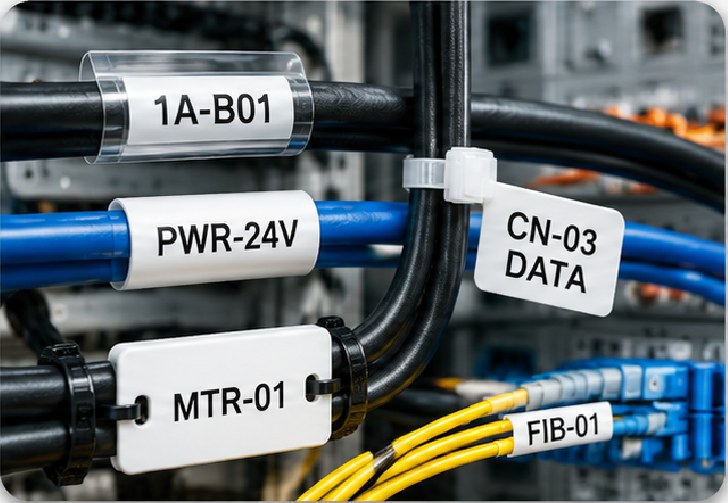
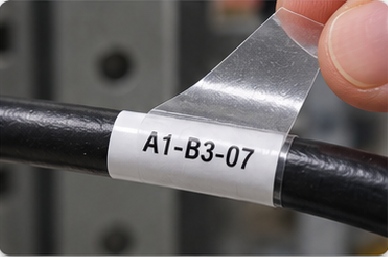
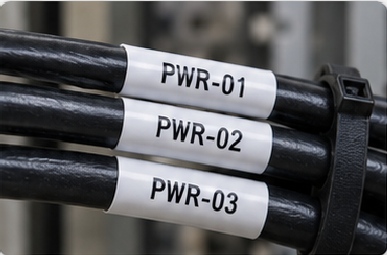
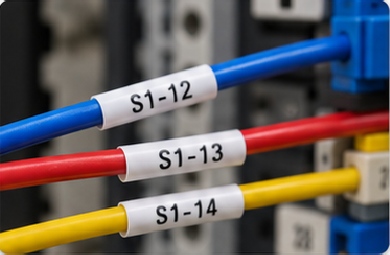
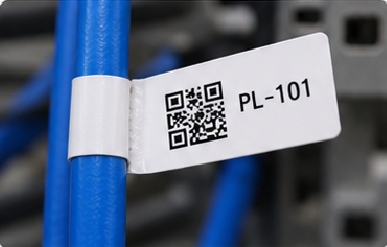
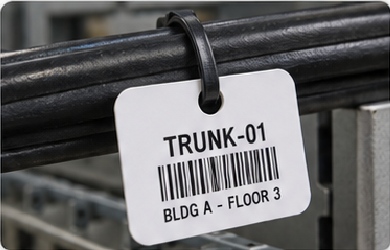
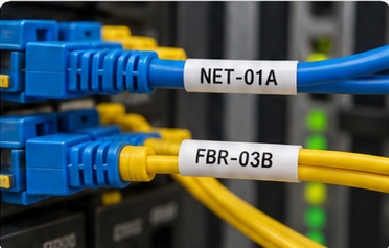
Cable OD, installation timing, information area and service conditions should define the construction first. Artwork becomes far easier to control once the physical identification method is settled.
| Project condition | Suitable starting format | Key design input | Main risk to check | Recommended validation |
|---|---|---|---|---|
| Small individual wire | Wire wrap or self-laminating label | Wire OD, character height, wrap length | Edge lift or excessive stiffness | Apply samples to actual wire and inspect after dwell |
| Medium cable with routine handling | Self-laminating label | Cable OD, printable zone, clear overlap | Printed field exposed to abrasion | Confirm clear overwrap fully protects print |
| Cable needing long text or code | Cable flag label | Flag size, fold line, code size | Fold hides data or code distorts | Scan and read after final fold |
| Large cable or bundle | Wrap-around label or cable tag | Bundle OD, surface, attachment method | Insufficient contact or tag movement | Test on representative bundle |
| High-SKU harness program | Variable-data wrap label | Data file, sequence logic, SKU mapping | Duplicate, missing or mixed identifiers | Data verification plus SKU-controlled packing |
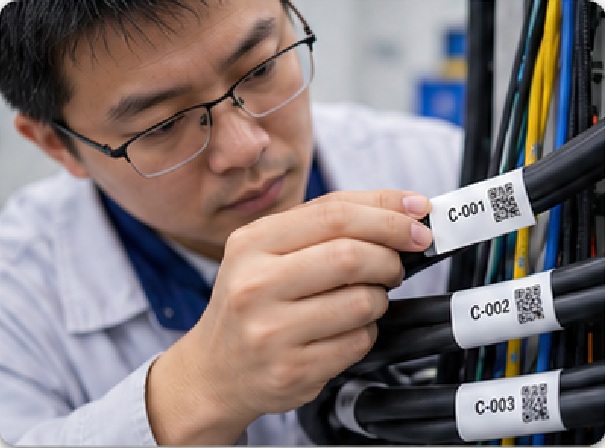
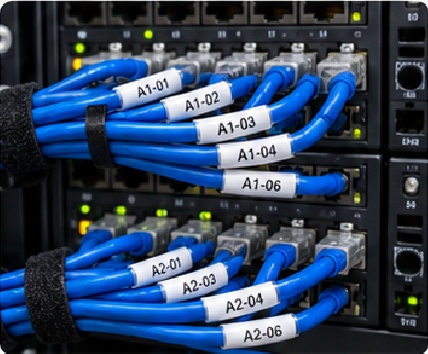
| Network or fiber installation | Flag, wrap or compact self-laminating label | Port/rack data, cable OD, install sequence | Small text, sorting errors, rework | Pilot set by rack or work order |
Cable labels should be sized from the real cable diameter and required information area, not from a standard rectangle selected before the application is known.
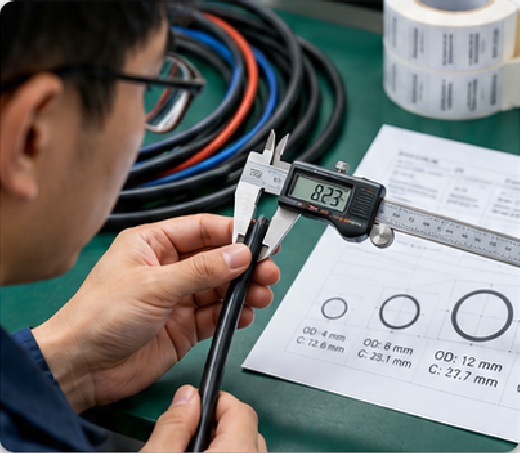
Cable outside diameter is the first dimension Philiton requests because a curved surface changes how a label behaves. Circumference can be calculated as π × cable OD: a 4 mm cable has a circumference of about 12.6 mm, an 8 mm cable about 25.1 mm, and a 12 mm cable about 37.7 mm. Those numbers do not automatically become label length; they show how much surface must be wrapped before printable area, overlap and edge position are added.
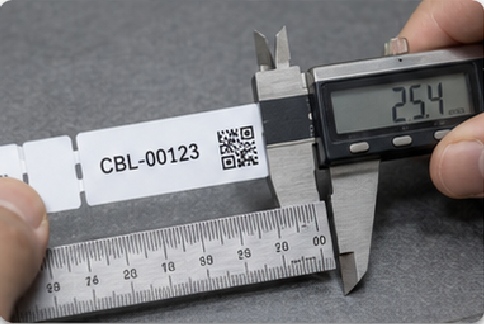
A useful sizing review separates three zones: the readable print area, the wrap or bonding area, and any protective clear overlap. Small wires usually need a more conformable construction because excessive film stiffness can pull an edge away from the jacket. Larger cables create more room for text but may introduce textured surfaces, deeper curvature transitions or larger bundles. Philiton therefore asks for actual cable OD or a physical cable sample whenever dimensions are tight.
For multi-size harnesses, one label size should not be forced across every conductor simply to reduce SKUs. A better approach is to group cable diameters into workable families, then confirm whether one construction can cover each group without sacrificing readability or adhesion. Final dimensions are approved from a dieline or printed sample before mass production.
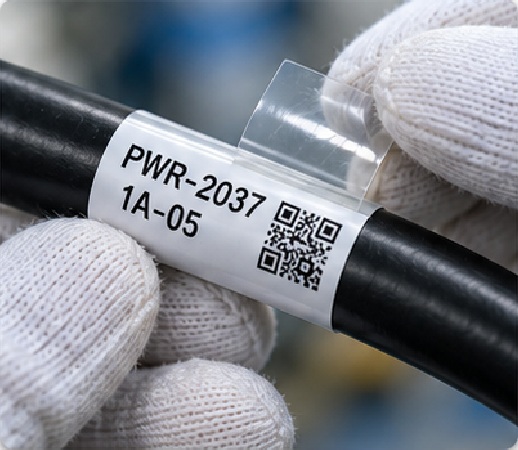
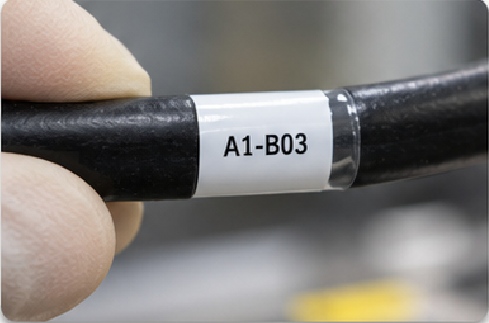
A self-laminating label only works when printable area, clear tail, overlap and adhesive zone are designed as one construction rather than four unrelated dimensions.
Philiton starts by defining what must remain visible after wrapping: wire ID, circuit number, barcode, QR code, warning, asset number or other controlled information. The printable field is positioned so essential text stays clear of the final overlap and remains readable from the expected viewing direction. A transparent tail can then wrap over the printed area to provide an additional protective layer against handling, rubbing and moisture.
Cable diameter determines how quickly the label curves and where the overlap lands. A clear section that is too short may leave print exposed; an unnecessarily long section adds material, increases roll diameter and can make small-wire application harder. Film flexibility, adhesive tack and liner release also affect whether the label wraps smoothly around the cable without spring-back.
For variable-data programs, the protective geometry is approved before data files are released to production. Philiton can then control text position, code size, die-cut registration, sequence and roll configuration against the approved layout. Sample labels should be applied to the actual jacket, allowed to dwell, then checked for edge lift, print coverage, scan performance and handling before bulk production. The result is a repeatable manufacturing specification rather than a visual sample alone.
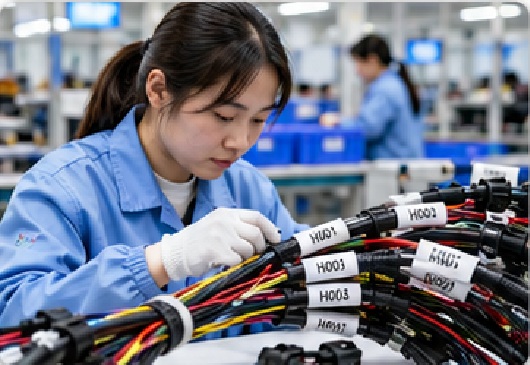
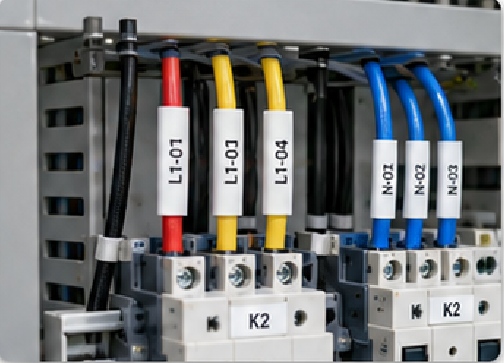
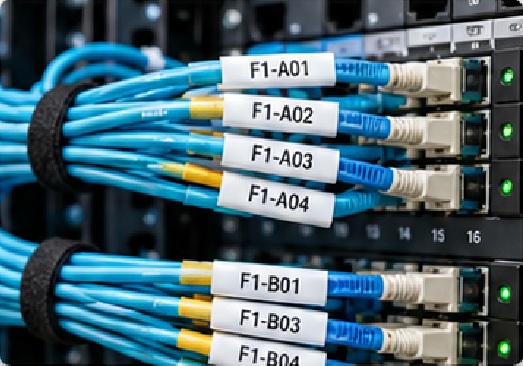
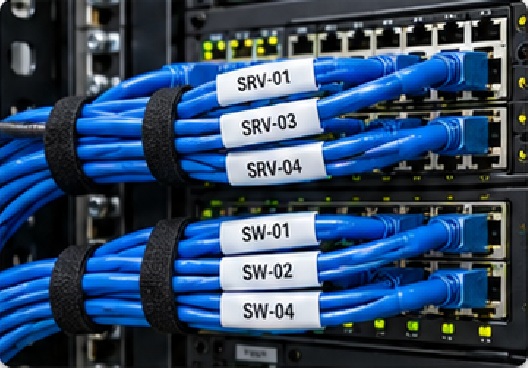

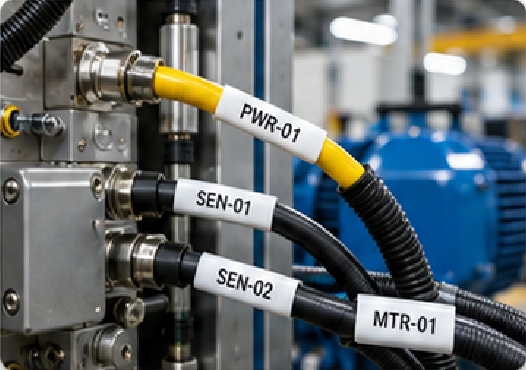
A strong print result is not enough if the film is too stiff or the adhesive is poorly matched to the jacket, curvature, contamination and service environment.
Philiton sources labelstocks according to project requirements and handles printing, converting, finishing, inspection and testing through its production system. Common candidate face materials can include PET, PP/BOPP, PE and other specialty films; higher-temperature electronics programs may also require project-specific specialty materials such as polyimide. The final choice depends on the cable jacket, required conformability, print method, overlamination or self-laminating structure, and expected handling.
Adhesive selection begins with the actual surface. Cable jackets can differ greatly in surface energy, texture, plasticizer content, flexibility and contamination. PE or other lower-surface-energy surfaces may need a different adhesive approach from a smoother, higher-energy surface. Curvature adds another load because the label is constantly trying to return to a flat shape, especially on smaller diameters.
Philiton therefore asks for cable material, OD, application temperature, service temperature, water or oil exposure, cleaning chemicals, outdoor use and required lifetime before locking the construction. When cable chemistry is unclear, a physical sample is more useful than a material name alone. Candidate labels can be applied, allowed to dwell and then checked for edge lift, movement, print protection and removal behavior. Material certificates or third-party test documents are reviewed against the exact selected construction rather than assumed from a general material family.
Terms such as waterproof, chemical-resistant or high-temperature only become useful when the actual exposure, duration, cable surface, service life and acceptance method are defined before material approval.
| Service condition | What Philiton reviews | Construction direction | What should be validated | Release decision |
|---|---|---|---|---|
| Repeated handling and abrasion | Contact points, rubbing, maintenance frequency | Protected print, laminate or self-laminating structure | Legibility and edge condition after representative handling | Approve only after print remains readable |
| Water or condensation | Application temperature, moisture, dwell time | Film stock plus suitable adhesive | Adhesion before and after moisture exposure | Confirm on actual cable or equivalent surface |
| Oil or cleaner exposure | Chemical type, concentration, contact duration | Resistant film/ink/protective finish candidate | Print rub, swelling, edge lift and adhesive change | Test with representative chemical exposure |
| Outdoor installation | UV, rain, temperature cycle, expected service period | Outdoor-suited film and adhesive candidate | Weathering evidence or project test plan | Do not state outdoor life without supporting evidence |
| Elevated temperature | Application and service temperature | Heat-capable material/adhesive candidate | Dimensional stability, adhesion and print durability | Confirm against material data and sample test |
| Tight cable curvature | Cable OD, film stiffness, overlap | Conformable film and suitable adhesive | Spring-back and edge lift after dwell | Approve size/material combination, not material alone |
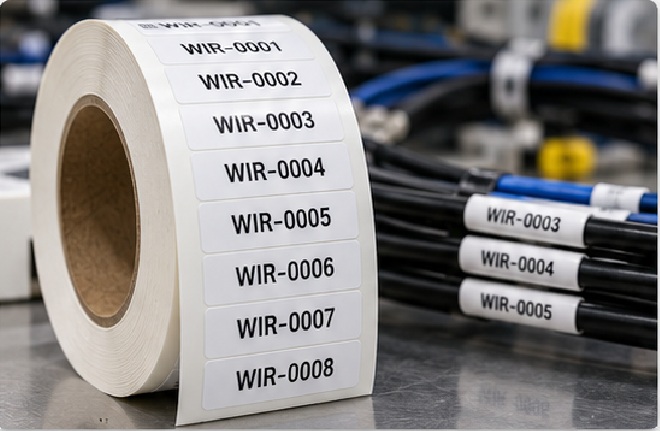
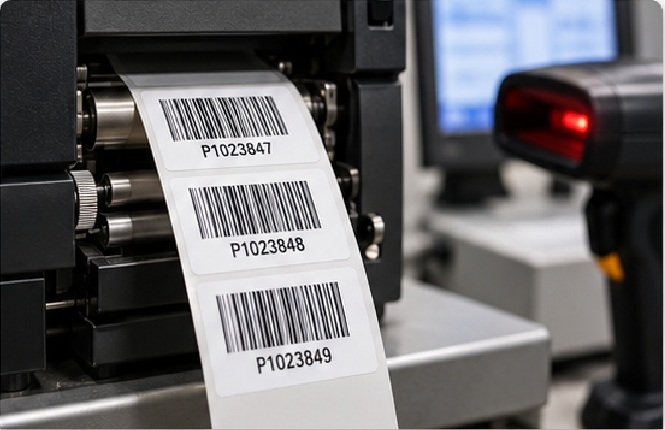
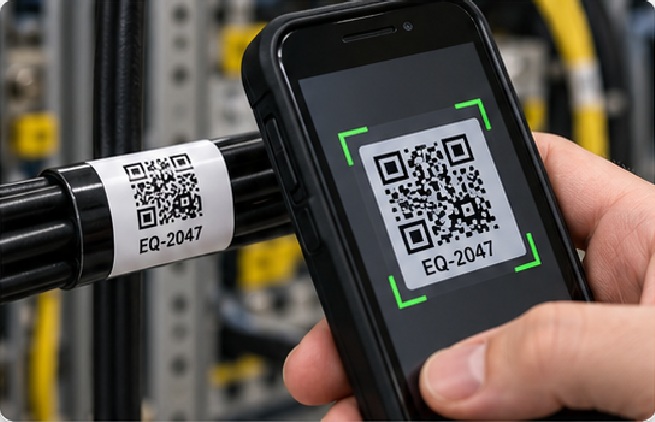
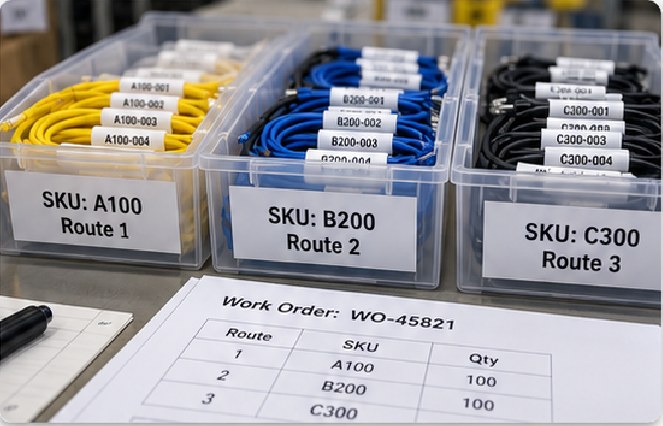
A cable-label sample should close fit, adhesion, print, data and dispensing risks before volume production rather than serve only as a color proof or artwork check.
For standard printed label samples using confirmed artwork and readily available materials, scheduling commonly starts around 3-5 business days. Specialty adhesives, custom materials, complex converting or data-heavy pilots are quoted with a project-specific schedule. Sample timing begins after the information needed for the selected validation stage is complete; waiting for artwork, cable samples or specification approval is not active production time.
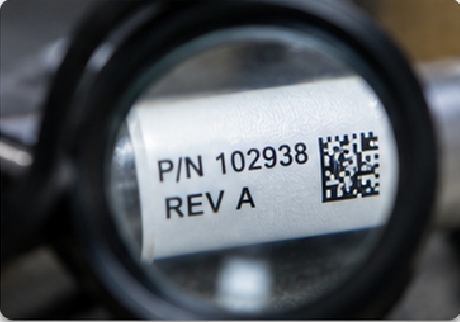
Before approval, Philiton recommends applying labels to representative cable, allowing adhesive dwell, then checking edge lift, readability, protective overlap, code scanning and handling. When the project runs through a local printer or applicator, the pilot should also be tested on the actual equipment. Once the approved structure is locked, material, artwork, tooling, data rules, roll parameters and QC criteria become the reference for mass production and repeat orders.
Philiton links prepress, printing, converting, variable data, inspection and packing so every manufacturing step works from the same approved cable-label specification and revision.
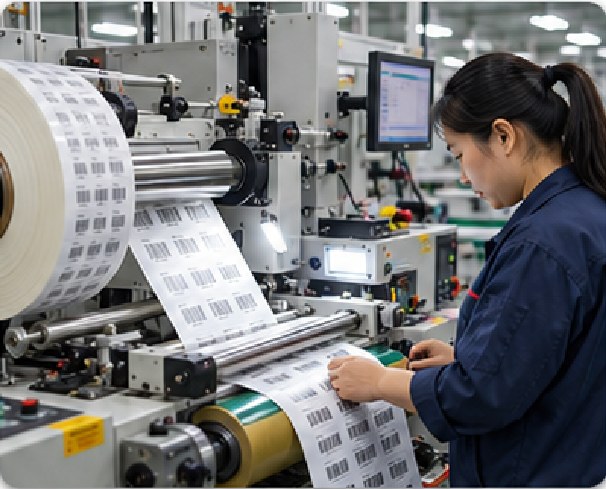
Production begins with an artwork and specification review. The team checks label dimensions, print area, cable application, material, adhesive, colors, variable fields, die line, roll configuration and packing instructions. Digital printing can support short runs and multi-SKU work, while flexographic and other printing routes can be selected when quantity, material and repeat-production economics justify a different setup. Screen, UV and other specialty processes are available for projects that require specific graphics or durable print effects.
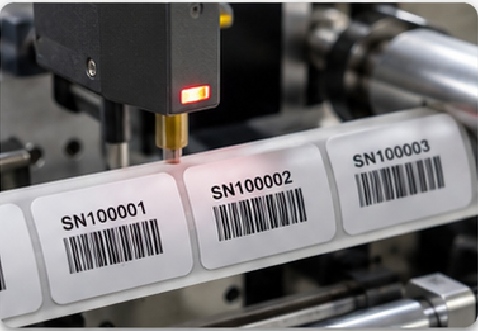
After printing, converting controls determine whether the approved design becomes a usable cable-identification product. Lamination or a self-laminating clear zone may protect print; die cutting defines wrap geometry; waste stripping removes matrix; slitting and rewinding set liner width, core, winding direction and finished roll size. Variable-data programs add data import, batch control, stoppage/restart rules, reprint handling and final sequence checks.
Mass production is not treated as a larger copy of a sample. Philiton compares production against the approved artwork/specification and project QC plan, then packs by SKU, quantity and batch. Repeat orders can reuse retained project records when the specification remains unchanged, while changed cable size, jacket, material, data structure or compliance requirement triggers a fresh review before release.
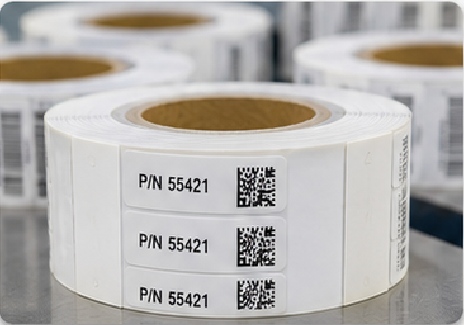
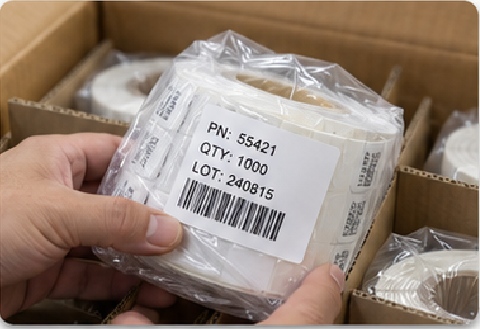
Roll configuration affects printers, dispensers, storage and line-side handling. Philiton records delivery parameters together with the label specification instead of deciding them after printing.
| Delivery parameter | What to provide | Why it matters | Philiton control point |
| Core diameter | Required core ID from printer/applicator | Controls machine fit and roll build | Confirm before rewinding |
| Winding direction | Inside/outside wound and leading edge orientation | Controls how label enters printer or dispenser | Match approved unwind diagram |
| Gap and pitch | Sensor spacing or indexing requirement | Affects detection and registration | Check die-cut repeat against specification |
| Maximum roll OD | Machine or storage limit | Controls labels per roll and total roll thickness | Set roll count during rewinding |
| Liner width | Required web width and side margins | Affects tracking through printer/applicator | Control slitting width |
| Labels per roll | Target count or roll length | Supports workstation replenishment and inventory | Count and label each roll |
| SKU separation | One SKU per roll/carton or mixed rules | Prevents installation and receiving errors | Use SKU/batch carton identification |
| Shipment method | Courier, air or sea plus destination | Determines packing protection and logistics quote | Quote route and transit separately by project |
Cable and wire programs often mention UL, RoHS, REACH, flame behavior, chemical resistance or temperature ratings. Philiton separates manufacturing capability from documentary claims so evidence stays tied to the actual material and use condition.
Philiton can manufacture to approved regulatory artwork and can support material documentation or third-party testing when the project requires it. Evidence must be connected to the selected face material, adhesive, ink, protective layer, cable application and destination requirement. A report for one film or adhesive should not automatically be extended to another construction after a material, supplier or end-use change.
ISO, FSC, UL, IATF, BSCI, Sedex/SMETA, GRS and similar certifications are not presented as active Philiton certifications unless the certificate number, scope, legal entity and validity are verified for publication. RoHS and REACH are also not treated as generic factory certificates; they relate to defined materials, substances, test scope and market requirements.
For projects that need a formal document package, send the target standard, destination market, cable application and any project specification during the quotation stage. Philiton can then determine which supplier documents, material declarations, test reports, production records or third-party testing should be included. The brand, importer or legally responsible product party remains responsible for confirming final market-entry and labeling obligations.
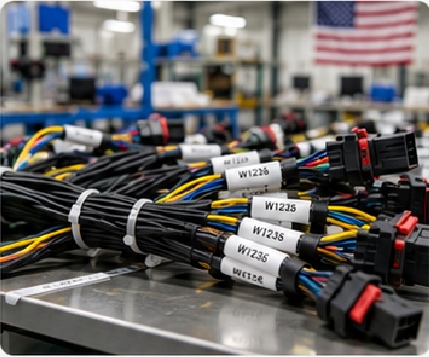
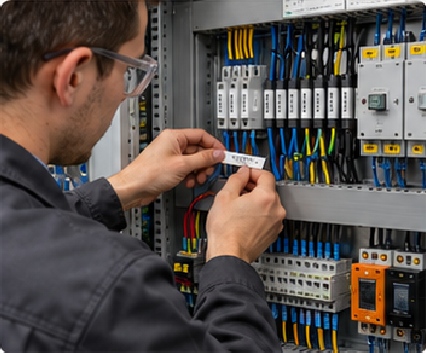
Philiton was founded in 2016 and operates manufacturing facilities in Shenzhen and Dongguan, China. The combined manufacturing system covers more than 12,000 ㎡ and supports custom labels, stickers, tags, industrial identification, security labels and smart-label projects for international programs. Cable and wire identification sits within the company’s broader electronics and industrial-label scope, allowing related barcode, QR, variable-data and durable-label requirements to be handled within the same manufacturing organization.
A useful quotation starts with the cable and application, not only the finished label dimensions. Send available information and Philiton can organize the remaining items before sampling. For cable-identification projects, the most useful inputs are cable outside diameter, jacket material or a physical sample, label type, printed content, variable-data file, quantity per SKU, operating environment, application method and required roll or sheet format. For printer- or dispenser-fed labels, include core size, winding direction, maximum roll diameter, liner width, gap/pitch and any sensor requirement. If oil, chemicals, outdoor exposure, elevated temperature or compliance documentation is involved, include the exact condition and target standard so material selection and testing can be planned correctly. Also include the destination country, preferred shipping method and required in-hand date when timing matters. Philiton can then separate sample preparation, active production and logistics timing instead of giving one combined lead-time estimate that hides where approval or transport time is being spent.
For all inquiries, please feel free to reach out at:
Our team will answer your inquiries within 12 hours.
Your information will be kept strictly confidential.
We will contact you within 24 Hours, please pay attention to the email with the suffix“@philiton.com”.
For all inquiries, please feel free to reach out at:
We will contact you within 24 Hours, please pay attention to the email with the suffix“@philiton.com”.
For all inquiries, please feel free to reach out at:
We will contact you within 24 Hours, please pay attention to the email with the suffix“@philiton.com”.