Your Trusted Labels & Stickers Manufacturer from China!

Quality Control For Custom Labels Stickers

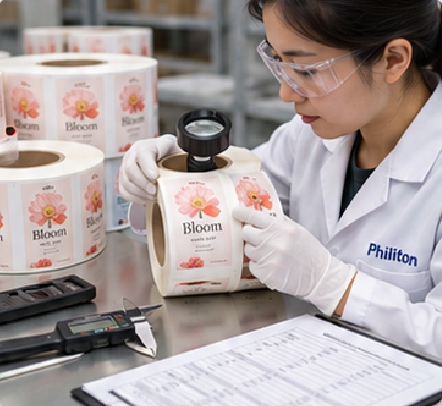
Custom label quality controlled from incoming material and approved artwork through production, testing, final inspection and shipment.
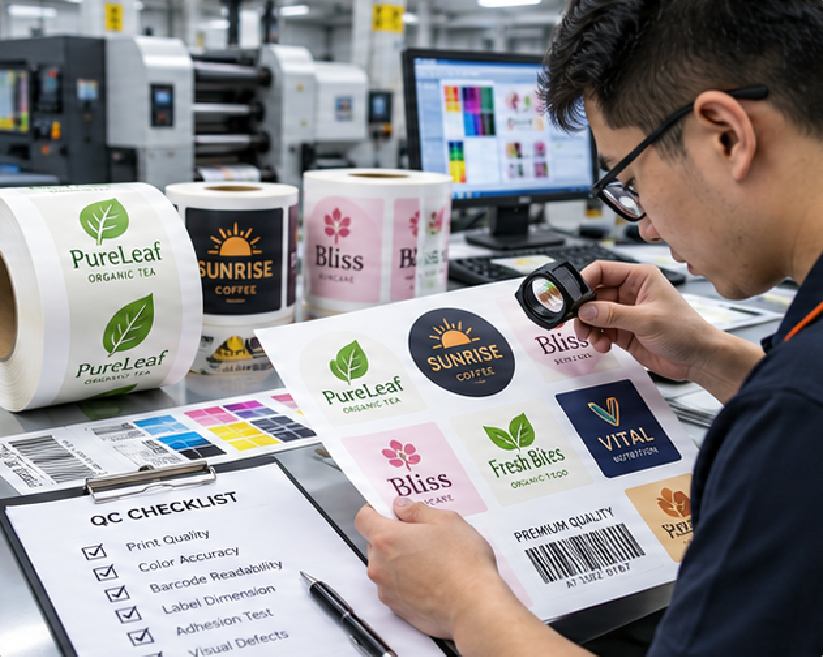
  • IQC, IPQC, FQC and OQC checkpoints across the manufacturing flow
  • Dedicated QC and laboratory areas support print, adhesion, durability, barcode and RFID verification
  • 12,000+ ㎡ manufacturing footprint with 200+ employees and 91 technical, skilled production and quality personnel
  • Inspection plans are matched to the approved specification, application risk and required delivery format
Quality Control For Custom Labels Stickers

What Quality Control Means in Label Manufacturing

AreaQuality Assurance FocusQuality Control Focus
Artwork & revisionDefines approval flow, controlled files and revision responsibilityConfirms production uses the approved artwork and current revision
MaterialsDefines approved material and supplier requirementsChecks received material identity, specification, batch and visible condition
Printing & convertingDefines process route and acceptance requirementsChecks first article, in-process print, finishing, die cut and roll condition
Final releaseDefines release criteria and required recordsChecks finished labels against approved specification before packing or shipment

Quality Priorities Change With the Organization Using the Labels

Different organizations measure label quality differently. Philiton aligns inspection and verification with the commercial risk, application method, brand standard and functional requirement behind each order.

Established Consumer Brands

Brand teams need more than attractive print. Repeated orders must preserve approved artwork, color appearance, material construction and finishing across changing quantities and SKU mixes. Philiton connects prepress approval, sample confirmation, in-process checks, final inspection and project records so later production can be reviewed against the correct baseline. Typical priorities include Pantone references, clear-film appearance, white ink, foil position, emboss registration, multi-SKU segregation and packaging identification. The goal is to reduce visible shelf variation and prevent outdated versions from returning to production.

Manufacturers and OEMs

Production operations judge label quality by whether the labels run reliably on the line and perform on the product. Size, gap, pitch, liner width, roll direction, core diameter, maximum roll diameter and labels per roll can matter as much as graphic appearance. Philiton reviews these variables before mass production and includes them in final and outgoing checks when required. Barcode readability, variable data, adhesive fit and packaging rules can also be added to the inspection plan for manufacturing programs with line-stop or traceability risk.

Quality and Procurement Teams

Supplier qualification teams want evidence that problems can be prevented, identified, isolated and traced. Philiton organizes quality work across IQC, IPQC, FQC, OQC and internal laboratory verification, with project coordination linking artwork, materials, production, inspection and shipment. Procurement can provide an existing inspection plan, supplier checklist, approved sample or corporate quality specification for review. Where a requirement depends on a certificate, third-party report or customer-specific acceptance limit, the exact document and scope are confirmed for the project instead of being treated as a universal factory claim.

Distributors and Print Brokers

A back-end manufacturing partner must keep many client projects separated while protecting specifications and confidential artwork. Philiton supports multi-SKU project management, neutral or project-specific packing, repeat-order review and controlled production records. Quality checks can emphasize SKU identity, version control, quantity, roll configuration, carton marking and consistency between repeat orders. Branded samples, photographs and case-study details are not automatically used publicly; authorization or adequate anonymization is required before external use, which is important for distributors managing end-client confidentiality.

Quality Control Across Twelve Label and Sticker Programs

Quality checkpoints must follow the risks of the product. Philiton adapts inspection, testing, data verification and packing control to the construction and end use of each label program.
Product Packaging Labels

Product Packaging Labels

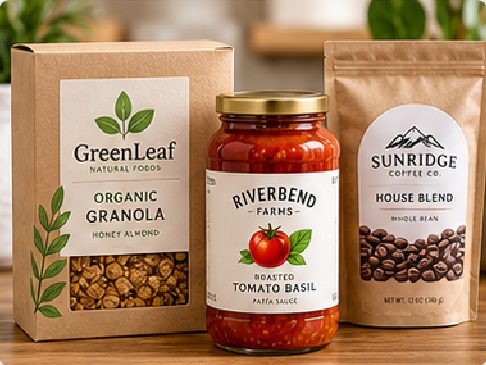
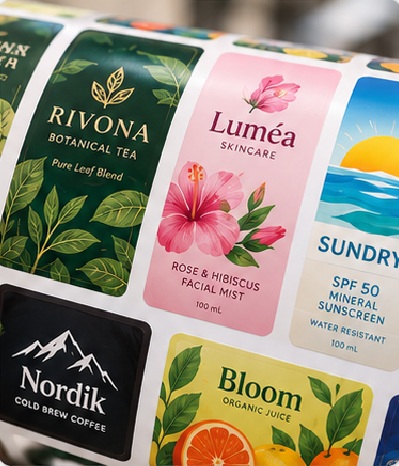
Packaging labels combine brand appearance with application performance. Philiton reviews material, adhesive, artwork, color, finishing and delivery format as one construction. QC commonly checks visual appearance, text, dimensions, die cut, surface finish and packaging identification. For roll-applied packaging, roll direction, liner and winding requirements can be added so a label that looks correct also arrives in a form compatible with the packing line.
Roll Labels

Roll Labels

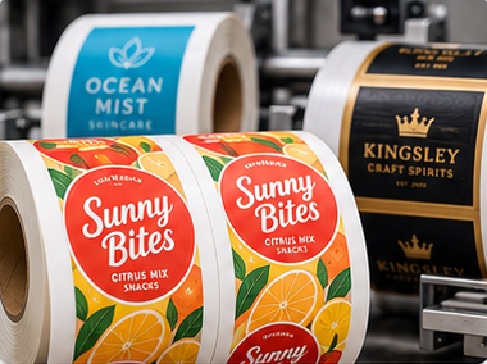
Roll labels introduce machine-compatibility risks that sheet or individual labels do not. Philiton can control core size, winding direction, gap, pitch, web width, labels per roll and other roll parameters against the approved specification. Final inspection can also review roll tightness, edge condition, telescoping risk and SKU identification. These checks help reduce changeover problems, misfeeds and production interruptions at the application stage.
Clear Labels

Clear Labels

Clear labels make contamination, white ink registration, print density and adhesive appearance more visible. Philiton checks the selected transparent construction, production artwork and printed result in the finished structure rather than judging color only from a digital proof. Projects can include checks for haze, surface marks, white-underprint alignment, die-cut edge condition and visible contamination. Actual container appearance remains the strongest reference when a no-label-look effect is required.
Wine and Spirit Labels

Wine and Spirit Labels

Premium wine and spirit labels often combine textured stocks, foil, embossing, varnish and precise color expectations. Philiton uses approved artwork and samples to define the manufacturing baseline, then checks print, finishing position, die cut and final appearance after all processes are combined. Where moisture or ice-bucket exposure matters, material and adhesive selection should be validated for the actual bottle and service condition rather than assumed from visual quality alone.
Cosmetic Labels

Cosmetic Labels

Cosmetic labels may face oils, water, curved containers and dense regulatory or ingredient text. Philiton reviews artwork legibility, material construction, protective finishing, adhesive fit and dimensional accuracy according to the package and use environment. QC can include color, small text, white ink, lamination or varnish condition, adhesion-related testing and final package compatibility. Product formula exposure should be defined when oil, alcohol or chemical resistance is important.
Cosmetic Labels

Food and Beverage Labels

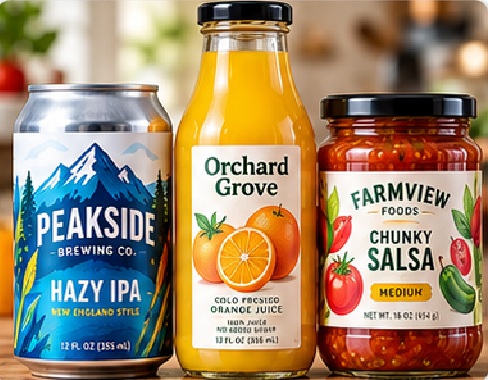
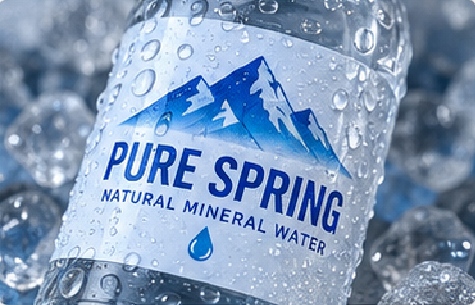
Food and beverage labels can involve chilled storage, condensation, wet bottles, high-speed application and market-specific information. Philiton controls the approved label construction and print output while separating manufacturing responsibility from the brand’s legal content responsibility. Where low-temperature or wet conditions matter, material and adhesive selection is tied to the application surface and temperature. Roll parameters, barcode readability and packing identification can also be incorporated for automated filling lines.
Thermal Labels

Thermal Labels

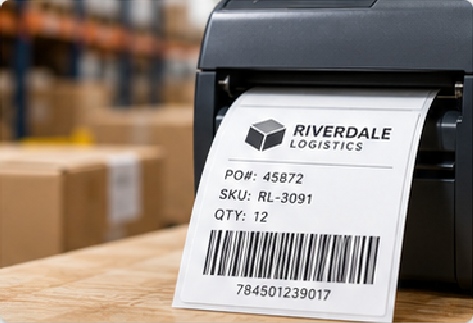
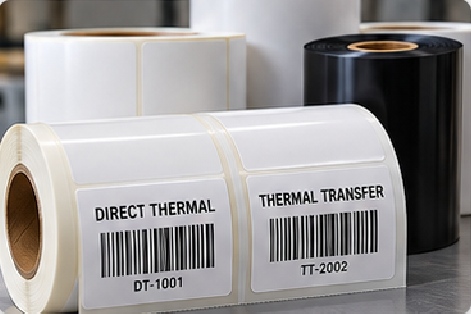
Thermal labels are often purchased for logistics, retail, warehouse or variable-information use, so printability and data readability are central quality concerns. Philiton can review thermal material type, dimensions, roll format, liner, core and compatibility requirements. For thermal-transfer programs, ribbon compatibility and durability expectations should be defined with the application. For direct-thermal programs, storage life and environmental exposure should be considered because the imaging layer itself is part of the performance risk.
Barcode and QR Labels

Barcode and QR Labels

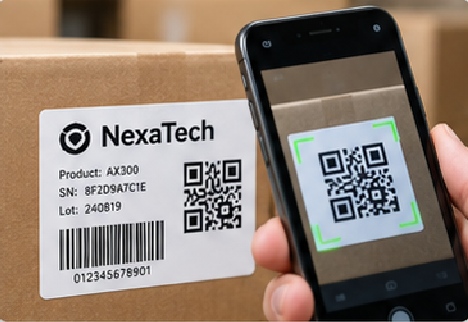
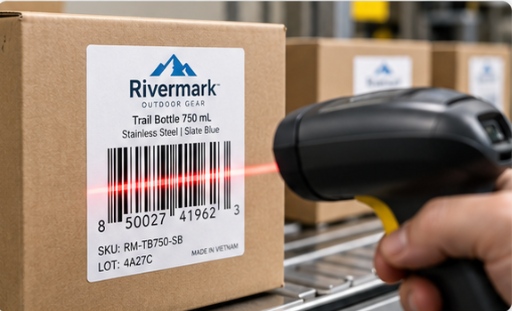
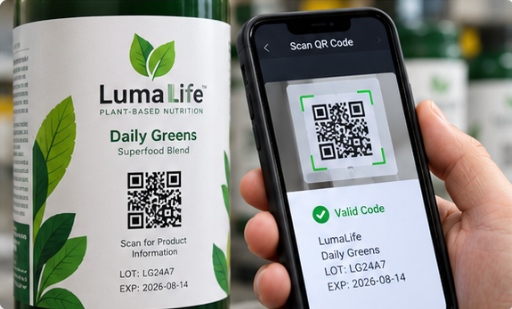
A code that scans once with a phone is not automatically production-ready. Philiton treats barcode and QR output as a data-quality object as well as a printed graphic. Projects can define code size, contrast, quiet zones, variable-data rules, verification method and rejection handling. During production, visual output, data sequence and readability can be checked according to the agreed plan, helping reduce unreadable codes, duplicates, missing records or damaged symbols.
Industrial Labels

Industrial Labels

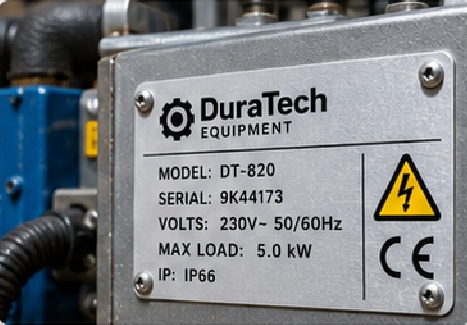
Industrial labels may require stronger materials, durable print, high-tack adhesives, abrasion resistance or chemical and temperature evaluation. Philiton separates the requirement into material, adhesive, print, protective layer and verification steps. QC can then focus on dimensions, print legibility, adhesion-related checks, surface protection, serial data and final identification. Exact environmental claims are confirmed through material information, samples and project testing rather than applied universally to every industrial label.
Security Labels

Security Labels

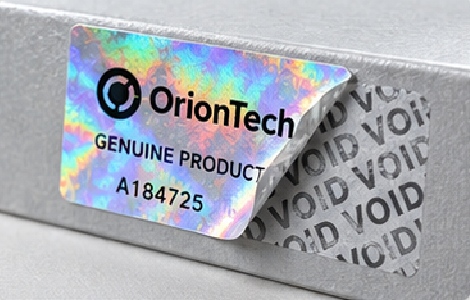
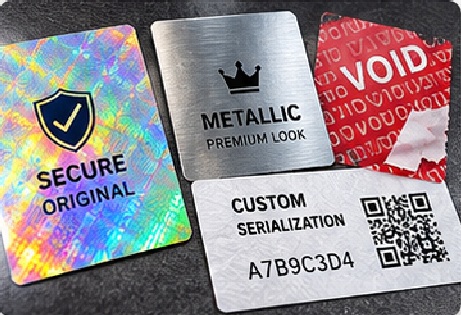
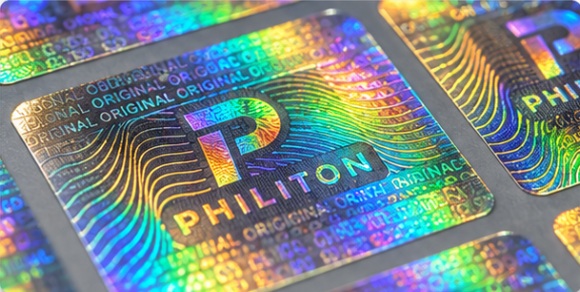
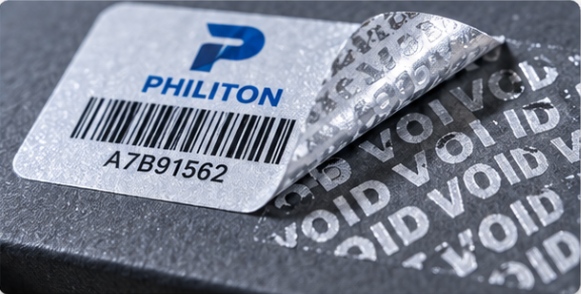
Security labels require quality checks beyond appearance because the intended evidence of opening or tampering must work on the real surface. Philiton can manufacture structures using VOID, destructible, holographic, security-seal and variable-data features according to project requirements. QC may include print, die cut, security pattern, sequence data and application trials. The required tamper behavior should be defined and tested; wording such as tamper-evident is more accurate than an absolute tamper-proof promise.
RFID and NFC Labels

RFID and NFC Labels

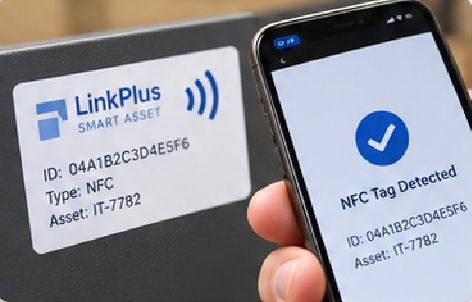
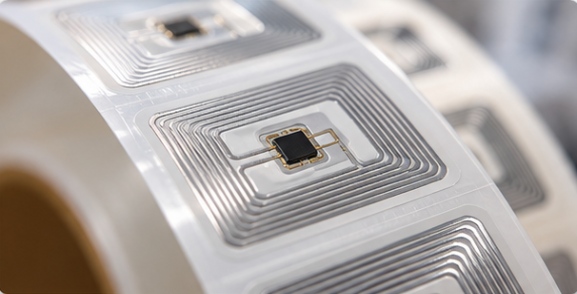
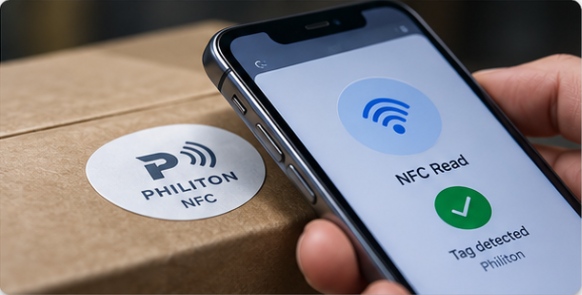
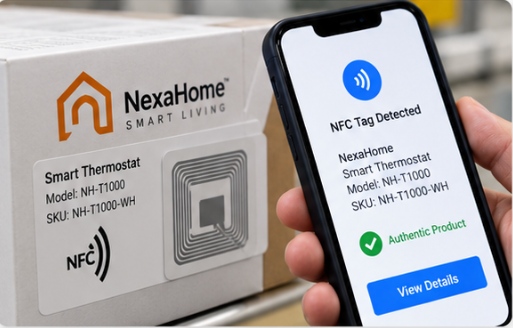
RFID and NFC labels combine a printed label with an electronic inlay, so physical and data verification must be connected. Philiton can support inlay converting, printing, encoding, serialization, read verification and final converting according to the selected chip or inlay and application. QC can review visual information, encoded data, read status, label construction and roll format. Read performance still depends on the final surface, reader environment and surrounding metal or liquid conditions.
Apparel and Hang Tags

Apparel and Hang Tags

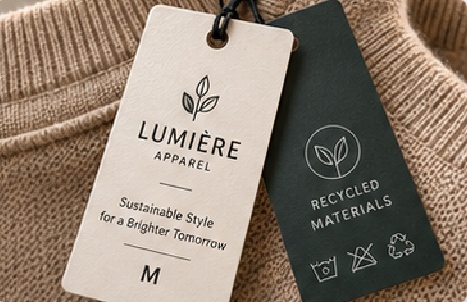
Apparel labels and hang tags can involve paper or film stocks, variable size and style information, barcode data, foil, embossing, holes, strings or related brand elements. Philiton checks approved artwork, material, dimensions, print, finishing and packing by SKU. Multi-style programs benefit from clear revision and segregation controls so size, color, style code and carton identification remain aligned. Any textile or product legal content supplied for printing remains subject to the responsible brand’s market requirements.

Material Control Starts Before Printing Begins

Philiton sources labelstocks and related raw materials from qualified external supply channels, then verifies identity, specification, condition and project fit before the material enters production.
Paper Labelstocks

Paper Labelstocks

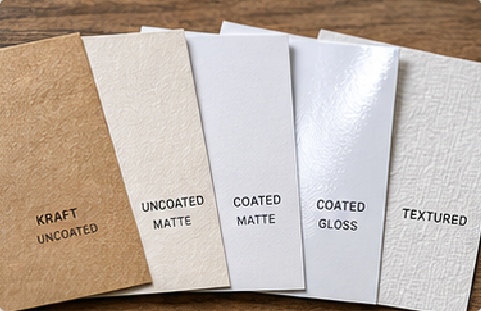
Coated, uncoated, matte, gloss, kraft and textured papers can behave differently during printing, die cutting, finishing and end use. Incoming review focuses on the approved stock identity, surface condition, specification and batch alignment. For premium papers, visual texture and finishing response may also be part of sample approval. Sustainability or chain-of-custody claims are only used when the specific sourced material and supporting documentation have been verified for the project.
BOPP and PP Films

BOPP and PP Films

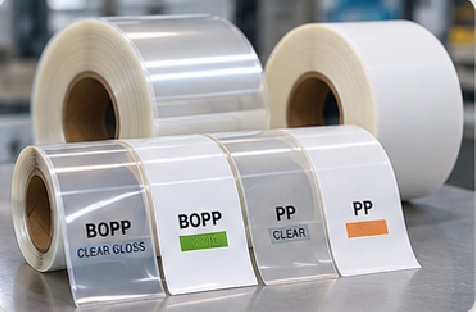
BOPP and related PP films are common for moisture-resistant packaging and clear-label applications. Quality control considers film identity, thickness or construction where specified, surface treatment, transparency or opacity, print compatibility and adhesive pairing. Clear projects may require closer attention to contamination, haze, white ink and adhesive appearance. The film alone does not determine waterproof or durability performance; ink, finishing, adhesive, application and service conditions also matter.
PET Films

PET Films

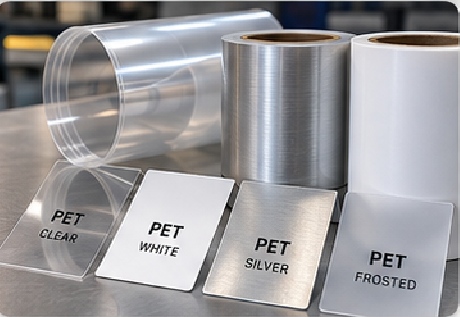
PET is often selected for durable, industrial, security or higher-stability label constructions. Philiton checks the approved material route before printing and can combine PET with suitable adhesive, printing and protective finishing based on the application. When temperature, chemicals, abrasion or long service life matter, the project should define exposure conditions and the required verification method. Material data and project testing support specific performance statements more reliably than a generic PET durability claim.
PE and Flexible Films

PE and Flexible Films

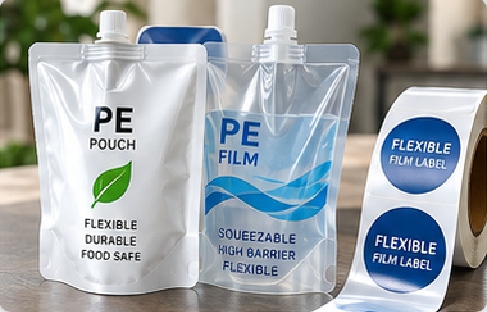
PE and other flexible films can better follow squeezable or flexible containers, but film stiffness, adhesive behavior, ink adhesion and converting performance still need review. Incoming material identity must match the approved construction because a film that looks similar may respond differently during printing or application. For flexible packaging or squeeze bottles, Philiton also considers container movement and curvature when recommending the label structure and evaluating edge lift or wrinkling risk.
Thermal Materials

Thermal Materials

Direct-thermal and thermal-transfer-compatible materials serve different operating needs. Philiton verifies the specified thermal material route, roll dimensions and converting requirements before production. Direct thermal relies on the coated imaging layer and may require clearer expectations for storage life and environment. Thermal transfer depends on the ribbon and surface combination. For barcode programs, readability and verification criteria should be defined alongside the stock rather than evaluated only by material appearance.
Specialty and Security Stocks

Specialty and Security Stocks

Metallic, holographic, destructible, VOID, synthetic and other specialty stocks add visual or functional behavior that standard paper does not provide. Incoming control checks the approved material identity, visible condition and project-specific structure. Some custom holographic or security materials can involve separate origination, tooling or supplier minimums. Philiton therefore confirms the material route and evidence requirement before mass production instead of treating every specialty stock as an interchangeable inventory item.

Adhesives, Liners and Protective Layers Need Separate Control

A label construction is more than the face material. Adhesive, release liner and protective layers can decide whether the finished roll applies cleanly and survives its environment.

Permanent Adhesive

Permanent adhesive systems are selected according to the application surface, surface energy, curvature, temperature, moisture and service life. Incoming and project checks focus on using the approved construction, not simply choosing a generic permanent glue. PP, PE and HDPE can require stronger or specially formulated systems. Final confidence comes from testing on the actual or representative surface when adhesion failure would create line, retail or safety risk.

Removable Adhesive

Removable and repositionable constructions require a balance between enough tack for service and acceptable removal behavior later. Performance can change with dwell time, temperature, substrate coating and surface sensitivity. Philiton therefore treats removability as an application requirement rather than a universal material property. A sample applied to the intended surface is the preferred route when residue, surface marking or clean removal is commercially important.

Freezer Adhesive

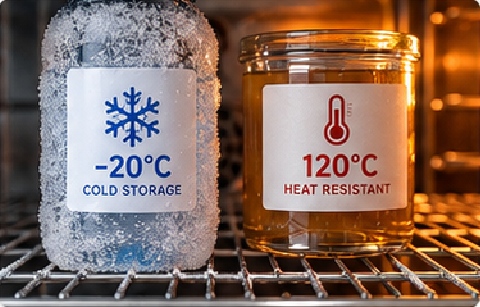
Low-temperature projects must distinguish the temperature when the label is applied from the temperature during storage or service. A construction can survive cold conditions after bonding but still fail if applied below its minimum application window. Philiton collects the application and service temperatures, container material, moisture or condensation conditions and storage process before recommending a route. Project testing can then confirm the construction on the actual or representative package.

High-Tack Systems

Rough, curved, low-surface-energy or difficult substrates may require higher-tack adhesive systems. More aggressive adhesive is not automatically better because liner release, application speed, removability, bleed and substrate sensitivity can also matter. Philiton reviews the surface and failure consequence before selection. Incoming material control then verifies that the approved adhesive construction reaches production, while sample testing checks whether the proposed route creates the required bond under realistic conditions.

Release Liners

The liner supports die cutting, waste stripping, rewinding, storage and label dispensing. Liner thickness, stiffness, release behavior and width can influence automatic application even though the liner is discarded after use. Philiton can control the approved liner and roll configuration together with gap, pitch, web width and core requirements. For automated labeling, a stable liner and suitable release behavior help reduce peeling, sensor and dispensing problems at the application machine.

Lamination and Varnish

Protective finishing can improve abrasion, moisture and handling resistance, but it does not correct an unsuitable adhesive or material choice. Philiton checks the specified lamination or varnish route during production for bubbles, wrinkles, contamination, registration and surface consistency. Where alcohol, oil, chemicals or heavy friction are expected, the exposure should be defined so protection can be evaluated against a real condition instead of described with an unlimited resistant claim.

Functional Components Add Their Own Quality Risks

Smart, security and specialty labels combine printed converting with added functional components. Philiton treats each component as a controlled part of the finished construction.
RFID Inlays

RFID Inlays

RFID label quality begins with the correct frequency, chip or inlay family, antenna size and intended application. Philiton can inspect incoming inlay identity and basic readability, then integrate the inlay through converting, printing, encoding and final verification. Finished-label checks can connect the visible serial information with electronic data where required. Read range and performance are still application-dependent, especially near metal, liquid or challenging reader environments.
NFC Components

NFC Components

NFC projects can combine a printed label or tag with encoded URL, NDEF or other defined data. Philiton confirms the selected inlay, memory requirement, encoding rule and finished construction before production. Quality verification can include encoding accuracy, visible-data alignment and read checks. Data ownership, destination system and long-term platform behavior remain separate from label manufacturing, so the required interface and retention rules should be defined for the project.
Holographic Elements

Holographic Elements

Holographic films or effects may be used for visual security, decoration or brand authentication. QC focuses on the approved holographic material or effect, print alignment, surface condition, die cut and finished appearance. Custom holographic origination can involve separate supplier or tooling requirements and should be confirmed before artwork is frozen. Where the holographic element forms part of a security program, its role should be defined together with tamper structure or serialization rather than treated as decoration alone.
Security Structures

Security Structures

VOID, partial-transfer, full-transfer, destructible, security-seal and concealed-code structures require functional evaluation on the intended substrate. Philiton can combine these materials with printing, die cutting and variable data. The quality plan should define what visible evidence must remain after removal, how the seal is applied and what data controls are required. Finished labels can then be tested against the agreed behavior rather than judged only by their unopened appearance.

Four Quality Gates Control the Manufacturing Flow

Philiton organizes inspection around four manufacturing gates, supported by 13 quality personnel, approximately 300 ㎡ of dedicated QC space and about 150 ㎡ of laboratory space for project verification.

IQC Incoming Control

Incoming quality control checks whether received materials match the approved project route before they enter production. Review can cover supplier, facestock, adhesive, liner, specification, batch, visible condition and required supporting documents. Special projects may add RFID inlay identity, thermal stock, security material or sustainability evidence. Nonconforming incoming material is isolated for confirmation, replacement or re-sourcing rather than being accepted because it appears visually similar to stock already in the warehouse.

IPQC Process Control

In-process quality control is designed to stop a small deviation from being repeated through a long production run. Philiton can use first-article confirmation, patrol inspection and process checks during printing, finishing, die cutting, waste stripping, slitting and rewinding. Color drift, registration, surface defects, foil transfer, die-cut position, roll direction and variable-data issues are reviewed at relevant stages. When an abnormal condition appears, the affected section can be isolated before production continues.

FQC Final Control

Final quality control evaluates the completed label construction against the approved artwork, sample, specification and project requirements. The review can include appearance, text, color, dimensions, die cut, finishing, roll parameters, data readability, quantity and packaging readiness. FQC looks at the combined result after all processes, because a label can pass printing and still fail after lamination, die cutting or rewinding. Release decisions follow the agreed inspection plan rather than machine-completion status alone.

OQC Outgoing Control

Outgoing quality control protects the last handoff before shipment. Philiton checks project-specific packing details such as SKU identity, quantity, roll direction, core, labels per roll, carton marking and protective packaging where required. Shipping documentation and destination rules are also reviewed against the order. This gate is especially important for multi-SKU and automatic-labeling programs because a correct label packed under the wrong SKU or roll configuration can still create costly receiving and production problems.

Approved Files and Samples Become Production Quality References

Quality starts before ink reaches the press. Philiton links artwork review, sample approval and production setup so the factory has a controlled reference for what must be reproduced.

Artwork and Revision

Production artwork should clearly define dimensions, dieline, fonts, images, barcode or QR placement, white ink, foil or emboss layers and other manufacturing information. Philiton can review vector PDF, AI, EPS and other suitable production files, then return a proof for approval when adjustments are needed. Revision status matters because the biggest error is sometimes not poor printing, but perfect printing of an obsolete file. Multi-SKU programs benefit from project IDs and clear version naming before production release.

Sample and Approval

A sample is used to close risks that cannot be judged confidently from a screen, such as material appearance, white ink, foil, embossing, adhesive behavior or the interaction between label and container. Philiton can prepare material samples, digital samples, process samples or approval samples depending on the risk. Sampling time is quoted after material and process review because complex finishing, security structures or smart-label components do not follow one universal timeline. The approved result becomes a production reference.

Plate and Tooling

Digital printing may not require a traditional printing plate, while flexographic and some conventional routes may require plate making. Custom shapes can require a die; hot foil and embossing can require dedicated tooling. Philiton confirms which tooling is needed after the artwork, quantity, material and process route are clear. Quality control includes using the correct approved tooling version and checking first output before continuous production. Design changes are reviewed to determine whether existing tooling can be reused safely.

In-Process Control Prevents Defects From Multiplying

Long production runs can reproduce one small setup error thousands of times. Philiton checks critical output during manufacturing, not only after the rolls are finished.

Control Points Follow the Actual Printing and Converting Route
  • First article: Before continuous production, Philiton checks the production setup against the approved artwork, material and process requirements. Depending on the project, the review can include text, dimensions, color, registration, white ink, finish position, die cut and variable-data content.
  • Printing: Digital, flexographic, screen, UV and other routes create different control points. The inspection focus can include image completeness, registration, density, visible contamination, color drift and surface condition. A Pantone-critical brand program may require more color attention than a single-color logistics label.
  • Finishing: Lamination, varnish, foil, embossing, holographic effects and security layers are checked after the relevant operation because a correct print can still be damaged or misregistered during finishing.
  • Converting: Die cutting, waste stripping, slitting and rewinding introduce dimensional and roll risks. Checks can cover cut position, edge quality, liner damage, web width, winding direction, roll condition, core and separation between SKUs.
  • Abnormal output: Affected material is isolated for review instead of being allowed to mix with accepted production. After adjustment, the process is reconfirmed before normal production resumes. Shift changes, SKU changeovers and resumed runs can also trigger renewed attention to the approved setup where the project risk requires it. This approach protects both quality and delivery because problems are contained before they reach final inspection as a full-batch rework issue.

Final Inspection Checks the Label as a Deliverable Product

Final inspection compares completed labels with the approved requirement after printing, finishing and converting have all affected the finished construction.

Visual Inspection, Measurement and Functional Checks Work Together

Finished-label release starts with the approved artwork, specification, sample status and order requirements. Philiton can check appearance, text, color, dimensions, die-cut position, surface finishing, roll configuration, variable information, quantity and packing details according to the risks of the project. The final standard is the delivered label, not an isolated printed image.

  • Vision inspection: Philiton has automated inspection capability for suitable roll-label projects. Machine vision is useful for repeated visual criteria such as missing print, contamination, obvious registration defects, image displacement, certain die-cut issues and defined variable-data presence. It is not a substitute for every quality characteristic. Adhesion, chemical resistance, peel behavior or RFID read performance require different methods.
  • Manual and instrument checks: Quality personnel and laboratory tools are used where human comparison, dimensional measurement, color review or functional testing is more appropriate. Philiton’s quality organization covers IQC, IPQC, FQC, OQC and laboratory verification rather than treating automation as the only proof of quality.
  • Release logic: Different label programs can use sampling, measurement, 100% visual screening, functional verification or a combination. The inspection plan is aligned with the approved specification and project risk. Philiton does not present every quality characteristic on every order as automatically 100% inspected when the appropriate method is different.

What Philiton Checks on Finished Custom Labels

Quality ObjectTypical ChecksWhy It Matters
Artwork & textRevision, content, fonts, small text, white ink, variable fieldsPrevents obsolete or incorrect information from reaching production
Color & appearanceBrand color reference, visual consistency, contamination, print defectsProtects shelf consistency and recognizable brand presentation
Dimensions & die cutWidth, height, shape, cut position, liner condition, gap/pitchSupports fit, dispensing and automatic application
FinishingLamination, varnish, foil, embossing, holographic or security effectConfirms added processes did not introduce surface or registration defects
Adhesive performanceProject sample, peel or adhesion-related checks where requiredReduces edge lift, drop-off or unsuitable bond behavior
Barcode / QR / dataReadability, contrast, sequence rules, duplicate or missing data checksProtects retail, warehouse and traceability workflows
RFID / NFCEncoding, read status, visible-data matching where specifiedConfirms electronic and printed identities remain aligned
Roll configurationWinding direction, core, OD, web width, labels per roll, roll conditionProtects applicator compatibility and line efficiency
PackingSKU, quantity, carton marking, moisture/crush protection and shipment identificationPrevents good labels from being delivered under the wrong receiving condition

Logo, Color and Finishing Quality Must Be Controlled Together

Brand appearance is created by the complete printed structure. Philiton checks how artwork, ink, substrate and finishing interact instead of judging the logo as a separate graphic.
Printed Brand Graphics

Printed Brand Graphics

Logos, fine text, gradients and photographic artwork can be produced through digital, flexographic, letterpress, screen, UV or other suitable routes depending on quantity, material and effect. Quality review covers the approved artwork, legibility, registration, missing elements, contamination and finished appearance. The printing route is selected for the project rather than presented as one universal best method. Repeat programs benefit from retaining approved artwork and production references for comparison during later orders.
Pantone and White Ink

Pantone and White Ink

Pantone references, spot colors and opaque white can be important for cosmetic, beverage, clear-film and premium brand labels. Final color appearance can change with substrate color, transparency, white-underprint density, varnish, lamination and viewing conditions. Philiton therefore reviews color in the finished material construction when color is critical. A screen proof alone cannot show every interaction. Approved samples or physical references provide a stronger production baseline for repeat work.
Foil, Emboss and Effects

Foil, Emboss and Effects

Hot foil, embossing, debossing, Spot UV, holographic effects and specialty finishes introduce registration, transfer and surface-quality risks. Philiton checks the approved position, completeness and visual result after the relevant finishing step. Tooling versions are controlled where molds or plates are required. For labels exposed to friction, oils or handling, appearance should also be considered together with abrasion and surface protection requirements so a premium effect does not fail during distribution or use.

Performance Testing Is Matched to the Failure Risk

Philiton uses internal laboratory checks and project-specific verification to evaluate label behavior. Exact limits are defined by the material, application, specification and agreed test method.
Adhesion and Peel

Adhesion and Peel

Adhesive evaluation starts with the actual substrate because glass, coated paper, PET, PP, PE, HDPE, metal and textured surfaces can behave differently. Philiton can prepare application samples and perform adhesion- or peel-related checks when required. Temperature, surface contamination, curvature and dwell time are considered when interpreting results. A successful test on one surface is not presented as proof that the same construction will bond identically to every material.
Abrasion and Rub

Abrasion and Rub

Printed graphics, foil and protective coatings can wear during packing, transport and handling. Abrasion or rub checks help evaluate whether the chosen ink and finishing route are suitable for the expected friction. Philiton can use internal testing for project development and quality verification where relevant. Exposure conditions should be described clearly because dry rubbing, repeated handling, alcohol wiping and chemical contact are different failure modes and should not be collapsed into one generic durability claim.
Scratch Resistance

Scratch Resistance

Scratch performance is influenced by face material, ink adhesion, curing and the protective surface layer. Philiton can compare unfinished, varnished or laminated structures when a label is likely to contact cartons, equipment, retail fixtures or repeated handling. The test method and acceptance expectation should reflect the actual use. A label designed for a decorative gift box does not need the same scratch resistance as an industrial identification label exposed to tools and maintenance activity.
Water and Moisture

Water and Moisture

Water exposure can affect the face material, printed surface, adhesive and edge of the construction in different ways. Philiton can recommend film-based structures, suitable inks and protective finishing for wet or moisture-prone applications, then validate the selected construction against the intended condition. Cold condensation, immersion, repeated washing and short-term splashing are not the same test. The project should define the relevant exposure rather than relying on a broad waterproof label description.
Temperature and Environment

Temperature and Environment

Application temperature and service temperature should be separated during development. Philiton can review low-temperature, freezer, heat or environmental requirements together with the application surface and adhesive route. Internal verification may include temperature or humidity-related checks where suitable, while material data or third-party testing can support more specific claims. Exact temperature ranges are confirmed for the selected construction rather than assigned universally to every label stock in the factory.
Oil and Chemicals

Oil and Chemicals

Cosmetics, chemicals, industrial fluids and cleaning agents can attack ink, surface protection or adhesive differently. Philiton collects the liquid or chemical, concentration, contact method, duration and expected handling before selecting a route. PET, BOPP, laminate, varnish and specialized adhesives may be considered depending on the case. Resistance is evaluated against the defined exposure; no material is described as permanently chemical-proof under every possible substance and concentration.

Data Quality Matters as Much as Printed Appearance

Philiton supports barcode, QR, variable-data and RFID/NFC projects where readable output, unique identity and electronic data must remain aligned with the physical label.
Barcode Verification

Barcode Verification

Barcode quality depends on defined print parameters, not only whether one phone or handheld scanner happens to read the symbol. Philiton can review size, bar width, contrast, quiet zones, placement and printing quality, then verify readability according to the agreed method. Retail or industrial programs can require more disciplined verification than a simple decode test. When barcodes are variable, the data source and reprint rules also become part of the quality plan.
QR Code Control

QR Code Control

QR codes must maintain suitable size, contrast, quiet zone and print quality, especially on small, curved, metallic or reflective labels. Philiton can review artwork before production and inspect printed output during variable-data work. A code that is distorted by curvature or covered by reflective effects can fail even if the source file is correct. Where every label contains a unique code, duplicate, missing and reprint controls should be defined before production starts.
Variable Data

Variable Data

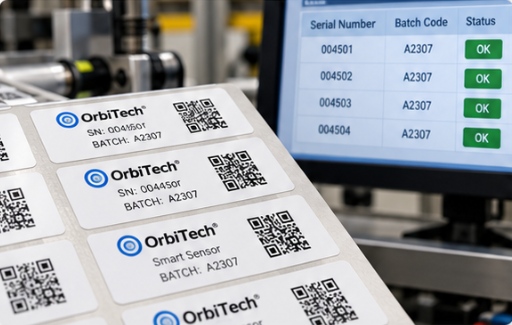
Serial numbers, batch codes, unique text, QR codes and other variable elements require control of both print quality and data integrity. Philiton can manage source data, print batches, stoppage and restart points, scrap, reprints and final verification according to the project. The quality objective is to prevent accepted codes from being duplicated during reprint and to keep visible information aligned with the required sequence, SKU or batch structure.
RFID and NFC

RFID and NFC

Smart-label production can combine incoming inlay inspection, converting, printing, encoding, serialization and read verification. Philiton can write EPC, URL, NDEF or other defined data when chip memory and project rules are confirmed. Final checks can link visible information with electronic data where required. Electronic performance also depends on inlay choice, application material, location and reader environment, so finished-project validation is more meaningful than a universal read-range promise.

Roll Configuration Is a Quality Specification, Not Packing Detail

Roll ParameterWhat Is ControlledProduction Risk If Wrong
Winding directionArtwork orientation and leading edge as the roll unwindsLabel enters applicator in the wrong orientation
Inside / outside woundLabels face inward or outward according to machine requirementIncorrect dispensing path or setup
Core diameterCore size specified for the applicator or handling systemRoll does not fit the mandrel or unwinder
Maximum roll diameterFinished OD within machine and packing limitsRoll cannot load or interferes with guarding
Gap and pitchRepeat spacing between die-cut labelsSensor detection and indexing become unstable
Liner widthWeb width and edge margin around the labelTracking, peeling and guiding problems
Labels per rollQuantity per finished roll and roll-to-roll consistencyFrequent changeovers or inventory mismatch
Black marks / perforationPosition and format when equipment requires themSensor or handling function fails

Packing Quality Protects Labels After Production Is Complete

Packing is part of outgoing quality control because roll deformation, moisture, mixed SKUs or poor identification can create failures after perfectly good labels leave the factory.
Roll Protection

Roll Protection

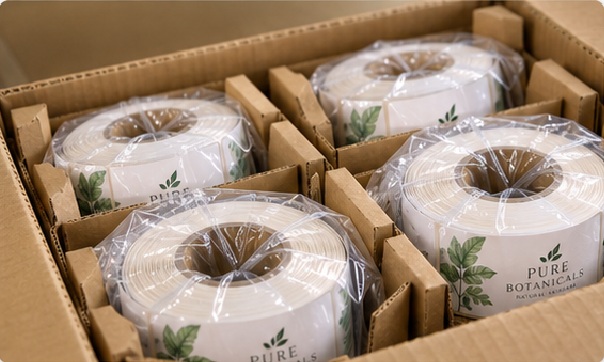
Finished rolls are packed to reduce crushing, edge damage, unwinding and telescoping during handling. The exact method depends on roll diameter, material stiffness, shipment size and destination. Where roll shape is critical for automatic application, packaging must hold the finished roll without excessive pressure. Philiton reviews roll condition before packing and can adapt inner protection to the project rather than using one carton method for every roll-label order.
Moisture and Surface Care

Moisture and Surface Care

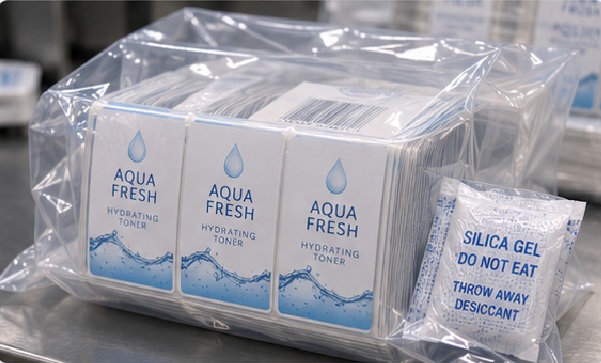
Paper labels, specialty stocks and printed surfaces can be sensitive to moisture, pressure or abrasion during transport. Philiton selects packaging protection according to the label construction and shipment route. Protective bags, interleaving, internal fixation or other measures can be used when appropriate. Packing does not replace a suitable material choice, but it prevents avoidable logistics damage from masking the quality achieved during printing and converting.
SKU and Quantity Control

SKU and Quantity Control

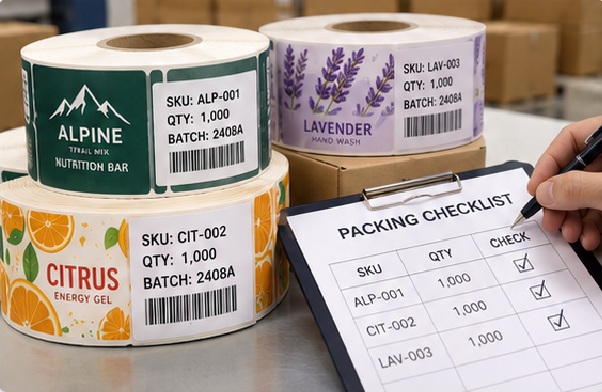
Multi-SKU orders require clear separation so correct labels do not arrive in the wrong carton or quantity. Philiton can identify rolls, inner packs and cartons by SKU, quantity and batch as required. Packing checks compare the finished goods with the shipment plan before release. Mixed-SKU carton or pallet rules can be defined when a receiving warehouse or fulfillment operation has specific requirements, reducing counting errors and receiving confusion.
Shipment Identification

Shipment Identification

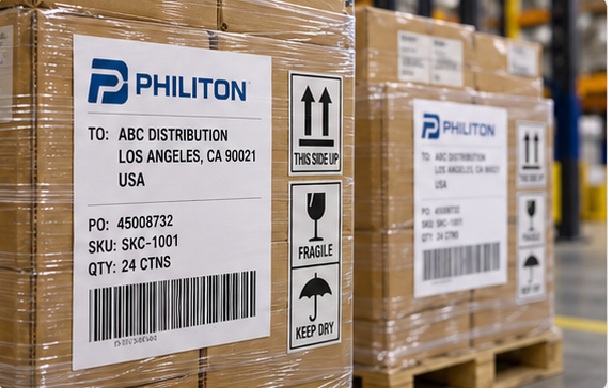
Carton marks, pallet rules, destination labels and receiving instructions can be controlled as part of OQC. Philiton can arrange courier, air or sea shipment according to the order and agreed commercial terms, while destination-specific receiving rules are confirmed before dispatch. The manufacturing quality plan therefore extends through the last factory handoff: labels, rolls, quantities, cartons and shipment identification should tell the same project story when they reach the destination warehouse.

Traceability and Change Control Protect Repeat Production

A stable repeat order depends on controlled records, not memory. Philiton links approved specifications, production information, inspection results and changes so previous work can be reviewed before reordering.

Batch Traceability

Project records can connect approved artwork, specification, material route, tooling, production and quality information with the finished order. Traceability helps the team compare a repeat request with what was previously approved and identify whether quantity, substrate, application or compliance requirements have changed. It is particularly important for industrial, security, barcode, RFID and multi-SKU programs where an apparently small change can affect function or data integrity.

Repeat Order Review

Repeat production is not released automatically simply because the SKU existed before. Philiton reviews the prior project information and checks whether artwork, material, adhesive, tooling, quantity, application, destination or required documentation has changed. When conditions remain the same and materials are available, retained references can improve consistency and reduce unnecessary redevelopment. When a significant condition changes, the process returns to engineering or sample verification instead of assuming the old construction is still suitable.

Nonconforming Control

Rejected or questionable material and product must remain separated from accepted goods. Philiton can isolate affected material for review, correction, rework, remake or disposal according to the project risk. Security, unique-code and anti-counterfeit work can require tighter scrap and destruction controls. When a delivered issue is reported, the review compares photographs, batch information, approved artwork, specification, samples, quality records and application conditions to determine whether the cause relates to printing, converting, material, adhesive, application or transport.

Change Management

Artwork revisions, material substitutions, adhesive changes, tooling changes, data rules and roll-configuration changes can all alter the approved product. Philiton treats meaningful changes as project decisions rather than silent production adjustments. The required level of reapproval depends on the risk: a wording revision may need new artwork approval, while a new adhesive may require application testing. Clear change records help prevent an old version or unapproved substitute from becoming the new normal in repeat manufacturing.

Quality Documentation Must Match the Actual Material and Scope

Philiton separates manufacturing control, material documentation, project testing and company-level certification so evidence is not stretched beyond what it actually proves.

Compliance Evidence Is Verified at the Correct Level

  • Philiton can manufacture to approved regulatory artwork and support project-specific material documentation or testing, but a printed label does not automatically make the final product compliant in every market. The legal content, claims, warnings, translations, certification-mark authorization and final market-access decision remain with the responsible brand, importer, manufacturer or regulatory party.
  • Material evidence: TDS, SDS, supplier declarations, RoHS/REACH-related files, food-contact documents, heavy-metal testing or other reports can be reviewed when relevant to the selected material. The document must correspond to the actual construction and intended use.
  • Project testing: Where a requirement depends on abrasion, chemicals, temperature, adhesion, barcode or RFID performance, the method and acceptance criteria are defined for the specific project. Internal testing can support development and production control; third-party testing is arranged or referenced when external evidence is required.
  • Certification boundary: Philiton does not use unverified ISO, FSC, UL, IATF, BSCI, Sedex, GRS or similar claims as blanket proof. Current certificates, scopes, chain-of-custody records or authorization files must be checked before public or project-specific use. This distinction gives procurement teams a clearer view of what evidence exists and what still requires verification. It also keeps a material-level report, a project-level test and a company-level management certificate from being presented as if they were interchangeable forms of proof.

Supplier Audit Readiness Focuses on Evidence, Not Logos

  • Quality teams evaluating a custom label manufacturer usually look beyond a certificate wall. Philiton can review a supplier qualification checklist and organize evidence around the operational controls relevant to the project. A useful audit structure covers company and site identity, quality-system document control, incoming material and supplier control, artwork and revision approval, printing and converting controls, inspection and testing, traceability and change control, variable data or RFID/security controls, packing and shipment, complaint handling and business continuity.
  • Audit input: Send the corporate checklist, required documents, product categories, target markets and any confidentiality rules before the review. The team can identify which items are supported by current records, which require project-specific evidence and which depend on external certificates or reports.
  • Evidence examples: Approved artwork, sample references, material documents, inspection records, test results, roll specifications, batch identification and project procedures are more useful when tied to the actual order than when shown as generic marketing claims.
  • Confidentiality: For sensitive artwork, brand launches, security labels or RFID/data projects, Philiton can work under a customer NDA or mutually agreed NDA. Public use of branded samples, production photos or project details is not automatic and requires authorization or sufficient anonymization. For important programs, the audit review can be organized before a factory visit so document gaps, project-specific questions and responsible internal contacts are identified in advance rather than discovered during the audit itself.

Representative Quality-Control Scenarios for Custom Label Programs

The following project scenarios show how Philiton would structure quality control for common international programs. Quantities and locations are illustrative, not named client records.
U.S. Skincare Roll Labels

U.S. Skincare Roll Labels

United States | Growth skincare brand | 18,000 labels across 6 SKUs, mainly 45 × 80 mm. The program uses clear film, white ink, brand colors and lamination for oil- and moisture-prone bottles. Philiton would begin with artwork revision control and a physical sample on the actual bottle, then confirm film, adhesive and white-underprint structure. Production QC would focus on white-ink registration, color appearance, fine INCI text, die-cut position and roll configuration. Final release would include SKU separation, roll direction, quantity and packing checks, with oil or alcohol exposure testing added if the brand defines the required condition.
German Industrial Identification

German Industrial Identification

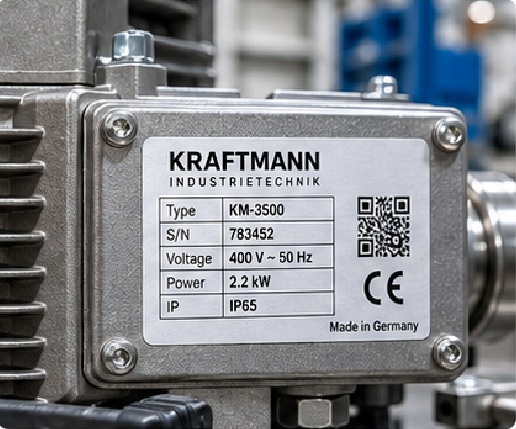
Germany | Equipment manufacturer | 12,500 durable 60 × 35 mm identification labels. The label carries model data, serial information and QR codes for service tracking on coated metal and plastic surfaces. Philiton would review the application substrate, adhesive route, PET-based construction, print method and protective finishing before sample approval. Production control would cover dimensions, print legibility, variable-data integrity, QR readability, die cut and roll parameters. Finished goods would be released by SKU and data batch, while abrasion or chemical checks would be added according to the maintenance environment specified by the manufacturer.
Australian Beverage Launch

Australian Beverage Launch

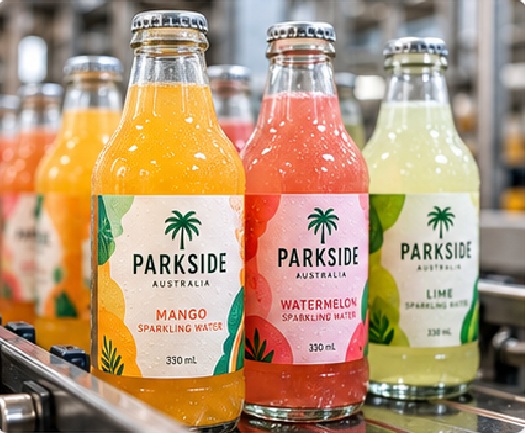
Australia | Beverage company | 24,000 bottle labels in 4 SKUs, approximately 70 × 110 mm. The main risks are condensation, automatic application and shelf-to-shelf brand consistency. Philiton would confirm bottle material, labeling temperature, cold-storage conditions, label size, adhesive construction and applicator specifications before production. A pre-production sample would establish the approved color and finished appearance. IPQC would monitor print, registration, die cut and winding; FQC would verify roll direction, core, gap, labels per roll and final graphics. Packing would keep each SKU separately identified for direct delivery to the filling operation.

Quality Control Frequently Asked Questions

Inspection depends on the quality characteristic and project risk. Suitable roll projects may use 100% visual screening for defined visible defects, while dimensions, color, adhesion, environmental performance or RFID function may use measurement, sampling or functional verification. Philiton defines the inspection route from the approved specification rather than claiming that every characteristic on every order is automatically checked 100%.

Philiton links production to approved artwork, proof or sample status and project identification. Meaningful artwork changes should create a new controlled revision before release. Multi-SKU programs benefit from consistent project naming and approval records. Repeat orders are reviewed against previous files instead of being released automatically from memory or an old email attachment.

Philiton can work with Pantone references and physical color standards where appropriate. Final appearance is influenced by substrate, transparency, white ink, varnish, lamination and viewing conditions, so color-critical programs are best approved on the intended construction. The agreed reference then becomes part of the production and repeat-order comparison process.

Yes. Adhesive recommendations are based on the actual surface, surface energy, curvature, application temperature, service temperature, moisture, oil, chemicals and required lifetime. Samples on the real container or substrate provide the strongest basis for evaluation. Peel or other adhesion-related checks can be added when required by the project.

Philiton can review code size, contrast, quiet zones, placement and print quality, then verify readability according to the agreed requirement. Variable-data programs can also define uniqueness, sequence, missing-code and reprint controls. A single successful phone scan is not treated as a complete verification method for retail or industrial programs with defined barcode-quality requirements.

Philiton can support incoming inlay checks, encoding, serialization, read verification and visible-data matching when required. The selected frequency, chip or inlay, memory rules, finished construction and application environment must be defined first. Final performance can also depend on metal, liquid, reader location and installation position, so application testing remains important.

Common roll specifications include winding direction, inside or outside wound, core diameter, maximum roll diameter, gap, pitch, liner width, labels per roll, black marks, perforations and other applicator requirements. Philiton confirms the relevant parameters from the labeler or project specification before mass production and can include them in final or outgoing checks.

Project-specific documents can include approved artwork or specifications, material information, inspection records, test results or supplier documents where available and appropriate. Regulatory or certification evidence must match the actual material, scope and validity period. Philiton does not treat one material report or unverified certificate as proof that every label automatically meets every market requirement.

The review compares the approved artwork, specification, sample status and available QC records with photographs, batch information and application conditions. The team investigates whether the cause relates to printing, converting, material, adhesive, application, packing or transport. Affected material is separated from accepted product while the corrective route is evaluated according to the issue and agreement.

Yes. Large-company procurement and quality teams can send a supplier qualification checklist, inspection plan, quality agreement or document request for review. Philiton can organize the response by factory, material control, artwork control, production, inspection, testing, traceability, packing, complaints and project-specific documentation, while clearly identifying items that require external certificates or additional verification.

Send Your Quality Requirements Before Production Starts

The fastest way to build a reliable custom label program is to define the quality requirement before materials, artwork and production routes are locked. Send Philiton the information your team already uses – even when it is incomplete. We can review the application, identify the quality characteristics that need control, separate visual inspection from functional testing, and confirm which records or external documents are needed for the project. If your organization already has a supplier manual, inspection plan or audit form, attach it at the RFQ stage so engineering, production and quality teams can work from the same standard. For a new program, basic inputs are enough to begin the review. Philiton can also compare an existing label, container or roll specification with the proposed construction so important changes are visible before approval. Where a requirement depends on a defined acceptance limit, testing method, certificate or third-party report, include it early so the quotation and sample route reflect the real quality work. Sampling and production timing are confirmed after the material, process, tooling and test requirements are clear.

  • Label size, shape, quantity per SKU and number of SKUs
  • Artwork, existing label, approved sample or Pantone reference
  • Application surface, temperature, moisture, oil, chemicals or abrasion exposure
  • Roll direction, core, gap, pitch, maximum roll diameter or labeler manual
  • Barcode, QR, variable-data, RFID or security requirements
  • Quality specification, test method, inspection plan, audit checklist or required documents
  • Destination, delivery target and packing or warehouse receiving rules

Get In Touch

  • Our team will answer your inquiries within 12 hours.

  • Your information will be kept strictly confidential.

Get a Fast Quote for Custom Labels & Stickers

We will contact you within 24 Hours, please pay attention to the email with the suffix“@philiton.com”. 
For all inquiries, please feel free to reach out at:

Ask For A Quick Quote

We will contact you within 24 Hours, please pay attention to the email with the suffix“@philiton.com”. 
For all inquiries, please feel free to reach out at:

Get a Quote Today!

We will contact you within 24 Hours, please pay attention to the email with the suffix“@philiton.com”.