Your Trusted Labels & Stickers Manufacturer from China!

Wholesale Labels for Wholesalers

Custom label manufacturing built for wholesalers, distributors, print brokers and packaging suppliers managing multiple end-client programs.
Philiton works as the manufacturing layer behind growing label businesses.
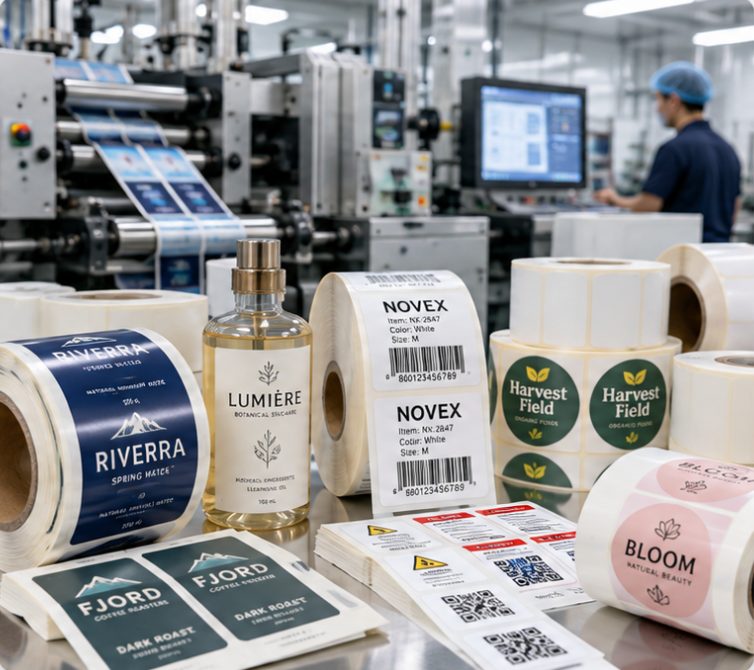
  • Manufacturing since 2016 in Shenzhen and Dongguan
  • 12,000+ ㎡ manufacturing and operating footprint
  • 200+ employees, including 91 technical, skilled production and quality personnel
  • Many standard label projects can start around 500 pcs
  • Digital, flexographic, converting, finishing and repeat-production capability
Wholesale Labels for Wholesalers

Built Around How Label Wholesalers Actually Operate

Philiton supports channel partners that sell labels under their own commercial relationships while relying on an experienced manufacturing team for production, engineering and repeat supply.

Label Wholesalers

Label wholesalers often manage many accounts rather than one fixed product. Order sizes change by artwork, end use and replenishment cycle, so a manufacturing partner must handle small development runs, larger repeat quantities and several specifications at the same time. Philiton supports standard and custom label programs with SKU-separated quoting, manufacturing and packing. Stable material platforms, approved artwork and repeat specifications can be retained to reduce unnecessary rebuilding when established labels are reordered.

Label Distributors

Distributors frequently combine local sales, technical advice and account service with outsourced manufacturing. Philiton supplies the production layer behind those programs, covering artwork review, material selection, printing, finishing, die cutting, roll conversion, inspection and shipment preparation. OEM presentation, neutral packing, sample support and repeat-volume manufacturing can be structured according to the distributor’s operating model. Different industries can remain under one production relationship rather than requiring a separate factory for every label category.

Print Brokers

Print brokers may have strong local relationships without owning every press, finishing line or specialty process required by incoming projects. Philiton can manufacture jobs that are outside an existing production range, uneconomical to run locally or technically better suited to another process. Digital, flexographic, specialty finishing, variable data, security and smart-label capabilities give brokers more room to quote unfamiliar projects while keeping commercial communication and end-client management within their own organization.

Packaging Suppliers

Bottle, jar, pouch, carton, flexible-packaging and gift-box suppliers often receive label requests as part of a wider packaging program. Philiton can manufacture the label component around the actual container, surface, application method and artwork requirement. Coordinating labels alongside a broader packaging project helps packaging suppliers offer a more complete program without investing in dedicated label converting equipment. Sizes, materials, roll direction, carton marks and delivery schedules can be aligned with the final packing operation.

Wholesale Label Supply Has More Risks Than Unit Price

Philiton structures manufacturing around four recurring problems that can erode margin, slow quotations or make repeat orders harder to control.

Too Many Specifications

A wholesaler may quote paper labels in the morning, freezer labels before lunch and serialized PET labels later the same day. Treating every request as the same printing job creates unnecessary risk. Philiton reviews:
  • label size and shape
  • face material and adhesive
  • application surface
  • service environment
  • artwork and finishing
  • roll or sheet configuration
  • quantity by SKU
The specification is defined before bulk production, so pricing and manufacturing are tied to the label that will actually be used.

Multi-SKU Order Complexity

Ten artworks totaling 50,000 labels are not operationally identical to one artwork totaling 50,000 labels. Each SKU may require separate artwork control, quantity allocation, identification and final packing. Philiton can structure multi-SKU orders around:
  • controlled artwork versions
  • shared materials where suitable
  • common dies when dimensions match
  • defined quantities per SKU
  • separated roll and carton identification
  • repeat-order references
Standardizing compatible elements reduces unnecessary setup without merging specifications that need to remain different.

Unstable Repeat Orders

A profitable wholesale account often depends on replenishment rather than a single shipment. Problems appear when the second order is recreated from emails, screenshots or incomplete notes. Philiton retains approved production references covering artwork, material, adhesive, dimensions, finishing, die line, winding and packing instructions. When specifications remain unchanged, repeat production can follow the approved reference instead of reopening the entire development process. Revisions are separated from existing versions so an old artwork is less likely to enter a new production batch.

Margin Lost in Rework

A low quotation is not economical if labels arrive with the wrong adhesive, roll direction, core, finish or artwork version. Reprinting also damages the wholesaler’s relationship with the end account. Philiton moves technical questions forward before bulk production:

  • confirm application surface
  • define environmental exposure
  • check artwork and dieline
  • approve material or finished samples when required
  • lock roll specifications
  • identify inspection points

Manufacturing cost is evaluated together with failure risk rather than by unit price alone. 

Match Each Wholesale Order to the Right Production Route

Wholesale Order SituationPhiliton Production ApproachMain Commercial BenefitKey Information Needed
New account or product launchSample or flexible short-run route before scale-upLimits inventory exposure before the specification is provenArtwork, size, surface, material direction, initial quantity
Several low-volume SKUsDigital-oriented production when technically suitableHandles artwork variety without forcing one oversized production runQuantity per SKU, shared dimensions, finishing and material
Stable repeat labelsApproved specification reused for replenishmentReduces redevelopment and keeps recurring orders easier to manageExisting reference, revised quantity, required delivery date
Growing high-volume SKUProduction route reassessed for larger volumeSetup can be spread across more labels and a more efficient process may become viableForecast, order frequency, stable artwork and construction
Specialty finishing projectProcess sequence planned around the required visual effectAdds premium options without overlooking registration or converting limitationsArtwork, foil/UV/emboss areas, substrate and quantity
Direct channel fulfillmentSKU-separated neutral or agreed packing and shipment instructionsReduces handling between the factory, channel partner and nominated destinationCarton marks, consignee, packing rules and legal shipping documents

Expand Your Label Range Through One Manufacturing Partner

Philiton manufactures label families covering everyday packaging, durable identification, variable data, security applications and smart-label programs for diverse wholesale account portfolios. Explore Label Options
Product Packaging Labels

Product Packaging Labels

Paper, BOPP, PET and other selected constructions can be developed for bottles, jars, boxes, pouches, cosmetics, supplements, beverages and general packaged goods. Philiton reviews appearance together with container surface, moisture, oil, curvature, application temperature and required finishing. Standard rectangular labels, custom shapes, clear effects and premium decorated labels can all follow different manufacturing routes without forcing every packaging project into one material specification.
Barcode Data Labels

Barcode Data Labels

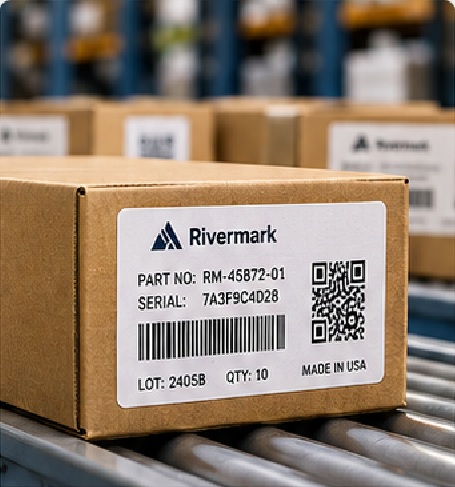
Barcode, QR, serial-number and other variable-data labels require more than placing changing information into artwork. Philiton can manage fixed graphics together with variable fields, controlled source data, numbering sequence, barcode quality, SKU separation and production records. Labels can be prepared for inventory, logistics, traceability, warranty, asset identification and other systems where the printed data must remain connected to the correct physical label batch.
Thermal Label Products

Thermal Label Products

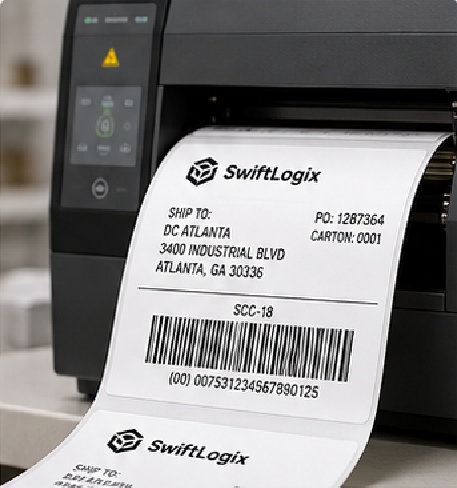
Philiton manufactures direct thermal and thermal transfer constructions for logistics, warehouse, retail, industrial and identification uses. Blank or preprinted labels can be converted into rolls, sheets or other suitable formats according to the application. Material selection considers print method, ribbon compatibility where applicable, adhesive, core, winding, maximum roll dimensions and equipment requirements instead of treating thermal labels as one interchangeable commodity grade.
Durable Industrial Labels

Durable Industrial Labels

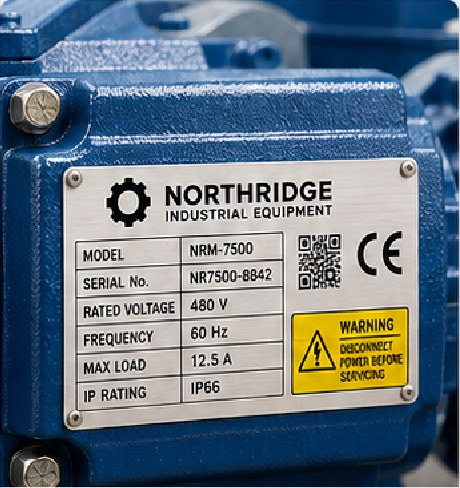
PET, synthetic films, high-tack constructions and application-specific materials can support equipment, electronics, machinery, assets, chemicals and demanding operating environments. Philiton reviews temperature, surface energy, abrasion, moisture, oil, chemicals, UV exposure and expected service duration before recommending the structure. Protective laminates, varnishes, specialty adhesives, variable identification and controlled die cutting can be integrated where the operating environment requires them.
Security Label Solutions

Security Label Solutions

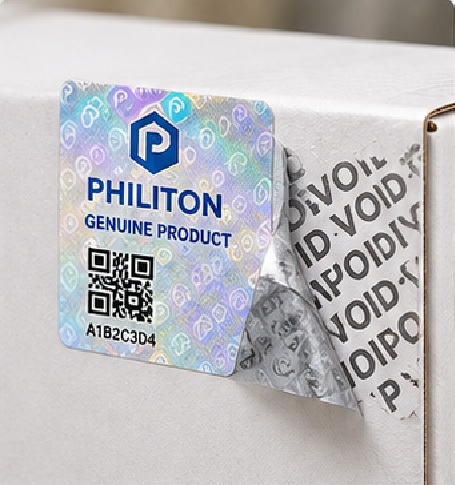
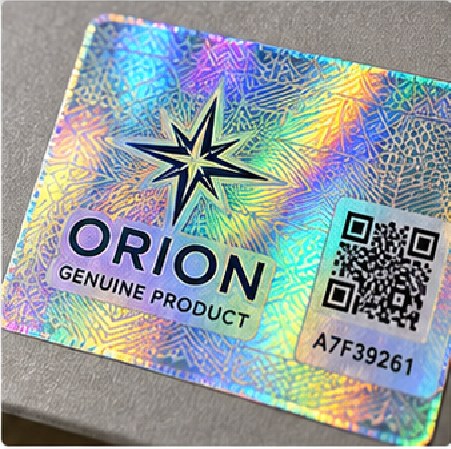
Tamper-evident, destructible, holographic, serialized and related security labels can be developed according to the required function. Philiton separates decorative effects from genuine security objectives. A VOID construction, destructible material, holographic feature, hidden data or serialized element serves a different purpose, so development starts by defining what must be detected, deterred, identified or recorded before material and process selection.
RFID Smart Labels

RFID Smart Labels

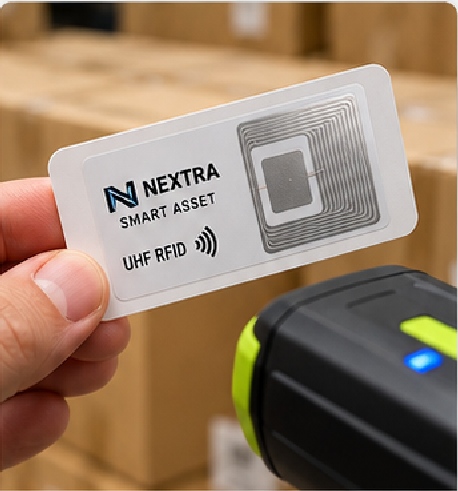
UHF RFID and NFC-related projects combine printed label requirements with inlay, encoding, positioning and functional considerations. Philiton can integrate smart-label work within a broader manufacturing and quality workflow when the project specification is defined. Inlay selection, label dimensions, read environment, material interaction, variable printing, encoding requirements and verification criteria should be established before bulk production because changing one element may affect the entire structure.

Serve More End Markets Without Rebuilding Your Supply Chain

Philiton structures label manufacturing around real application conditions, allowing wholesale partners to support diverse industries through one coordinated production relationship.
Food and Beverage

Food and Beverage

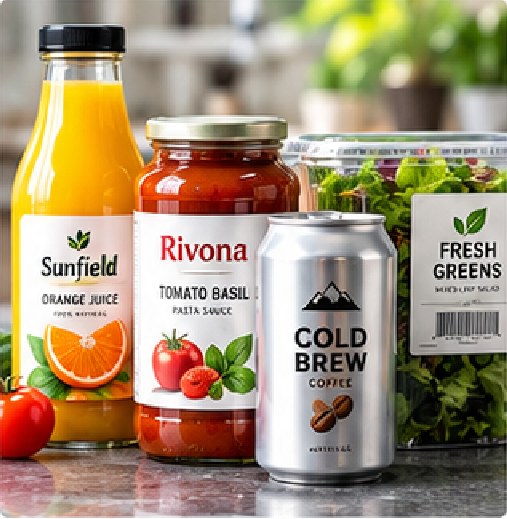
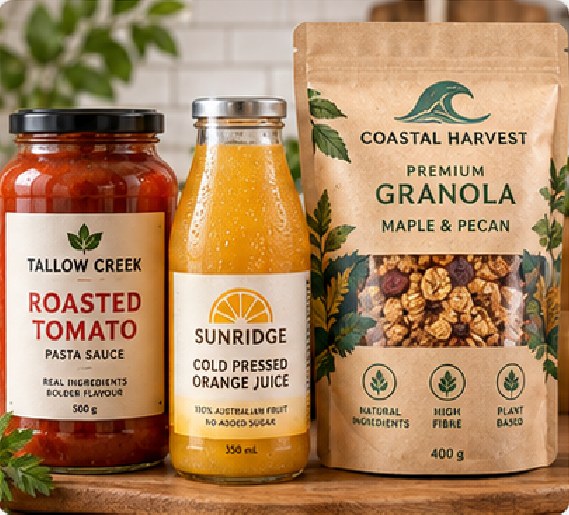
Food jars, bottles, cartons, chilled packs, frozen goods and beverage containers introduce different moisture, condensation, refrigeration, oil and application conditions. Philiton selects paper or film, adhesive and protection around the actual pack instead of assuming one food label construction suits every program. Roll format, winding and carton identification can also be prepared for filling operations using hand, semi-automatic or automatic label application.

Cosmetics and Personal Care stickers

Cosmetics and Personal Care

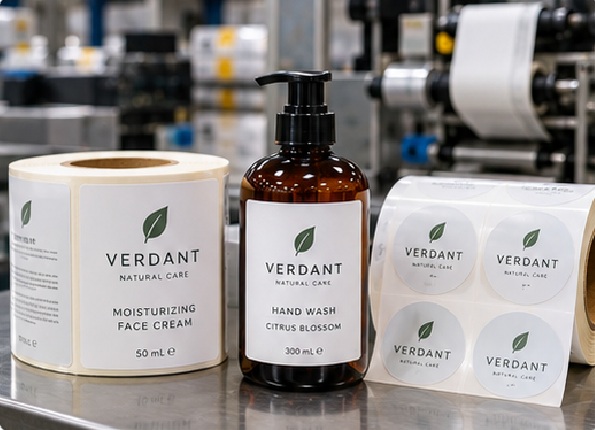
Cosmetic packaging often combines strong visual expectations with small containers, curved surfaces, oils, moisture and frequent handling. Philiton can produce clear, white, metallic, paper and specialty labels with foil, embossing, spot UV, lamination and other finishing where suitable. Artwork review includes small text, reverse text, white ink, registration and dieline clearance so visual decoration does not create avoidable converting or readability problems.
Supplements and Wellness stickers

Supplements and Wellness

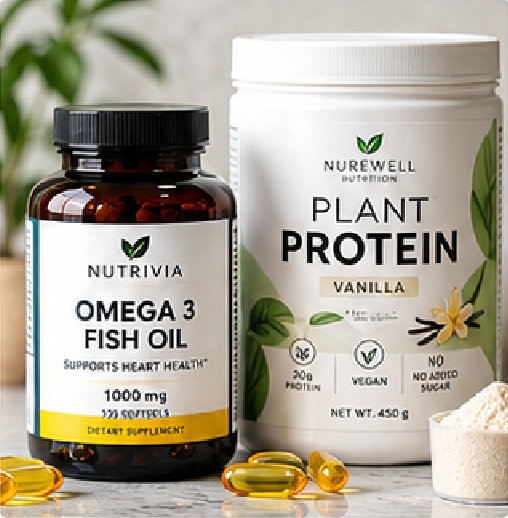
Supplement programs frequently contain several formulas, sizes and artwork revisions. Philiton can manage shared material platforms where technically suitable while separating each approved artwork and quantity. Dense text, barcodes, lot-related areas, bottle curvature, label overlap and roll requirements are reviewed before production. Multi-SKU launches can begin with flexible production and later move toward larger recurring quantities after demand and artwork become more stable.
Logistics and Fulfillment labels

Logistics and Fulfillment

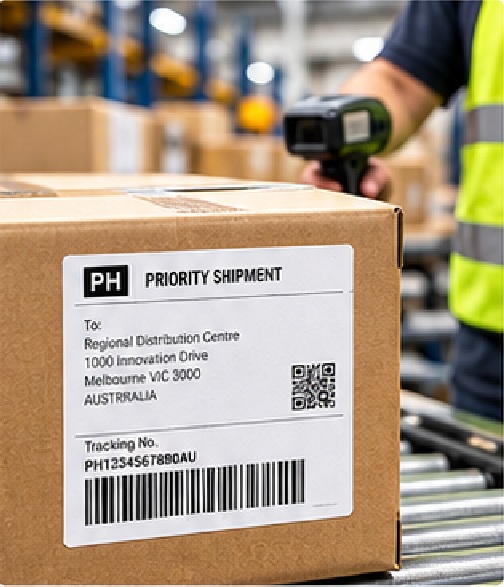
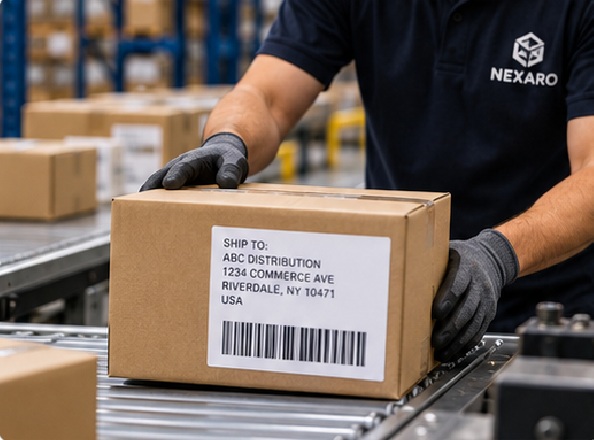
Shipping, routing, carton, pallet, warehouse and returns labels prioritize reliable printing, scan performance and efficient replenishment. Philiton can manufacture direct thermal, thermal transfer, barcode and preprinted roll labels around printer and applicator requirements. Common 100 × 150 mm shipping formats can be supplied alongside smaller routing and inventory labels, with roll count, core, winding and carton identification planned around workstation needs.
Industrial Manufacturing stickers

Industrial Manufacturing

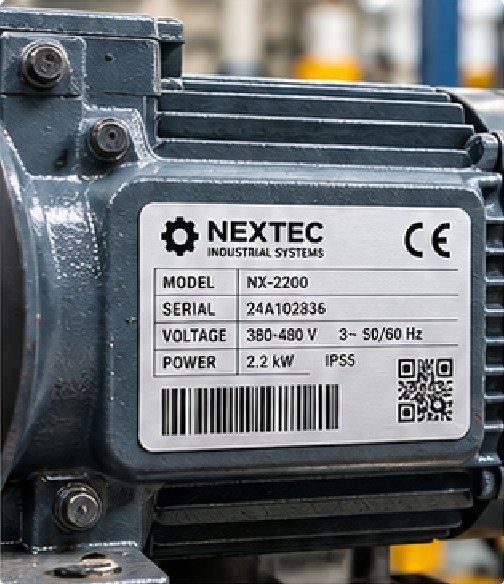
Equipment, electronics, machinery and component programs may require durable identification, warnings, serial data, rating information or long-term traceability. Philiton evaluates face material, adhesive, printing, protection and operating exposure together. PET, specialty films, strong adhesives, laminated structures, variable data and selected high-temperature or chemical-resistant options can be considered according to the application rather than added automatically to every industrial label.
Retail and Promotions labels

Retail and Promotions

Retail labels can range from economical promotional stickers to premium product seals and short-run seasonal artwork. Philiton supports custom shapes, paper and film stocks, removable or permanent adhesive options, variable data and decorative finishing. A wholesaler can therefore quote simple promotional work and more developed branded packaging through the same manufacturing relationship while selecting a production route appropriate to the order size and required finish.

Material and Adhesive Decisions Start With the End Application

Material selection affects appearance, converting, application and service performance. Philiton reviews the whole construction rather than quoting a facestock name without understanding where the label will be used.

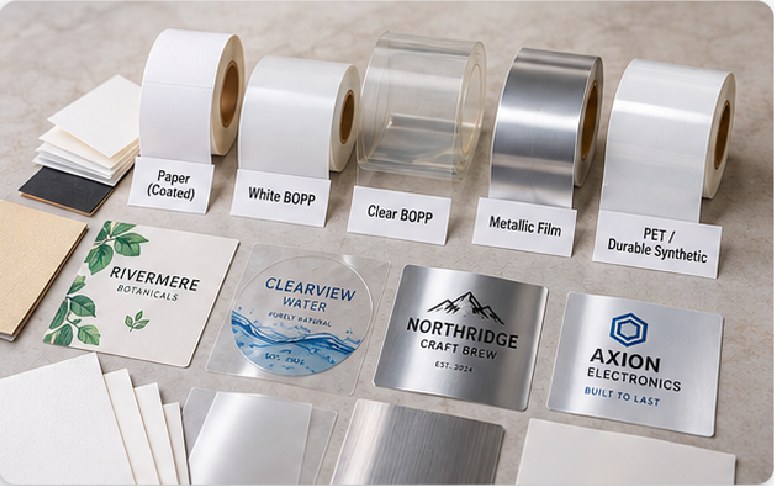
Choose Facestock by Appearance, Environment and Converting Requirements

Paper and film can produce very different results even when the artwork is identical.

  • Paper constructions: Coated paper is widely suited to general product and promotional labels where economical printing and a familiar paper appearance are priorities. Uncoated and textured stocks can create a softer, premium or more natural finish but may react differently to ink, varnish, foil, moisture and abrasion. Kraft papers can support selected natural packaging concepts but need actual sample review when fine graphics, white printing or demanding environmental exposure are involved.
  • BOPP / PP films: White BOPP supports clean packaging graphics, moisture resistance and efficient roll conversion. Clear BOPP can create a no-label appearance but often requires careful white-ink planning to maintain color strength and text readability. Metallized films can introduce reflective effects without applying foil over every decorative area.
  • PET and durable synthetics: PET offers dimensional stability and is often considered for electronics, industrial, durable and technical identification. The selected surface coating, adhesive, protection and environmental requirement still determine final performance.
  • Flexible materials: PE or other flexible constructions may be considered where a container compresses or deforms during use.

Philiton does not classify a material as premium or durable from its name alone. The intended surface, exposure, life, print process, finish and application method determine whether the construction is suitable.

Adhesive Selection Depends on Surface, Temperature and Removal Behavior

Two labels printed on the same material can perform very differently when the adhesive changes.

  • Permanent adhesive: Standard permanent systems suit many clean, dry packaging surfaces when the substrate and temperature are within the adhesive’s working range. A stronger adhesive is not automatically better; excessive bond can create unnecessary cost or make future removal difficult.
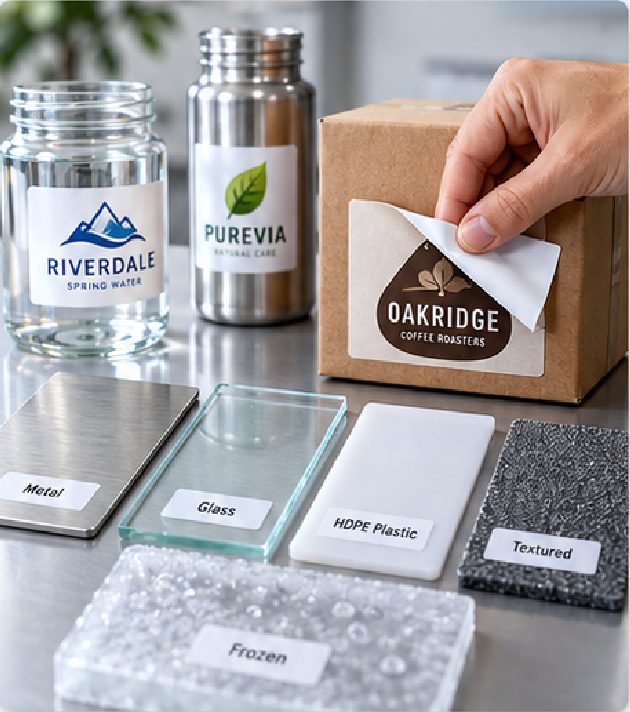
  • High-tack adhesive: Rough, textured, low-surface-energy or difficult substrates may require stronger initial or final adhesion. Philiton asks for the actual surface material and, where possible, a container or substrate sample before recommending a high-tack route.
  • Removable and repositionable options: Promotional, logistics or temporary applications may need cleaner removal or repositioning. Required dwell time, residue limits and the actual receiving surface should be defined before approval.
  • Cold and freezer conditions: Application temperature and service temperature are different specifications. A label applied to a warm dry pack before entering cold storage may need a different adhesive from one applied directly to a chilled or frozen surface.
  • Oil, moisture and chemicals: Exposure can affect both facestock and adhesive. Philiton reviews the expected liquid, contact time and cleaning conditions rather than using a generic waterproof description as the full specification.

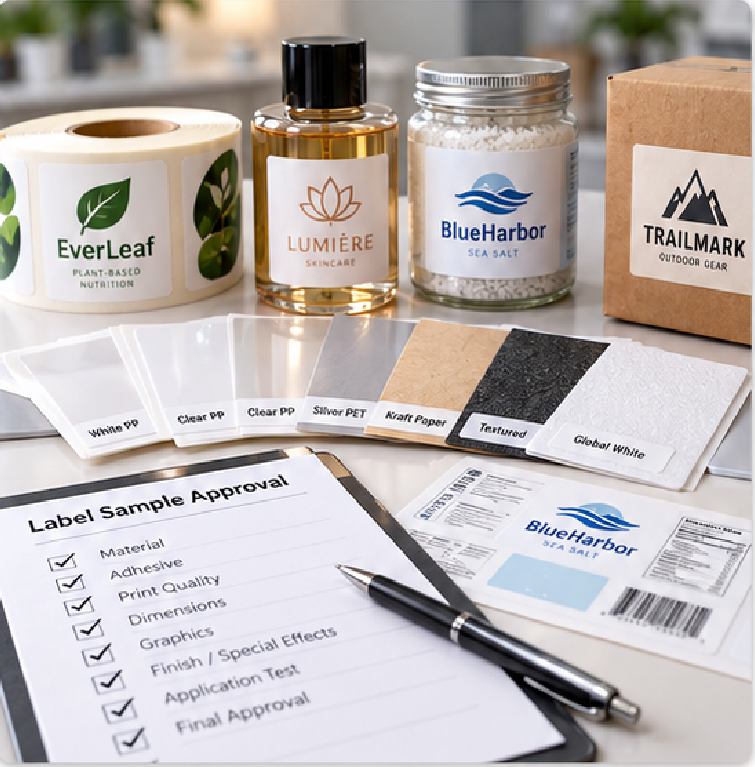
Samples Confirm the Construction Before Volume Production Starts

Specification review narrows the material options, but physical validation is often the fastest way to resolve uncertainty.

Philiton can prepare different sample routes depending on the decision required.

  • A blank stock or adhesive sample is useful when the main question is bonding or material feel.
  • A digital sample can confirm dimensions, graphics and a first visual direction.
  • A finished sample is more suitable when foil, embossing, lamination, spot effects, special die cutting or a complete label construction needs approval.

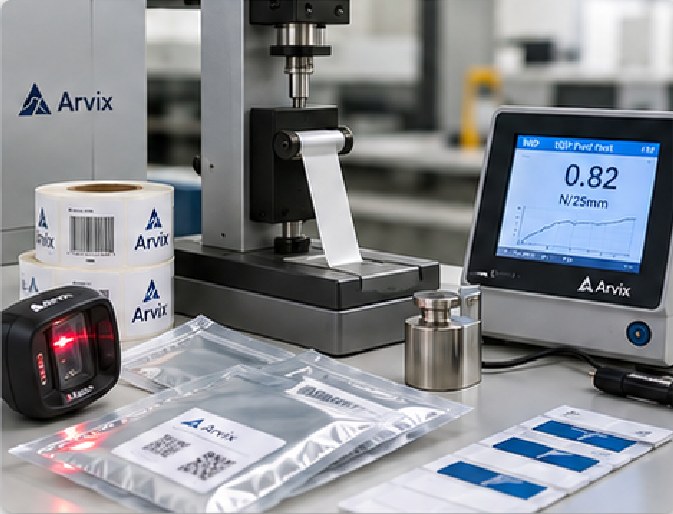
For application-sensitive work, Philiton recommends testing samples on the actual bottle, jar, carton, pouch, component or other receiving surface. Adhesion should be checked after an appropriate dwell period rather than immediately after application alone.

Roll projects also need mechanical confirmation. Core, winding, gap, pitch, liner width and roll diameter can determine whether an otherwise correct label runs smoothly through the printer or applicator.

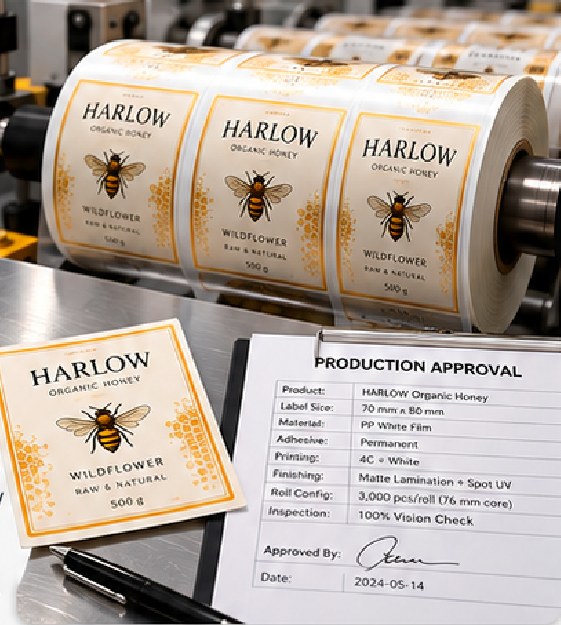
The approved sample and final specification then become manufacturing references for production and future repeat orders.

Digital and Flexographic Routes Serve Different Wholesale Order Patterns

FactorDigital ProductionFlexographic ProductionPhiliton Planning Direction
SKU varietyStrong fit for multiple artworks and frequent changesMore efficient when versions are stableReview total quantity and quantity per artwork separately
Initial quantitySuitable for many short and medium runsSetup becomes more economical as stable volume increasesAvoid ordering excess labels only to reach a larger run
Artwork changesEasier to accommodate between versionsRepeated setup changes can reduce efficiencyUse stable files before moving mature programs to volume routes
Variable dataWell suited to many serialized and variable-data programsMay require separate variable-data integrationDefine database and verification requirements before production
Repeat volumeSuitable where flexibility remains importantStrong option for stable recurring quantitiesReassess route when annual demand becomes predictable
FinishingCan combine with selected downstream finishingCan integrate with established converting and finishing routesChoose finishing from final appearance and production economics

Add Finishing Where It Improves Value, Not Complexity

Philiton combines printing with decorative and protective finishing according to the artwork, material, quantity and commercial role of the finished label.
Hot Foil Stamping labels

Hot Foil Stamping

Foil can add metallic or pigmented emphasis to logos, product names, borders and selected graphics. Philiton reviews foil area, line width, substrate, tooling, registration and later die cutting before production. Concentrating foil on priority elements often gives stronger visual hierarchy than covering large areas. Finished samples are recommended when foil color, fine detail or registration against printed graphics is commercially important.
Embossing and Debossing labels

Embossing and Debossing

Embossing raises selected elements while debossing presses them inward, creating tactile depth without adding another printed color. Paper thickness, material structure, relief depth, detail size and distance from cut lines affect the result. Philiton coordinates tooling with printed graphics and dielines. Combined foil-and-emboss work requires tighter registration and should be reviewed on the final selected stock before repeat production is approved.
Spot UV Effects

Spot UV Effects

Spot UV or selected varnish can create contrast between highlighted graphics and the surrounding surface. Logos, patterns and product names can receive localized gloss or texture while other areas remain matte. Philiton reviews coating position, registration and later converting steps. Reflective coatings near QR codes, barcodes or small text require care because excessive glare can interfere with visual or machine readability.
Protective Lamination labels

Protective Lamination

Lamination can improve abrasion and moisture protection while changing gloss level, stiffness and hand feel. Matte film can create a softer appearance, while gloss film often increases color depth and reflection. Philiton evaluates protection together with material flexibility, label curvature, later finishing and recycling considerations. Lamination is added where it serves the application rather than being treated as a compulsory upgrade.
Holographic stickers Features

Holographic Features

Holographic appearance may come from holographic stock, foil or a dedicated security element. Decorative and authentication objectives are treated separately because the production controls are different. Philiton can integrate selected holographic effects with printing and converting while preserving readable text and machine-readable codes. Custom security structures, serialization or authentication programs require separate specification development before bulk manufacturing.
Custom Die Cutting stickers

Custom Die Cutting

Die cutting defines the final shape, corners, internal openings and kiss-cut structure. Complex outlines can increase waste or create weak narrow areas, especially when graphics or foil sit close to the cut edge. Philiton reviews dielines before tooling, checks artwork clearance and controls cut-to-print registration during production. Existing standard shapes may reduce development work, while unique profiles require project-specific tooling evaluation.

Roll, Sheet and Packing Formats Must Fit the Next Operation

Philiton defines delivery format around how labels will be stored, printed, applied, resold or distributed after leaving the factory.
Roll Labels and stickers

Roll Labels

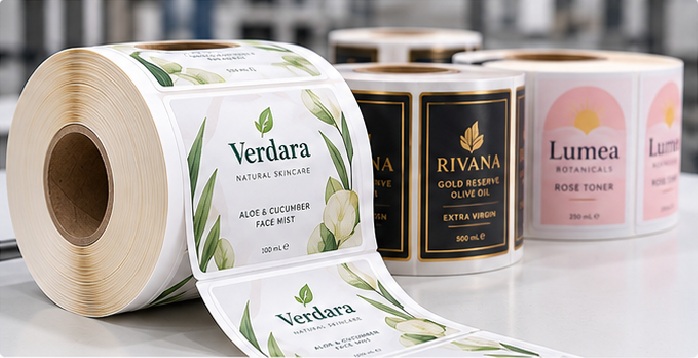
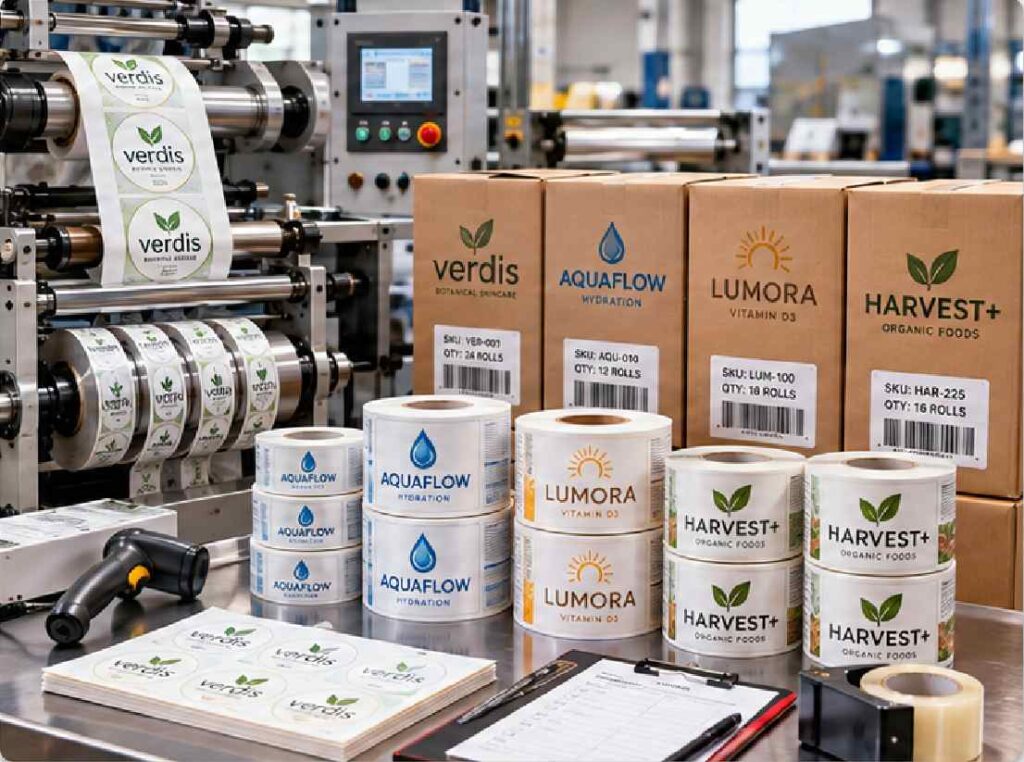
Roll format is common for automatic and semi-automatic application, thermal printing and efficient wholesale handling. Philiton confirms core diameter, winding direction, web width, label gap, repeat pitch, maximum roll diameter and approximate labels per roll where relevant. A 50 × 75 mm product label and a 100 × 150 mm logistics label may require completely different roll construction even when total order quantity is similar. Approved roll parameters are retained with the production specification.
Sheet Label Formats

Sheet Label Formats

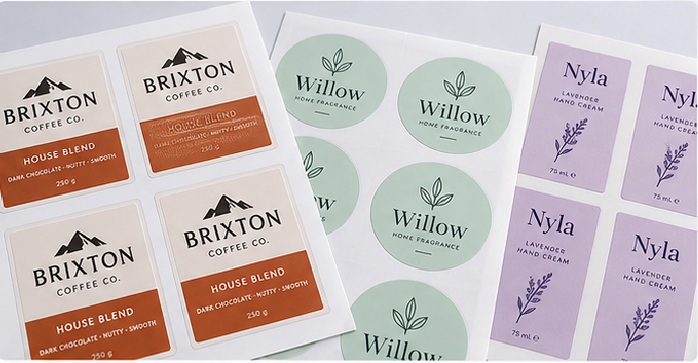
Sheets can suit selected hand-application, promotional, office, craft or resale programs where roll equipment is not required. Sheet dimensions, label spacing, kiss cutting, backing stability and packing method need to match the intended use. Philiton can arrange custom sheet layouts according to label size and quantity rather than placing every design on a fixed universal sheet. Wholesale packs can also be separated by SKU for easier inventory and resale handling.
Individual Die Cuts

Individual Die Cuts

Individually cut stickers or labels suit promotional programs, inserts, event materials and selected retail packs. Philiton controls cut shape, backing size, peel access and packing quantity according to the required presentation. Small designs such as 25 × 25 mm seals need enough backing and edge clearance for handling, while larger die cuts require attention to curling, transport protection and carton arrangement. Finished format is agreed before production rather than decided after printing.
Machine Application Rolls

Machine Application Rolls

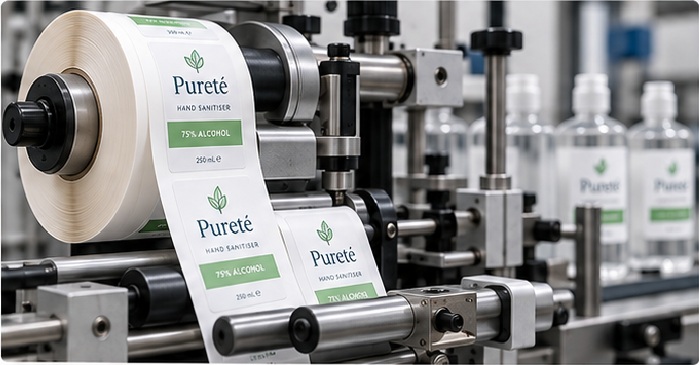
Automatic applicators require tighter operating specifications than general hand-applied rolls. Philiton reviews label dimensions, liner width, feed direction, gap, pitch, core, maximum outer diameter, sensor marks and winding. Roll count can be standardized so production teams know how many labels enter each line change. A physical machine specification, existing approved roll or equipment model is especially useful when developing a new wholesale program for contract packers or manufacturing plants.

MOQ and Unit Cost Depend on More Than Quantity

Philiton prices the complete manufacturing setup, allowing wholesalers to identify which variables genuinely reduce cost and which changes would create unnecessary technical or inventory risk.

Start With the Specification Before Comparing Quantity Breaks

Many standard custom label and sticker projects can begin around 500 pieces, but no single minimum applies to every material, adhesive, finish or converting route.

Quantity is only one component of production economics.

  • Material: Standard stocked papers and films can usually support more flexible quantities than a specialty substrate purchased against a supplier minimum. Custom adhesives, security constructions, RFID inlays and unusual durable materials may create different thresholds.
  • SKU structure: A 10,000-piece order with one artwork has different setup requirements from ten artworks at 1,000 pieces each. Philiton therefore asks for quantity per SKU rather than only the total program quantity.
  • Tooling: Existing shapes can sometimes use available tooling, while a unique die, emboss plate, foil plate or other dedicated tool creates setup cost independent of the finished quantity.
  • Finishing: Foil, embossing, specialty coating, multilayer work and security processes introduce additional manufacturing steps.
  • Packing: Standard rolls and cartons are generally simpler than individually packed sets, split cartons, custom resale packs or multiple destination allocations.

Philiton separates these variables during quotation so a wholesaler can see whether the main cost comes from material, setup, converting or order structure instead of assuming that increasing quantity is always the only solution.

Reduce Cost by Standardizing the Right Parts of a Label Program

Wholesale programs become easier to manage when compatible SKUs share stable specifications.

Several artworks can sometimes use the same:

  • label dimensions
  • die
  • facestock
  • adhesive
  • liner
  • core
  • winding direction
  • carton format

Standardization reduces unnecessary variation, but Philiton only combines specifications when every included SKU can use the same construction safely.

A freezer label should not be forced onto a general permanent adhesive merely because another SKU uses the same size. Likewise, a label for an oily cosmetic container may need different material or adhesive from a dry carton even when both use identical artwork dimensions.

Inventory strategy also affects total cost. Larger quantities often reduce manufacturing cost per usable label, yet an oversized run can become expensive when ingredients, regulations, branding or product formats change before inventory is consumed.

Philiton therefore reviews expected reorder frequency and artwork stability together with price breaks. Mature, predictable SKUs can be planned differently from launch products with uncertain demand.

Multi-SKU Programs Need Control Before They Need More Volume

Philiton organizes artwork, specification and packing references so growing wholesale accounts can add versions without turning every replenishment order into a new development project.

Build a SKU Matrix

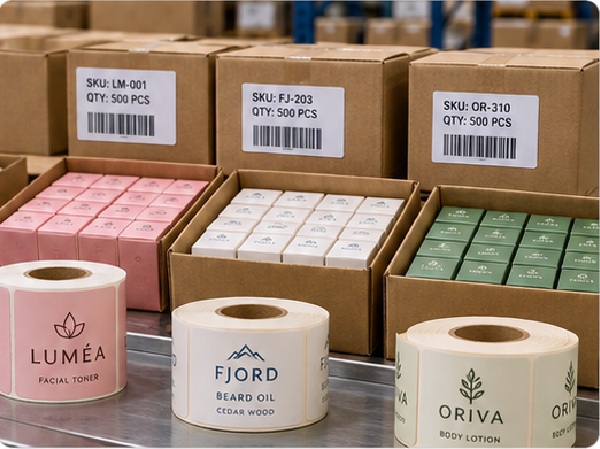
Each SKU can be assigned its artwork revision, dimensions, material, adhesive, finish, quantity, core, winding and packing reference. A matrix makes differences visible before production rather than after cartons arrive. Shared specifications can be grouped where appropriate, while special constructions remain separate. For a program containing 12 artworks, Philiton can therefore identify which SKUs share one die or material platform and which require their own manufacturing route.
  • Lock revision before production
  • Record quantity by SKU
  • Separate shared and unique specifications

Control Artwork Versions

A new file should not silently overwrite the previous approved version. Philiton reviews artwork names, revision references and production instructions before release. When only one SKU changes, the revised artwork can be separated from the unchanged family rather than rebuilding every file. Barcode, QR, legal text, ingredient or language revisions receive extra attention because a visually small change may have a large downstream impact.
  • Keep released files identifiable
  • Archive obsolete production references
  • Reconfirm changed variable or regulatory content

Pack for Fast Receiving

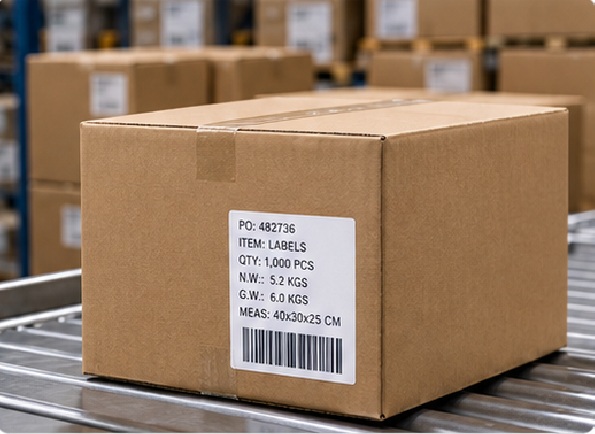
A wholesale shipment becomes harder to handle when multiple SKUs are mixed without clear identification. Philiton can separate rolls, sheets or packs by approved SKU references and apply agreed carton information for receiving. Roll quantity and carton allocation can also be planned so warehouse staff do not need to open every carton to understand the contents. Repeat shipments can follow the same packing structure when specifications remain unchanged.
  • Separate SKU quantities clearly
  • Identify partial rolls where relevant
  • Retain repeat packing instructions

Select the Sample Route Around the Decision You Need

A wholesaler does not always need a fully finished production-equivalent sample before quoting an early-stage project.

  • Material or adhesive swatches — commonly 1–2 business days: Useful when the main decision involves paper feel, film appearance, color, transparency, adhesive direction or basic application checking.
  • Digital samples — commonly 1–3 business days: Useful for dimensions, artwork layout, color direction and short-run visual review when the selected construction is compatible with digital sampling.
  • Standard printed or finished samples — commonly 3–5 business days: Suitable when the final print, die cutting, lamination or standard finishing needs closer review.
  • Complex finishing samples — commonly 5–7 business days: Foil, embossing, specialty screen work, unusual die cutting or special materials may require additional setup.
  • Security, RFID or custom structures — commonly 5–10 business days: Functional and multi-component projects often require more development work.

Timing begins after artwork, materials and process requirements are confirmed. International courier transit is additional.
Philiton chooses the sample route around the unresolved risk rather than adding unnecessary development steps to every quotation.

Move From Approved Sample to Controlled Repeat Production

Sample approval is valuable only when the approved result is translated into production controls.

Philiton records the relevant manufacturing information after approval:

  • artwork and revision
  • dimensions and dieline
  • selected facestock
  • adhesive
  • print route
  • color and white-ink requirements
  • finishing
  • roll or sheet configuration
  • packing instructions
  • inspection requirements

Common standard label production can often run in approximately 5–10 business days once artwork or sample, materials and tooling are approved and ready. Larger or more involved orders commonly require about 7–15 business days. Unchanged repeat orders may run in approximately 3–7 business days when required material and capacity are available.

Special materials, security work, RFID, complex finishing or unusually large multi-SKU programs receive project-specific schedules.

International transportation is planned separately according to destination, shipment size and freight method, preventing production lead time from being confused with door-to-door delivery time.
Protect the Channel Relationship Through Controlled Fulfillment

Philiton can support wholesale, distributor and broker programs with packing and shipment instructions designed around the partner’s commercial relationship and receiving workflow.
White-Label Manufacturing

White-Label Manufacturing

Philiton can manufacture labels, stickers, tags and related printed products behind a channel partner’s commercial identity. Finished goods do not need Philiton marketing branding on the external presentation when neutral or partner-defined packing is agreed. Artwork, specifications and sales communication remain controlled by the channel partner. White-label manufacturing allows a wholesaler to expand into materials, finishes or label categories that may not be produced within its own equipment base.
Neutral Packing

Neutral Packing

Neutral packing can be used where the distributor or broker wants factory branding kept away from the outward product presentation. Carton marks, SKU descriptions, quantities and packing references can follow agreed project instructions. Carrier, customs, origin and statutory documentation still must remain accurate. Neutral presentation therefore protects normal channel confidentiality without creating false shipment documents or removing information legally required for international logistics.
Blind Shipping Support

Blind Shipping Support

Project-based blind or neutral shipping can be arranged to a nominated warehouse or end location when the logistics route allows it. Philiton confirms consignee information, carton marks, contact visibility, packing slips and required shipping documents before dispatch. Blind shipping does not mean disguising legally required manufacturer, origin or customs information. The purpose is to remove unnecessary factory-facing marketing from the fulfillment flow while keeping the shipment commercially and legally correct.
SKU-Ready Packaging

SKU-Ready Packaging

Wholesale programs can be packed according to SKU, roll count, product family or agreed receiving logic. Individual rolls may use identification labels, while outer cartons can show SKU, quantity and other approved receiving information. Programs with many artworks can be separated so warehouse staff do not need to sort mixed stock after arrival. Custom resale packing can also be evaluated when the labels need to move directly into a distributor’s inventory or fulfillment system.

A Defined Workflow Keeps Wholesale Orders Moving

Philiton connects commercial information, technical review, sampling, manufacturing and replenishment in one order flow instead of treating each stage as an isolated transaction.

Send Project Details

Provide artwork, dimensions, quantity per SKU, application surface, preferred material if known, finishing, delivery format and destination. Photos of the container, existing label or current roll can shorten technical clarification when specifications are incomplete. Philiton identifies missing information before final quotation.

Review Specification

Philiton reviews material, adhesive, printing, finishing, shape, die requirements, roll or sheet format and operating conditions. Unsuitable combinations are raised before production. When several constructions could work, options can be compared around application requirement, appearance and order economics.

Prepare Quotation

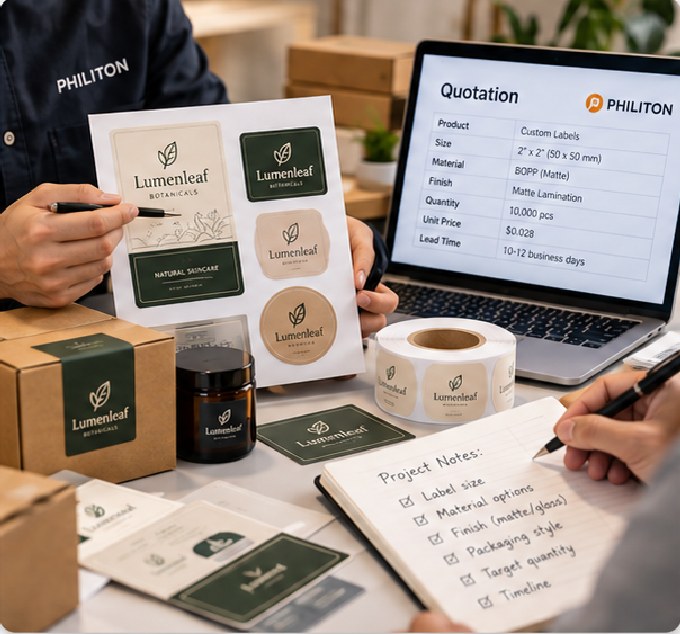
Quotation reflects the production setup actually required rather than dimensions alone. Quantity per SKU, materials, tooling, finishing, variable data, packing and shipment requirements are considered. Alternative quantities or constructions can be quoted where they provide a meaningful commercial comparison.

Develop and Approve

Material samples, digital proofs or finished samples are prepared according to the unresolved risk. Dimensions, appearance, adhesion, roll specification or functional requirements can be checked before bulk production. Approved artwork and construction become the production reference.

Manufacture and Inspect

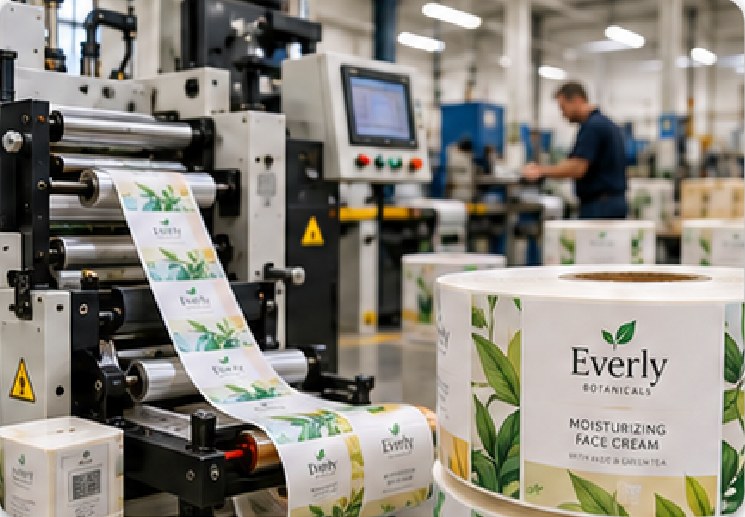
Released files move through printing, finishing, die cutting, slitting, rewinding and packing as required by the project. Quality checks are linked to the specification, including artwork version, print, dimensions, converting, roll construction and final packing.

Reorder by Reference

Established SKUs can be reordered against retained specifications when no change is required. Quantity, destination and requested schedule are reconfirmed while approved artwork, material, die, winding and packing references remain available for repeat manufacturing.

Production Details: Stay Connected From Prepress to Final Packing

Philiton manufactures wholesale label programs through coordinated printing, converting, finishing and inspection steps, keeping commercial specifications connected to the actual production route.

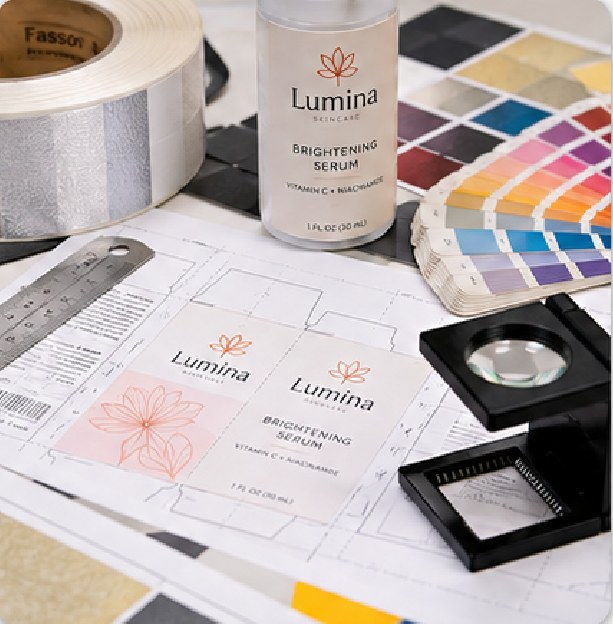
Pre-press Artwork, Material & Process Verification

Production control begins before ink reaches the substrate.

  • Artwork and prepress: Philiton checks dimensions, dielines, bleed, small text, barcode or QR placement, white ink, finishing layers and other manufacturing information relevant to the selected process. Artwork questions are resolved before a released file enters formal production.
  • Material control: Facestock, adhesive, liner and special components are linked to the approved construction. A material substitution is not treated as invisible simply because the appearance seems similar. Functional or documentation requirements may change when the construction changes.
  • Printing route: Digital, flexographic, screen or combined processes are selected according to quantity, material, artwork and finishing. Stable high-volume work and short multi-SKU runs do not have to use the same route.
  • Process sequence: Foil, embossing, lamination, varnish, variable data and other operations must be sequenced correctly around printing and converting. Finishing can affect registration, material thickness and later die cutting.

Philiton treats the released specification as the connection between quotation, sample and mass production rather than allowing production teams to reconstruct requirements from scattered messages.

Convert and Pack Labels Around the Way They Will Be Used

Printing creates the graphic layer; converting determines whether the finished labels can actually be handled and applied correctly.

  • Die cutting: Label shape, corner radius, gaps and cut-to-print position are checked against the approved dieline. Kiss cutting must separate the label without damaging the liner.
  • Slitting and rewinding: Roll width, core, winding and roll build are controlled for the final application method. Automatic-application programs may also require defined pitch, liner edge, maximum outer diameter or registration marks.
  • Quantity control: Rolls can be prepared with planned counts, partial rolls identified where appropriate and SKU quantities separated.
  • Packing: Finished rolls, sheets or die cuts are protected against crushing, telescoping, moisture, mixing and unnecessary handling. Outer cartons can carry agreed SKU and quantity references.
  • Repeat reference: Final approved specifications are retained so future production can begin from a controlled reference rather than physical guesswork.

The result is a label program designed to move from press to receiving, storage, application and reorder with fewer avoidable handoffs.

Quality Control Follows the Specification at Every Critical Stage

QC StageMain ControlsWholesale Risk Reduced
Incoming materialMaterial reference, appearance, relevant construction information and received conditionWrong stock entering production
Artwork releaseVersion, dimensions, dieline, text, barcode/QR areas and finishing layersObsolete or incorrect artwork
Press setupPrint position, color direction, registration and approved visual referenceLarge runs produced before setup errors are detected
In-process printingPrint clarity, consistency and selected process parametersColor or registration drift
FinishingFoil, embossing, coating, lamination and special-effect placementDecorative defects or misregistration
Die cuttingDimensions, cut position, liner condition and edge qualityLabels that do not peel or fit correctly
Rewinding and rollsWinding direction, core, web, roll build and quantity controlPrinter or applicator incompatibility
Final packingSKU, quantity, carton marks, protection and shipment preparationMixed stock or receiving errors

Compliance Evidence & Material Documentation

Compliance Evidence Must Match the Actual Label Construction

Philiton supports documentation and testing by selected material, application and destination market rather than applying one certificate claim to every label leaving the factory.

Confirm Material Documentation Before Making Market or Compliance Claims

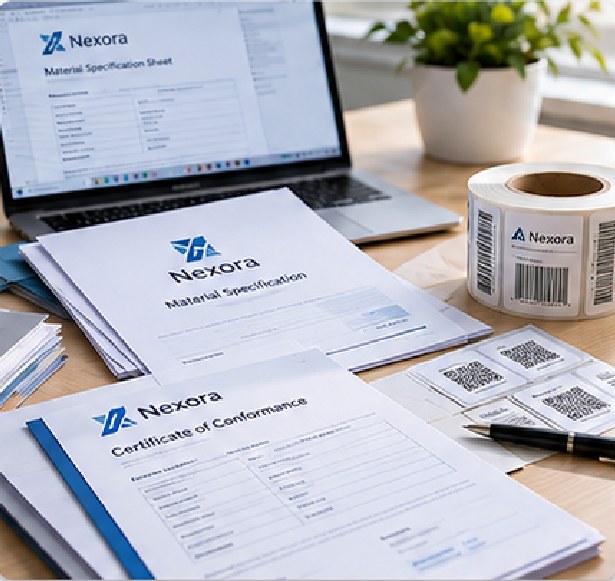
A document is useful only when it covers the actual construction being supplied.

Philiton sources paper, film, adhesive, liner, RFID components and other inputs from qualified external sources according to project requirements. Available documentation can be reviewed when programs request evidence related to areas such as FSC sourcing, RoHS, REACH, selected food-contact requirements or other market-specific material expectations.

The important control is scope.

  • A report for one BOPP construction cannot automatically be applied to another film.
  • An adhesive document does not automatically certify the ink, laminate or finished label.
  • Likewise, a factory-level certificate does not replace product-specific evidence when a regulation or account requirement applies to a particular material.

Philiton therefore asks for the destination market and intended application before final materials are released when compliance matters to the program.

Wholesalers serving several industries should pass relevant requirements during quotation rather than after production. Early confirmation allows the manufacturing route, supplier documentation and any necessary third-party testing to be planned before the final construction is locked.

Finished-Product Testing Is Defined by Risk and End Use

Some projects need more than supplier documents.

Adhesion, abrasion, moisture, cold exposure, chemical contact, barcode readability, variable-data accuracy, RFID performance or another function may require project-specific validation. The appropriate test depends on what could fail in actual use.

Philiton’s manufacturing and quality system includes incoming inspection, process checks, final inspection and laboratory-related support. External testing can also be arranged when independent evidence is required for a defined specification.

For food packaging, chemical products, electronics, industrial identification or regulated markets, the wholesaler should provide the required standard, account specification or compliance target as early as possible.

Philiton avoids using broad statements such as “all labels are food safe” or “all materials are REACH compliant” when the actual scope differs by stock.

A material substitution made later for cost or availability reasons also requires renewed document review when compliance evidence is tied to the original construction.

Compliance remains connected to the selected material, intended use and target market rather than treated as a generic logo placed beside every product.


Manufacturing Resources Behind Every Wholesale Label Program

Philiton combines operating scale with technical, converting and quality resources needed to develop new label work and reproduce established programs.

Manufacturing Since 2016

Philiton has manufactured custom labels, stickers, tags and specialty printed products since 2016. The manufacturing model covers branded packaging labels, durable identification, variable data, security applications and smart-label work. Development, printing, finishing, converting, inspection and repeat production remain connected so wholesalers can move an approved project into replenishment without finding a new upstream manufacturer for every stage.

12,000+ m2 Operations

Manufacturing operations in Shenzhen and Dongguan cover more than 12,000 m2 of combined manufacturing and operating space. The system includes production, engineering, sampling, storage, quality control, laboratory-related work, packing and supporting functions. The two-location structure provides room for different printing and converting routes while supporting short runs, multi-SKU programs and recurring volume production.

200+ Employees

More than 200 employees support engineering, prepress, printing, converting, quality, warehousing, project coordination and management. Wholesale programs often pass through several disciplines before shipment, so headcount matters most when responsibilities are connected. Artwork review, machine setup, printing, die cutting, slitting, inspection and packing can be managed through one manufacturing organization rather than unrelated subcontracting steps.

91 Core Professionals

Philiton has 91 technical personnel, experienced production operators and quality-related professionals combined. Their work covers process engineering, digital and flexographic production, screen printing, specialty finishing, die cutting, slitting, RFID work, incoming inspection, in-process checking, final inspection and laboratory support. Technical resources can therefore be assigned according to the risk of the label rather than using the same development path for every job.

Representative Wholesale Label Programs Managed by Philiton

The following anonymized program profiles show realistic order structures for channel manufacturing. Commercial identities are omitted while quantities and workflows illustrate how larger wholesale projects can be organized.
United States Label Distributor

United States Label Distributor

A regional U.S. label distributor required a representative 85,000-label program covering nine SKUs for supplements, personal-care bottles and general packaged products. Quantities varied by SKU, so Philiton separated artwork volume instead of pricing the program as one 85,000-piece design. Compatible products shared BOPP material and common roll specifications, while two moisture-sensitive applications received a different construction. Artwork, dielines and winding were approved before production. Finished rolls were identified by SKU and packed in neutral outer cartons, giving the distributor a cleaner receiving process and a repeat reference for later replenishment.
  • Region: United States
  • Order structure: 85,000 labels / 9 SKUs
  • Main focus: multi-SKU wholesale supply
United Kingdom Print Broker

United Kingdom Print Broker

A UK print broker needed a representative 42,000-label order after receiving a premium cosmetics project outside its usual production range. The program included six artworks using clear film, controlled white ink and selected hot-foil areas. Philiton reviewed bottle curvature, transparent zones, white-underprint requirements, foil registration and roll direction before preparing finished samples. After approval, the six versions were manufactured under one coordinated material and finishing plan while remaining separated by artwork. Final cartons followed agreed neutral presentation and SKU identification, allowing the broker to maintain the commercial relationship while Philiton handled the specialist manufacturing route.
  • Region: United Kingdom
  • Order structure: 42,000 labels / 6 SKUs
  • Main focus: clear film and premium finishing
Australia Packaging Supplier

Australia Packaging Supplier

An Australian packaging supplier required a representative 68,000-label program for several food and beverage accounts using jars, chilled bottles and pouches. The project contained seven SKUs with different application environments, so Philiton did not force all versions onto a single adhesive. Container surface, refrigeration exposure, moisture and hand-versus-machine application were reviewed first. Sample labels were tested on the intended packaging before artwork and roll specifications were released. Bulk production was divided by SKU with controlled roll counts and carton identification, giving the packaging supplier a structured label component that could move alongside its broader packaging deliveries.
  • Region: Australia
  • Order structure: 68,000 labels / 7 SKUs
  • Main focus: application-matched materials and repeat supply

Frequently Asked Questions About Wholesale Labels

Many standard custom label and sticker projects can start from around 500 pieces. Final MOQ depends on size, material, adhesive, number of SKUs, printing route, finishing, tooling and delivery format. Standard digital work can often remain more flexible than projects requiring custom materials, security structures, dedicated foils or RFID components. Philiton confirms the workable minimum after reviewing the real specification rather than applying one fixed MOQ to every label category.
Yes. Philiton can organize multi-SKU programs with separate artwork, quantity and packing references. When dimensions, materials, adhesives, cores or other technical requirements are compatible, selected specifications may be standardized across several SKUs. Products with different environmental or application requirements remain separate. Quantity per SKU should be supplied during quotation because ten artworks totaling 50,000 pieces require different planning from one 50,000-piece artwork.
Yes. Philiton supports OEM and white-label manufacturing for distributors, wholesalers, print brokers and label brands. Neutral or agreed channel presentation can be arranged according to project instructions. Finished goods do not need Philiton marketing branding on the external presentation. Legally required customs, origin, carrier or statutory information still remains accurate where applicable.
Project-based blind or neutral shipping can be arranged to a nominated warehouse or end location where the logistics route allows it. Carton marks, packing presentation, contact visibility and consignee instructions should be confirmed before shipment. Blind shipping limits unnecessary factory-facing branding; it does not remove legally required customs, carrier, origin or statutory information.
Blank material or adhesive swatches commonly take 1–2 business days, digital samples around 1–3 business days and standard printed or finished samples around 3–5 business days after the specification is confirmed. Complex foil, embossing or specialty work commonly requires 5–7 business days. Security, RFID and special structures can require around 5–10 business days. Courier transit is additional.
Common standard label production can often take approximately 5–10 business days after artwork or sample approval and after required materials and tooling are ready. Larger programs commonly need around 7–15 business days. Unchanged repeat orders may run in approximately 3–7 business days when the material and production capacity are available. Complex finishing, special materials, RFID and large multi-SKU orders receive project-specific schedules.
Yes. Philiton can prepare roll labels around applicator requirements including label size, web width, liner, gap, repeat pitch, core, winding direction, maximum roll diameter and sensor marks where required. Sending the equipment model, media specification or a current approved roll helps reduce development uncertainty. Machine compatibility should be confirmed before bulk production, especially when replacing an existing label supply.
Yes. Artwork alone is enough to start a technical discussion, but final material selection also requires application information. Philiton will normally ask about the receiving surface, container material, moisture, temperature, oil or chemical exposure, removability, expected durability, application method and destination market. A photograph or physical sample of the container can be useful when the exact substrate is unknown.
Yes. Cost can often be improved by standardizing compatible dimensions, dies, materials, cores, winding or packing across several SKUs, increasing stable repeat quantities, simplifying unnecessary finishing or selecting a more suitable production route. Philiton does not recommend reducing material or adhesive performance simply to lower unit cost. Any cost change is reviewed against the label’s actual application.
Provide label size, shape, artwork, material if known, receiving surface, quantity per SKU, number of SKUs, printing and finishing, roll or sheet requirement, core and winding where applicable, packing requirements, destination and required timing. For technical projects, also include temperature, moisture, chemicals, machine model, compliance needs or an existing sample. Complete information allows Philiton to quote the production route rather than a generic label assumption.

Send Your Wholesale Label Program for Manufacturing Review

Philiton can review a single new label, a multi-SKU launch or an established repeat program. The most useful inquiry explains how the labels will be manufactured, applied, packed and reordered rather than sending only a total quantity.

For a faster technical and commercial review, include:

  • label size and shape
  • artwork files or reference images
  • quantity for each SKU
  • number of artworks
  • paper, BOPP, PET, thermal or other preferred material if known
  • permanent, removable, freezer or other adhesive requirement
  • bottle, jar, carton, pouch, component or other application surface
  • foil, embossing, spot UV, lamination, holographic or other finishing
  • roll, sheet or individual format
  • core, winding and equipment details where applicable
  • neutral packing, blind-shipping or SKU-marking requirements
  • destination country and requested delivery schedule
  • compliance documents or functional tests required for the program

Philiton will review the information against manufacturing, material, tooling, sampling, quality and packing requirements before preparing the appropriate production route.

Get In Touch

  • Our team will answer your inquiries within 12 hours.

  • Your information will be kept strictly confidential.

Get a Fast Quote for Custom Labels & Stickers

We will contact you within 24 Hours, please pay attention to the email with the suffix“@philiton.com”. 
For all inquiries, please feel free to reach out at:

Ask For A Quick Quote

We will contact you within 24 Hours, please pay attention to the email with the suffix“@philiton.com”. 

For all inquiries, please feel free to reach out at:

Get a Quote Today!

We will contact you within 24 Hours, please pay attention to the email with the suffix“@philiton.com”.