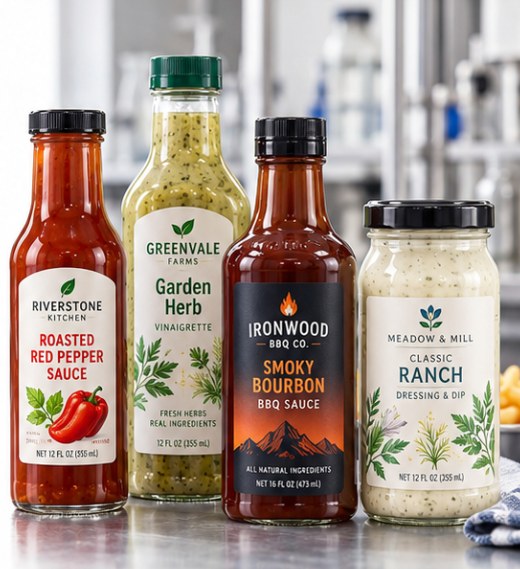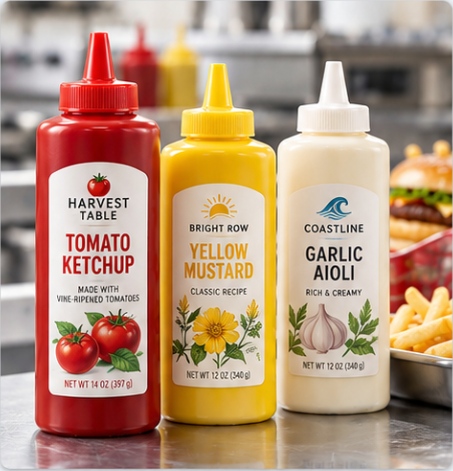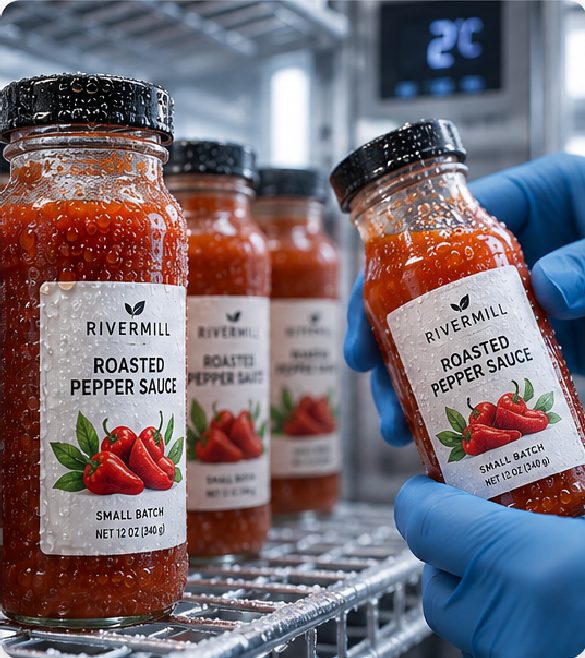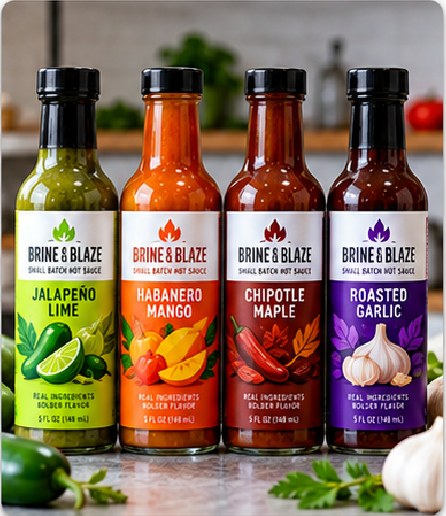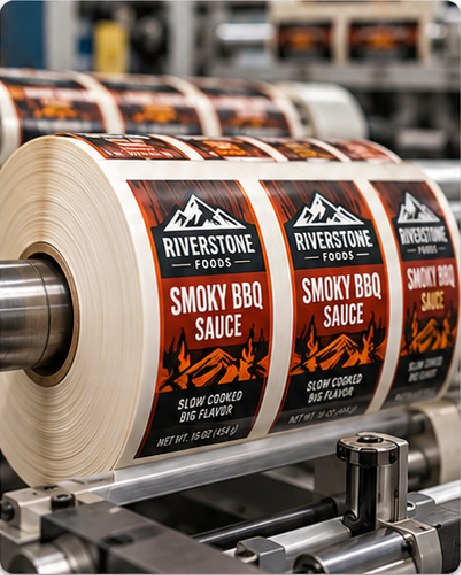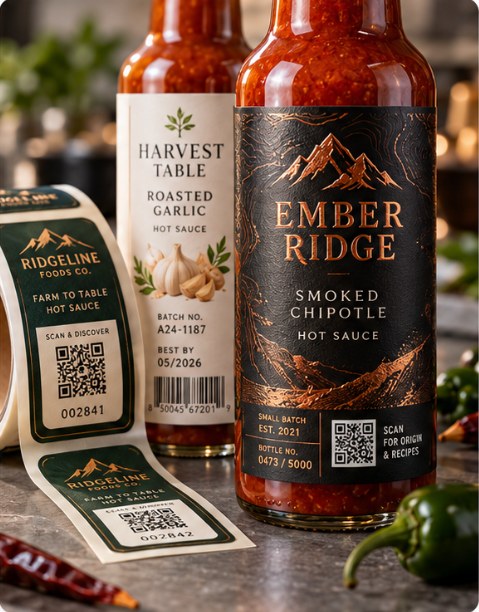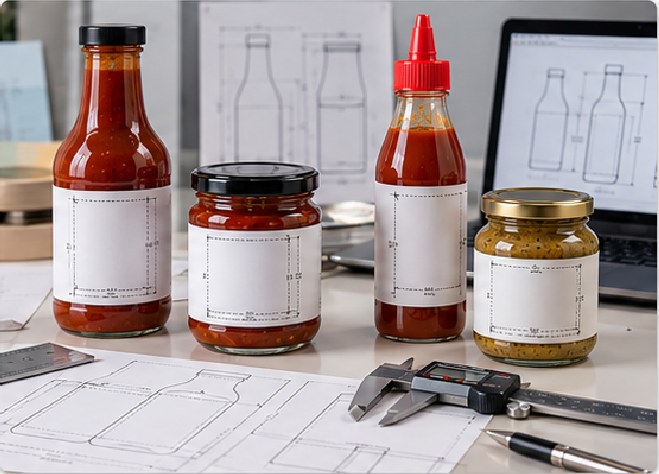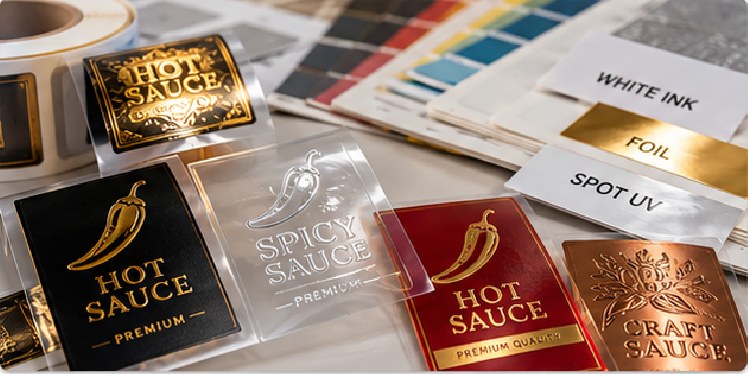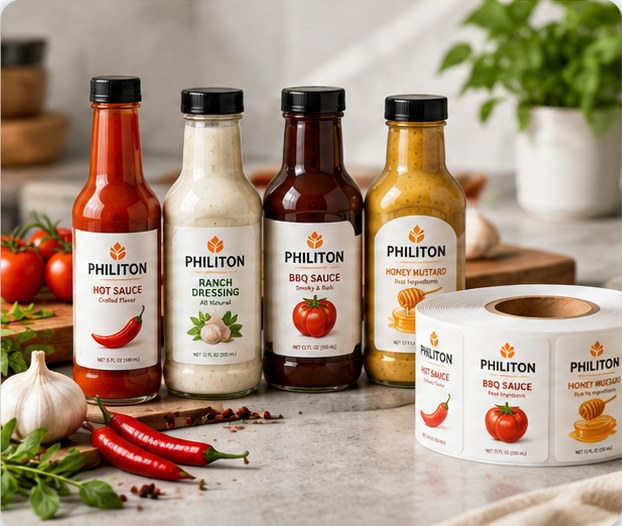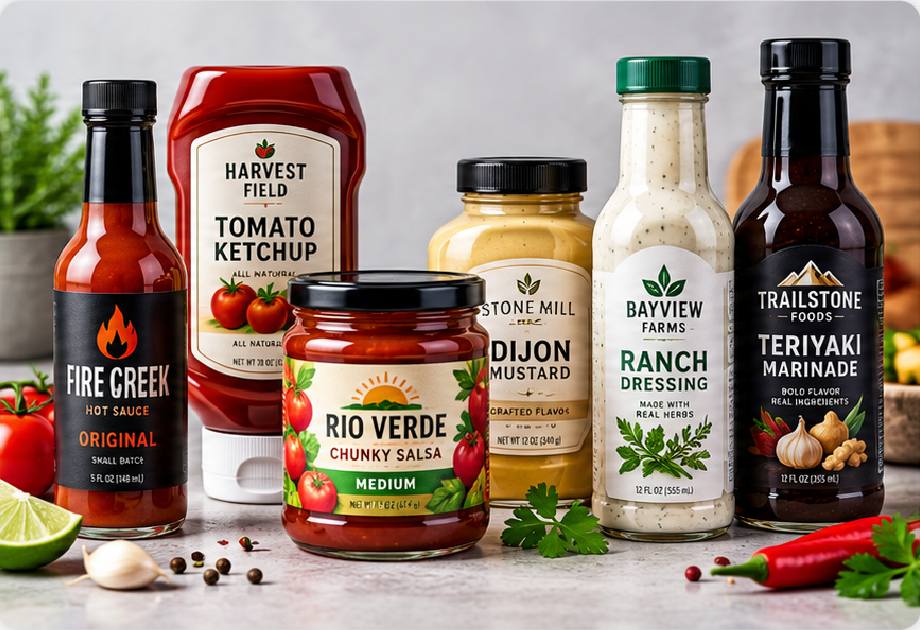
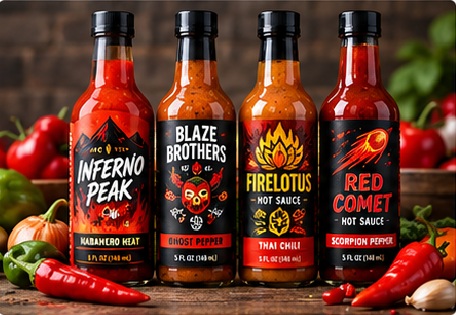
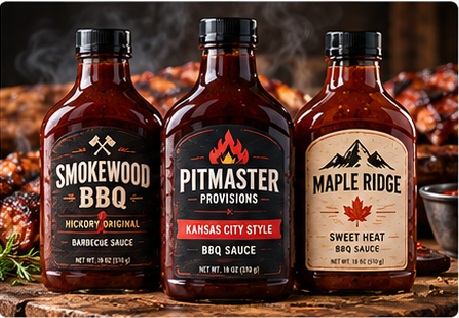
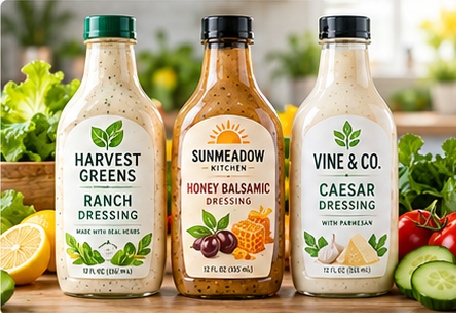
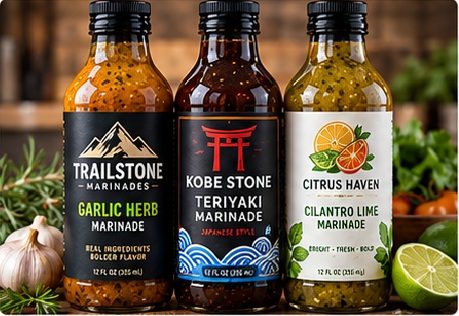
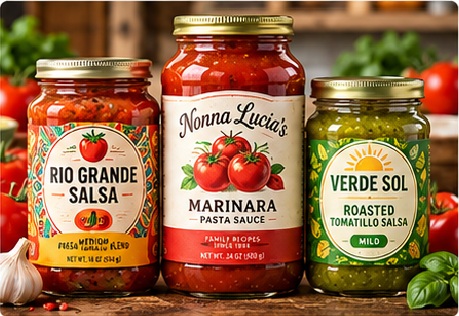
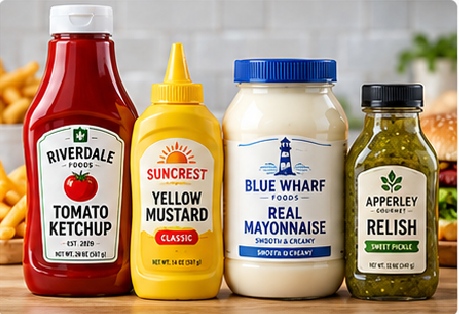
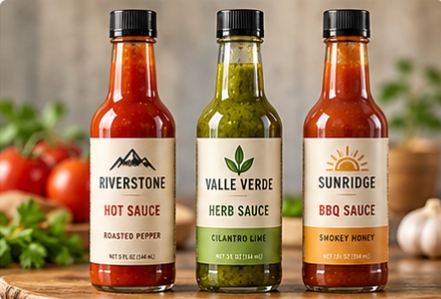
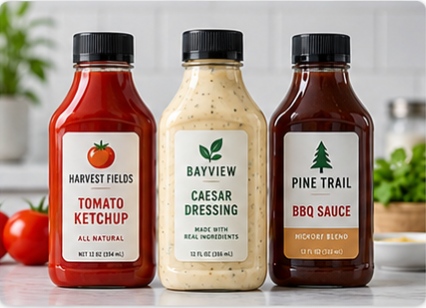
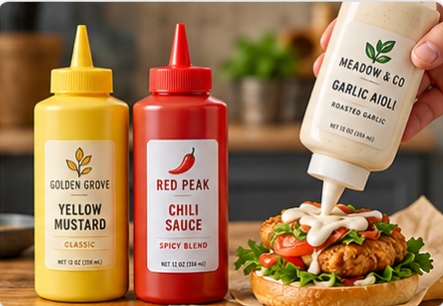
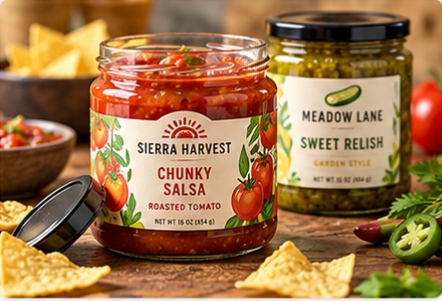
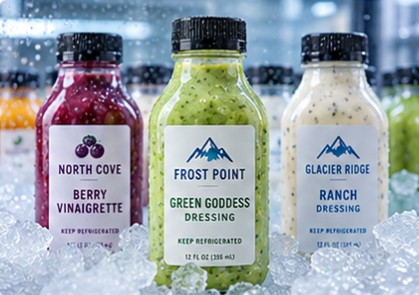
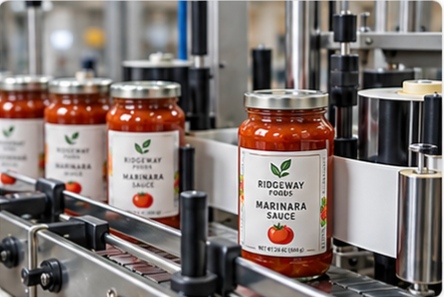
Use the pack and environment to narrow the construction first. Final material and adhesive approval should follow actual container sampling and project-specific validation. Use it as a starting framework before sample approval.
| Application Condition | Primary Risk | Construction Direction | Validation Focus |
|---|---|---|---|
| Dry glass bottle, ambient shelf | Scuffing, brand appearance | Paper or film; varnish or laminate as required | Bottle fit, color, finish, edge position |
| Glass bottle, refrigerated | Condensation, edge lift | Film with suitable adhesive direction | Application temperature, dwell time, condensation exposure |
| PET bottle, wet-use | Moisture, handling, residue | White or clear BOPP; protective finish | Bottle surface, rub, moisture and edge check |
| PE/HDPE squeeze bottle | Low surface energy, flexing | Flexible film plus adhesive review | Squeeze cycle, edge lift, label footprint |
| Hot-fill sauce bottle | Thermal transition, later storage | Project-selected film or paper structure | Fill process, cooling cycle, container distortion, adhesive response |
| Multi-SKU retail line | Version control, excess inventory | Shared material/die-line with versioned artwork | SKU files, quantities, color-critical elements, packing |
| Automatic roll application | Dispensing, sensor, line stoppage | Roll format engineered to applicator | Core, OD, gap/pitch, roll direction, liner, trial roll |
White BOPP is a strong starting direction for many sauce and condiment programs because it combines a clean white print surface with better moisture tolerance than ordinary paper. It works well for bottles that may be handled with wet hands, moved through refrigeration or exposed to light sauce splashes.
Best fit:
Watch before release:
Philiton can review white BOPP together with digital or flexographic printing, matte or gloss protection, specialty finishes and roll specifications. Material samples should be tested on the actual container when cold storage, hot-fill transitions, oily handling or low-surface-energy plastics are involved.
For quotation, Philiton also asks for label dimensions, quantity by SKU, whether the pack is hand or machine labeled, and the preferred finish. Those inputs help determine whether one shared construction can support the full flavor range or whether specific SKUs need a different adhesive or protection route.
Clear BOPP is useful when the sauce color, bottle shape or premium product presentation should remain visible through the label. Clear constructions can create a no-label look on smooth glass or transparent PET, but successful results depend on more than transparency. White ink planning, adhesive clarity, bottle cleanliness and artwork contrast all influence the final appearance.
Best fit:
Watch before release:
Philiton can separate CMYK, spot color and white-ink layers during prepress, then produce a printed sample on the intended clear stock. The sample should be applied to the actual filled or representative bottle so color, transparency and edge visibility can be judged under real shelf conditions.
A clear-label sample should be judged on both an empty and filled bottle when possible. Sauce color can change perceived ink density, while bottle seams, molded marks and small surface defects become more visible through transparent areas. Approval under normal retail lighting is more reliable than judging transparency against a white desktop background.
Paper remains useful for craft, gourmet and premium sauce ranges when the packaging environment is controlled. Uncoated, coated, kraft and textured papers can deliver tactile character that film cannot fully reproduce, especially when combined with foil, embossing, debossing or selective varnish. The main question is whether the use environment allows paper to keep its appearance throughout distribution and consumption.
Best fit:
Watch before release:
Philiton can compare paper samples, print finish and protective routes before production. For brands choosing paper mainly for appearance, application testing should include the real bottle and expected storage so the premium look does not create an avoidable durability problem later.
Paper programs also benefit from disciplined warehouse and shipping protection. Textured stocks can mark or polish when labels rub against dividers or neighboring rolls, and heavy foil or embossing may need extra care during rewinding and packing. Philiton can include surface protection and carton handling in the released packing instruction.
PET and specialty films can be considered when a project needs stronger dimensional stability, tougher handling or a specific visual effect. PET face materials are commonly associated with durable labeling, while metallized, holographic and other specialty films can add premium shelf impact. The correct choice still depends on the complete construction, not the facestock name alone.
Best fit:
Watch before release:
Philiton can source suitable film candidates, review print and converting requirements, and prepare material or printed samples. Performance claims such as chemical resistance or extreme-temperature capability are only used when the actual material, test condition and project evidence support them.
Specialty film decisions should also consider converting behavior. Thicker or stiffer films can influence die cutting, waste stripping, roll diameter and dispensing, especially on small labels or automatic lines. Philiton reviews the label as a complete roll construction so the premium material remains compatible with the intended packing operation.
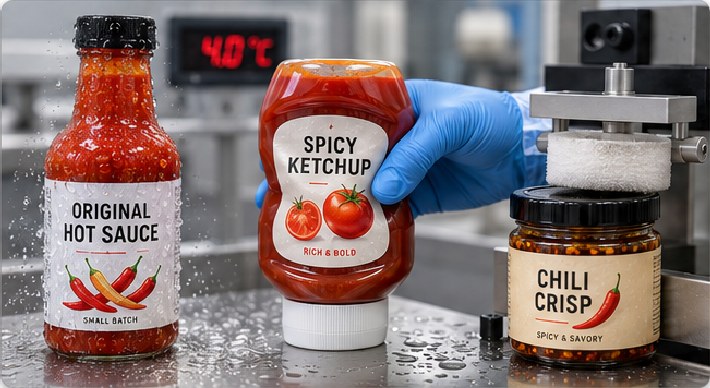
Glass and PET often provide relatively stable surfaces, but real adhesion still depends on bottle cleanliness, release agents, coating, surface texture and application conditions. A label applied to a warm, dry glass bottle may behave differently from the same construction applied to a chilled bottle carrying condensation.
Surface review:
Construction review:
Philiton uses container information to narrow candidate labelstocks and then moves higher-risk applications into material sampling or application testing. The goal is to approve a construction under known conditions rather than rely on a generic adhesive name.
For repeat programs, the approved container should be identified by supplier or pack specification where possible. A quiet packaging change – such as a new bottle coating, recycled-content blend or surface treatment – can alter adhesion even when the bottle dimensions appear unchanged. Material changes should therefore enter revision review before the next production run.
PE and HDPE squeeze bottles create a different challenge from rigid glass. Lower surface energy can make bonding more demanding, while repeated squeezing moves the bottle wall under the label. A label that is too stiff, too large or placed across a high-flex area can wrinkle or lift even when initial tack looks strong.
Geometry matters:
Material matters:
Philiton can review a physical bottle or accurate drawing and prepare a sample construction for squeeze and edge-lift checks. Large production should follow the approved container-label combination, not an artwork-only approval.
Bottle filling level also changes how a squeeze pack behaves. An empty sample can flex more than a filled retail unit, while chilled contents may stiffen the pack. Where flexing is a major risk, Philiton prefers a filled or representative container test so the label footprint and material are judged under a realistic use condition.
Sauce labels can move through several environments before reaching a kitchen table: filling, cooling, warehouse storage, transport, refrigeration, retail handling and repeated consumer use. Adhesive performance is influenced by both the label application condition and the later service condition.
Key inputs:
Philiton can help turn these conditions into a sample plan. A refrigerated bottle may need an application check at the real packing temperature, while a hot-fill product may require review after the container cools and changes dimension. No single adhesive should be described as suitable for every temperature and surface. Approval is strongest when the actual container, material, label construction and handling cycle are tested together.
When a co-packer applies labels, production details should be confirmed with the facility rather than assumed by the brand office. Line speed, bottle temperature, surface drying and the time between labeling and cartoning can all influence results. Philiton can use those inputs to define a sample or trial-roll check before full release.
Digital printing is useful when sauce programs have several flavors, frequent artwork changes or launch quantities that do not justify a longer conventional setup. It can reduce the setup burden for short runs and allows several versions to be produced within one controlled material platform when dimensions and construction are shared.
Good use cases:
Production controls:
Philiton can use digital printing as part of a structured NPI route rather than treating it as a shortcut around engineering. When volumes grow and artwork stabilizes, cost and repeatability can be reviewed again to decide whether the same job should remain digital or migrate to another production route.
Digital production also helps when initial demand is uneven across flavors. A core SKU may need several thousand labels while a limited flavor needs far fewer. Philiton can quote the mix as a program, but each SKU still needs a defined quantity, approved file and packing instruction so flexibility does not become version confusion.
Flexographic printing is suited to stable roll-label programs where quantities, artwork and repeat production justify conventional setup. It integrates well with roll-to-roll converting and can support efficient production for recurring sauce ranges after specifications have been approved.
Good use cases:
Production controls:
Philiton combines flexographic capability with die cutting, finishing, slitting, rewinding, inspection and packing. For a sauce brand moving from a small launch to stable repeat demand, the production route can be re-evaluated based on volume, number of versions, finish complexity and total cost rather than forcing one print technology from the first order onward.
For long-running sauce programs, the advantage grows when specifications remain stable across orders. Philiton can retain released process information and use approved production references during reorder review. Any change in bottle, material, adhesive, artwork, color target or applicator should be flagged before scheduling so repeat efficiency does not hide a technical change.
Sauce and condiment labels can also require screen or UV effects, variable data, serialized codes, promotional QR codes or specialty ink layers. Philiton can combine those functions with standard printed graphics when the project needs more than a static package label.
Suitable directions:
Engineering checks:
Philiton reviews the full process route before production so one finishing step does not compromise another. RFID/NFC, security coding or project-specific performance claims are handled according to the actual component, encoding plan and testing requirement rather than described with one universal specification.
When unique codes are used for promotions or traceability, data ownership and system responsibility should be defined in advance. Philiton can manufacture and verify printed variable information according to the agreed file and checking method, while campaign databases, consumer platforms and downstream data handling remain within the responsibilities assigned by the project.
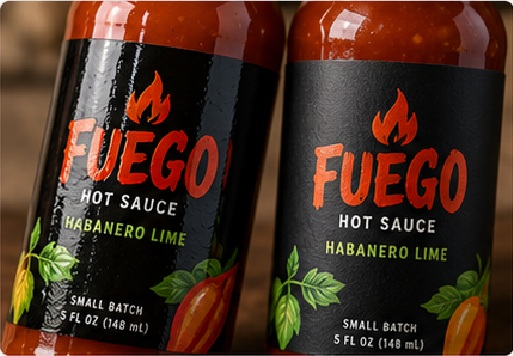
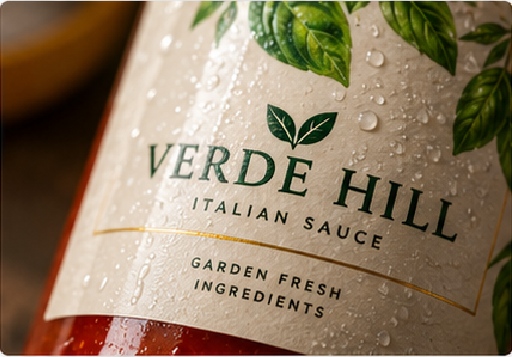
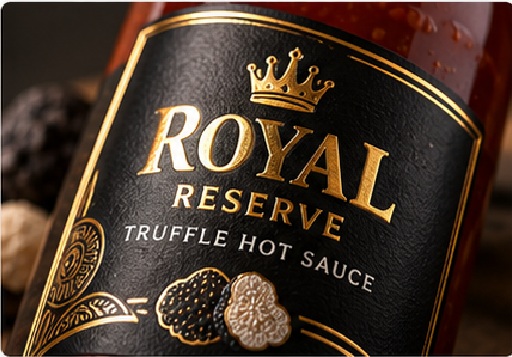
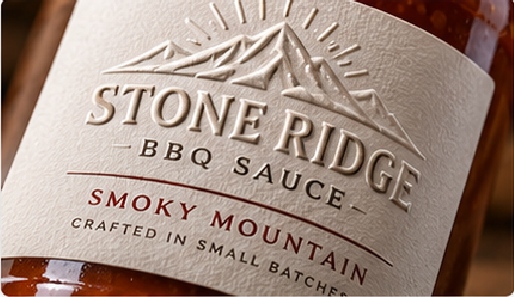
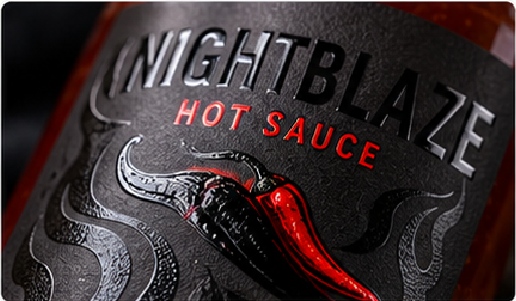
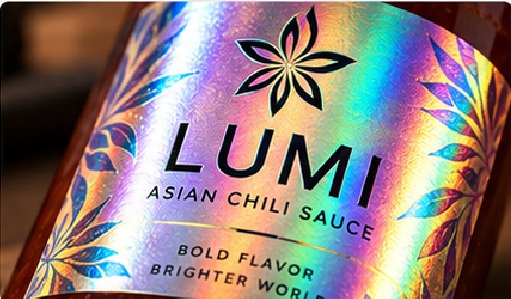
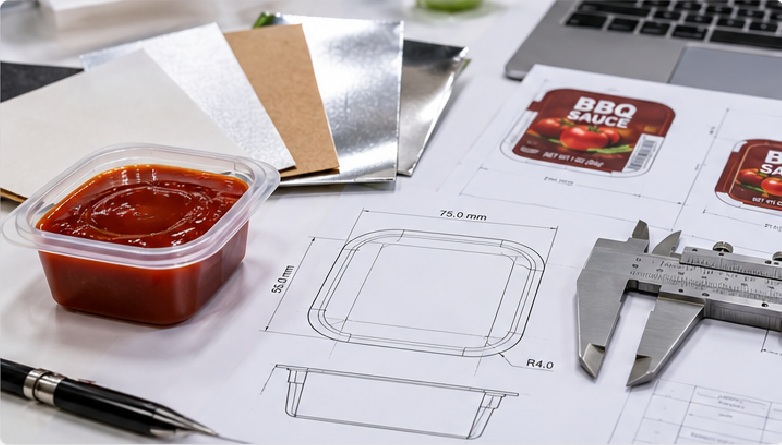
A label file should be built around the real packaging surface. Bottle diameter, panel width, shoulder curve, base curve, ribs, seams and squeeze zones all affect where a label can sit. A flat PDF can look balanced on screen while failing once wrapped around a tapered jar or narrow bottle.
Information Philiton asks for:
Engineering approach:
Philiton can support artwork adjustment and prepress, but the most reliable result comes from approving the label on the actual pack. Brands using a common container across several flavors can then lock one mechanical die-line and control later SKU changes through artwork version management instead of repeatedly changing dimensions.
For wrap labels, circumference and overlap or gap planning should be confirmed with a physical fit rather than calculated from nominal bottle diameter alone. Mold variation, taper and label thickness can change the visual seam. A small fitting test can prevent costly artwork rework after printing plates, dies or finishing tools are prepared.
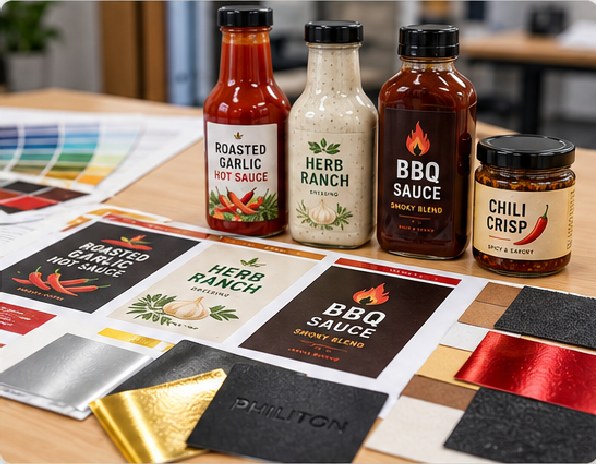
Clear, metallic and specialty labels often need production layers that are not obvious in a normal design file. White ink may sit under color, foil may require a separate vector plate, embossing needs its own tooling layer, and spot effects must be isolated from ordinary CMYK artwork.
Prepress review can include:
Philiton checks layer naming and manufacturability before production so a visual effect does not create hidden registration or legibility problems later. Small reversed text, thin foil lines, tight knockouts and codes placed over reflective materials deserve extra attention. A printed sample or finish proof is preferred when the effect is central to the product launch. Approved layers should then be archived with the final SKU version so repeat orders do not depend on rebuilding the file from memory.
Prepress also checks whether nutrition panels, ingredient text and legal copy remain readable after special effects are added. Reflective stock, clear areas and heavy varnish can reduce contrast in ways that are hard to predict on screen. Philiton can recommend moving decorative effects away from dense information zones when readability would otherwise suffer.
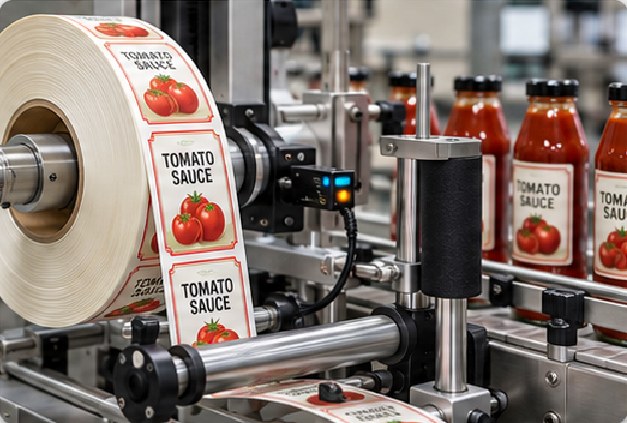
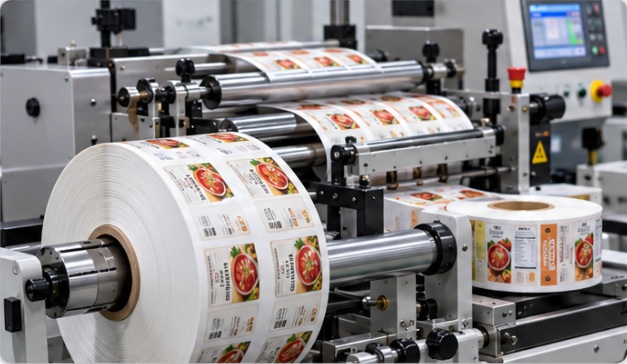
Automatic labeling lines need the finished roll to match the applicator, not only the bottle. Core size, maximum roll diameter, gap or pitch, web width, unwind direction, labels per roll and splice expectations can affect dispensing and sensor performance. A roll that is technically printable can still create downtime if those parameters are wrong.
Before production Philiton can collect:
For a new line, a production-representative trial roll is a useful validation step. Once approved, roll specifications become part of the controlled production record together with material, adhesive, print route and die-line. Reorders can then follow the released configuration unless the pack, applicator or artwork changes. This approach reduces line-side surprises and makes quotation, packing and repeat production more predictable.
Co-packers often have their own preferred roll format, so the final specification should come from the actual line rather than a generic factory standard. If a brand changes co-packer or applicator later, roll requirements should be reviewed again before reorder. Keeping the artwork unchanged does not guarantee the old roll format remains compatible.
Not every project needs the same sample. A simple printed proof can confirm artwork, color direction and general appearance, while a material swatch can answer an adhesive or substrate question before decorative finishing is added. Complex foil, embossing, specialty film or functional structures may need a production-oriented sample using the intended process.
Typical routes include:
For straightforward printed proofs, a 3-5 business-day sample route can commonly be possible when the selected stock and standard converting route are ready; complex constructions are scheduled by project. Philiton does not use one fixed sample time for every material and finish. The most efficient sample plan starts by identifying the uncertainty that needs to be closed, then uses the least expensive sample capable of answering it.
Sample cost is also tied to what must be simulated. A simple digital appearance proof is different from a production sample requiring custom foil, embossing or a dedicated die. Philiton confirms the purpose, process and expected decision before quoting the sample so the brand does not pay for a complex prototype when a simpler material check would answer the question.
A printed sample can look excellent but still leave the main application risk unresolved. For refrigerated, hot-fill, oily, low-surface-energy or squeeze-bottle projects, the label should be applied to the intended container and observed under the expected use cycle.
Useful checks can include:
Philiton can support internal application and quality checks according to the chosen construction, while external or third-party testing can be coordinated when a market or brand specification requires it. Performance should be recorded against the actual material, container and condition. Approval based only on a catalog description is weaker than approval based on the bottle and process that will be used in production.
A written test plan is useful for higher-risk projects. It can record the container, application condition, observation period and pass/fail criteria agreed for the development stage. The purpose is not to create a laboratory claim for every label, but to make the approval decision traceable and easier to repeat when the project scales or changes pack supplier.
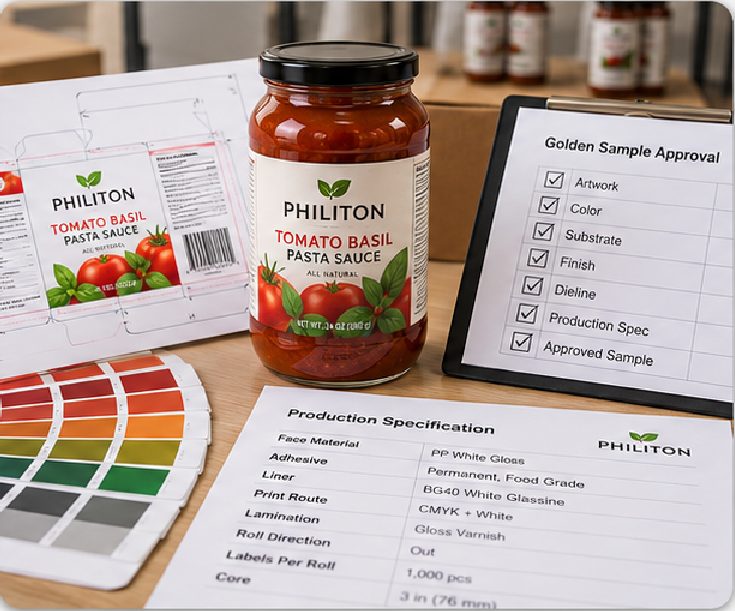
Once appearance and application are approved, the project should move from “a sample we liked” to a released production reference. Philiton can lock the essential manufacturing inputs so later production and reorders have a clear baseline.
The released record can include:
Revision control matters when ingredients, language, barcodes or flavors change later. New files should be compared against the released specification so a content change does not unintentionally alter construction. For repeat sauce programs, keeping a stable Golden Sample and production specification can reduce repeated clarification, speed internal review and improve consistency from one order to the next.
A released sample should also state what it does not control. For example, a visual Golden Sample may not prove low-temperature adhesion or line-speed performance unless those conditions were part of the approval. Separating appearance approval from functional approval keeps later quality discussions anchored to the evidence actually created during development. The release record should also identify the container and intended application route used during approval.
Philiton operates manufacturing in Shenzhen and Dongguan with a 12,000+ ㎡ footprint, 200+ employees and integrated printing, converting, inspection and testing capabilities.
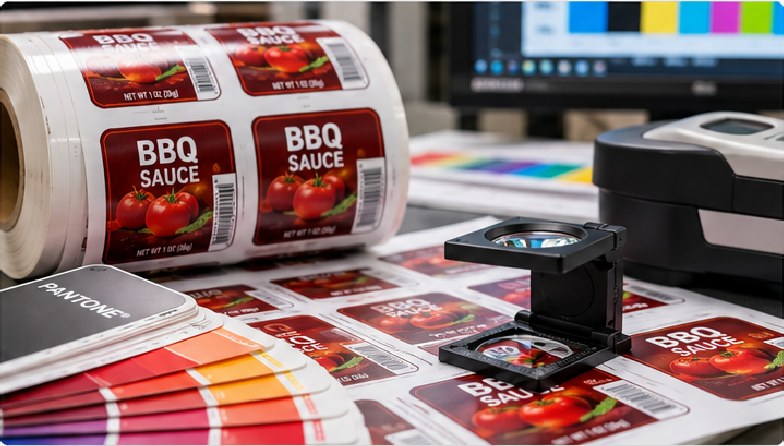
Terms such as waterproof, oil-resistant, freezer-safe, heat-resistant, chemical-resistant or outdoor-durable can be useful only when the conditions are defined. A film face material may tolerate water while the adhesive, ink, finish or container interface remains the weaker point. A label that survives refrigeration may not be suitable for cold application, and a hot-fill bottle may create a different thermal cycle from ambient storage. Philiton therefore separates general material knowledge from project-specific proof. Candidate materials can be recommended based on known characteristics, then samples and tests are used when risk is higher. Specific extreme-temperature ranges, chemical exposure limits, peel-force values or service-life claims are not presented as universal company facts without supporting material data or test records. For procurement teams, the useful question is not “Is the label certified?” but “Which requirement applies to this product, which part of the label construction does it cover, and what evidence is available?” Sending the requirement early allows Philiton to review the correct material and documentation route before quotation or production. The same discipline applies to sustainability and recycled-content statements. Claims should match the actual substrate and supporting supplier documentation used for the order. Philiton can source candidate materials and provide available evidence, but marketing language should not exceed the documented scope of the selected construction or the market rules governing the final pack.
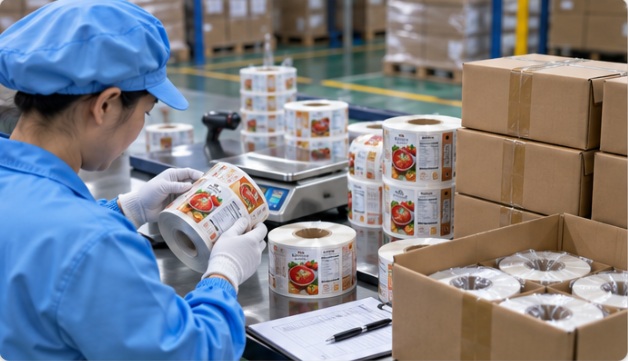
Finished sauce labels can be supplied in rolls, sheets or individual pieces. Packing should protect the label and help production teams identify the correct SKU quickly. Philiton confirms the receiving and application workflow before final packing is released.
| Delivery Format | What to Confirm | Why It Matters |
| Roll labels | Core, outer diameter, roll direction, gap/pitch, labels per roll | Supports automatic or efficient hand application and stable line setup |
| Sheet labels | Sheet size, label layout, count per sheet, protective packing | Useful for hand application, sample kits or low-volume operational use |
| Individual pieces | Piece count, backing format, bundle or bag method | Suitable for promotions, specialty packs or manual workflows |
| SKU-separated packing | SKU code, quantity, roll ID, carton mark, color coding if requested | Reduces flavor or version mix-ups in warehouse and production |
| Surface-protected packing | Interleaving, inner bags, edge protection, carton fit as required | Helps protect foil, matte, clear and other appearance-sensitive finishes |
| International shipment | Courier, air, sea, nominated forwarder, project trade term | Aligns sample speed, bulk cost, carton planning and destination requirements |
For many standard labels, projects can start from around 500 pieces. Final MOQ, price and production timing depend on material, SKU structure, process and tooling. A complete RFQ reduces back-and-forth and exposes cost drivers before production planning begins.
| Quote Factor | Commercial Effect | Information Philiton Needs |
|---|---|---|
| Quantity | Changes setup cost allocation and production route | Total quantity plus quantity by SKU |
| SKU count | More versions increase file, setup and packing control | Number of flavors, sizes and market versions |
| Material & adhesive | Special constructions can change sourcing and MOQ | Container material, storage, filling and exposure conditions |
| Printing route | Digital and conventional routes have different setup economics | Artwork, colors, repeat forecast and version frequency |
| Finishing | Foil, emboss, laminate, UV and specialty effects add process steps | Finish artwork layers and reference effect |
| Tooling & shape | Custom dies or embossing tools can add one-time setup cost | Final dimensions, corner shape and approved die-line |
| Roll specification | Core, roll direction and quantity per roll affect converting and packing | Applicator requirements or roll diagram |
| Testing & documents | Project-specific tests or third-party reports add scope and time | Target market, required standard, report or document list |
| Schedule | Complex approval, sourcing and finishing change the production plan | Target in-hand date and required sample/approval stage |
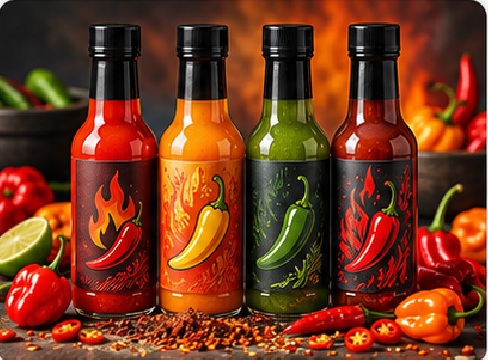
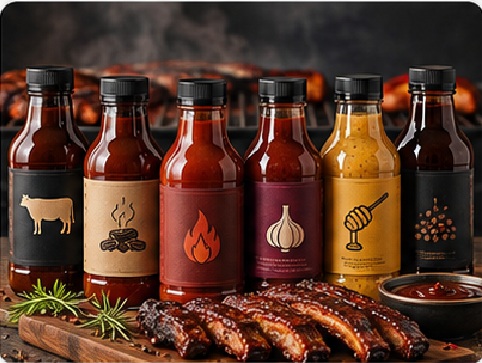
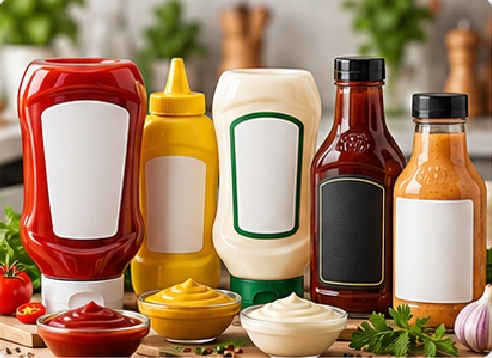
A useful quotation starts with the packaging conditions, not only a PDF file. Send Philiton the bottle or jar information, intended label size, quantity and SKU structure, plus any environmental or application requirement that could affect material and adhesive choice. Artwork can be final or still under development. If the container is unusual, a physical sample or dimensioned drawing helps the team review label fit before tooling. For automated application, include the applicator requirement or roll-direction diagram. Philiton will use the information to organize material, printing, finishing, sampling, QC and delivery into one manufacturable specification.
Please include:
For all inquiries, please feel free to reach out at:
Our team will answer your inquiries within 12 hours.
Your information will be kept strictly confidential.
We will contact you within 24 Hours, please pay attention to the email with the suffix“@philiton.com”.
For all inquiries, please feel free to reach out at:
We will contact you within 24 Hours, please pay attention to the email with the suffix“@philiton.com”.
For all inquiries, please feel free to reach out at:
We will contact you within 24 Hours, please pay attention to the email with the suffix“@philiton.com”.