Your Trusted Labels & Stickers Manufacturer from China!

Reduce Label Purchasing Cost

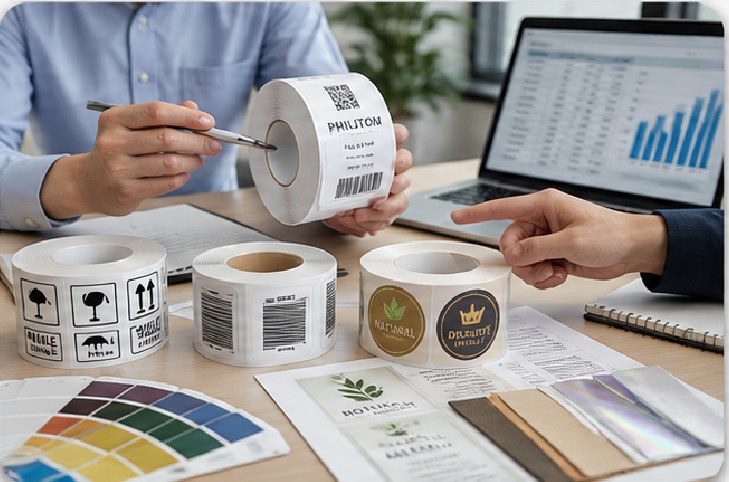
Lower label spend by engineering specifications, order structure, production routing, inventory and delivery – without cutting critical performance. Philiton reviews labels, SKU mix and annual demand before recommending changes. Around 500 pcs is workable for many standard projects, while the same manufacturing system scales into repeat mass production.
  • 12,000+ m² Shenzhen + Dongguan manufacturing footprint
  • Digital, flexographic, screen, UV and specialty finishing
  • 200+ employees; 91 technical, skilled production and quality personnel
  • Material, application, QC and repeat-order review
Reduce Label Purchasing Cost

What Actually Reduces Total Label Purchasing Cost

A lower invoice price helps only when the label still runs, sticks, scans, stores and ships correctly. Philiton reviews the full cost structure before recommending changes.

Specification Fit

Overspecified materials, adhesives or finishes can lock unnecessary cost into every reorder. Philiton checks application surface, environment, visual requirement and durability first, then identifies where performance is essential and where a simpler structure may be suitable. Cost reduction starts with removing excess specification, not removing the performance needed to keep the label on the product and working in the field.

Production Route

Digital, flexographic, screen and UV processes carry different setup, run-length and finishing economics. A short multi-SKU campaign may benefit from a different route than a stable annual program with repeated artwork. Philiton reviews quantity per SKU, color requirements, finishing and reorder pattern before choosing a production path, so setup and conversion cost are matched to the real order rather than forced into one printing method.

Order Structure

Twenty small purchase orders can cost more to manage than a planned annual program even when the yearly quantity is identical. Philiton looks at SKU count, quantity per SKU, reorder frequency, common sizes, shared materials, tooling reuse and forecast visibility. Standardizing compatible specifications and grouping repeat demand can reduce repeated setup, material fragmentation and avoidable administrative cost while keeping each artwork version separately controlled.

Applied Cost

Unit price is only one line in the cost equation. Label waste, wrong roll direction, unstable cores, artwork obsolescence, reprints, rush freight, line stops and rejected production all create additional cost. Philiton evaluates label performance, roll format, QC and delivery structure together so savings are not achieved by moving cost from the purchase order into production, inventory or corrective work.

Procurement Teams That Gain Most From Cost Review

Philiton cost engineering is most useful when label spend is recurring, SKU complexity is growing, or existing specifications were created without a structured cost review.

Procurement Managers

Annual savings targets are easier to defend when each recommendation has a clear cost source. Philiton separates material, printing, tooling, finishing, packing, freight and repeat-order effects instead of offering an unexplained lower price. Procurement teams can compare the current structure with alternative routes, identify which variables are negotiable, and keep critical quality requirements fixed before requesting a revised commercial offer.
  • Useful inputs: annual volume, price history, SKU list
  • Main goal: measurable sourcing efficiency

Packaging Managers

Packaging teams often inherit labels built from old artwork, legacy materials and premium finishes that are no longer necessary for every SKU. Philiton reviews face material, adhesive, liner, white ink, lamination, foil, embossing, die shape and application conditions together. The aim is to protect brand appearance and packaging performance while removing unnecessary complexity that adds recurring cost but delivers little value on shelf or in production.
  • Useful inputs: dielines, containers, brand standards
  • Main goal: specification right-sizing

Supply Chain Teams

Stockouts and excess inventory can both make labels expensive. Philiton can support repeat programs with forecast-based material planning, customer-dedicated inventory and VMI-style cooperation when SKU stability, usage rhythm and commercial rules are suitable. Supply teams gain better visibility into material lead time, reorder structure and obsolete-label risk without assuming every project should carry finished-goods inventory for every individual SKU.
  • Useful inputs: forecasts, reorder frequency, seasonality
  • Main goal: lower inventory disruption

Operations Teams

A label can be inexpensive to buy and costly to run. Roll direction, core, roll diameter, gap, liner behavior, die-cut stability, sensor response and adhesive performance all affect application efficiency. Philiton reviews line parameters before changing a specification that touches automatic labeling. Operations teams can therefore evaluate savings against line stability, changeover frequency, waste and rework rather than accepting a price cut that creates production problems later.
  • Useful inputs: applicator settings, failure photos, roll spec
  • Main goal: stable applied cost

Six Cost Layers Behind Every Label Purchase

A useful cost comparison separates what is paid to print the label from what the label costs to store, apply, control and replace.
Cost Layer What It Includes Typical Cost Leak Philiton Review Focus
Purchase Cost Unit price, setup, dies, plates, foil or emboss tooling Repeated setup, unnecessary premium structure Quantity, tooling reuse, material and process route
Application Cost Manual labor, applicator setup, downtime, roll changes Wrong roll direction, unstable liner, poor die-cut release Core, roll direction, gap, pitch, liner and application method
Quality Cost Rejects, rework, reprints, inspection and complaint handling Color drift, weak adhesion, unreadable codes Approval standards, IQC/IPQC/FQC/OQC and verification
Inventory Cost Storage, cash tied up, obsolete artwork, slow-moving stock Over-ordering, too many unique materials, frequent artwork changes MOQ, SKU structure, forecast and stock strategy
Logistics Cost Packing, freight, rush replenishment and handling Low roll density, excessive cartons, emergency shipments Roll count, packing format, carton efficiency and delivery plan
Risk Cost Failed adhesive, compliance gaps, inconsistent repeat orders Specification changes without validation Engineering review, sampling, testing and change control
 

Label Formats With Different Cost Behavior

Philiton manufactures multiple label and sticker formats, but each format carries a different cost structure. Format selection should reflect application, handling, finishing and repeat-order needs.
Roll Labels

Roll Labels

Roll labels suit automatic or efficient manual application and can support digital, flexographic, variable-data and specialty finishing routes. Cost is influenced by roll width, core, unwind direction, labels per roll, gap, liner and packing density. For recurring programs, a stable roll specification can reduce changeover confusion, simplify warehouse handling and make repeat orders easier to reproduce across multiple SKUs. Review: core, unwind, count per roll Cost lever: application and packing efficiency
Sheet Labels

Sheet Labels

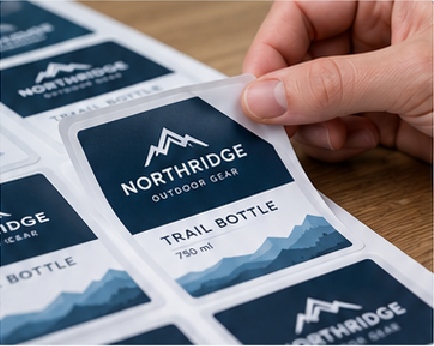
Sheet delivery can work well for manual application, retail packs, sample programs and orders that do not require machine-compatible rolls. The commercial advantage depends on sheet size, nesting efficiency, die cutting and packing method. Philiton reviews whether sheet format genuinely simplifies handling or merely increases conversion steps compared with roll production. The right choice depends on how labels are stored, picked and applied after delivery. Review: sheet size, nesting, handling Cost lever: converting and labor fit
Individually Cut Stickers

Individually Cut Stickers

Single pieces are useful for promotions, inserts, events, brand packs and distribution where individual handling matters. Cost changes with contour complexity, backing size, kiss-cut or full-cut structure, sorting and packing. Philiton checks whether individual cutting is necessary for the sales channel or whether sheets or rolls could deliver the same result at lower conversion and packing cost for repeat campaigns. Review: cut shape, backing, pack count Cost lever: conversion complexity
Security Labels

Security Labels

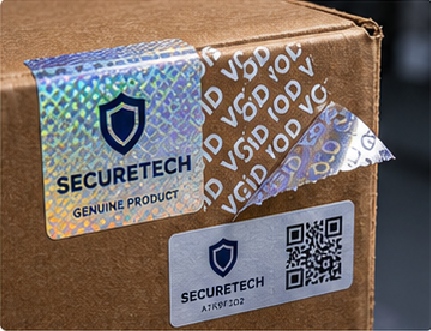
VOID, destructible, holographic and tamper-evident structures should not be simplified without reviewing the security function. Cost depends on substrate, custom effects, adhesives, printing, serial data and validation needs. Philiton separates decorative security effects from functional tamper evidence so the specification pays for the protection actually required rather than adding expensive features that do not change the intended security result. Review: tamper mode, substrate, evidence need Cost lever: function-focused specification
Variable Data Labels

Variable Data Labels

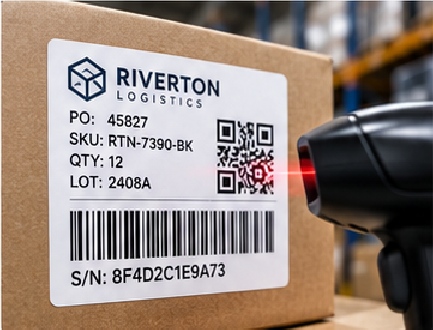
Barcodes, QR codes, serial numbers and changing text can reduce inventory when common artwork is combined with controlled variable content. Cost depends on data source, verification level, print route and quantity. Philiton reviews data structure and verification requirements early because a low printing price can be offset quickly by unreadable codes, duplicated records or rework caused by weak data control. Review: data file, code type, verification Cost lever: version and inventory control
RFID And NFC Labels

RFID And NFC Labels

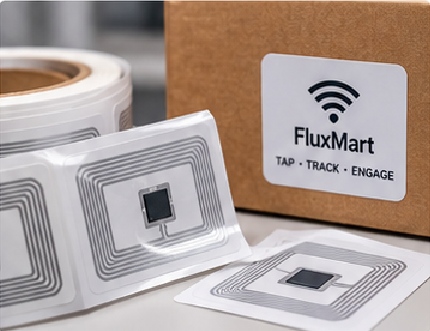
Smart labels add inlay, chip, antenna, converting, encoding and read/write verification variables. A cheaper inlay is not automatically cheaper if read performance, application surface or system compatibility fails. Philiton treats RFID/NFC as an application project: chip and inlay choice, placement, label construction, encoding workflow and verification are reviewed before a cost alternative is proposed. Review: chip, inlay, read environment Cost lever: validated component choice

Applications Where Purchasing Cost Often Becomes Hidden

Label cost behaves differently across packaging, logistics and industrial use. Philiton links each cost review to the product surface, environment, production method and failure consequence.
Cosmetics And Skincare

Cosmetics And Skincare

Clear films, white ink, metallic effects, foil, embossing and premium laminates can make a cosmetic label visually strong but also expensive to repeat across many SKUs. Philiton separates brand-critical effects from secondary decoration, reviews whether multiple SKUs can share size and material platforms, and checks resistance to water, oil or bathroom handling before recommending any lower-cost construction.
  • Common issue: too many unique premium specifications
  • Review focus: appearance, resistance, SKU standardization
Food And Beverage

Food And Beverage

Cold storage, condensation, curved containers, oils, refrigeration and production-line speed can make a low-priced material costly in use. Philiton reviews substrate, adhesive, application temperature, service environment, roll parameters and labeler compatibility before reducing material or liner cost. The goal is to avoid label lifting, line stoppage and emergency reprints while still removing unnecessary finishing or oversized specifications.
  • Common issue: specification chosen without environment data
  • Review focus: adhesive, liner, line performance
Supplements And Wellness

Supplements And Wellness

Supplement portfolios often grow into many flavors, strengths and pack sizes. Small fragmented orders, frequent text changes and premium finishes can push cost upward. Philiton reviews common material platforms, digital production for version-heavy runs, controlled artwork updates and shared dimensions where feasible. Regulatory text remains tied to approved artwork; cost work must not compromise required information or legibility.
  • Common issue: version-heavy SKU fragmentation
  • Review focus: digital routing, artwork control, common structures
E-commerce And Logistics

E-commerce And Logistics

Shipping labels, identification labels, barcode labels and warehouse stickers are often purchased in large repeat volumes where scan reliability and roll consistency matter more than decoration. Philiton reviews thermal or printed structures, barcode quality, roll direction, core, labels per roll and packing. Savings can come from specification standardization and packing efficiency, but code readability and operational compatibility remain non-negotiable.
  • Common issue: unit-price focus without scan or roll review
  • Review focus: barcode, roll format, repeat consistency
Electronics And Industrial

Electronics And Industrial

PET films, strong adhesives, overlays, serial data and durable printing may be required for heat, chemicals, abrasion or long service life. Cost reduction starts by separating actual exposure from assumed worst-case conditions. Philiton can compare candidate structures and testing routes, but final durability claims are project-specific. Avoiding unnecessary over-specification can save cost while preserving the performance required by the real environment.
  • Common issue: blanket use of highest-spec material
  • Review focus: environment, durability, verification
Multi-SKU Retail Programs

Multi-SKU Retail Programs

Large assortments create cost through duplicated sizes, unique dies, low quantities per design, version changes and obsolete stock. Philiton reviews the SKU matrix before pricing each design in isolation. Shared materials, dimensions, roll specifications and planned production windows can create manufacturing efficiency while artwork approval, quantity and QC records remain separate for every SKU.
  • Common issue: every SKU treated as a unique platform
  • Review focus: matrix standardization and batch planning

Six Places Label Budgets Commonly Leak Money

Most avoidable cost does not come from one dramatic mistake. It builds through repeated specifications, fragmented orders, outdated structures and weak production planning.

Over-Specified Materials

Using a premium film, heavy laminate or specialty adhesive everywhere can become expensive when only a few SKUs face demanding conditions. Philiton reviews where high performance is required and where a standard material may meet the real application. Material changes are tested before approval; savings should come from removing unnecessary specification, not gambling with adhesion or durability.
  • Check: surface, temperature, exposure
  • Avoid: blind downgrade to cheaper stock

Wrong Print Route

A production method that worked when annual demand was small may no longer be economical after volume grows, and the reverse can also happen when SKU count expands. Philiton compares digital, flexographic, screen and UV-related requirements against run length, colors, finishes and version changes. Re-routing the job can reduce repeated setup or unit cost without changing the visible design.
  • Check: quantity per SKU and annual volume
  • Avoid: one process for every order

Fragmented SKU Structures

Unique label sizes, materials, cores and finishing combinations multiply setup, inventory and purchasing complexity. Philiton maps the SKU family to find specifications that can share a platform. Artwork remains individually controlled, but common dimensions, materials or roll formats can improve production planning and make repeat orders easier to manage across an expanding portfolio.
  • Check: common size and material opportunities
  • Avoid: redesigning every SKU independently

Excessive Finishing

Foil, embossing, varnish, lamination, specialty white and custom shapes all have valid uses, but stacking effects on every product tier can create permanent cost. Philiton identifies which effects carry brand value and which can be simplified. A cost-balanced option may keep the hero visual element while reducing secondary finishing steps, tooling or registration complexity.
  • Check: brand-critical versus secondary effects
  • Avoid: removing protection needed for use

Obsolete Inventory

Large buys lower unit cost only when artwork and demand remain stable. Frequent formula changes, regulatory revisions, promotions or redesigns can turn low unit price into expensive scrap. Philiton reviews annual usage, version frequency and reorder cadence before recommending larger runs. Forecast-based material planning can sometimes protect supply without printing excessive finished labels too early.
  • Check: artwork life and consumption rate
  • Avoid: buying annual volume blindly

Inefficient Packing

Too few labels per roll, unsuitable cores, unnecessary inner packs or poor carton utilization can raise freight and warehouse handling cost. Philiton reviews roll count, finished diameter, SKU separation, carton plan and downstream handling. Packing should protect the labels and fit the application process while avoiding excess volume, frequent roll changes or unnecessary repacking after arrival.
  • Check: roll count, cartons, pallet plan
  • Avoid: optimizing freight alone

Protect Critical Performance Before Cutting Label Cost

Cost reduction stops being useful when adhesion, code readability, application stability, brand control or required product information becomes unreliable. Philiton locks critical requirements first.

Adhesion And Environment

Adhesive selection depends on the actual surface, surface energy, texture, temperature at application, service temperature, moisture, oils, chemicals and container curvature. Philiton does not treat “permanent adhesive” as one universal answer. A lower-cost adhesive structure is considered only after the application conditions are clear and the proposed material has been sampled or tested where needed on representative substrates.
  • Protect: adhesion on the real substrate
  • Validate: sample, peel/tack or application trial

Automatic Labeling

Automatic lines depend on more than face material. Liner stiffness, release, die-cut depth, matrix removal, pitch, gap, roll direction, core and finished roll condition can affect speed and waste. Philiton keeps machine compatibility inside the cost review so a saving on material or packing does not create stoppages, misfeeds or excessive roll changes on the line during regular production.
  • Protect: liner, roll and sensor compatibility
  • Validate: line parameters and trial material

Codes And Traceability

Barcodes, QR codes, serial numbers and RFID/NFC functions must remain readable and correctly associated with each production lot. Philiton reviews code size, quiet zone, contrast, material, print process and verification requirement by project. Cost reduction cannot remove necessary verification or compress a code beyond reliable use simply to reduce label dimensions, print area or required verification work during production.
  • Protect: readability and data integrity
  • Validate: verification under project conditions

Compliance And Approved Artwork

Philiton manufactures to approved artwork and project specifications; regulatory responsibility depends on product category, market and label content. Required warnings, ingredient information, language, symbols or traceability fields should be frozen before production. Material or process documents can be managed where applicable, but cost work must never be presented as automatic legal compliance. Any compliance-sensitive change should be reviewed and re-approved before release.
  • Protect: required content and approved version
  • Validate: market-specific document needs

Philiton Uses A Four-Step Cost Engineering Method

Every cost-down proposal follows a controlled sequence. Savings are pursued only after functional requirements are identified, current cost drivers are reviewed and alternatives are validated.

Protect What Cannot Change

Start with the non-negotiables: application surface, adhesive performance, temperature, water or chemical exposure, automatic labeling parameters, barcode readability, brand-critical color, security function and required artwork content. Philiton marks these items before looking for savings. The purpose is to prevent an attractive quotation from creating a hidden production or field failure later. Any item tied to safety, legal content, machine compatibility or core product function remains outside the first round of cost cutting.

Review Current Cost Drivers

Philiton reviews material, adhesive, liner, size, colors, printing route, white ink, lamination, foil, embossing, die structure, quantity per SKU, tooling, labels per roll, packing, freight and reorder pattern. Current pain points are added to the same review. A complete cost picture makes it easier to see whether spending is driven by product design, manufacturing setup, inventory, logistics or application losses. Existing purchase frequency and annual demand are considered so one low-price order is not mistaken for a lower-cost annual program.

Optimize The Right Variables

Potential changes may include a better-matched material grade, shared dimensions across SKUs, digital or flexographic route changes, simplified secondary finishing, tooling reuse, revised labels per roll, forecast planning or more efficient packing. Philiton can present several paths rather than forcing one answer. Each path should explain what changes, what stays fixed and where the cost reduction is expected to come from. Commercial impact is separated from performance impact so procurement and packaging teams can evaluate the trade-off together.

Validate Before Scale

No cost alternative should move directly into mass production when material, adhesive, print process or application behavior changes. Philiton uses artwork approval, material samples, physical samples, application checks and relevant internal tests to confirm the new route. Once approved, the selected specification becomes the reference for production, QC, packing and repeat orders, creating a controlled basis for future purchasing. If the proposed saving fails validation, the route is revised before commercial release rather than pushed forward to meet a target price.

Material Selection Is A Cost Engineering Decision

Material cost should be judged against appearance, application, durability, printing and supply conditions. Philiton sources base materials externally and controls selection, converting and validation in-house.

Select Adhesive Around Surface, Temperature And Removal Needs

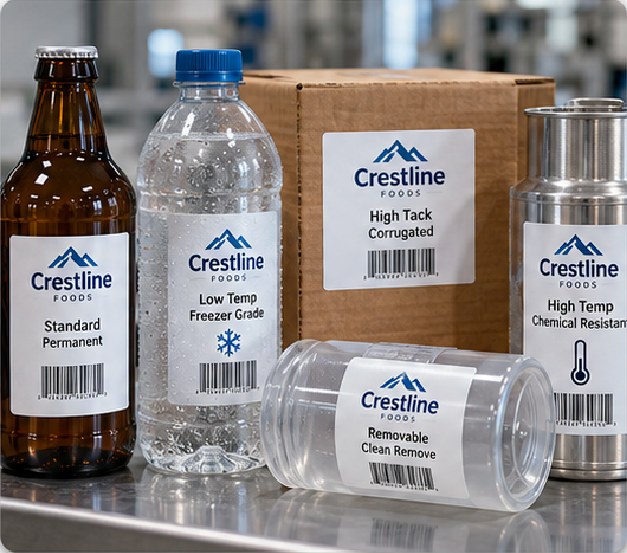
Adhesive is one of the fastest ways to turn a cheap label into an expensive failure. General permanent, stronger permanent, removable, freezer and specialty structures are selected according to the real substrate and environment. Rough corrugated surfaces, low-surface-energy plastics, cold containers, condensation, oils and curved bottles behave differently. Philiton therefore reviews surface condition and application temperature before considering a lower-cost adhesive.

  • Standard permanent: Suitable for many common paper, glass and PET packaging applications when the surface and environment are stable.
  • High tack: Used where rough, difficult or lower-energy surfaces need stronger initial and long-term anchorage. Replacing it with a standard grade requires evidence, not assumption.
  • Removable: Appropriate for temporary information, promotions or applications where clean removal matters. A permanent adhesive may be cheaper but can create residue or product damage.
  • Low-temperature and specialty: Cold-chain, freezer, chemical, rubber, high-temperature or wash-off applications require project-specific selection. No universal service-temperature claim should be used without supporting material data and application review.

The cost goal is a fit-for-purpose adhesive – strong enough for the job, but not an unnecessarily expensive construction selected without real use conditions. Procurement teams should also consider whether one adhesive is being used across unrelated product families only for administrative convenience. Standardization is useful when surfaces and environments are genuinely compatible; otherwise it can create hidden failure cost.

Balance Protection, Appearance And Material Layers

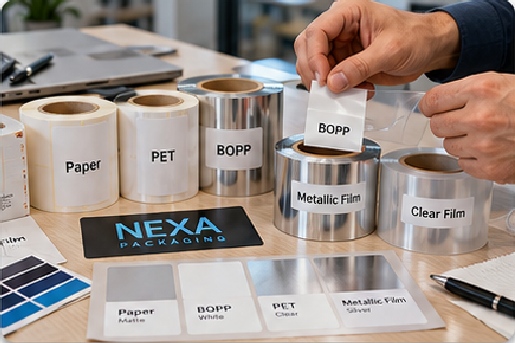
Lamination, varnish, clear films, opaque white, metallized effects and protective layers can serve real functions, but every layer adds material, process and handling. Philiton separates protection from decoration before proposing a reduction. A clear overlaminate may be justified for abrasion, chemicals or heavy handling, while a varnish may be sufficient for lighter use. A premium transparent film may be essential for a no-label look, while another SKU in the same range may not need the same construction.

  • Protection first: Identify whether the surface faces moisture, scuffing, chemicals, sunlight or repeated handling. Protection is specified against exposure, not automatically copied from another product.
  • Visual priority: Clear, metallic, textured or premium paper effects should be linked to the brand role of the SKU. Hero products and value-tier products may not require identical material stacks.
  • SKU standardization: Where several products share container type and environment, common materials can simplify purchasing and production. Artwork remains unique, but shared material platforms can reduce fragmentation.
  • Validation: Any removal or substitution of a protective layer should be confirmed by sample evaluation or relevant testing before mass production.

A material stack review should therefore identify the function of every layer. Philiton can mark each layer as required for adhesion, protection, appearance, printing or handling. Layers with no clear role become candidates for simplification, while layers tied to durability or brand presentation remain protected until an approved alternative is proven.

Choose Printing Technology By Volume And SKU Mix

Philiton uses different printing routes because run length, version count, color, finishing and repeat frequency change the cost equation. No single process is cheapest for every job.

Production RouteBest FitCost StrengthWatch Before Changing
Digital PrintingShort to medium runs, frequent artwork changes, multi-SKU launchesLow plate dependence, fast version switching, efficient short runsUnit economics at stable high volume, material and finishing compatibility
Flexographic PrintingStable repeat programs, medium to high volume, common roll productionStrong run-rate economics after setup, scalable repeat productionPlate/setup cost, color count, change frequency, SKU fragmentation
Screen PrintingOpaque whites, specialty inks, tactile or heavy ink effectsAdds targeted functional or visual effectsUse only where the effect is required; extra passes add cost
UV / Specialty PrintingHigh-impact graphics, selected coatings and specialty effectsCombines visual enhancement with controlled surface treatmentAvoid stacking effects that add little brand or functional value
Variable Data ProductionBarcodes, QR, serial numbers, changing text or controlled versionsReduces need for separate preprinted inventoriesData preparation, verification and traceability must remain controlled

Improve Layout Efficiency Without Changing Brand Recognition

Label dimensions influence material yield, die layout, roll width, packing and application. A small size change can sometimes improve nesting or press utilization, but it must be checked against container coverage, legal text, barcode quiet zones, decoration and applicator settings. Philiton does not recommend shrinking labels only to save substrate. The review asks whether unused area, excessive bleed, unusually large backing or inefficient shape geometry is creating recurring conversion waste.

  • Size: Compare the current label footprint with actual artwork and mandatory content. Remove unused dimensions only where the application still works.
  • Shape: Complex custom contours can increase die cost, stripping difficulty and material waste. A refined contour or standard radius may improve production without changing the overall brand impression.
  • White and special layers: Clear-label white ink, spot effects and specialty coatings should be limited to the areas that need them. Full coverage may be unnecessary when only selected graphics require opacity or texture.
  • Automatic application: Any dimensional change must be checked against pitch, gap, sensor behavior and product placement before approval.

The commercial benefit should be measured over repeat volume, not only on the first run. A small geometry improvement may reduce material usage, tool count or roll width across every reorder. Philiton compares the saving against redesign effort, sample validation and any required applicator adjustment before recommending the change.

Keep High-Value Finishes And Remove Low-Value Complexity

Premium finishing can be commercially important. The cost question is not whether foil, embossing, lamination or specialty varnish is “expensive,” but whether each effect contributes enough visual or functional value to justify repeated production cost. Philiton can prepare alternatives that preserve one strong visual cue while simplifying secondary operations.

  • Foil: Reduce foil area, move from multiple foil colors to one controlled accent, or compare another metallic route when brand appearance allows.
  • Emboss or deboss: Keep dimensional effects where tactile distinction matters; remove them from secondary information that does not benefit from relief.
  • Lamination and varnish: Match protection to actual handling. A lighter protective route may be suitable for dry indoor packaging, while chemical or abrasion exposure may require the stronger construction.
  • Combination effects: Multiple specialty steps compound setup, registration and reject risk. Philiton reviews whether every step still earns its place in the design.

For established brands, a finish review can be organized by SKU tier. Core products may keep the full premium treatment, while secondary or promotional SKUs use a simplified but visually consistent route. The goal is controlled differentiation, not a blanket removal of finishing from the entire portfolio. Philiton can sample the revised visual route before a brand commits it to the next production cycle.

Treat Tooling As A Reusable Project Asset

Custom dies, flexographic plates, foil dies and emboss tooling are project-specific preparation costs. Hiding them inside a unit price makes cost comparison difficult. Philiton prefers to explain which tooling is required, why it is required, whether an existing tool can be reused and which design changes would trigger new tooling. Reuse is conditional on design, size, process route, tool condition and storage arrangement; no tool should be described as reusable forever.

  • Die cost: Usually linked to label size, shape and converting route. Existing compatible tooling can be checked before a new die is ordered.
  • Plate cost: Traditional printing routes may require physical plates. Digital production can remove plate dependence for many jobs, but not every setup cost disappears.
  • Foil or emboss tooling: Changes to the decorative pattern can require new tooling even when the main label size stays unchanged.
  • Repeat orders: Stable specifications allow approved artwork, tools and production settings to be referenced again, reducing repeated development work.

Tooling records are most useful when linked to artwork version and applicable SKU. Philiton can check whether an existing die or finishing tool still matches the released design before quoting a repeat run. Clear tooling visibility helps procurement distinguish true new-project cost from avoidable duplicate setup.

Multi-SKU Planning Can Reduce Repeated Purchasing Cost

Growing product ranges often become expensive because each SKU is treated as a separate manufacturing platform. Philiton reviews common variables before quoting designs in isolation.

Shared Dimensions

When several SKUs use the same container family, common label dimensions can reduce die proliferation and simplify roll specifications. Artwork can stay completely different while the physical platform remains shared. Philiton checks whether standardization affects coverage, legal copy, barcode space or applicator settings before recommending a common size. A shared dimension is useful only when it works technically across the full SKU group.

Shared Materials

Common face material, adhesive and liner across compatible products can reduce small-lot material fragmentation and simplify replenishment. Philiton groups SKUs by surface, environment and visual requirement before proposing a shared material platform. Cold-chain, oily, low-energy or industrial applications should not be forced into the same construction simply for purchasing convenience.

Quantity Per SKU

A total order of 50,000 labels is not the same manufacturing job when it contains one design versus 25 designs. Philiton prices and plans around quantity per SKU, setup, material sharing and version changes. Procurement teams should provide both total annual demand and the quantity for each artwork so production efficiency can be evaluated accurately.

Planned Production Windows

Combining compatible repeat orders into planned production windows can reduce frequent setups and emergency purchases. Philiton can review forecast rhythm, seasonal demand and artwork freeze dates before suggesting grouped production. The approach works best when demand is predictable and approved versions are stable; rapidly changing artwork may need shorter, more flexible runs.

Repeat-Order Control

Stable repeat orders can reuse approved artwork, specifications, production notes, tooling where suitable and Golden Sample references. Philiton records order and SKU information so later production starts from an approved baseline rather than rebuilding the project from memory. Consistent repeat control reduces avoidable development time and lowers the risk of old and new versions being mixed.

Around 500-Piece Entry

For many standard custom label and sticker projects, Philiton can start around 500 pieces, with actual MOQ depending on material, process and structure. Flexible entry quantities help new or changing SKUs avoid excessive finished inventory. As demand stabilizes, the same manufacturing system can move toward larger, more economical production runs without forcing a brand to change suppliers.

Sampling Confirms Savings Before Production Is Committed

Philiton uses sample development to check appearance, construction and application before a cost alternative moves into repeat manufacturing. Sample timing is quoted by project, not forced into one universal promise.

Development Starts With The Current Label And Real Application

A useful cost-down sample starts with the existing specification or a physical label whenever possible. Philiton compares the current construction with the intended alternative and records what must remain unchanged: size, artwork, key color, adhesive performance, protection, roll parameters, barcode or security function. If no existing specification is available, the project is built from container, surface, environment, artwork, quantity and application information.

  • Artwork review:Production artwork, dieline, bleed, safe zone, white ink, foil, variable data and finishing layers are checked before sample release.
  • Material review:Candidate face material, adhesive, liner and protection are selected from qualified supply sources according to the application.
  • Process route:Digital sampling can be efficient for many printed structures, while foil, embossing, specialty security or RFID constructions may require additional preparation and project-specific timing.
  • Physical evaluation:Samples are assessed for color direction, die cut, finishing, adhesion and actual application where relevant.

Philiton maintains an approximately 350 m² sampling and development area for digital proofing, material/process confirmation and sample development. Sample lead time is confirmed after the structure is defined because a simple printed proof and a multi-process functional sample do not carry the same preparation work. The quotation should therefore show the sample route and approval purpose, not only a date.

Approval Creates A Controlled Baseline For Repeat Production

The sample stage should end with a clear production decision, not an informal looks fine. Philiton can use approved artwork, physical samples, color targets and Golden Sample references to define the production baseline. When a cost-saving change touches material, adhesive, printing, finishing, barcode or application behavior, the approved version becomes the reference for mass production and later reorders.

  • Color: Pantone, approved physical sample, brand guide or measured data can be used depending on project requirements. Screen photos alone are not treated as a strict production color standard.
  • Application: Adhesion, removability, cold conditions, abrasion or other relevant behavior is checked according to the actual use case rather than a generic claim.
  • Line fit: Roll direction, core, gap, pitch and finished roll configuration are confirmed when automatic application matters.
  • Change control: If artwork, material, process or application requirements change after approval, the affected items are reviewed again instead of assuming the old sample still applies.

Production and delivery timing are then quoted against the approved specification, quantity, material availability, finishing and destination. Philiton avoids publishing one fixed lead time that would be misleading across very different label structures. For repeat orders, previously approved artwork, tools and production records can shorten the decision path even when the actual manufacturing schedule still depends on current capacity and material availability.
Production Planning Turns Cost Decisions Into Repeatable Output

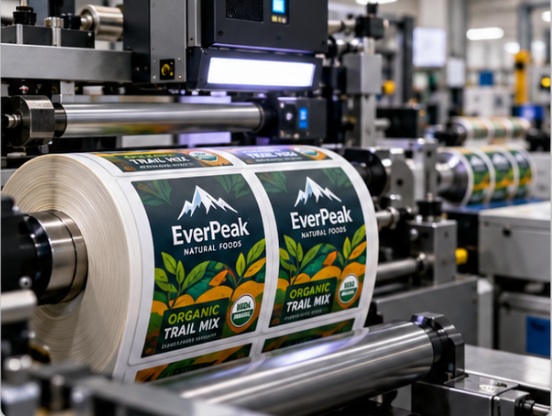
Cost engineering only works when the approved route can be reproduced. Philiton links prepress, printing, converting, inspection and packing to the same controlled specification.
Route Each Job Through The Appropriate Manufacturing Sequence

Route Each Job Through The Appropriate Manufacturing Sequence

Philiton operates production across Shenzhen and Dongguan, with approximately 7,200 ㎡ of core production, processing, sampling and packing areas inside a 12,000+ ㎡ manufacturing and operating footprint. The route for a label depends on the approved specification rather than a fixed factory recipe. Artwork and prepress are prepared first, followed by the selected print process, specialty finishing where required, die cutting, waste stripping, slitting or rewinding, inspection and final packing.

  • Prepress: Production files are checked for dimensions, bleed, cut line, colors, white ink, foil, embossing, variable-data fields and version status.
  • Printing: Digital, flexographic, screen, UV and related routes are assigned according to run length, material, visual requirement and finishing.
  • Converting: Die cutting, slitting, rewinding and sheet or individual-cut handling are configured to the delivery format.
  • Finishing: Lamination, varnish, foil, embossing, holographic or other approved operations are inserted only where the specification requires them.

Key production lines can operate on a two-shift basis, with capacity scheduled around material, equipment, staffing and delivery requirements. The value for procurement is not “more machines”; it is having enough process depth to change the manufacturing route when the cost model changes. Production planning also considers whether compatible SKUs can share material preparation or scheduled windows without losing individual version control.

Version And Batch Control Protect The Savings On Reorders

Version And Batch Control Protect The Savings On Reorders

A reduced-cost specification can lose its value if repeat orders drift. Philiton treats approved production information as a controlled package: artwork version, material route, process, tooling, color target, roll specification, packing and QC requirements remain linked to the order. Repeat production can refer back to approved records rather than relying on verbal instructions.

  • Artwork version: The final approved production artwork is the release point for plates, dies, printing and QC.
  • Material batch: Incoming materials are identified and managed by batch, with production records linking material use to the relevant order.
  • Tooling: Applicable dies, plates and finishing tools are checked for compatibility and condition before reuse.
  • Repeat history: Stable SKUs can reference prior approvals, Golden Samples and production notes, reducing avoidable redevelopment.
  • Change trigger: New dimensions, new material, new application environment or major artwork changes enter review before production.

Controlled repeat production matters because a one-time saving is not enough. The commercial benefit becomes meaningful when the optimized specification can be reproduced consistently across future purchase orders. Philiton can also use repeat-order history, annual estimated volume and forecast information to decide when a previously suitable route should be reviewed again as quantities or SKU mix change over time across repeat programs.

Inspection Starts Before Printing And Continues Through Conversion

Philiton uses incoming, in-process, final and outgoing checks to keep the approved cost route from creating expensive defects, returns, line problems or repeated production.

Philiton’s quality workflow covers IQC, IPQC, FQC and OQC, supported by an approximately 450 ㎡ QC and laboratory area. Incoming material identity, appearance, dimensions and relevant characteristics are checked before release. During production, print registration, color direction, text, die cutting, waste stripping, finishing and roll formation are monitored against the approved job information. Final inspection confirms order-specific requirements before packing and shipment.

  • IQC: Material and batch identification, visual condition and project-related checks before production.
  • IPQC: Printing, registration, color, finishing, die-cut quality and process stability during the run.
  • FQC: Finished label appearance, quantity, roll or sheet condition and required functional checks.
  • OQC: Packing, SKU separation, carton information and shipment readiness before release.

Automatic vision inspection is available for appropriate label jobs, while laboratory capabilities include color evaluation, barcode/QR verification, peel or tack testing, abrasion testing and environmental checks. Test scope depends on product, material and agreed requirement; internal testing is not presented as third-party certification. Inspection records should follow the released specification so a cost change can be traced back to the exact material and production route that was approved. If a defect trend appears, the team can compare the affected batch with the approved baseline instead of treating every complaint as an isolated event.

Quality Metrics Should Follow The Cost Risk

Not every project needs the same inspection intensity. A decorative promotional sticker, a high-speed beverage roll label and a serialized industrial label carry different failure consequences. Philiton aligns inspection and verification with the real risk so quality control supports cost reduction instead of becoming a generic layer of paperwork.

  • Color-sensitive branding:Use approved physical references, defined color targets or measurable criteria when needed.
  • Automatic labeling:Check roll construction, edge quality, release behavior and dimensions that affect feeding and dispensing.
  • Barcode and QR:Confirm print quality and scan performance according to project requirements.
  • Adhesive applications:Evaluate samples on the actual or representative substrate when adhesion risk is important.
  • RFID/NFC:Encoding and read/write verification are handled according to chip, inlay and project strategy.

A low unit price combined with unstable QC is not a cost reduction. Stable quality protects material already purchased, production time already booked and inventory already committed. For recurring programs, the same critical checks should remain visible in the repeat-order record so procurement does not receive a cheaper reorder created by quietly removing controls that were part of the approved specification. Quality scope should remain visible in the quotation and production record so commercial changes do not silently redefine acceptance.

Pack For The Way Labels Will Be Stored And Used

Philiton has an approximately 700 m² finished packing area supporting roll, sheet, individual-piece, SKU-separated and export-ready packing. The packing plan is built around label format and downstream handling rather than one standard carton rule. For roll labels, labels per roll, core, finished diameter, winding direction and carton count can affect warehouse space, line change frequency and freight volume. For multi-SKU orders, clear separation prevents picking errors after arrival.

  • Roll packing:Confirm count per roll, core, finished diameter, unwind direction and protective wrapping.
  • Sheet or piece packing:Define pack count, backing protection and carton arrangement to avoid bending or mixed SKUs.
  • SKU separation:Use clear internal and external identification so artwork versions are not mixed in receiving or production.
  • Carton efficiency:Reduce unnecessary void space while protecting edges, cores and finished surfaces.
  • Palletization:Used when shipment scale, handling or transport risk makes pallet loading more suitable.

Packing should never be optimized by compressing labels until rolls deform or surfaces mark. The objective is lower handling and transport cost with usable goods at destination. For repeat programs, the approved packing specification can be standardized by SKU so receiving teams know what quantity, roll format and carton identification to expect on each shipment.

Compare Freight On The Same Commercial Basis

A factory price, FOB price and delivered price do not represent the same cost boundary. Philiton separates product manufacturing from freight and import responsibilities so procurement teams can compare offers fairly. International logistics planning should account for shipment size, destination, urgency, delivery term, customs responsibility and whether the order is routine or an emergency replenishment.

  • EXW: Useful for companies managing pickup and export themselves; freight and export responsibilities remain outside the product price.
  • FOB: Suitable where the importer manages main carriage from the agreed port after export handling.
  • DAP/DDP-style delivered options: Quoted when destination details, shipment data and responsibility scope are clear; duties and tax treatment depend on the agreed term and destination.
  • Rush replenishment: Emergency air or express shipments can erase savings created by a low factory unit price. Forecasting and repeat-order planning are often the more effective cost lever.

Philiton therefore treats freight as part of landed-cost review rather than hiding logistics inside a headline unit price. Scheduled sea or consolidated freight may suit planned repeat demand, while urgent launches can justify faster modes. Procurement should compare equivalent delivery terms and shipment assumptions before deciding which quotation is actually lower in landed annual cost over the full purchase cycle.

Inventory Planning Reduces Obsolete And Emergency Label Cost

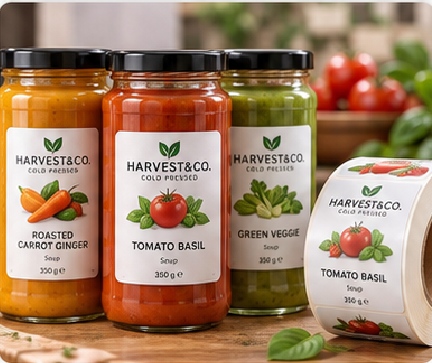
Finished inventory is only one option. Philiton can combine standard material stock, customer-specific materials, forecast-based planning and conditional VMI support for suitable repeat programs.

Standard Material Stock

High-frequency standard materials can be held or replenished according to normal demand, supplier lead time and current orders. The aim is not to stock every possible paper, film or adhesive. Philiton uses qualified external material sources and incoming inspection, keeping common routes available while special materials remain project-purchased when that is commercially safer for cost, freshness, availability and batch control.
  • Best for: recurring standard constructions
  • Cost benefit: fewer material-related delays

Dedicated Inventory

Stable repeat programs may justify customer-dedicated material, semi-finished or finished inventory. Records can be linked to the account, SKU, material batch and quantity rather than mixed casually with other projects. Commercial responsibility for long-term slow-moving stock, artwork changes or cancelled SKUs should be agreed before dedicated inventory is established and before formal replenishment rules are activated.
  • Best for: fixed SKUs and repeat demand
  • Cost benefit: faster response with controlled ownership

Forecast-Based Stock

Rolling forecasts can support material purchasing before each purchase order is released. New launches, seasonal campaigns, stable repeat SKUs and long-lead RFID or security materials may benefit from planned supply. Philiton uses forecast information to prepare common materials or selected components without automatically printing finished labels that may later become obsolete after an artwork, regulation or demand change.
  • Best for: predictable launches and seasonal demand
  • Cost benefit: lower emergency replenishment risk

Conditional VMI Support

Philiton can support VMI-style cooperation when SKU stability, consumption rhythm, forecast or call-off method, minimum and maximum stock rules, inventory ownership and obsolete-material responsibility are defined. VMI is not a default service attached to every order. Used under the right conditions, it can reduce receiving pressure and emergency purchasing without creating uncontrolled finished-goods stock or unclear commercial responsibility.
  • Best for: mature repeat programs
  • Cost benefit: planned replenishment and call-off efficiency

Three Representative Label Cost-Reduction Cases

The examples below show how Philiton structures cost reviews for 1,000+ piece projects. Quantities illustrate realistic project scale and are not published savings claims.
U.S. Skincare Brand

U.S. Skincare Brand

A U.S. skincare brand preparing six bottle and jar SKUs planned an initial 12,000-label order, with 2,000 labels per design. The original brief used separate dimensions, clear film, full white coverage, lamination and foil on every SKU. Philiton’s review first protected the no-label look, bathroom resistance and gold brand accent, then compared common dimensions, reduced white-ink coverage and one shared clear-film platform. A digital multi-SKU route was reviewed for the launch quantity, while foil remained limited to brand-critical areas. Samples were approved before production so the cost work did not change the required shelf appearance.
  • Region: United States
  • Order: 12,000 pcs / 6 SKUs
  • Main review: size, white ink, foil, material platform
UK Food Producer

UK Food Producer

A UK chilled-food producer modeled a 24,000-label repeat order across eight flavors, 3,000 labels per SKU. The commercial issue was not decorative cost; it was fragmented roll specifications, excess finished inventory and concern over labels lifting after refrigeration. Philiton kept the low-temperature adhesive requirement fixed, reviewed a shared face material and liner, standardized core and unwind direction, and proposed forecast-based material planning instead of printing all future demand at once. Barcode and application requirements stayed inside the approval process. The result was a cleaner purchasing structure designed to reduce fragmentation and obsolete-label exposure without trading away cold-use performance.
  • Region: United Kingdom
  • Order: 24,000 pcs / 8 SKUs
  • Main review: adhesive, roll standardization, inventory planning
Australian Industrial Distributor

Australian Industrial Distributor

An Australian industrial distributor prepared an 18,000-label program covering three durable identification SKUs. Existing specifications used the same high-durability laminate and adhesive on all products even though exposure conditions differed. Philiton separated indoor equipment, warehouse assets and harsher service conditions, then reviewed PET structure, adhesive strength, protective layer and barcode requirements for each group. Common dimensions and roll format were retained to simplify handling, while the most demanding construction was reserved for the environment that required it. Material alternatives were sampled and barcode performance checked before release, keeping the cost review tied to actual service conditions rather than a blanket downgrade.
  • Region: Australia
  • Order: 18,000 pcs / 3 SKUs
  • Main review: durability tiers, adhesive, laminate, barcode

Manufacturing Depth Supports Cost Changes At Scale

Cost engineering requires more than a revised quotation. Philiton combines flexible entry quantities, multiple print routes, converting, QC, testing and repeat-order control within one manufacturing system.

12,000+ ㎡ Manufacturing Footprint

Philiton operates manufacturing facilities in Shenzhen and Dongguan with a combined 12,000+ ㎡ manufacturing and operating footprint. Approximately 7,200 ㎡ is assigned to production and engineering activities, about 2,100 ㎡ to warehousing, about 450 ㎡ to QC and laboratory work, and about 350 ㎡ to sampling and development. The structure supports small-run, multi-SKU and scalable repeat production inside one managed system.

  • Manufacturing: Shenzhen + Dongguan
  • Production/engineering: approx. 7,200 ㎡

200+ People, 91 Core Specialists

More than 200 employees support prepress, production, finishing, QC, warehousing, project work and management. Technical personnel, skilled machine operators and quality staff total 91 people under the current verified fact base. The value for cost-reduction projects is cross-functional execution: material, printing, conversion and quality changes can be reviewed by the functions that will actually produce, inspect and reliably repeat the revised specification across future orders.
  • Employees: 200+
  • Technical/skilled production/quality: 91

Multiple Manufacturing Routes

Philiton supports digital, flexographic, screen, UV-related and variable-data production together with foil, emboss/deboss, holographic effects, lamination, die cutting, slitting, rewinding, RFID/NFC converting, inspection and testing. Multiple routes matter because cost optimization may require changing process rather than merely asking the same production method to become cheaper. Final process selection remains tied to material, quantity, design and application.
  • Print routes: digital, flexo, screen, UV
  • Converting: die cut, slit, rewind, specialty finishing

Flexible Entry, Scalable Reorders

For many standard custom label and sticker projects, practical order entry can begin around 500 pieces, with MOQ varying by material, process, structure and application. Philiton can support launch quantities, multi-SKU trials and later mass production through the same manufacturing base. Cost planning can therefore change as demand grows: an early digital route may later be reviewed for a higher-volume process without rebuilding the supplier relationship from zero.
  • Typical starting point: around 500 pcs for many standard projects
  • Scale: short runs to repeat mass production

Frequently Asked Questions About Label Purchasing Cost

Philiton first locks critical requirements such as adhesion, application environment, barcode readability, automatic labeling parameters, brand-critical color and required artwork content. Cost options are then reviewed across material grade, print route, dimensions, finishing, tooling, SKU structure, order quantity, packing and inventory. Any change that affects performance should be sampled or tested before production approval.
Larger runs can reduce setup cost per label, but total cost may increase if the artwork changes, demand slows or finished inventory becomes obsolete. Philiton reviews annual volume, quantity per SKU, reorder frequency and artwork life before recommending a larger run. The lowest unit price is not automatically the lowest purchasing cost.
Not automatically. Each SKU has its own artwork, quantity and QC identity. Shared materials, dimensions or production settings can improve manufacturing efficiency, especially for multi-SKU digital work, but Philiton still needs a SKU matrix showing quantity per design. MOQ depends on material, process and structure.
Yes, when a suitable alternative exists and the critical performance can be preserved. Philiton reviews surface, temperature, moisture, chemicals, durability, appearance, printing and application before proposing material options. A cheaper material is not approved solely on price; samples or relevant checks are used where performance risk exists.
Digital printing often fits shorter runs, frequent version changes and multi-SKU work because it reduces dependence on traditional plates. Flexographic printing can become more efficient for stable repeat programs and higher quantities after setup. Philiton compares quantity per SKU, annual volume, colors, finishing and reorder pattern before recommending a route.
Often, but reuse is project-specific. Dies, plates, foil tools and emboss tools depend on design, size, process, condition and storage. Philiton checks existing tooling before a repeat quotation and identifies when a new design or dimensional change requires replacement. Tooling should not be described as permanently reusable without conditions.
Labels per roll, core size, finished diameter, SKU separation, cartons and palletization affect freight, warehouse handling and line change frequency. Philiton reviews packing against the application method and destination. Lower freight volume is useful only when rolls remain protected and compatible with the equipment that will use them.
No. VMI-style cooperation is conditional. Stable SKUs, predictable consumption, forecast or call-off rules, minimum and maximum stock, inventory ownership and obsolete-stock responsibility should be agreed first. Standard material stock and forecast-based planning may be more suitable for projects that do not need a full VMI arrangement.
Send a current label or specification, artwork or dieline, size, material if known, annual volume, quantity per SKU, reorder frequency, finishing, roll requirements, application surface, use environment, destination and current pain points. Current unit cost and target cost can be provided optionally when procurement wants a direct comparison.
Timing is confirmed after Philiton reviews material, printing, finishing, tooling, testing, quantity and destination. A simple printed sample, a foil or embossed sample, and an RFID construction do not share one reliable lead time. Philiton therefore quotes sample, production and delivery timing against the approved specification instead of publishing one fixed schedule for every project.

Send Your Current Labels For A Cost Review

Philiton can review an existing label program before asking you to redesign everything. Send the information already available: a physical label photo or current specification, artwork or dieline, annual volume, quantity per SKU, material and adhesive if known, printing and finishing, roll or sheet format, application surface, service environment, packing preference, destination and any recurring problem such as peeling, high MOQ, frequent artwork changes, excessive inventory, high freight, line stops or inconsistent reorders.

Useful files and data include:

  • Current label photo, artwork, dieline or specification sheet
  • SKU matrix with annual volume and quantity per design
  • Material, adhesive, finish and roll requirements if available
  • Applicator details for automatic labeling projects
  • Current unit cost or target cost, optional
  • Destination and required commercial term
  • Pain points, failures, obsolete stock or repeat-order issues

Philiton will review what must stay fixed, where cost may be removed, which alternatives require validation and what information is still missing before quotation.

For all inquiries, please feel free to reach out at:

Get In Touch

  • Our team will answer your inquiries within 12 hours.

  • Your information will be kept strictly confidential.

Get a Fast Quote for Custom Labels & Stickers

We will contact you within 24 Hours, please pay attention to the email with the suffix“@philiton.com”. 
For all inquiries, please feel free to reach out at:

Ask For A Quick Quote

We will contact you within 24 Hours, please pay attention to the email with the suffix“@philiton.com”. 
For all inquiries, please feel free to reach out at:

Get a Quote Today!

We will contact you within 24 Hours, please pay attention to the email with the suffix“@philiton.com”.