Your Trusted Labels & Stickers Manufacturer from China!

Custom Pouch Labels Manufacturer

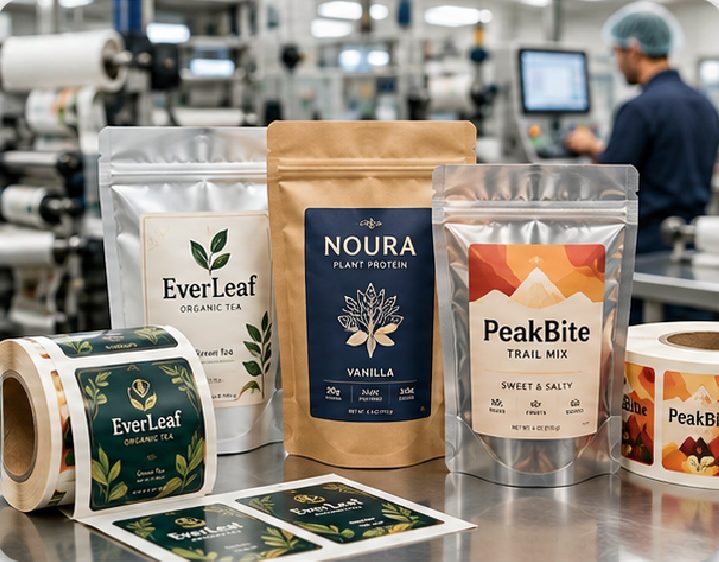
Custom pressure-sensitive labels engineered for stand-up pouches, zipper bags, kraft packs, and flexible retail packaging from launch runs to scale.
Philiton matches pouch surface, label material, adhesive, print route, finishing, and roll specification before production.
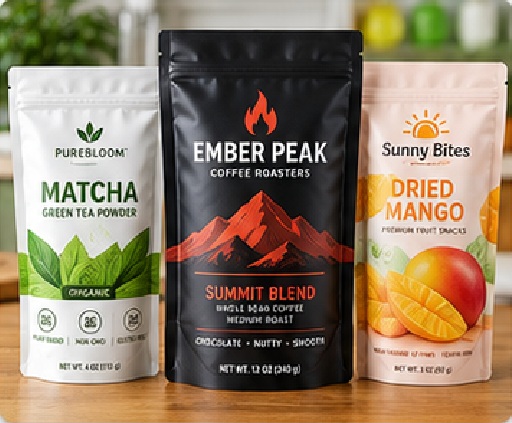
  • MOQ: around 500 pcs for many standard label projects
  • Regular samples: about 3-7 business days
  • Common production: about 7-15 working days after approvals
  • 12,000+ m² manufacturing footprint; 200+ employees; 91 technical, skilled production and quality personnel
Custom Pouch Labels Manufacturer

Pouch Label Programs Built Around Different Operating Models

Pouch label requirements change with SKU count, packaging line, launch stage, repeat volume, artwork control, delivery format, and internal approval structure. Philiton adjusts material, process, and manufacturing route accordingly.

Established Consumer Brands

Established brands usually need more than an attractive print. Packaging teams often manage several flavors, sizes, languages, seasonal editions, and regional versions at the same time. Philiton can keep artwork versions, approved material structures, color references, die lines, and roll specifications organized by SKU. Digital printing supports shorter campaigns and market tests, while flexographic production can support repeat volume when the specification becomes stable. The objective is consistent shelf appearance without forcing every SKU into the same production route.

Food and Supplement Producers

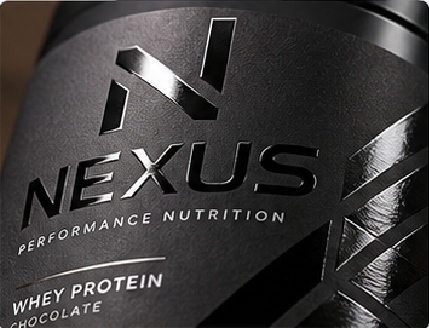
Food, nutrition, and supplement pouch programs often combine dense regulatory copy, barcodes, batch information, strong branding, and exposure to oil, moisture, refrigeration, or frequent handling. Philiton reviews the pouch surface, application temperature, service environment, label size, print density, and protective finish before material approval. For co-packed products, artwork control and clear SKU identification matter as much as print quality. Front and back labels can be planned as coordinated sets when the packaging layout needs separate branding and information panels.

Contract Manufacturers and Packers

Contract manufacturers and packing facilities need labels that arrive ready for production, not only visually correct. Philiton can work from approved pouch dimensions, filling conditions, applicator data, roll direction, core requirement, labels per roll, and warehouse identification rules. Multi-brand programs can be separated by SKU, batch, roll, and carton. When several projects share compatible material and finishing, production planning can be standardized without mixing artwork control. The goal is fewer line interruptions, fewer specification changes, and a smoother transition from approval to repeat orders.

Packaging Partners and Distributors

Packaging companies, label distributors, and print brokers may need a manufacturing partner behind their own local service. Philiton supports custom pouch labels with paper and film stocks, digital and flexographic printing, specialty finishing, die cutting, slitting, rewinding, inspection, and export packing. Confidential artwork, neutral packing, mixed-SKU shipments, and repeat specifications can be handled by project agreement. The cooperation model works best when the partner supplies clear application conditions, annual or campaign volume, delivery requirements, and any labeler specifications needed for roll production.

Pouch Label Formats for Branding, Information, and Application

A pouch does not always need one large rectangle. Philiton can build coordinated label formats around usable panel area, opening features, information density, shelf presentation, pack movement, and application method.
Front Panel Labels

Front Panel Labels

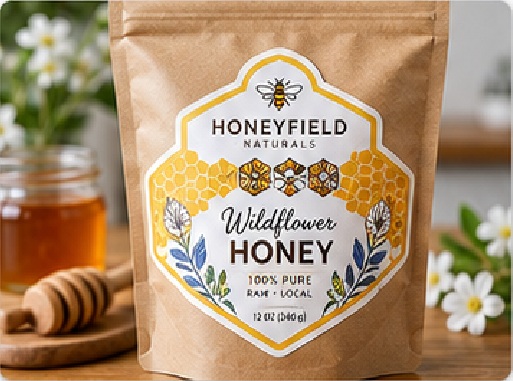
Front panel labels carry the main brand block, product name, flavor or variant, net content, and key visual elements. They work well on stock pouches where direct pouch printing is not economical for every SKU. Size should stay inside the stable front panel rather than crossing seals, gussets, or high-flex zones. White BOPP, clear film, coated paper, kraft paper, metallic constructions, and premium finishing can be selected according to the pouch surface and intended shelf appearance.
Front and Back Sets

Front and Back Sets

A two-label set separates branding from ingredient, nutrition, warning, barcode, instruction, or multilingual information. The format gives packaging teams more freedom when the pouch has limited flat area or when back information changes more frequently than the front design. Philiton can keep both labels under one SKU specification while controlling size, material, color, quantity, and packing separately. Matching label materials are common, but different constructions may be used when the front requires premium finishing and the back prioritizes dense readable text.
Full-Face Panel Labels

Full-Face Panel Labels

Large panel labels cover much of the visible pouch face and can transform a standard stock pouch into a strongly branded pack. The wider area increases sensitivity to pouch movement, trapped air, label stiffness, wrinkles, and edge lifting. Material flexibility, adhesive wet-out, corner radius, and application method therefore need closer review. Philiton can test the selected construction on the actual pouch before release. Large labels should avoid zipper tracks, gusset folds, heat-seal zones, and surfaces that distort after filling.
Die-Cut Brand Labels

Die-Cut Brand Labels

Custom shapes can turn the label itself into part of the brand identity. Rounded organic forms, badges, product silhouettes, and compact logo shapes are suitable when the pack already carries printed information or when a small branded area is enough. Die-cut geometry must still support clean waste stripping and stable application. Sharp internal corners, extremely thin projections, or shapes that cross pouch folds may create avoidable manufacturing or handling problems. Philiton reviews the artwork and die line together before tooling and sampling.
Seal and Closure Labels

Seal and Closure Labels

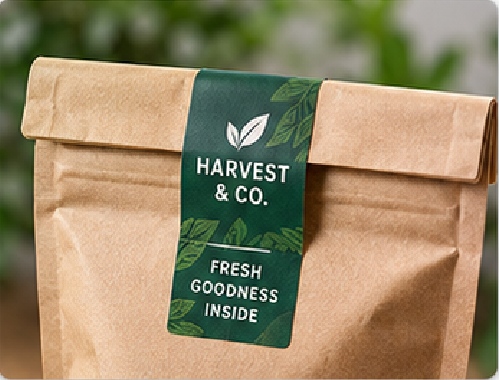
Seal labels can bridge a folded top, close a sample pouch, secure secondary packaging, or add a visible tamper cue where the construction allows it. The label should not be described as a certified tamper-evident system unless the exact structure and requirement are validated. Philiton can evaluate permanent, removable, destructible, VOID, or other security-related constructions for defined projects. Fold radius, opening force, pouch coating, storage temperature, and residue expectations should be confirmed before the adhesive route is selected.
Roll Labels for Applicators

Roll Labels for Applicators

Roll supply is the preferred route for many semi-automatic and automatic labeling lines. The finished label is only one part of the specification: unwind direction, inside or outside wound, core diameter, maximum roll diameter, gap, pitch, liner width, labels per roll, perforation, and sensor marks can affect line compatibility. Philiton confirms the applicable roll data before mass production. For new equipment setups, a trial roll can be used to verify feeding, sensing, peel behavior, placement, and line speed before a larger order is released.

Match Label Construction to the Actual Pouch Surface

Start with the pouch, not with a material name. Surface chemistry, coating, flexibility, temperature, moisture, filling behavior, label size, and application method determine which label construction deserves testing before bulk production.

Pouch SurfaceTypical SituationLabel Route to EvaluateAdhesive / Construction FocusValidation Before Bulk
Kraft paper pouchDry coffee, tea, snacks, specialty foodsCoated paper, kraft/textured paper, white BOPPPorosity, coating, fiber strength, desired paper feelApply samples to the final pouch and check edge lift after filling
Matte laminated pouchPremium food, supplements, beauty, pet treatsWhite BOPP, coated paper, clear or specialty filmSurface coating, slip additives, texture, abrasionTest adhesion on the exact laminate and after normal handling
Glossy PP / PE pouchSnacks, powders, refill packs, household productsWhite BOPP, PE film, selected PETLower surface energy, pouch flexing, moisture or oil exposureConfirm tack, dwell, flex resistance, and corner behavior
Clear film pouchVisible-product packaging, samples, retail packsClear BOPP/PET, white BOPP, small die-cut labelsClarity, white ink plan, bubbles, adhesive hazeCheck transparency, print opacity, and application quality on filled packs
Metallized pouchCoffee, supplements, premium snacks, specialty productsWhite BOPP, clear film with white ink, paper, metallic-effect labelReflective background, contrast, adhesive compatibilityApprove color and white-ink appearance on the real pouch surface
Chilled or frozen pouchFrozen food, refrigerated packs, cold-chain productsFilm construction with low-temperature adhesive as requiredApplication temperature, condensation, frost, flexingRun actual-temperature adhesion and handling checks before production

Pouch Label Materials Chosen by Environment and Brand Goal

Philiton sources and converts paper and film label stocks according to pouch surface, visual target, exposure conditions, required flexibility, finishing plan, application method, expected life, and order economics.
Coated Paper Labels

Coated Paper Labels

Coated paper is a strong choice for dry retail packs where print sharpness, familiar paper feel, and cost control matter more than long-term water resistance. It suits many coffee, tea, confectionery, dry-food, candle, craft, and promotional pouch applications. Gloss or matte varnish and lamination can improve handling resistance, but a protective layer changes feel, stiffness, and recyclability considerations. Philiton reviews pouch coating, expected shelf environment, print coverage, and finishing before confirming the final paper and adhesive combination.
Kraft and Textured Paper

Kraft and Textured Paper

Kraft and textured papers support natural, artisan, organic, premium, and tactile packaging concepts, especially on matte paper-based or kraft-style pouches. Texture can strengthen brand character, but heavy grain may reduce fine-detail reproduction and can affect foil transfer, small reverse text, or delicate line work. Paper constructions also need more caution around oil, condensation, wet handling, and freezer exposure. Philiton can compare available paper stocks, print samples, and finish options before bulk approval rather than treating kraft appearance as a universal technical solution.
White BOPP Film

White BOPP Film

White BOPP is widely used for branded pouch labels because it combines a clean opaque print surface with moisture resistance, tear resistance, and good graphic reproduction. It fits many food, supplement, personal-care, household, and e-commerce packs. BOPP is not automatically correct for every flexible pouch: label stiffness, adhesive choice, pack movement, oil exposure, and application method still matter. Matte or gloss protection, foil, spot effects, and variable information can be added when the selected construction and production sequence support the required result.
Clear BOPP or PET

Clear BOPP or PET

Clear film can create a no-label-look effect, preserve visibility of a pouch surface, or allow the pack color to become part of the graphic design. White ink is often needed under color areas, small text, or barcodes when the background is transparent, metallic, dark, or visually busy. Final clarity depends on the face film, adhesive, pouch surface, trapped air, and application quality. Philiton reviews white-ink layers, opacity, transparency, finishing, and the final pouch before approving a clear construction for production.
PE Flexible Film

PE Flexible Film

PE-based label films deserve consideration where the pouch moves, bends, compresses, or expands enough to make a stiffer label fight the package. Greater conformability can reduce stress at edges on selected flexible substrates, although print, finishing, cost, and dimensional stability differ from BOPP or PET. PE should not be chosen by flexibility alone. Philiton compares the pack structure, label size, expected bending, adhesive requirement, print method, and protective finish, then uses sampling when the application presents a meaningful wrinkle or edge-lift risk.
Durable PET Film

Durable PET Film

PET offers dimensional stability and durability for demanding label structures, small technical text, variable data, higher abrasion exposure, and applications where a firm film can be beneficial. On a very soft pouch, the same stiffness can become a disadvantage if the label area bends heavily. PET also supports clear, white, and specialty constructions depending on sourcing and project needs. Philiton evaluates durability targets together with pouch flexibility, surface energy, label area, adhesive, finishing, and line conditions before recommending a PET route.

Adhesive Selection Starts With Surface and Service Conditions

A stronger adhesive is not automatically a better adhesive. Philiton reviews surface energy, coating, application temperature, service temperature, moisture, oil exposure, pouch movement, required life, label flexibility, and removal expectations together.

Permanent Acrylic

Permanent acrylic systems are common for retail pouch labels that need stable long-term attachment under normal storage and handling. Suitability still depends on the exact laminate, coating, surface energy, application temperature, dwell time, moisture, oil, and flexing. A permanent label can still lift if applied to a contaminated, low-energy, cold, or heavily moving pouch. Philiton matches the adhesive with the chosen face material and uses the final pouch as the preferred evaluation surface when performance risk is meaningful.

High-Tack and LSE

PP, PE, HDPE, certain films, and coated flexible packs can present lower surface energy or other difficult bonding conditions. A higher-tack or specially formulated adhesive may improve initial wet-out and grip, but high tack does not guarantee heat resistance, chemical resistance, clean converting, or long-term stability. Philiton checks pouch chemistry, texture, treatment, label size, face-film flexibility, and storage environment before selecting a stronger route. Testing matters because two visually similar pouch laminates can behave differently with the same label stock.

Cold and Freezer

Low-temperature projects require two separate temperatures: the temperature at the moment of application and the temperature during later storage. A label applied to a dry pouch at room temperature before freezing is a different engineering problem from a label applied to a cold, wet, frosted, or condensed surface. Philiton reviews application temperature, service temperature, condensation, frost, pouch material, dwell time, and handling. Freezer performance should be validated on the real pack rather than relying on one adhesive temperature number alone.

Removable and Repositionable

Removable constructions can support temporary identification, promotional labels, secondary seals, sampling programs, or applications where residue needs to be minimized. Clean removal is affected by pouch surface, adhesive chemistry, dwell time, temperature, pressure, and exposure. A label that removes cleanly after one day may behave differently after weeks of storage. Philiton can source removable or repositionable constructions for suitable projects and recommends surface testing when residue, reusability, or pouch appearance after removal is important.

Pouch Label Solutions for Common Retail Product Categories

Product contents and selling environment change material priorities. Philiton builds the label specification around pouch surface, exposure, information density, shelf appearance, filling process, handling, application method, storage, and repeat-order needs.
Coffee and Tea

Coffee and Tea

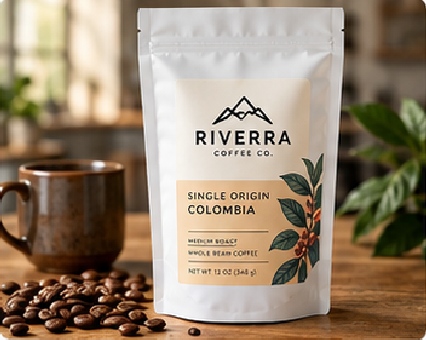
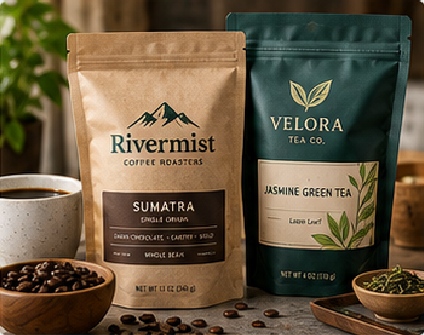
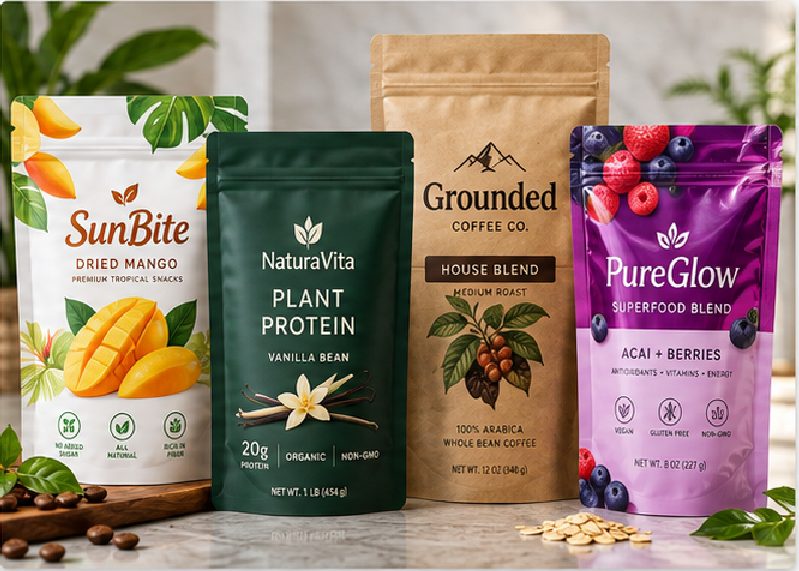
Coffee and tea brands often use kraft, matte black, metallized, or premium laminated pouches. Label choices therefore balance tactile branding with reliable adhesion and strong color contrast. Paper and textured stocks can reinforce a natural look, while film offers stronger moisture and handling resistance. Degassing valves, zipper tracks, folds, and seal areas should stay outside the label footprint. Multi-origin, roast, size, and seasonal variants also make digital production useful when several designs share a common format.
Snacks and Oily Foods

Snacks and Oily Foods

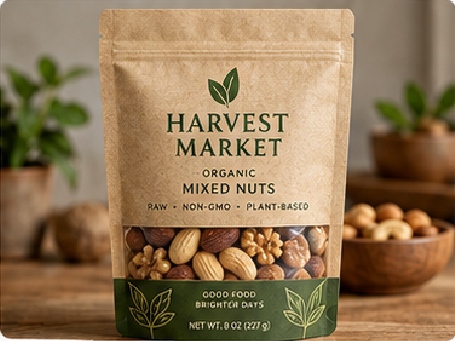
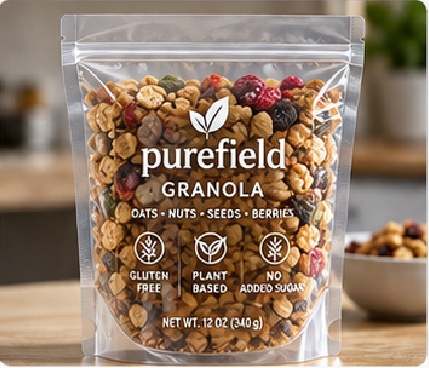
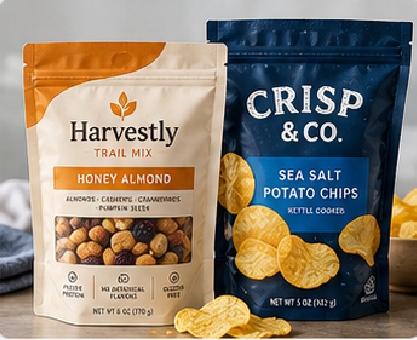
Nut, granola, dried-food, confectionery, and snack packs can face oil transfer, frequent handling, scuffing, and flexible movement. Film labels with suitable print protection often provide a safer route than unprotected paper when exposure is significant. Label corners, adhesive wet-out, and pouch flexing deserve attention on soft packs. Philiton can compare material, adhesive, lamination or varnish, and label size, then test the chosen construction against the actual pack and representative handling conditions before a larger production run.
Supplements and Powders

Supplements and Powders

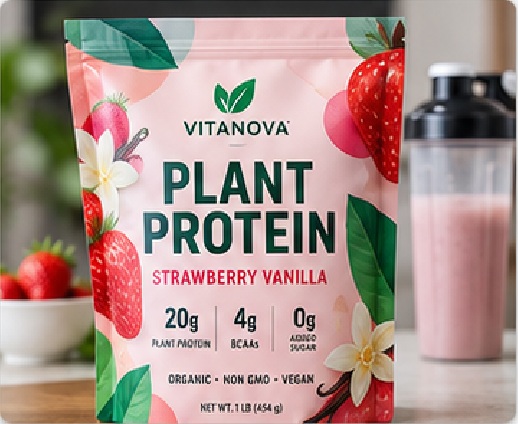
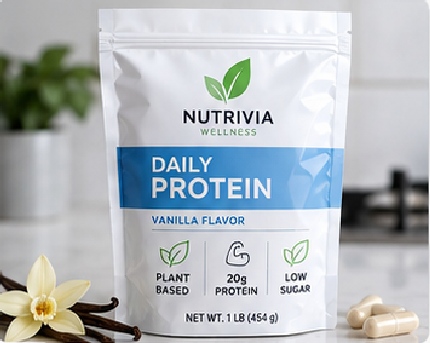
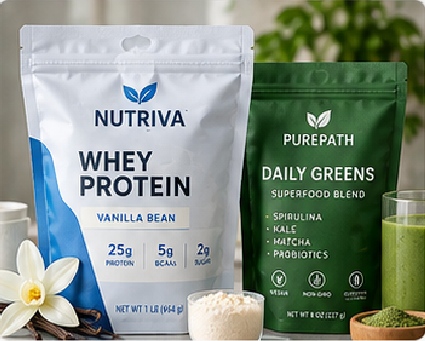
Supplement pouches carry dense ingredient panels, directions, warnings, lot information, barcodes, QR codes, and multiple flavor or formula versions. Small text legibility, artwork version control, SKU identification, and repeat color are therefore central production issues. White BOPP, paper, or durable film can be selected according to pouch surface and desired finish. Philiton can also manage variable text or codes when data rules are defined. Regulatory wording remains the responsibility of the brand or its regulatory adviser.
Pet Food and Treats

Pet Food and Treats

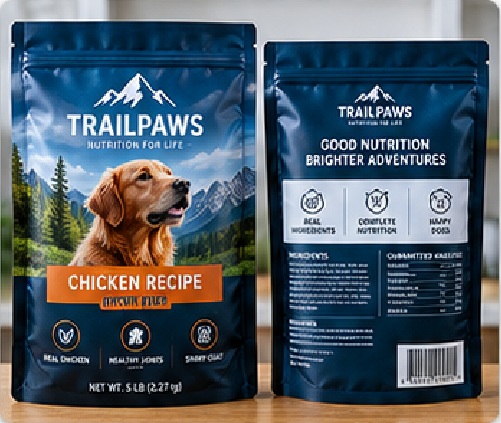
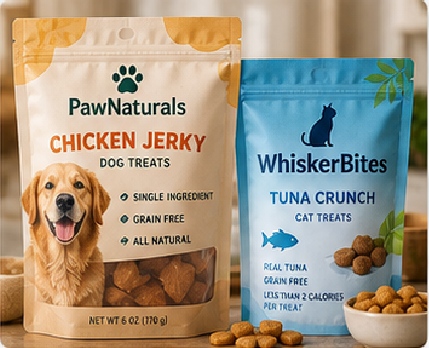
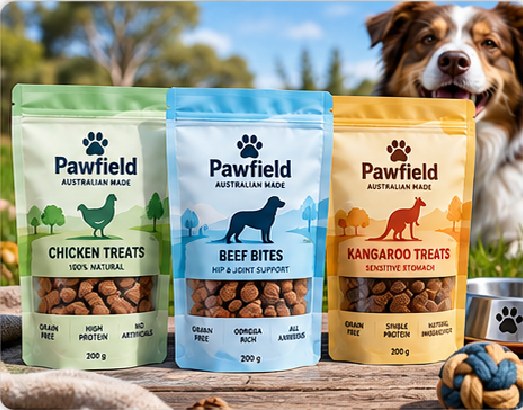
Pet treat and pet food pouches often combine flexible film, larger pack sizes, oils, repeated opening, and strong shelf graphics. A label that works on a rigid jar may wrinkle or lift when the pouch flexes after filling. Film flexibility, adhesive choice, protective finish, and label area need to work together. Philiton can develop front branding labels, back information labels, flavor variants, and roll formats for packing operations, with adhesion checks performed on the final pouch construction whenever the surface presents elevated risk.
Beauty and Personal Care

Beauty and Personal Care

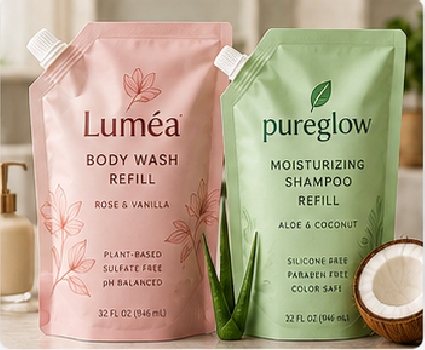
Bath salts, masks, refill products, powders, samples, and beauty accessories often use pouches that need premium appearance plus resistance to water, oil, rubbing, or cosmetic residues. Clear film, white BOPP, foil accents, soft-touch effects, and spot finishes can create a more refined presentation, but the final structure must still bond to the pouch. Philiton reviews the formula exposure, pack surface, white-ink requirement, finishing sequence, and label size before sampling. Representative exposure testing is recommended when oils or alcohols are present.
Household and Specialty

Household and Specialty

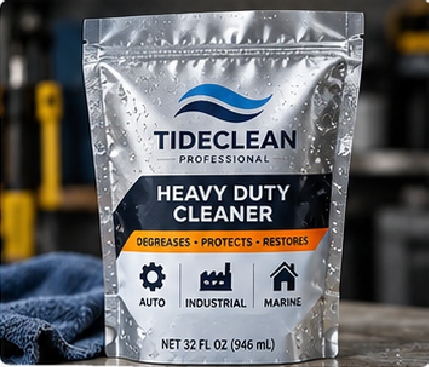
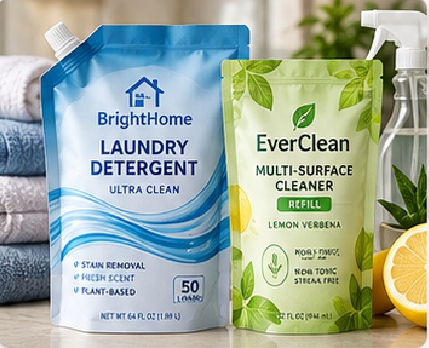
Refill packs, hardware packs, garden products, craft materials, small components, cleaning products, and specialty goods can impose abrasion, moisture, chemical, barcode, or long-storage requirements. The correct label may range from economical paper to durable PET or another film construction. Philiton first defines the real service condition rather than applying a premium material by default. Chemical or aggressive-environment claims should be tied to a defined material structure and test condition, especially when the label carries warnings or traceability information.

Printing Routes Selected by Quantity, SKU Count, and Artwork

Philiton uses digital, flexographic, screen, UV, and variable-data capabilities according to run length, SKU count, color structure, white ink, finishing sequence, repeat needs, roll format, inspection requirements, and economics.
Digital Printing

Digital Printing

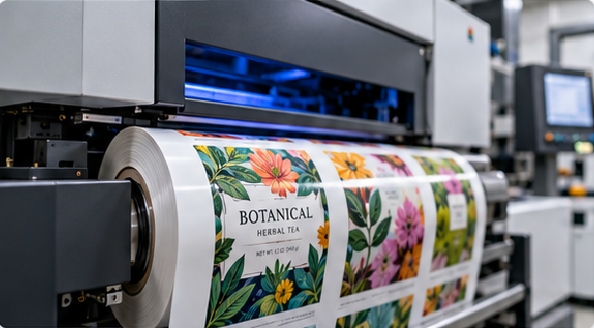
Digital printing is suited to launch runs, multi-SKU sets, frequent artwork changes, regional editions, seasonal packs, and projects where plate cost or changeover would make conventional printing inefficient. Philiton can move from artwork review into a digital sample or short production route when the selected material and finish are compatible. The internal equipment fact base records four industrial digital label press lines. Digital production still requires controlled artwork, color approval, die cutting, inspection, and roll configuration; short run does not mean uncontrolled production.
Flexographic Printing

Flexographic Printing

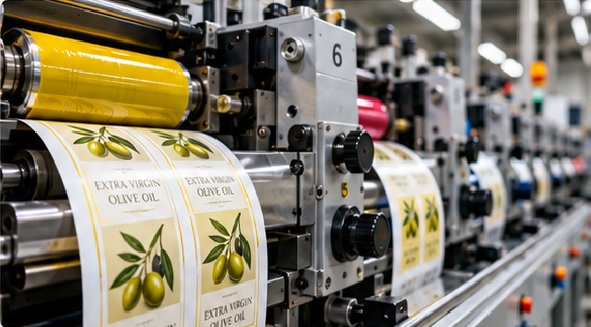
Flexographic printing becomes attractive when repeat volume, stable artwork, continuous roll production, and unit economics justify tooling and setup. Philiton records five multi-color flexographic label press lines in its equipment fact base. Flexo can support repeat pouch-label programs, long runs, many standard paper and film stocks, and integrated converting routes. Economic quantity depends on label size, colors, plate requirements, material, finishing, and total run length. Philiton can compare digital and flexographic options instead of forcing one process onto every order size.
White and Specialty Ink

White and Specialty Ink

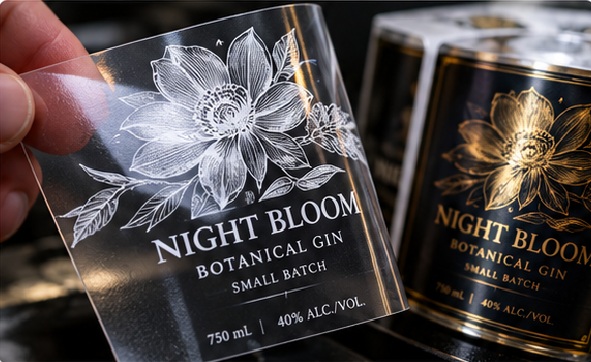
Clear, metallic, dark, or visually complex pouches often need controlled white ink to keep graphics, fine text, and barcodes readable. Screen, UV, digital, or other available print routes can be selected according to opacity, artwork, material, production quantity, and finishing sequence. White ink should be built as a separate production layer rather than hidden inside a flattened graphic. Philiton reviews knockouts, underprint coverage, overprint order, and registration before proof approval, especially when clear labels combine white, CMYK, foil, or spot effects.
Variable Data Printing

Variable Data Printing

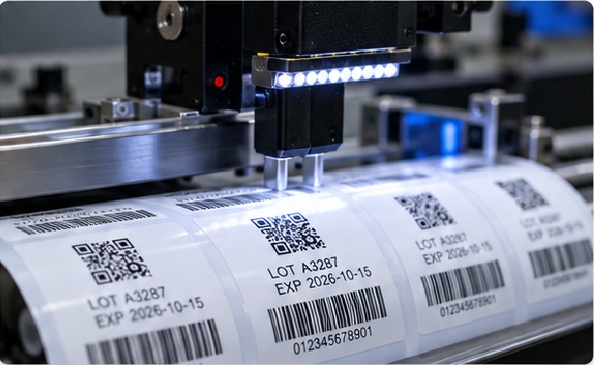
Lot codes, serialized numbers, QR codes, barcodes, promotional codes, regional information, and other variable elements can be integrated when source data and verification rules are defined. Philiton separates fixed artwork from variable fields, checks data quantity and format, controls restart and reprint logic, and can verify printed information according to the agreed inspection plan. Variable data creates more than a printing task: file access, version control, uniqueness, scan quality, scrap handling, and final reconciliation need to be considered before production starts.

Finishing Options That Change Appearance and Surface Performance

Finishing should solve a visual, tactile, protective, or security objective. Philiton reviews material compatibility, pouch flexibility, print structure, roll behavior, and production sequence before combining multiple effects on one label design.
Matte or Gloss Lamination

Matte or Gloss Lamination

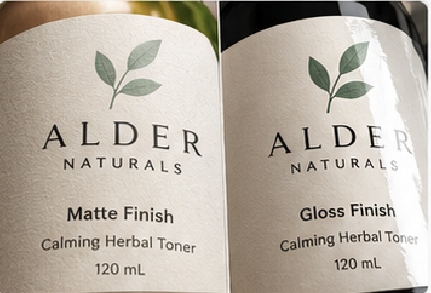
Lamination adds a protective film over the printed surface and can improve resistance to moisture, abrasion, rubbing, and repeated handling. Matte laminate reduces glare and supports a softer premium appearance; gloss laminate increases shine and color intensity. The added layer also changes thickness, stiffness, feel, and recyclability considerations. On large flexible pouch labels, excessive stiffness can work against pack movement. Philiton therefore evaluates laminate choice together with face material, label size, pouch flexibility, and application conditions.
Protective Varnish

Protective Varnish

Varnish can protect print while adding less structure than a full laminate. Gloss, matte, or selected spot varnish routes may suit projects where the label needs scuff protection without the feel or thickness of a second film layer. Resistance depends on ink, curing, material, varnish chemistry, and real exposure. A varnish should not be described as universal chemical protection. Philiton selects the coating route around the product environment and can recommend representative tests for oil, water, rubbing, or other identified risks.
Hot Foil Stamping

Hot Foil Stamping

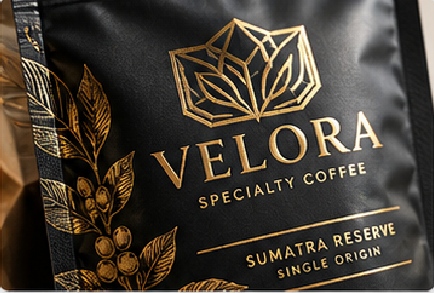
Hot foil can add metallic, colored, or holographic accents to logos, borders, product names, and premium details. Philiton records five rotary hot-foil workstations in its equipment fact base. Fine lines, large solid areas, textured papers, tight registration, and multi-finish stacking require different tooling and process control. Foil should be a separate vector layer in the artwork. A physical sample is recommended when foil color, coverage, register, or interaction with embossing is central to the brand appearance.
Embossing and Debossing

Embossing and Debossing

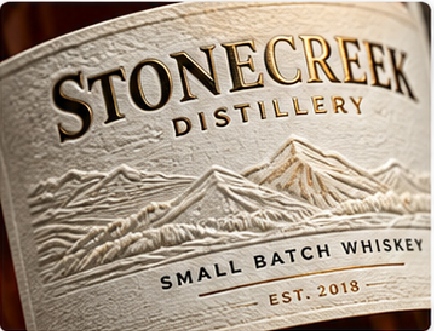
Embossing or debossing adds physical depth to logos, frames, icons, or selected text. The effect can strengthen premium presentation without covering the whole label with decoration. Material thickness, face-stock behavior, die design, image area, pressure, and surrounding print affect the final result. Philiton records three embossing/debossing finishing workstations in its equipment fact base. Complex registration with foil or printed detail should be proven by a physical sample before bulk production, especially on small labels or fine graphic elements.
Spot UV and Screen Effects

Spot UV and Screen Effects

Spot gloss, raised coating, thick white, tactile layers, and other screen or UV effects can create contrast against matte areas or add emphasis to a logo and product name. The process route depends on material, coating thickness, artwork, cure, flexibility, and later die cutting. Heavy coatings can influence roll behavior and finished thickness. Philiton reviews whether the effect needs protection, whether it can tolerate pouch bending, and whether the visual benefit justifies the additional production steps. Physical samples are recommended for tactile targets.
Metallic and Holographic

Metallic and Holographic

Metallic films, metallic-looking constructions, holographic materials, and holographic foil can create strong shelf contrast without relying on the pouch itself for the effect. Reflective backgrounds also change color perception, barcode contrast, and white-ink requirements. Philiton can evaluate metallic or holographic routes, but special materials and custom security effects may carry separate minimums, tooling, or sourcing conditions. Artwork should define which areas remain reflective and which need opaque white or printed coverage before the sample is approved.

Artwork and DFM Rules for Stable Pouch Label Production

A strong design still needs a manufacturable label footprint, clean production layers, readable codes, controlled bleed, and enough distance from pouch folds, seals, and moving zones.

Build the Label Around the Final Pouch Panel

Pouch label development starts with the final pack geometry, not only with a logo file. Philiton asks for the pouch width and height, usable front or back panel, zipper position, top and side seal areas, bottom gusset, valve position when relevant, and any zone that changes shape after filling. A label placed across a seal, gusset fold, zipper track, or heavily expanding area can wrinkle, bridge, or lift even when the adhesive performs well on a flat material sample. Large labels need extra attention because pouch movement creates more stress across the face stock and adhesive layer. For a new format, Philiton can build or refine the label die line from an approved finished size and shape. Rounded corners are often easier to process and handle than aggressive points or thin projections. Important copy, barcodes, and registration-sensitive decoration should stay away from the cut edge and from any part of the pack that deforms during filling. Front and back label sets should also be checked against the final artwork hierarchy: branding, net content, ingredients, nutrition, warnings, barcode, QR code, country information, and variable fields each need enough space to remain legible. A physical pouch or representative sample gives engineering teams a better basis for sizing than a screen mockup alone. Philiton can use the actual pack to review label proportion, visual placement, edge behavior, manual application, and the likely route for automatic application. When a pouch supplier changes laminate, coating, texture, or dimensions, the approved label should be reviewed again rather than assuming the previous material and die line remain suitable.

Prepare Production Files With Separate Technical Layers

Philiton accepts common design and image formats including AI, PDF, EPS, PSD, CDR, SVG, JPG, and PNG, with vector artwork preferred for production. Raster graphics are normally checked at 300 dpi at final print size. Simply changing a low-resolution file to a 300 dpi setting does not create missing detail, so small text, line art, logos, and code graphics should remain vector whenever possible. Standard label artwork normally uses about 2 mm bleed beyond the die line and keeps critical information roughly 1.5-2 mm inside the cut line; unusual shapes or very small labels may require a project-specific adjustment.
Color files are prepared around CMYK and Pantone workflows. Fonts should be embedded or converted to outlines before the production artwork is frozen. The die line belongs on a separate vector layer. White ink, hot foil, emboss/deboss, variable data, and other special operations also need clearly named production layers or spot colors so prepress and production teams can identify every operation without guessing. Clear pouch labels frequently need a separate white-ink plan because graphics that look correct on a white screen background can lose contrast on transparent, metallic, dark, or product-filled packaging.
Barcode and QR code size cannot be reduced by a universal percentage. Symbology, data volume, quiet zone, printing method, material, finishing, and final scanning environment all affect readability. Philiton checks code artwork during prepress and can perform scan or verification checks according to the project requirement. After revisions are complete, the approved production artwork is frozen by version and used for tooling, sampling, printing, inspection, and repeat-order control.

Roll Specifications to Confirm Before Automatic Pouch Labeling

Automatic application needs more than label width and height. Philiton confirms roll geometry, liner, winding, core, sensor, gap, pitch, quantity, and packing details before releasing production for machine use.

SpecificationWhat Must Be ConfirmedWhy It Matters on the Line
Finished label sizeWidth × height, shape, corner radiusControls placement, sensing, die cutting, peel behavior, and available pouch panel area
Application methodHand applied, semi-automatic, or automaticDetermines whether roll geometry and sensor requirements are production-critical
Unwind directionArtwork orientation and leading edgeEnsures the label reaches the applicator in the correct orientation
Wound sideInside wound or outside woundMust match the dispensing path and machine setup
Core diameterDiameter required by the applicatorCore is selected from machine requirements, not from label size alone
Maximum roll ODLargest finished roll diameter the equipment can acceptLimits labels per roll together with pitch, liner, core, and label thickness
Gap and pitchSpace between labels and repeat distanceAffects sensor detection, indexing, and placement consistency
Liner widthBacking width and side marginsAffects web tracking, die-cut stability, and compatibility with guides
Labels per rollTarget count and permitted toleranceSupports production planning, line changeover, warehouse control, and packing
Sensor marksBlack mark or other registration feature when requiredMust match sensor position, size, contrast, and machine logic

Sampling Turns a Pouch Label Concept Into an Approved Specification

Philiton uses sampling to verify appearance, material behavior, finishing, adhesion, and roll setup before a larger order carries the same assumptions into production.

Start With the Lowest-Cost Sample That Answers the Risk

  • Not every pouch-label project needs the same sample. A design that only needs scale, layout, color direction, and die-line confirmation may start with a digital print sample. A project with an unfamiliar pouch coating may need a material-and-adhesive sample before decorative finishing is added. A custom shape may need a die-cut sample to confirm edge quality, waste stripping, application, and visual proportion. A premium label with foil, embossing, clear film, white ink, or tactile effects may require a production-style physical sample because a screen proof cannot show reflection, opacity, surface feel, or real registration.
  • Philiton can produce digital samples, material samples, and die-cut samples, with regular samples commonly around 3-7 business days after required artwork, material, and specification inputs are ready. Special adhesive systems, unusual materials, dedicated tooling, complex finishing, RFID/security structures, or approvals involving third-party tests may take longer. Sampling time should therefore be quoted against the exact sample objective rather than treated as one fixed promise.
  • The most useful sample is the one that answers the project risk before more money is committed. For a new pouch, Philiton may request several unfilled or filled packs for application checks. For an existing label program, a retained label, current roll, pouch sample, Pantone reference, or approved pack can speed up comparison. A sample should be judged against defined criteria such as color, size, print detail, finish, adhesion, flexing, barcode scan, roll geometry, or hand-application behavior rather than only a general visual impression.

Lock the Approved Construction Before Mass Production

  • Sample approval should freeze more than artwork appearance. A production-ready pouch-label specification can include the face material, adhesive, liner, finished size, shape, print method, colors, white ink, protective finish, foil or embossing layers, die line, barcode or variable data rule, roll direction, core, maximum OD, gap, pitch, labels per roll, packing method, and inspection points. The approved physical sample or Golden Sample can then serve as a reference for later production and repeat orders when the project requires one.
  • Adhesion checks should use the actual pouch wherever possible. The label is applied under the intended condition, allowed to dwell, then reviewed after normal bending, filling, storage, rubbing, refrigeration, freezing, oil contact, or other relevant exposure. A short test at room temperature cannot prove long-term freezer, chemical, or high-abrasion performance. Higher-risk claims need a defined test method and the exact material structure.
  • Philiton treats sampling as an approval stage. Mass production begins after the approved specification is locked and required materials or tooling are ready. Changes after approval – a new pouch laminate, different adhesive, revised color, larger label, new finish, updated code, or changed labeler – can require another review because the previous sample only proves the conditions under which it was approved. The discipline is especially important for established brands and contract packing operations where a small unrecorded change can create a repeated defect across many SKUs or production batches.

Requirement Review and Controlled Prepress Before the Press Starts

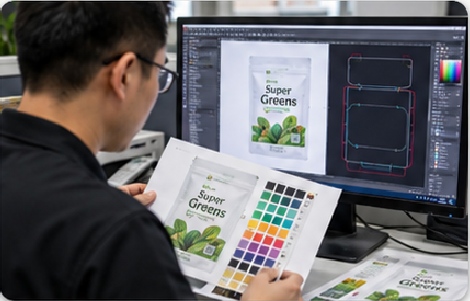
Philiton begins with a requirement review covering application, pouch surface, finished label size, quantity by SKU, artwork version, material, adhesive, printing, finishing, roll or sheet format, testing needs, delivery target, and destination. Missing information is resolved before production settings are released. Prepress checks file opening, dimensions, linked images, fonts, DPI, bleed, safe zone, die line, CMYK or Pantone color, special process layers, barcode or QR elements, and any variable-data file. When a source file is incomplete, the prepress team can rebuild a die line, create a white-ink layer, separate foil or emboss areas, convert color modes, or reconstruct vector elements after approval.

Philiton operates 8+ prepress workstations according to its equipment fact base, allowing several SKU files to be prepared in parallel. Production artwork is version-controlled so an obsolete revision does not move forward accidentally. If a project uses multiple flavors or languages, each artwork remains separately identified even when material and production setup are shared. A proof is issued for approval before the final production file is frozen.

The same review also determines whether digital, flexographic, screen, or another route is appropriate. Material availability, tooling, quantity, finishing sequence, inspection needs, and schedule are considered together. The purpose is to remove avoidable ambiguity before the first meter of material is consumed, because a wrong version, wrong die line, or wrong roll setup can otherwise multiply through the entire order.

Printing, Finishing, Die Cutting, and In-Process Checks

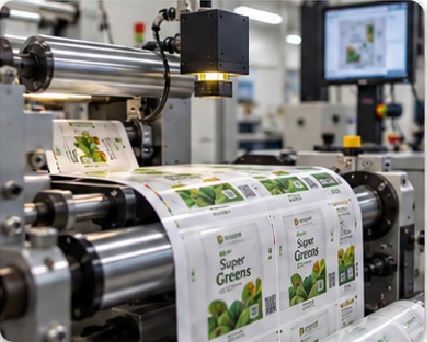
Once the approved specification is released, incoming materials are checked against the required construction and batch information. Press setup follows the approved artwork, color references, white-ink or special-color requirements, and production route. Philiton records four industrial digital label press lines and five multi-color flexographic label press lines in its equipment fact base, alongside letterpress, roll-to-roll screen, UV, variable-data, coating, lamination, foil, embossing, die-cutting, and converting equipment. The route used for one pouch label depends on the approved job rather than on the full equipment list.

In-process quality control starts with first-piece confirmation before continuous production. Operators review artwork version, text, dimensions, color, registration, print defects, finish position, and other job-specific checks. During production, inspection focuses on color drift, missing print, dirt, scratches, coating defects, foil transfer, emboss registration, bubbles, wrinkles, cure, and surface damage. If barcodes, QR codes, serial numbers, or other variable information are present, the relevant content and reading requirements are added to the control plan.

After printing and surface finishing, die cutting sets the final label shape. Die-cut depth, edge quality, matrix stripping, cut position, and liner integrity need to remain stable so labels dispense cleanly. A visually acceptable label can still create packing-line problems if the die cuts through the liner, leaves unstable waste, or varies in gap and pitch. Process checks therefore protect both appearance and later application.

Slitting, Rewinding, Packing, and Release for Shipment

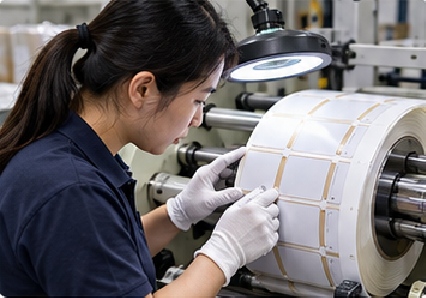
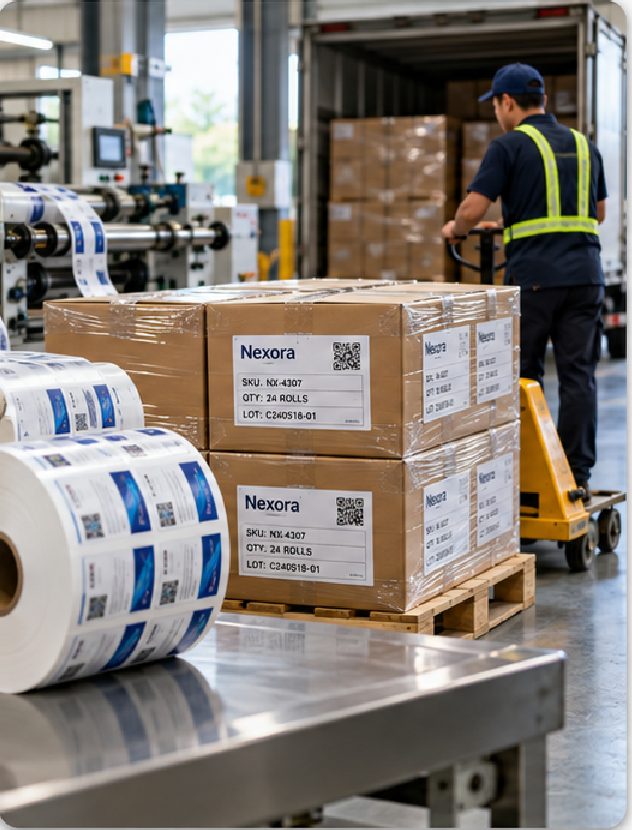
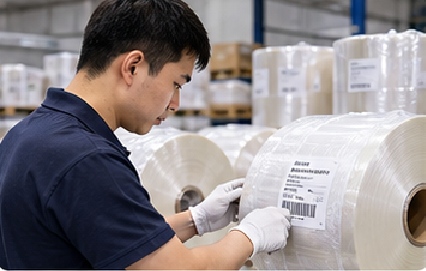
Finished webs are slit and rewound to the approved roll specification. Philiton checks finished width, winding direction, inside or outside wound orientation, core, roll diameter, labels per roll, roll tension, edge condition, splice or joint handling, and any sensor marks or perforations required by the applicator. Roll tension needs enough stability for transport and dispensing without creating telescoping, crushed edges, or excessive curl. The final configuration should match the packing line rather than a generic factory default.

Final inspection can include appearance, count, dimensions, roll condition, artwork version, SKU separation, barcode or QR function, variable data, and packaging identification according to the approved plan. Rolls are protected against crushing, moisture, telescoping, and unwanted unwinding. Cartons can identify SKU, quantity, batch, and roll information as required. Mixed-SKU shipments are possible when every variant remains separately identified and the receiving rules are defined.

Courier, air freight, or sea freight can be arranged according to shipment size, urgency, destination, Incoterm, and warehouse requirements. Exact transit time is quoted with the logistics route rather than folded into a generic production promise. Direct delivery to a warehouse or fulfillment center can also be planned when appointment rules, carton or pallet labels, receiving information, and customs responsibilities are supplied before dispatch.

Quality Control Focused on Pouch Label Failure Points

Philiton organizes quality control across incoming material checks, first-piece approval, in-process print inspection, converting control, roll verification, code checks, final inspection, packing review, and shipment release for pouch-label programs.
Incoming Material Check

Incoming Material Check

Face stock, adhesive construction, liner, foil, and other purchased materials need to match the approved production specification before they enter the run. Philiton checks relevant identification, appearance, dimensions, batch information, and project-specific documentation according to the material and risk level. Special adhesives or certified materials should be tied to the exact supplier construction rather than a generic material family name. Early confirmation reduces the chance of discovering a material mismatch after printing, finishing, and die cutting have already added cost.
First-Piece Approval

First-Piece Approval

Before continuous production, the first acceptable output is compared with the approved artwork and sample reference. Typical checks include text, SKU, dimensions, color, print registration, white ink, finishing position, die cut, barcode or QR content, and other defined features. First-piece control matters because one wrong setting can otherwise repeat across thousands of labels. Philiton uses the approved production file and project specification as the reference instead of relying on operator memory or an earlier revision stored outside the controlled job folder.
Print and Color Control

Print and Color Control

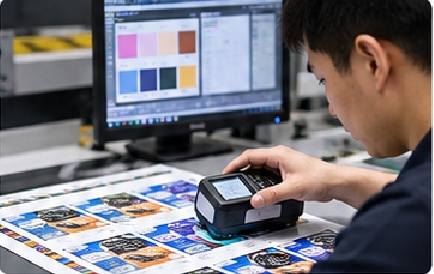
Brand color can shift with material, white ink, coating, laminate, ink system, press setup, and finishing. Philiton manages color from artwork review through press setup and in-process inspection, with Pantone or approved physical references used when required. Inspection also covers registration, missing print, contamination, scratches, streaks, and other appearance defects. Color expectations should be defined before production, especially when several SKU designs must sit together on shelf or when repeat orders need to match an earlier approved batch.
Die-Cut and Roll Control

Die-Cut and Roll Control

Pouch labels supplied on rolls must convert cleanly as well as look good. Philiton checks die-cut position, edge quality, matrix stripping, liner damage, gap, pitch, slit width, roll direction, core, roll OD, winding tension, and labels per roll according to the agreed specification. A cut that is slightly too deep can damage the liner and create dispensing failures. A wrong unwind direction can stop an applicator even when every printed label looks correct. Converting control therefore receives its own inspection points.
Barcode and Data Checks

Barcode and Data Checks

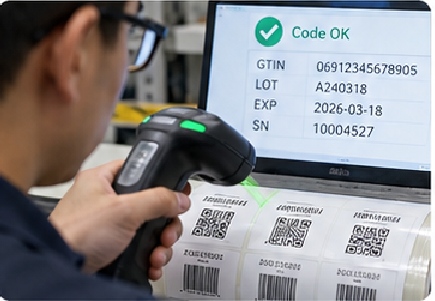
Barcodes, QR codes, serial numbers, and variable fields are reviewed for the defined content and reading requirement. A code that scans on one phone is not automatically equivalent to a formal barcode verification result, so the inspection level should match the market, retail system, or internal requirement. Philiton can control source data, variable-data batches, restart and reprint logic, and final checks according to an agreed workflow. Metallic backgrounds, low contrast, excessive print gain, damaged quiet zones, or pouch distortion need attention during design and production.
Final Inspection and OQC

Final Inspection and OQC

Final inspection confirms the finished SKU, quantity, appearance, label dimensions, roll configuration, packaging identification, and any agreed functional checks before shipment release. Quality control is organized across IQC, IPQC, FQC, OQC, and in-house laboratory testing within Philiton’s operating model. Project risk determines whether inspection is sampling-based, visual, functional, or expanded with testing. Labels are then packed to protect rolls from crushing, moisture, telescoping, and unwinding so production quality is not lost during storage and international transport.

MOQ, Sample Time, and Production Scale by Project Stage

Order planning should match the commercial stage. Philiton supports sample development, launch runs, multi-SKU growth, and repeat volume while choosing printing, tooling, inspection, roll format, and scheduling around the approved specification.

StageTypical Quantity / ScopeCommon Production RouteTiming ReferenceMain Control Focus
Sample / approvalMaterial sample, digital sample, die-cut or production-style sampleDigital proofing, sample converting, selected finishingRegular samples commonly about 3-7 business days after inputs are readyMaterial, adhesion, color, size, finish, application, roll trial
Launch / market testAround 500-5,000 pcs per SKU for many standard projectsDigital or flexible short-run routeCommon standard production around 7-15 working days after sample, artwork, and material approvalInventory risk, multi-SKU control, artwork version, initial pack performance
GrowthAbout 5,000-50,000+ pcs per SKU depending on programDigital, flexographic, or mixed route based on economicsConfirmed against material, tooling, finishing, quantity, and production loadingRepeat consistency, cost optimization, color, batch control, replenishment
Scale / repeat programAbout 50,000-500,000+ pcs or recurring scheduled batchesFlexographic or other efficient repeat-production route when suitableProduction and shipment schedule set by approved specification, forecast, materials, and delivery planCapacity, repeat specifications, QC documentation, line compatibility, delivery planning

Packing and Logistics Planned Around Roll Protection and Identification

Finished labels need to reach the packing line in the same condition approved at the factory. Philiton controls roll protection, SKU identification, batch information, carton marking, shipment consolidation, receiving requirements, and shipping route.

Roll Protection

Rolls are packed to reduce crushing, moisture exposure, telescoping, edge damage, and unwanted unwinding during storage and transport. The packing method reflects roll diameter, core, width, weight, material, and shipping route. Protective bagging, separators, end protection, cartons, or other methods can be selected according to the project. Large heavy rolls require different handling from short-run digital rolls. Packing should preserve winding tension and label edges so a roll that passed factory inspection still feeds correctly when opened at the filling or packing facility.

SKU and Batch Identification

Multi-SKU programs need clear outer identification so similar-looking rolls do not reach the wrong line or product. Philiton can mark cartons and roll packaging with SKU, quantity, batch, roll count, or other agreed information. Front and back label sets can also be packed in coordinated quantities when required. Mixed-SKU cartons or pallets are possible when warehouse rules are defined. Clear identification supports receiving checks, inventory control, production staging, complaint traceability, and repeat-order comparison without relying on artwork appearance alone.

Shipment Planning

Courier, air freight, and sea freight can be arranged according to shipment size, urgency, destination, and commercial terms. Direct delivery to a warehouse or fulfillment center is possible when receiving appointments, carton or pallet labels, routing instructions, and customs information are supplied. Production lead time and transit time are treated separately so a factory completion date is not confused with final arrival. For launch projects with a fixed shelf date, Philiton can review production and logistics milestones together before the order is released.

Compliance Support Tied to the Exact Label Construction

Philiton supports project-level material, printing, testing, and documentation requirements while keeping regulatory responsibility and evidence tied to the actual market, product category, pouch structure, label construction, and requested standard.

External Pack vs Food Contact

A pressure-sensitive label placed on the outside of a sealed pouch has a different risk profile from a material intended for direct food contact. Philiton does not treat every “food label” as the same compliance condition. The pack structure, label position, food-contact pathway, migration concern, target market, and requested documentation should be defined before materials are approved. When a project requires food-contact-related evidence, supplier declarations or third-party reports must correspond to the exact construction and intended contact condition rather than a generic statement covering all labels.

Material and Test Documents

Paper, film, adhesive, ink, coating, laminate, foil, and specialty materials can carry different documentation depending on supplier and project. Philiton can coordinate material information, internal checks, laboratory testing, and third-party testing when requirements are specified. REACH, RoHS, food contact, heavy metals, FSC, recycled content, or other claims should not be applied automatically across the full product range. A procurement or compliance team should identify the target standard, market, report type, and acceptable material source early enough to include the requirement in sampling and quotation.

Regulatory Artwork Responsibility

Philiton can reproduce approved ingredients, nutrition information, warnings, INCI text, directions, barcodes, country statements, or other regulated copy with controlled artwork and print legibility. The brand, product owner, or appointed regulatory adviser remains responsible for deciding what legally required content must appear in the target market. Final artwork approval should therefore include a formal copy review before production artwork is frozen. Printing a statement accurately is a manufacturing responsibility; deciding whether the statement is legally sufficient is a separate regulatory responsibility.

Market and Project Requirements

United States, European Union, United Kingdom, Canada, Australia, Japan, and other markets can impose different packaging, environmental, traceability, labeling, or documentation expectations depending on product category. Philiton can manufacture to a defined specification and support project-level testing or documentation, but does not issue a blanket guarantee covering every product law in every country. The efficient route is to send the applicable standard, retailer requirement, corporate specification, test method, or compliance checklist during development so material selection, artwork, sampling, and production records can be aligned from the start.

Manufacturing Capacity for Launch Runs and Repeat Programs

Philiton combines flexible starting quantities with a manufacturing system sized for repeat production, multi-SKU management, special finishing, inspection, laboratory support, roll conversion, export packing, and international project coordination.

Shenzhen and Dongguan

Philiton operates manufacturing facilities in Shenzhen and Dongguan with a combined manufacturing footprint of more than 12,000 ㎡. The two-location structure supports printing, converting, finishing, inspection, testing, packing, and project coordination across a broader operating base than a small online print shop. Manufacturing identity matters for pouch-label programs because materials, tooling, press scheduling, finishing, die cutting, rewinding, and shipment preparation must be coordinated under one controlled specification when a design moves from initial launch into repeat production.
200+ People, 91 Core Staff

More than 200 people support Philiton’s manufacturing, engineering, quality, commercial, and service functions. The confirmed core group includes 91 technical professionals, experienced machine operators, and quality personnel. Pouch-label production often crosses prepress, color, printing, finishing, die cutting, slitting, inspection, packing, and logistics, so staffing depth becomes important when several SKUs or repeat orders are active at the same time. Project coordination connects the approved specification with each department rather than leaving production knowledge with one salesperson or one machine operator.

Integrated Printing and Converting

Philiton’s confirmed capabilities cover artwork and prepress, digital printing, flexographic printing, letterpress, screen and UV processes, variable data, foil, embossing and debossing, lamination and coating, die cutting, slitting and rewinding, automatic inspection, laboratory testing, packing, and shipment preparation. The equipment fact base records 4 industrial digital label press lines, 5 multi-color flexographic press lines, 5 rotary hot-foil workstations, and 3 embossing/debossing workstations among the available production groups. Each job only uses the processes needed by its approved specification.

From 500 to Repeat Scale

Many standard custom label and sticker projects can begin from around 500 pieces, while the same manufacturing organization can support larger repeat batches. Philiton uses digital production where shorter quantities, multiple designs, and rapid changes make sense, then can shift toward flexographic or other efficient routes as volume and artwork stability increase. The value is continuity: material knowledge, approved artwork, die lines, color references, roll data, packing rules, and QC points can remain controlled as the commercial program grows instead of forcing a brand to rebuild the manufacturing specification with a new supplier at every stage.

Representative Pouch Label Project Scenarios for Planning

Editorial note: the three profiles below are illustrative manufacturing scenarios built from Philiton’s confirmed capabilities, not published client histories. Replace them with verified public case records before claiming project results.
United States Coffee Launch

United States Coffee Launch

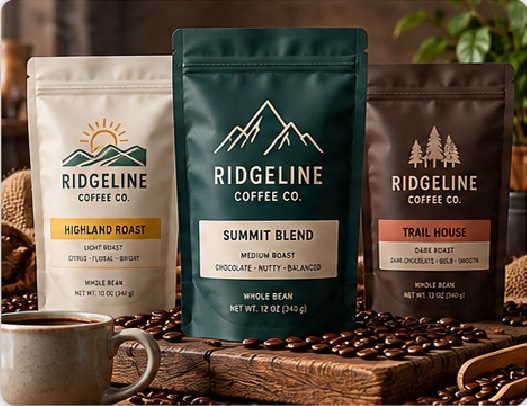
Scenario profile – United States. A specialty coffee brand plans six roast and origin SKUs in matte stand-up pouches and needs 8,000 front labels for an initial retail launch. Philiton reviews the matte pouch laminate, tests coated paper and white BOPP alternatives, and recommends a material route after adhesion and handling checks. Artwork is standardized to one label size across all six SKUs to reduce unnecessary tooling and setup. Digital printing supports the mixed artwork run, while each SKU remains separately approved and identified. Finished rolls are packed by SKU for hand or semi-automatic application, with a repeat specification retained for the next replenishment.
Germany Supplement Program

Germany Supplement Program

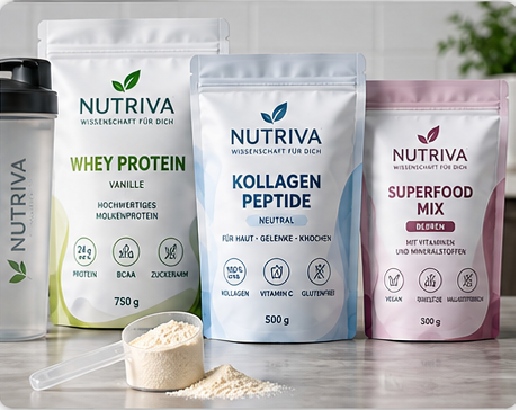
Scenario profile – Germany. A supplement contract packer needs 18,000 pouch labels across four powder formulas, with dense ingredient copy, QR codes, barcodes, and a matte premium surface. Philiton reviews the pouch film, label dimensions, white BOPP construction, matte protection, barcode quiet zones, and artwork version control before sampling. A physical print sample is checked for fine text, color, code readability, and adhesion. After approval, the order is separated by formula and roll, with SKU and quantity identification on the outer packing. The production file set remains frozen by version so later multilingual or formula updates can be introduced without mixing obsolete artwork into repeat orders.
Australia Pet Treat Range

Australia Pet Treat Range

Scenario profile – Australia. A growing pet-treat brand prepares a 30,000-label order covering five flavors packed in flexible glossy pouches exposed to oil, repeated opening, and warehouse handling. Philiton compares white BOPP and a more flexible film construction, then tests adhesive behavior on filled pouches to watch for corner lift and wrinkling. The approved design uses one common die size with flavor-specific artwork, allowing efficient SKU management. Protective finishing is selected for rub and moisture resistance. Rolls are produced to a defined core, unwind direction, and labels-per-roll plan for the packing operation, then inspected and packed by flavor and batch before shipment.

Pouch Labels Frequently Asked Questions

Philiton can source and convert coated and uncoated papers, kraft or textured papers, PET, PP/BOPP, PE, and specialty label stocks. Final selection depends on pouch surface, moisture, oil, abrasion, flexibility, visual target, adhesive, finishing, and any compliance requirements.
Yes, but PP and PE can present lower surface energy and may require a higher-tack or specially formulated adhesive. Surface treatment, coating, texture, contamination, temperature, pouch flexing, and label size also affect performance. Philiton recommends testing on the actual pouch when adhesion risk is significant.
Many standard custom label projects can start from around 500 pieces. MOQ changes with material, printing route, special adhesive, tooling, finishing, SKU count, roll specification, and supplier minimums for special components. Similar SKUs can sometimes share setup, but every artwork still needs separate approval and quantity control.
Regular digital, material, or die-cut samples are commonly about 3-7 business days after required artwork, material, and specifications are ready. Special adhesives, custom materials, complex finishing, security structures, or third-party testing can extend the schedule. The sample objective is confirmed before timing is quoted.
Common standard label orders are often around 7-15 working days after sample, artwork, material, and required tooling are approved. Special materials, complex finishing, very large quantities, security features, or additional testing are scheduled separately. Production lead time and transport time are quoted as separate parts of the project.
Yes. Philiton confirms finished size, unwind direction, inside or outside wound, core, maximum roll diameter, gap, pitch, liner width, labels per roll, perforation, black marks, and other sensor requirements before production. A trial roll can be used when line compatibility needs verification.
Yes when material, adhesive, finishing, and technical specifications are compatible. Digital production is especially useful for several designs in shorter runs. Each SKU still receives its own approved artwork, quantity, identification, and QC control. Sending a SKU matrix helps Philiton review which settings can be shared.
Suitable film, ink, coating, lamination, and adhesive can improve resistance to water, oil, abrasion, and handling. Performance depends on the exact construction and exposure. Philiton does not treat “waterproof” as a universal claim; higher-risk projects should define the liquid, temperature, contact time, and test condition.
Yes. Barcode and QR printing can be combined with fixed or variable artwork. Size, contrast, quiet zone, material, print gain, finishing, and pouch distortion can affect readability. Philiton can perform scan or verification checks according to the agreed requirement and data workflow.
Send the pouch material or a sample, label size and shape, quantity per SKU, number of SKUs, artwork or reference image, material or finish preference, storage and exposure conditions, application method, roll specifications if automatic labeling is used, destination, and required delivery date. Unknown fields can be marked for recommendation.

Send Your Pouch Label Specification for Manufacturing Review

A useful quote starts with the pack and the production conditions, not only a label size. Send Philiton the pouch material or a physical sample, finished label dimensions, quantity per SKU, number of SKUs, artwork, preferred appearance, and any exposure to moisture, oil, refrigeration, freezing, abrasion, or chemicals. If labels will run on an applicator, include unwind direction, core, maximum roll diameter, gap, pitch, labels per roll, and sensor requirements when available. Philiton can review incomplete specifications as well; unknown material or adhesive fields can be marked for recommendation. For an established program, sending a current label, approved pack, Pantone reference, roll sample, or labeler manual can shorten specification comparison. Add the target market, required compliance documents, packing method, destination, and requested arrival date when those items affect planning. Quotes are project-based because material, tooling, finishing, roll format, inspection, packing, freight route, and delivery terms all affect cost and schedule. A complete specification also makes sample approval and repeat production easier to control.

  • Pouch material, coating, and final application surface
  • Label size, shape, quantity per SKU, and total SKU count
  • Artwork, color references, white ink, foil, emboss, or other finishes
  • Hand application or complete roll and applicator specification
  • Required tests, compliance documents, packing rules, destination, and delivery target

For all inquiries, please feel free to reach out at:

Get In Touch

  • Our team will answer your inquiries within 12 hours.

  • Your information will be kept strictly confidential.

Get a Fast Quote for Custom Labels & Stickers

We will contact you within 24 Hours, please pay attention to the email with the suffix“@philiton.com”. 
For all inquiries, please feel free to reach out at:

Ask For A Quick Quote

We will contact you within 24 Hours, please pay attention to the email with the suffix“@philiton.com”. 
For all inquiries, please feel free to reach out at:

Get a Quote Today!

We will contact you within 24 Hours, please pay attention to the email with the suffix“@philiton.com”.