Philiton manufactures custom candle labels from artwork review through finished rolls, sheets or individual pieces. Projects can combine brand labels, bottom warning labels, lid labels and outer-packaging labels under one controlled specification.

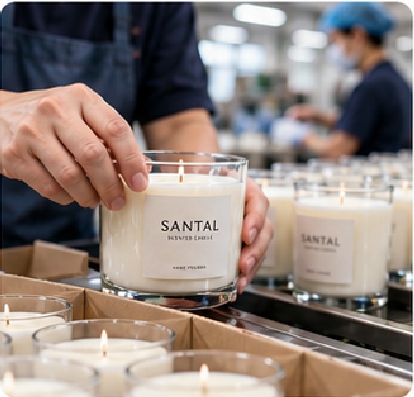

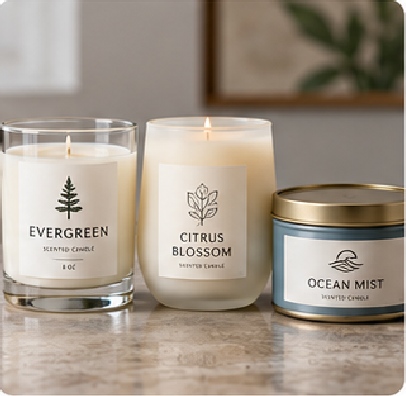
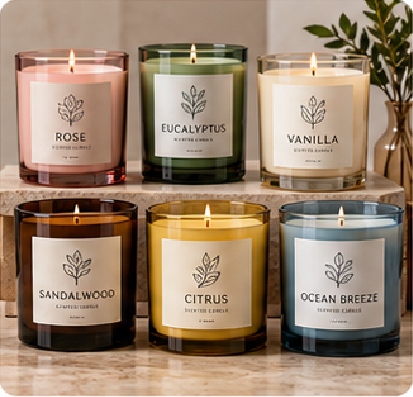
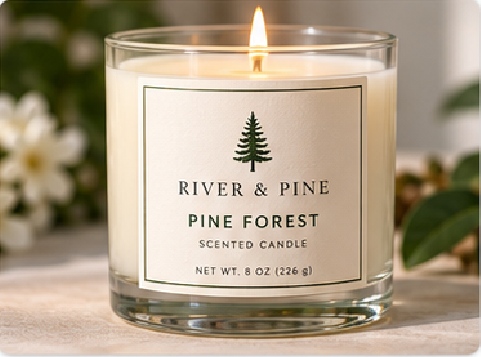

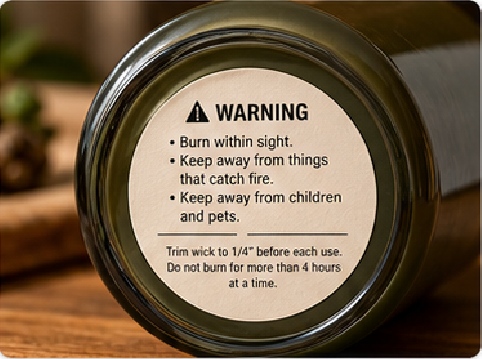
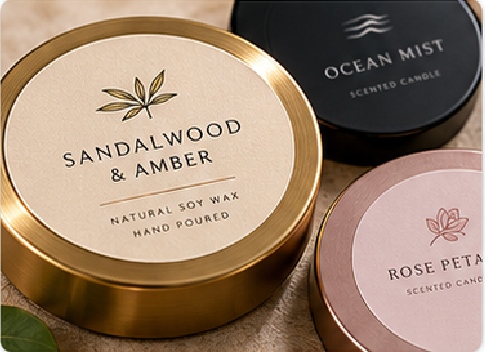
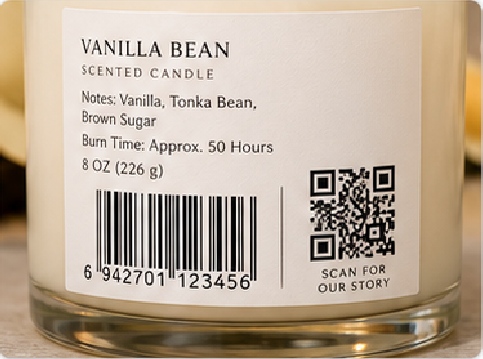
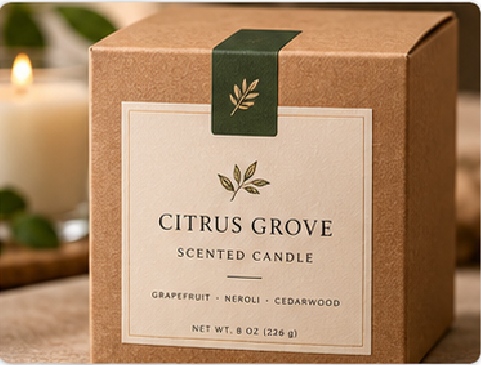

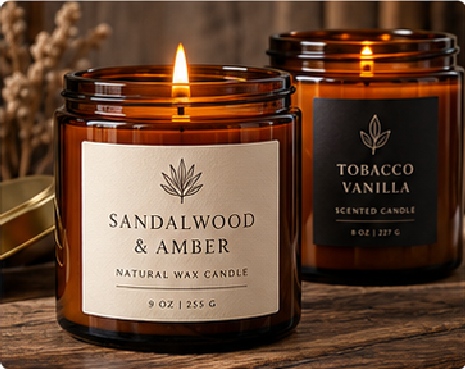
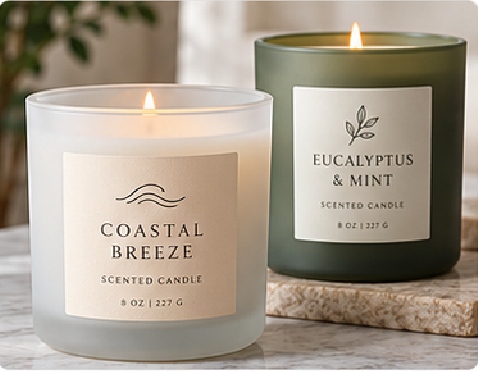
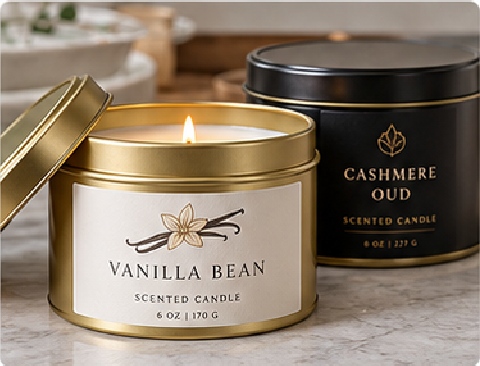
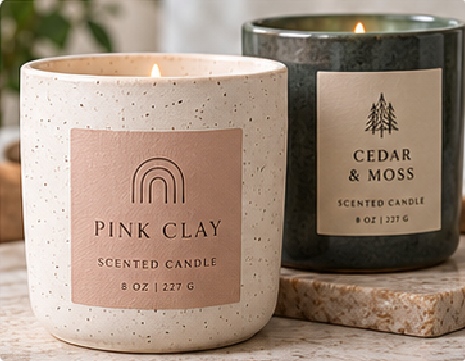
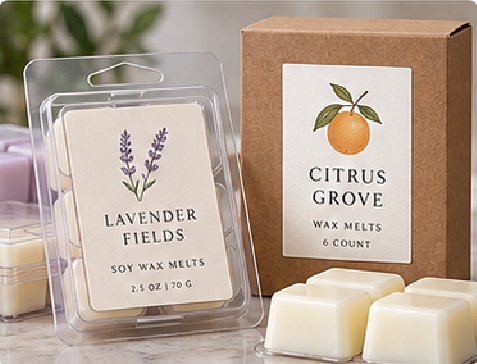
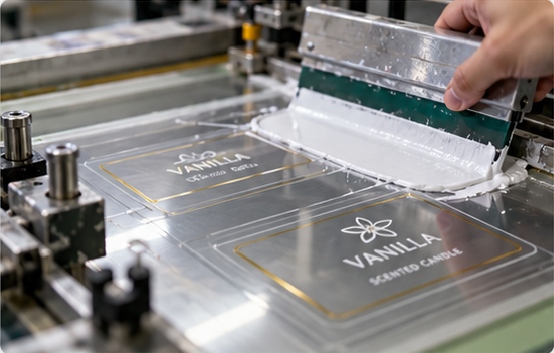
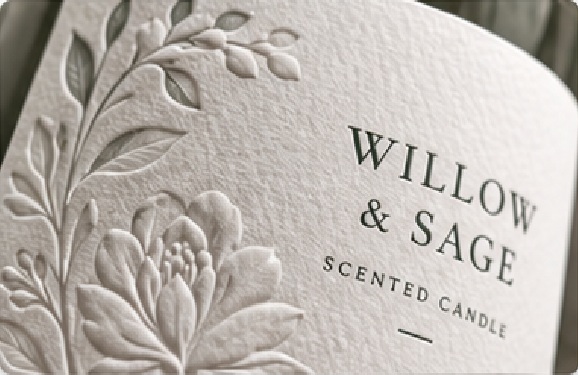
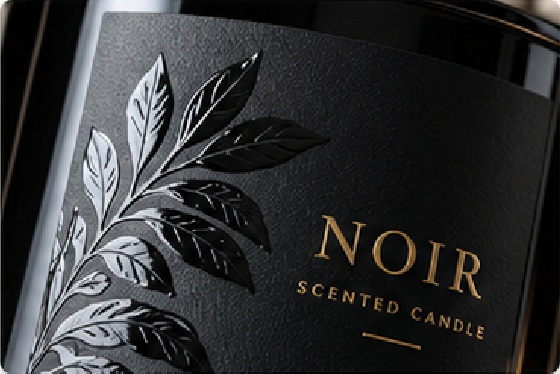
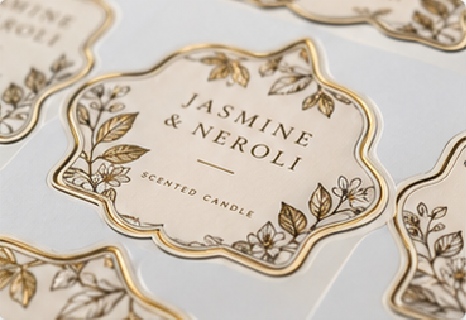
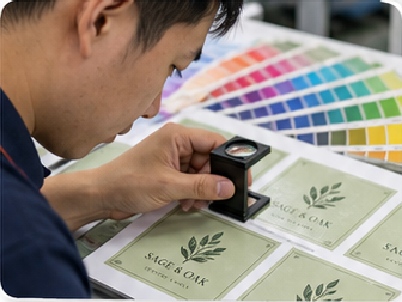
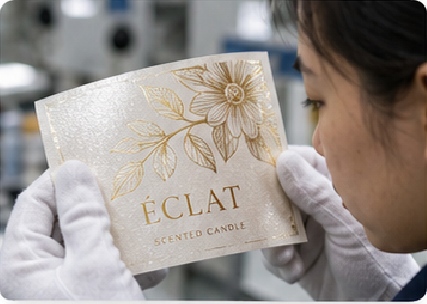
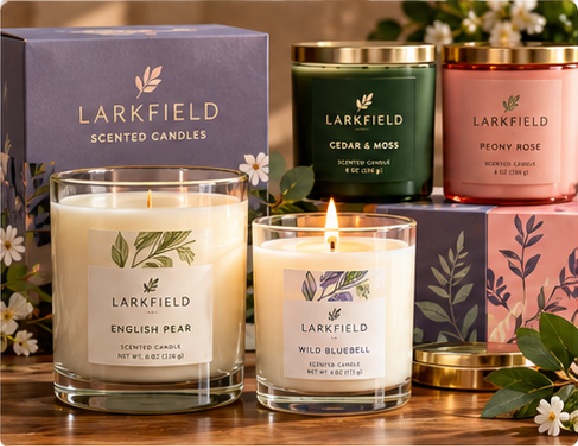
Premium candle collections often combine matte surfaces, foil, embossing, spot effects, fine typography and multiple fragrance colors. Small differences become obvious when the same collection is displayed side by side at retail. The visual challenge grows when ten or twenty scent artworks share one structural specification. Philiton manages these programs by fixing common elements first: finished size, die line, material, adhesive, print method, finishing zones and packing format. Variable elements such as scent name, accent color, barcode and language version are then controlled within the approved framework. Registration and artwork separation become critical when foil, emboss or spot UV sits close to fine type or a die-cut edge. The prepress file should clearly identify metallic, white-ink, varnish and emboss layers rather than relying on visual interpretation from a flattened PDF. When a finish is technically possible but too close to a tolerance boundary for stable repeat production, Philiton can recommend a spacing or artwork adjustment before tooling is released. Approved samples provide a physical reference for reorders. For larger multi-SKU programs, carton labels and roll identification should also match the file naming system so production, warehouse and receiving teams can distinguish scents without opening every roll. Consistency is built through specification control, not by relying on the memory of one operator.
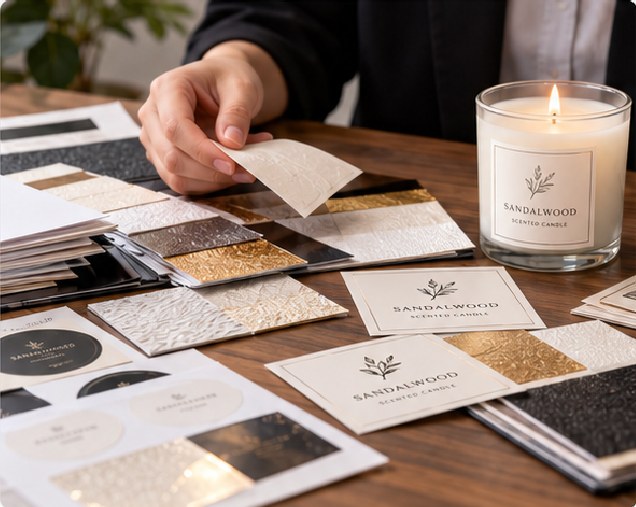
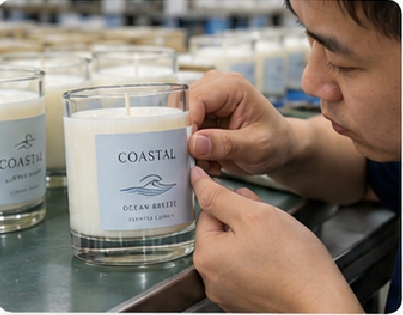
Philiton selects facestock around appearance, handling and vessel conditions. Final approval should use the actual container when coating, oil exposure, curvature or premium finishing adds risk.
| Material Route | Best Fit | Main Strengths | Watch Points | Common Finishes |
|---|---|---|---|---|
| Coated paper | Straight glass, boxes, stable indoor use | Clean print, broad finish range, efficient for many brand programs | Needs protection when frequent wiping, oil or moisture is expected | Matte/gloss varnish, lamination, foil, spot UV |
| Textured paper | Luxury, artisan and fragrance collections | Tactile surface, premium uncoated appearance, strong shelf character | Texture can affect fine foil, small type and adhesive contact on difficult curves | Foil, emboss/deboss, selective varnish |
| Kraft-style paper | Natural, handmade and earthy branding | Warm fiber look, good contrast for simple graphics | Artwork color is influenced by the brown base; oil and moisture exposure should be tested | Black/spot color, simple foil, varnish |
| White BOPP film | Glass, tins, higher handling and wipe resistance | Good dimensional stability, moisture resistance and crisp print | Film appearance is less paper-like; adhesive still must match the real surface | Matte/gloss laminate, white ink, foil, UV |
| Clear film | No-label look on clear or colored glass | Lets the vessel remain visible and supports layered transparent design | White ink, adhesive clarity, bubbles and surface cleanliness become more visible | White ink, spot color, metallic accents, laminate |
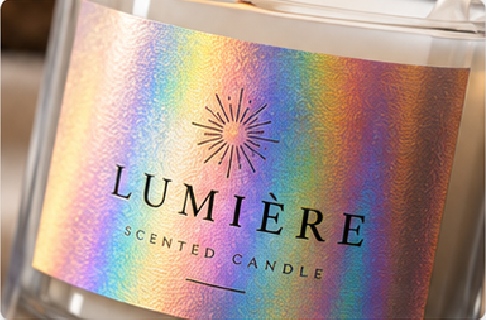
| Metallic / holographic structure | Premium accents, seasonal launches, gift ranges | Built-in reflective surface can create strong visual impact | Artwork contrast and barcode areas need control; not every effect suits large coverage | Opaque white, selective print, foil, matte/gloss contrast |

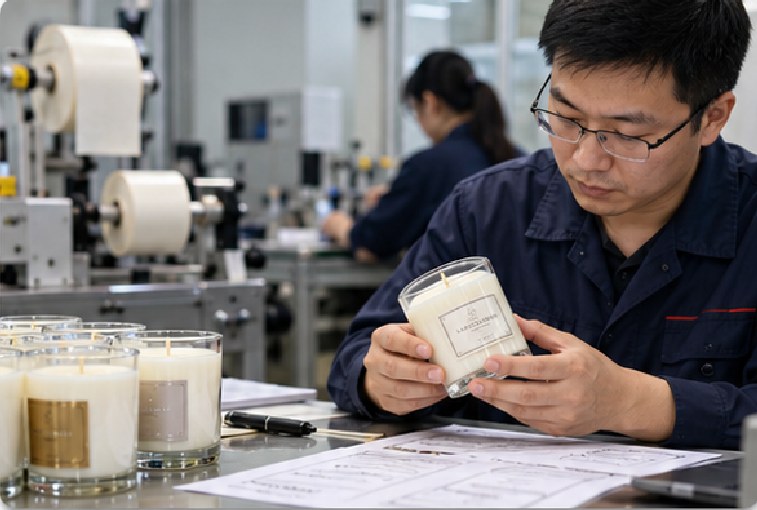
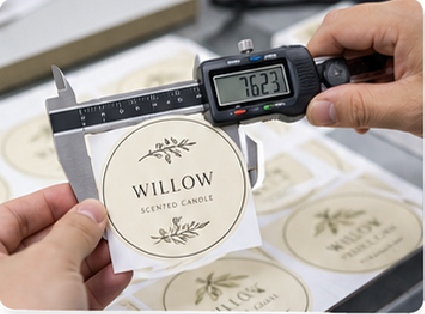
Philiton uses the measurable flat or stable labeling area, not the nominal jar volume, to set a die line. The dimensions below are starting references only.
| Application Position | Typical Starting Reference | Best For | What Philiton Checks |
|---|---|---|---|
| Front panel | About 2 x 2 in to 3 x 4 in | Straight-sided glass and tins | Flat wall height, diameter, shoulder/base clearance, visual centering |
| Wide front / back | About 2.5 x 3 in to 4 x 4 in | Larger jars and information-rich artwork | Curve stress, corner radius, copy density, hand placement tolerance |
| Wrap label | Measured from actual circumference | Extended branding and multilingual copy | Taper, overlap/gap, seam position, label stiffness, application method |
| Round lid label | About 2 to 3 in diameter | Travel tins, gift sets, top branding | Usable lid diameter, rolled edge, coating, abrasion from handling |
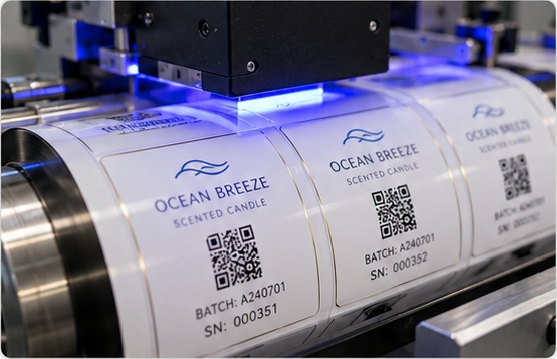
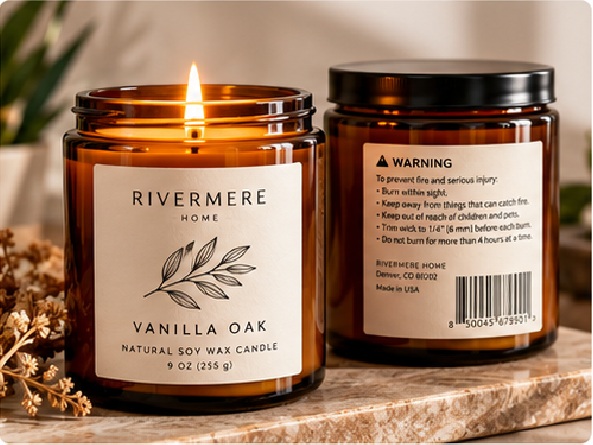
| Bottom warning label | About 1.5 to 2.5 in round or equivalent rectangle | Warnings, batch data, barcode, contact information | Recessed base, molded marks, readable area, warning artwork fit |
| Custom shape | Built from vessel and artwork | Premium identity, seals, seasonal editions | Narrow points, inside corners, curvature, die stability, waste efficiency |
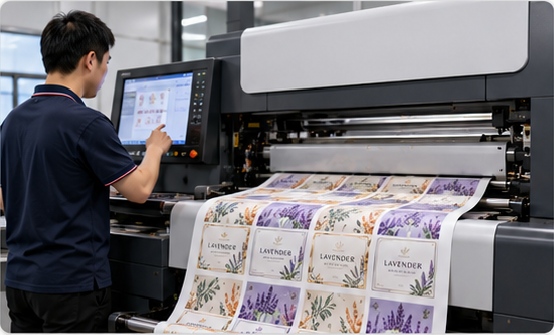
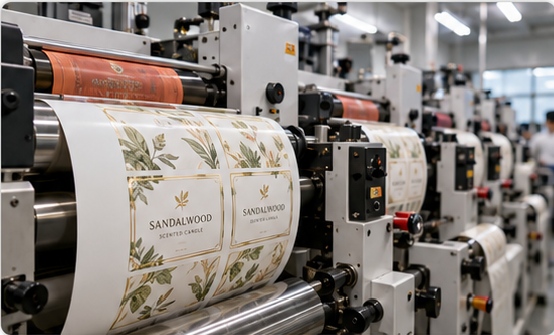


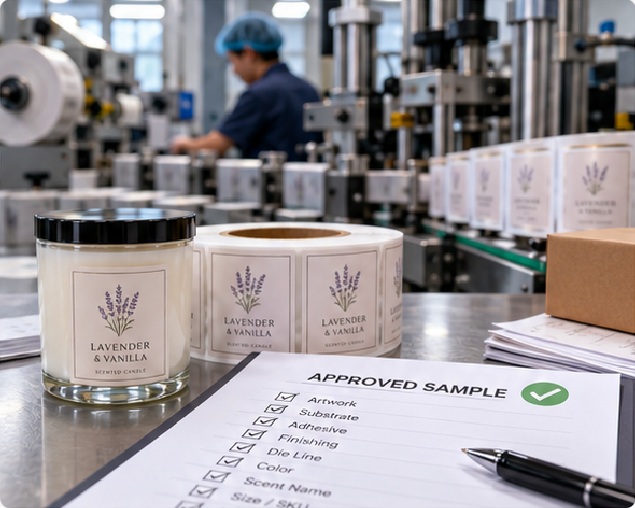
Once the sample is accepted, Philiton converts the approval into production controls: final artwork revision, substrate, adhesive, print route, finishing instructions, die line, roll or sheet format, quantity by SKU and packing identification. A launch order can then focus on reproducing the approved combination rather than reopening design decisions during production.
Many standard custom label and sticker projects can begin from around 500 pcs per design or SKU. Candle programs with several scents may be structured around a common material and size so fixed setup is shared where the process allows. Special materials, dedicated tooling, complex finishing and supplier minimums can raise the commercial starting point, so MOQ is confirmed from the actual specification rather than treated as one universal number. Material availability and finishing-tool lead time are reviewed before the launch date is committed.
For repeat programs, an approved sample or golden sample becomes more valuable over time. New fragrance artworks can use the same technical reference while brand teams approve only the variables that changed. When volume grows, Philiton can also review whether the original digital route should remain or whether a flexographic production path offers better efficiency without changing the agreed appearance and finished format. Reorder planning can then use the same approved construction while updating only quantity, artwork variables or packing instructions.
Philiton quotes candle labels from the complete specification. Quantity matters, but material, number of SKUs, tooling, finishing and delivery format can change the cost structure just as much.
| Commercial Factor | How Philiton Evaluates It | Typical Impact |
|---|---|---|
| Starting quantity | Many standard label and sticker projects start around 500 pcs per design or SKU | Supports launches and multi-SKU testing; special materials or tooling may require more |
| SKU count | Shared size/material/process can reduce repeated setup across scent artworks | More artwork checking and packing control, but common construction improves efficiency |
| Material and adhesive | Paper, film, texture, metallic surface and specialty adhesive are quoted by actual construction | Supplier minimums and non-stock materials can raise the starting order |
| Tooling and finishing | Die, foil plate, emboss tool, screen or specialty process is reviewed separately | Adds fixed setup; becomes more efficient as repeat volume increases |
| Production route | Digital favors shorter and variable runs; flexographic routes favor repeat roll volume | Unit economics change with quantity, colors, material and finishing complexity |
| Packing and roll specs | Core, unwind, labels per roll, SKU separation, cartons and special packing are included | Machine-ready roll requirements may add handling but reduce downstream setup risk |


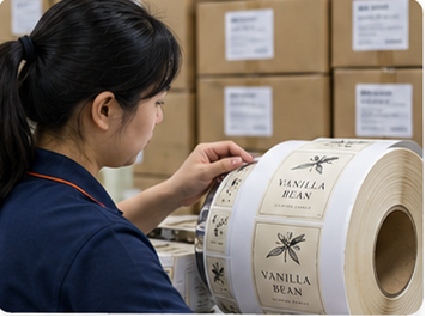
After printing and finishing, labels move through die cutting, waste removal, slitting, rewinding or sheet conversion according to the ordered format. Philiton can prepare rolls, sheets, individual pieces or stacked formats. Machine-applied roll labels require core, unwind direction, gap, roll diameter and labels-per-roll information; hand-applied projects can prioritize convenient counts and SKU separation instead. Packing is part of production control, not an afterthought. Each roll or bundle should identify the correct SKU and quantity. Fragrance collections can be separated by artwork code, scent name, size or market version to make receiving easier. Carton labels and packing lists should follow the same naming logic as the approved files. When several purchase orders ship together, packing rules should prevent similar artworks from being mixed. Clear inner-pack labels can also help the filling team verify the correct scent before the roll reaches the applicator or hand-labeling station. Before shipment, finished goods pass final checks and outgoing inspection according to the project requirements. International delivery options are then arranged around destination, carton volume, urgency and trade terms. Philiton supports global shipment preparation, while exact freight method, transit time and DDP availability are quoted for the confirmed destination and order. For replenishment programs, keeping the same roll, carton and SKU-identification rules also reduces receiving changes at the filling site. Build Your Quote


A useful quotation starts with the real vessel and production plan. Send Philiton the candle jar, tin, box or other container details together with artwork and the expected order structure. The team can review material, adhesive, size, die shape, print route, premium finishing, warning-label format and roll or sheet delivery before pricing. For new constructions, include a vessel photo or arrange to send a physical sample so curvature, coating and available labeling area can be checked. Multi-SKU fragrance programs should list quantity per artwork and identify any shared size or finish. Standard printed samples commonly require about 3-5 business days after details are confirmed, while foil, embossing, specialty die cutting or special materials commonly need about 5-7 business days. Mass-production timing is then scheduled around the approved artwork, material and process. For many standard label projects, production planning commonly falls around 7-15 working days after approvals, while special substrates, complex finishing or large-volume programs are scheduled separately. Freight transit is quoted by destination and shipping method.
For all inquiries, please feel free to reach out at:
Our team will answer your inquiries within 12 hours.
Your information will be kept strictly confidential.
We will contact you within 24 Hours, please pay attention to the email with the suffix“@philiton.com”.
For all inquiries, please feel free to reach out at:
We will contact you within 24 Hours, please pay attention to the email with the suffix“@philiton.com”.
For all inquiries, please feel free to reach out at:
We will contact you within 24 Hours, please pay attention to the email with the suffix“@philiton.com”.