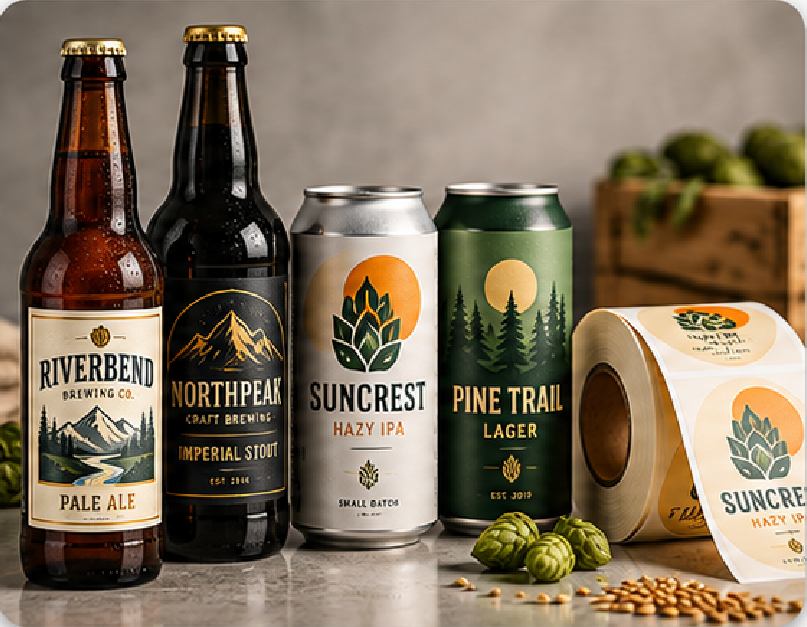
Custom beer labels engineered for bottles, cans, cold storage, multi-SKU releases, premium finishes and repeat production.
Philiton builds beer label programs around the container, labeling conditions, artwork and production volume – not a one-material-fits-all specification.
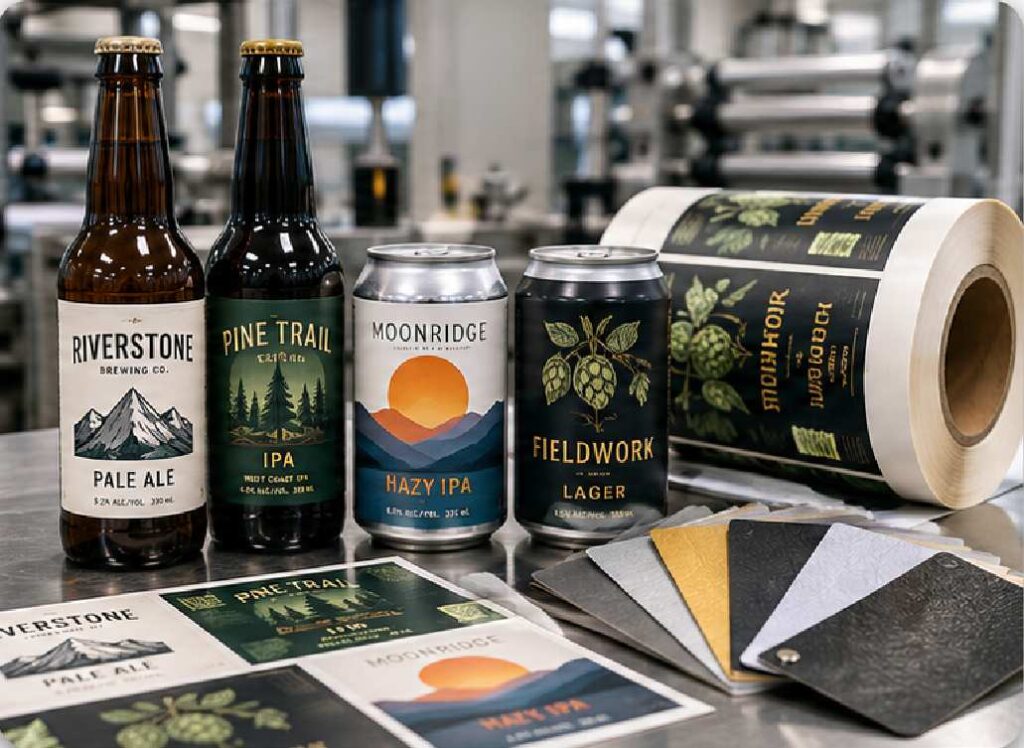
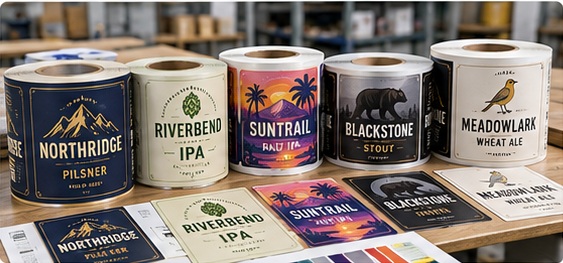
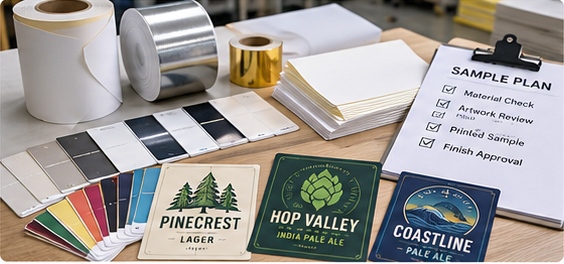
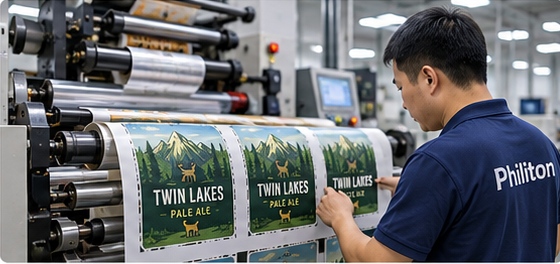
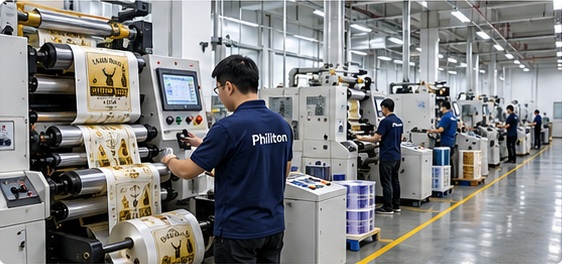
Philiton operates manufacturing facilities in Shenzhen and Dongguan with a combined manufacturing footprint exceeding 12,000 ㎡. The system covers artwork and prepress, sampling, printing, specialty finishing, die cutting, slitting and rewinding, inspection, laboratory testing, packing and shipment preparation, allowing beer-label projects to remain within one coordinated manufacturing workflow from first proof through repeat shipment.
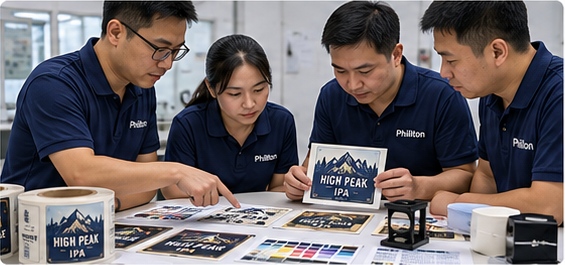
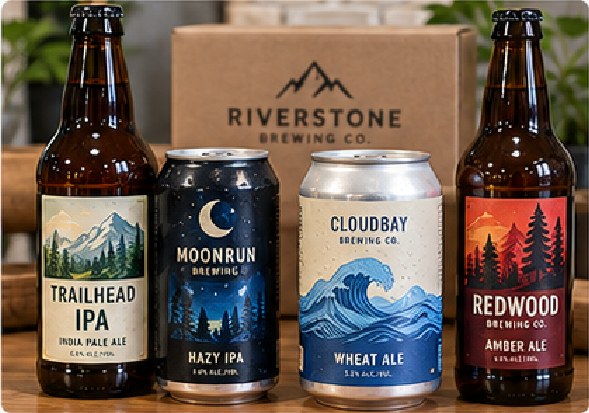
Larger programs usually involve procurement, packaging, design, quality and production teams rather than one decision maker. Philiton can document material structure, artwork version, roll direction, core, maximum roll diameter, labels per roll, SKU packing and agreed inspection points before mass production. Higher-volume work can use flexographic production where it offers better economics, while samples and shorter regional versions can remain on a digital route when appropriate. Roll specifications and packing rules can be standardized across plants or co-packers when the downstream equipment is known.
Contract packers, packaging companies, distributors and print partners often need labels built around downstream production rules rather than retail appearance alone. Philiton can work from machine requirements, warehouse receiving rules, private-label artwork and multiple delivery destinations. NDA arrangements can be used for confidential programs. Mixed-SKU packing, direct warehouse shipment and repeat-order specification control can be planned at quotation stage instead of being added after labels are already printed. Clear receiving instructions also reduce relabeling, repacking and roll-identification work at the destination.
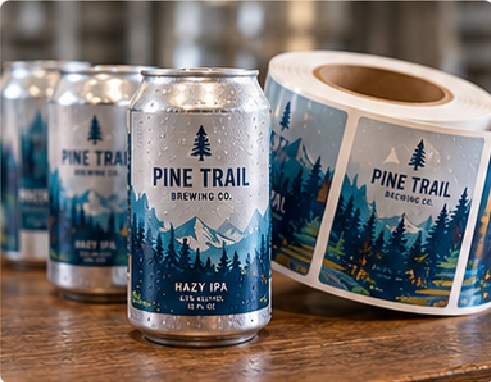
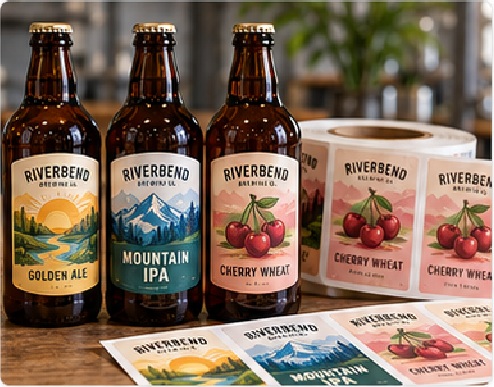
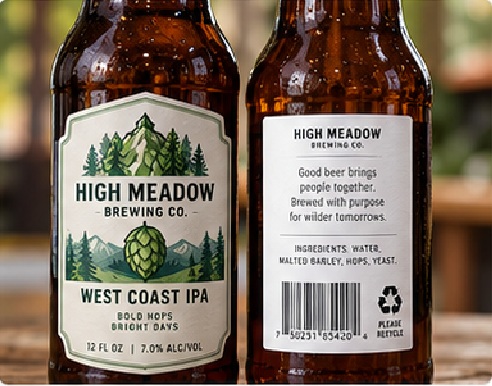
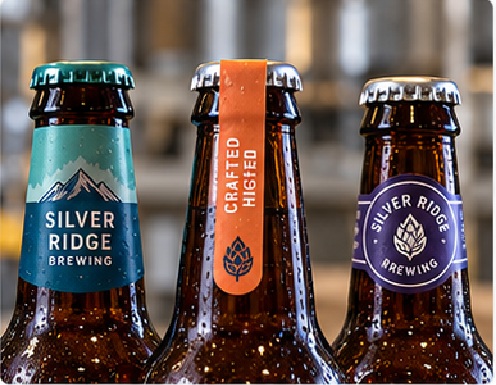
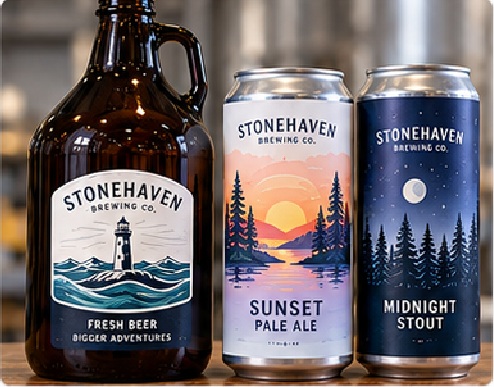
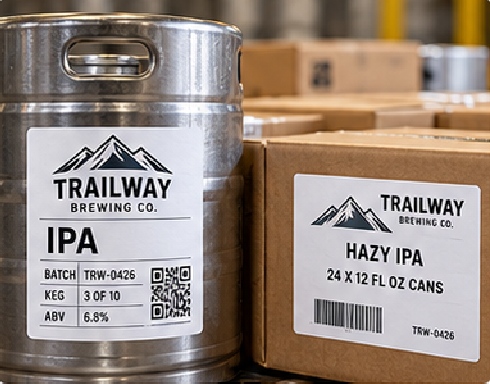
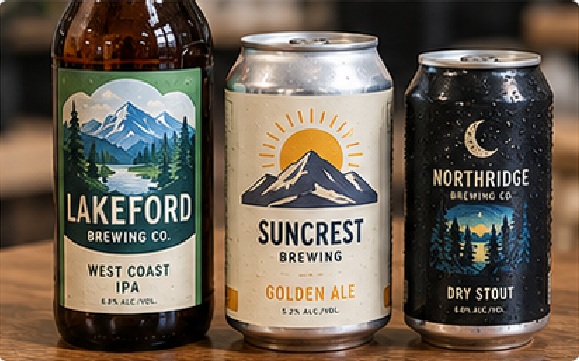
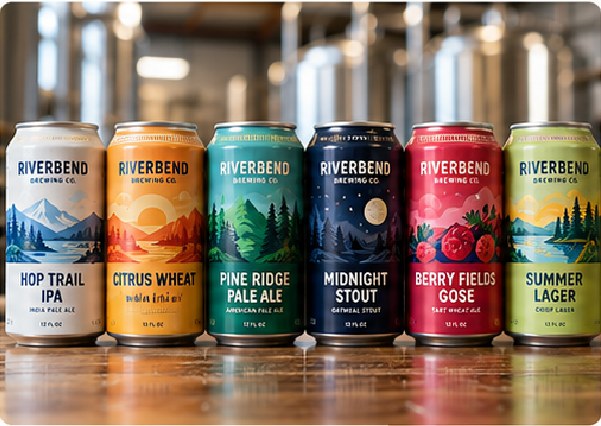
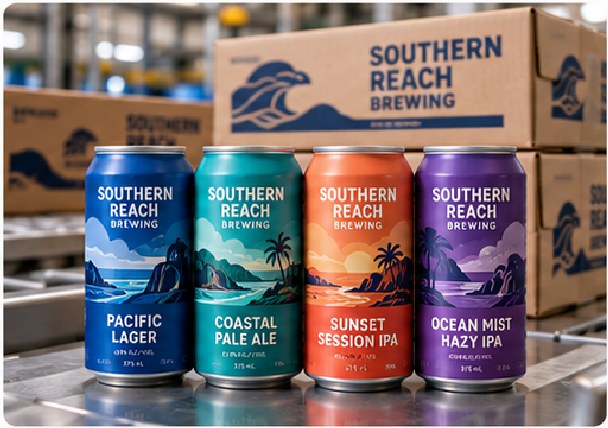
Can labels combine a highly visible branding surface with demanding production conditions. The can diameter is consistent, but a long label still needs correct dimensions, die cutting, release behavior and roll configuration to apply smoothly at speed. Philiton reviews the target can, desired coverage, label orientation and application equipment before setting the production specification. White film, clear film and specialty-effect materials can be considered according to the intended design.
For clear constructions, artwork needs a deliberate white-ink strategy. Colors printed directly on clear film can be influenced by the metal or background beneath them. Selective white can keep some areas transparent while giving logos, text or color blocks a solid visual base. Metallic or holographic materials create another variable because unblocked areas allow the reflective surface to influence printed color.
Automatic application adds mechanical requirements. Unwind direction, inside or outside winding, core, maximum outer diameter, pitch, liner width, labels across and sensor marks can affect line setup. Philiton records these requirements with the artwork and material specification so future repeat runs are not rebuilt from memory. Before mass production, a production sample or short roll can be used when line compatibility needs to be checked.
Material selection starts with the container, moisture level, finish, labeling process, handling risk and brand appearance. Philiton sources suitable stocks and converts them to the approved construction after the use conditions are defined.
| Material Route | Best Fit | Main Strengths | Important Watch-Outs |
|---|---|---|---|
| Coated Paper | Standard bottle labels, dry handling, cost-controlled programs | Good print surface, broad finishing compatibility, familiar paper appearance | Moisture exposure and wet handling need to be reviewed; paper alone should not be assumed waterproof |
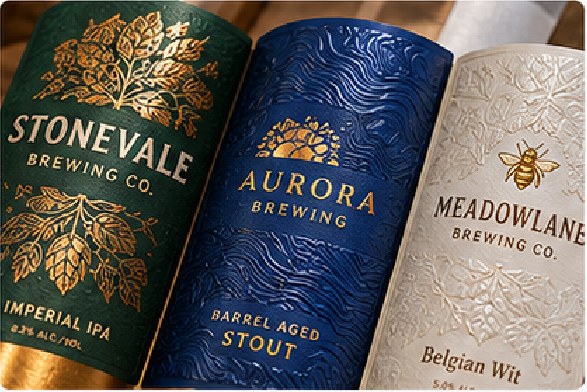
| Uncoated / Textured Paper | Premium craft beer, natural or tactile branding | Distinct hand-feel, strong fit for foil or emboss concepts, premium shelf appearance | Texture changes ink lay and fine-detail appearance; moisture resistance depends on the exact construction |
| White PP / BOPP Film | Cans, chilled bottles, moisture-prone applications | Moisture resistance, smooth print surface, flexibility, durable handling | Adhesive and surface treatment must match the package and application temperature |
| Clear PP / BOPP Film | No-label-look bottles and cans | Transparent appearance, selective white possibilities, moisture resistance | White-ink planning is essential; clear adhesive appearance depends on the package surface and application quality |
| PET Film | Higher durability or dimensional stability requirements | Good toughness, abrasion resistance and compatibility with durable constructions | Material cost and stiffness may be unnecessary for simple short-life packaging; adhesive still requires application review |
| Metallic / Holographic Stock | Limited releases, premium visual effects, security-style graphics | Reflective base can replace large printed metallic areas and create strong shelf contrast | Color changes over reflective areas; selective white, fine text and finishing need sample approval |
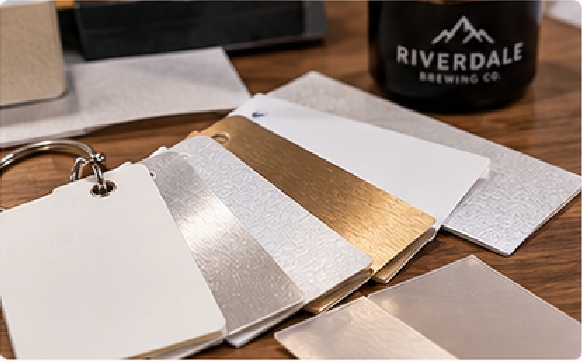
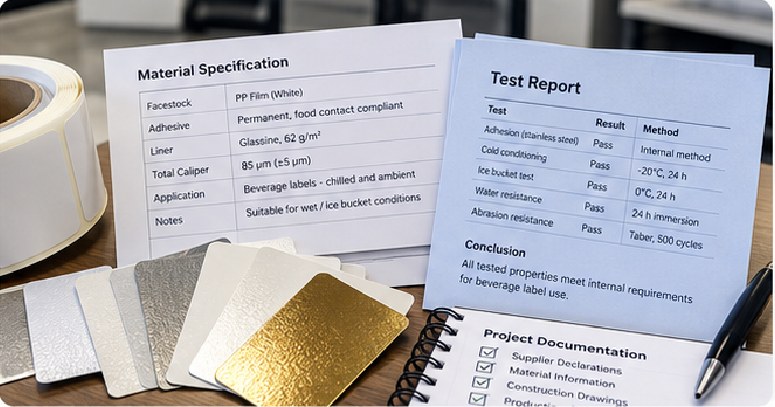
A material name is not a finished beer-label specification. The working construction includes facestock, adhesive, release liner, printing method, white ink where required, varnish or lamination, decorative finishing, die cut and roll configuration. Changing any one layer can affect stiffness, appearance, release behavior, adhesion or automatic labeling performance. Philiton therefore locks the final construction after the relevant samples and technical details are approved. Validation can start before finished artwork exists. Blank material swatches can be used to compare transparency, texture and adhesion on the real package. Printed samples add color, white ink and die-cut verification. Complex finishing samples confirm foil, embossing or special-effect registration. For high-volume or high-risk programs, a pre-production sample can follow the planned production route more closely and become the reference for mass production. Testing should reflect the expected environment rather than a single desk inspection. Chilling, condensation, rubbing, edge lifting, barcode or QR readability, roll feeding and label application can all be checked according to project risk. Findings are used to change the structure before scale. A failed sample is useful when it exposes a weak construction early enough to correct it.
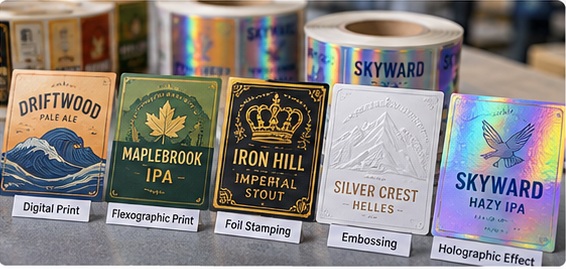
Philiton uses digital and flexographic production as different economic tools. Quantity, SKU count, artwork stability, material, finishing and expected reorder pattern determine the most suitable route.
| Decision Point | Digital Printing | Flexographic Printing |
|---|---|---|
| Typical Fit | New launches, short runs, seasonal releases, multiple artworks, frequent version changes | Stable repeat programs, larger quantities, long-running SKUs, cost optimization at scale |
| Quantity Logic | Often strongest around 500-5,000 pcs/SKU and can remain competitive into higher quantities depending on size and mix | Commonly evaluated from roughly 5,000-10,000+ pcs/SKU when artwork and specifications are stable; threshold is project-specific |
| Setup | No traditional printing plates; lower front-end setup for short runs | Plate and setup cost is spread across higher volume and repeat orders |
| Multi-SKU | Fast artwork changes make uneven SKU quantities easier to manage | Best when compatible SKUs and stable specifications justify the production setup |
| Color & Finishing | Strong for complex graphics, gradients, prototypes and variable data; specialty finishing can be added | Strong for repeat color control, high running speed and integrated high-volume label production |
| Scale Path | Useful for concept, launch and regional versions | Useful when successful SKUs move into recurring volume production |
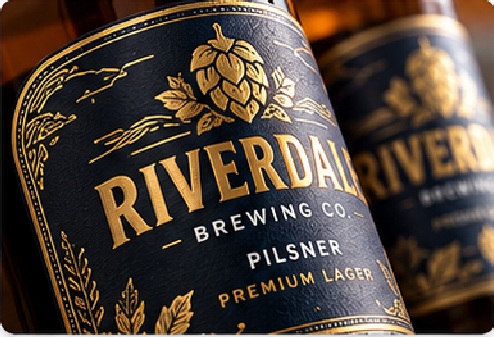
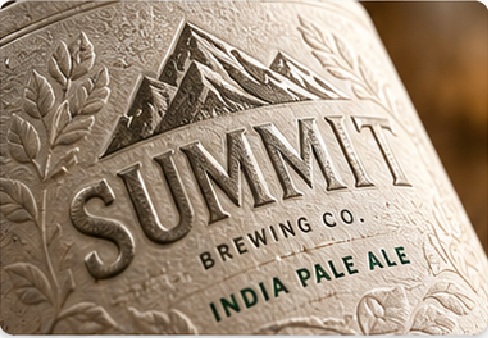
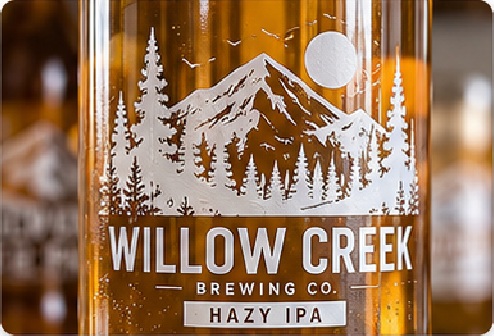
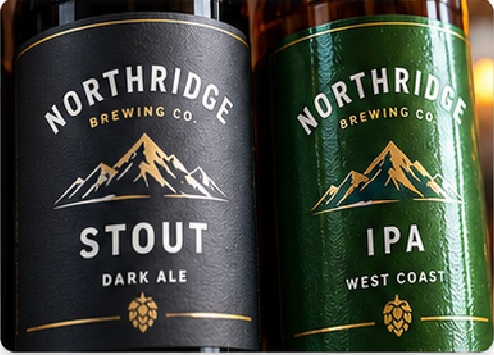
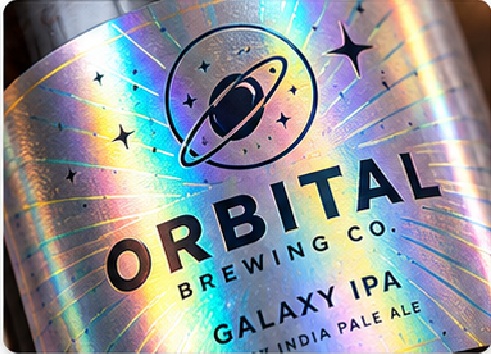
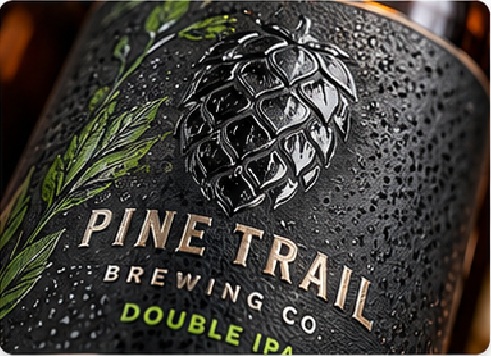
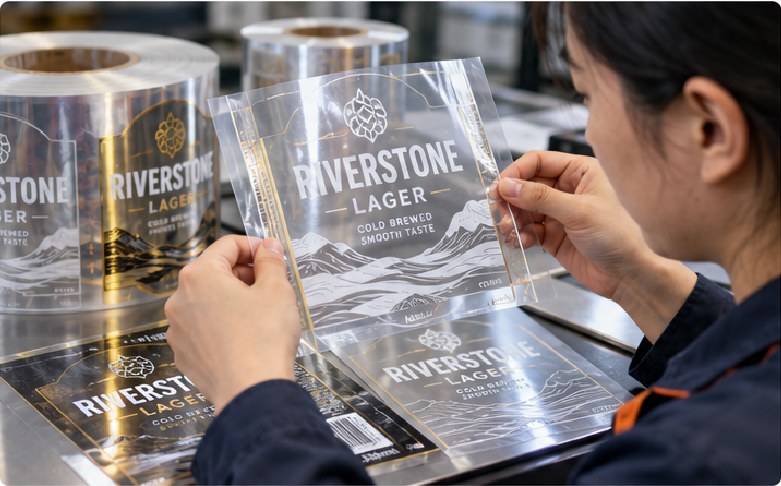
Clear and reflective labels can look completely different after application because the package becomes part of the graphic. On clear film, colors without white backing may appear darker, less saturated or influenced by the beer bottle, can or contents behind the label. On metallic or holographic stocks, unblocked areas take on reflective character. White ink lets the artwork control where that influence is allowed. Philiton can prepare a white-ink separation with three common approaches: no white in selected transparent or reflective zones, a full white underbase behind ordinary colors, or selective white behind only critical logos, text and color blocks. Designers should mark the desired transparent or metallic areas rather than assuming the prepress operator can infer them from the final image. Fine white text, small reverses and registration between white and color need realistic tolerance. A digital preview can show layer intent but cannot prove final opacity or appearance on the real stock. Printed sampling is the preferred approval method when white ink defines the brand effect. The approved white layer becomes part of the production specification for repeat orders.
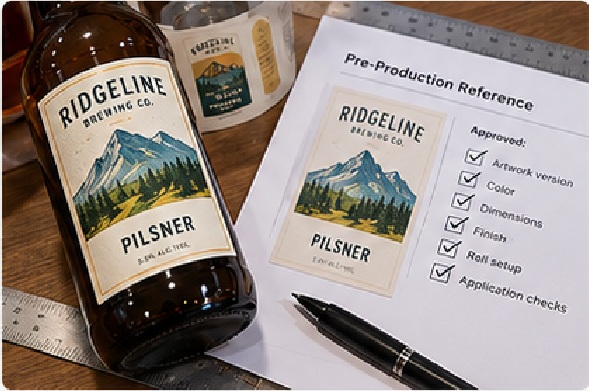
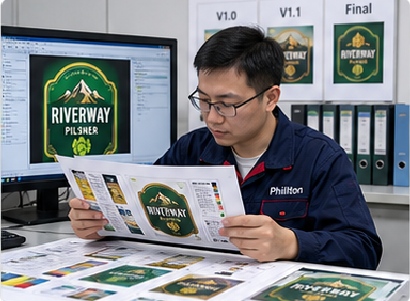
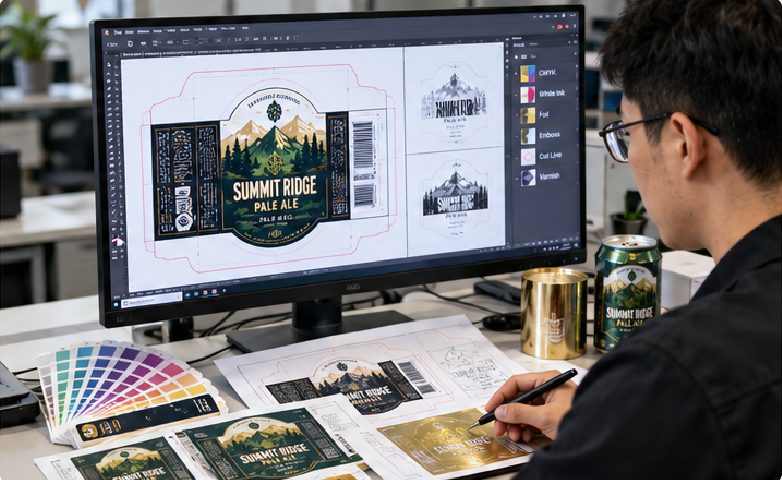
Every production run begins with the released artwork and specification. Philiton checks SKU identity, finished size, text, variable fields, barcode or QR content, white-ink layer and special-finish separations against the approved file. Version control is especially important for breweries with similar artwork across several beers. Production should never rely on an email attachment named “final-final” when a controlled release file can prevent costly mix-ups. The released version should connect directly to the SKU quantity and specification used for the job.
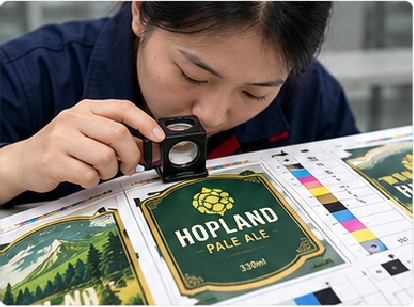
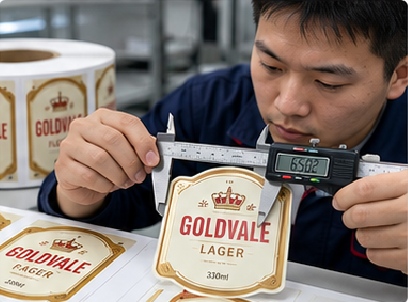
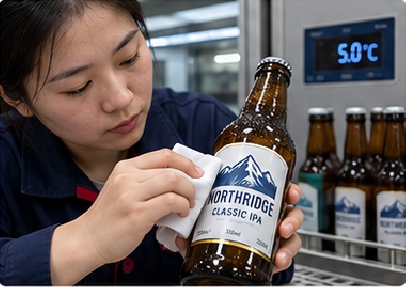
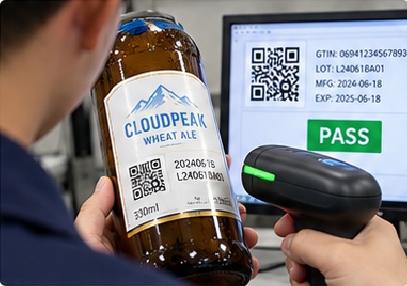
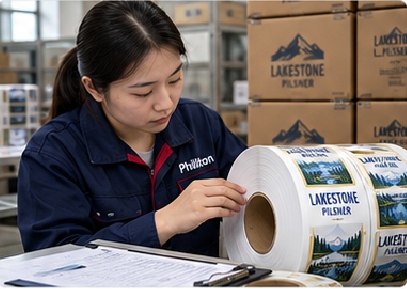
Automatic labeling depends on roll geometry as much as print quality. Philiton confirms production-line inputs, sensor needs, winding direction and packing expectations before the first commercial run.
| Roll Parameter | What Philiton Confirms | Why It Matters |
| Unwind Direction | Artwork orientation and leading edge | Prevents labels feeding upside down or reversed into the applicator |
| Inside / Outside Wound | Label face direction on the roll | Matches dispenser or labeling-machine web path |
| Core Size | Required inner diameter | Prevents loading problems and unsupported cores |
| Maximum Roll Diameter | Allowed finished roll OD | Keeps rolls within machine guards, shafts and handling limits |
| Gap / Pitch | Space and repeat between labels | Affects sensor timing, dispensing accuracy and line speed |
| Liner Width / Labels Across | Backing width and lane arrangement | Controls tracking, sensor position and available converting layout |
| Perforation / Black Mark / Sensor Feature | Required marks or perforations | Supports equipment detection or manual separation when specified |
| Labels per Roll | Target count and acceptable tolerance | Supports changeover planning, inventory control and consistent packing |
| SKU and Batch Identification | Roll and carton marking rules | Reduces warehouse mix-ups across similar beer artworks |
Digital production reduces plate setup for short runs and frequent artwork changes. Flexographic production can lower unit cost when stable quantities become large enough to spread setup across the run. Foil, embossing, screen effects and special materials add tooling or extra passes. Cost review therefore starts with the full SKU and finishing plan, not with a generic price per thousand labels detached from the artwork. Tooling and setup costs can then be spread intelligently across repeat volume.
A successful beer SKU can move from a 500-5,000 piece launch into 5,000-50,000+ piece growth runs and eventually higher recurring volumes. As specifications stabilize, Philiton can review print route, material purchasing, tooling reuse, roll counts and packing to reduce total production cost. Unchanged repeat orders commonly run faster than new projects, while any change to artwork, adhesive, material or line specification is reviewed before release. Forecasted recurring demand can also support better material planning and fewer emergency replenishment decisions.
Beer labels supplied on rolls are packed to reduce crushing, edge damage, telescoping and unwanted unwinding. Core strength, finished roll diameter and stacking method are considered before carton packing. Protective bags or moisture barriers can be used where the transport environment warrants them. Packaging is not treated as an afterthought because a perfectly printed roll can still cause downtime if it arrives deformed or difficult to load. Finished roll weight and carton handling are also considered when large runs create heavier shipping units.
Carton quantities, roll counts and pallet requirements can be aligned with the brewery or co-packer receiving process. Large programs may require pallet labels, carton numbering or specific warehouse marks. Direct delivery to a warehouse or fulfillment location can be arranged when address, appointment rules, receiving labels and customs details are provided. Packing instructions should be included in the quotation instead of added after production is complete. Palletization, carton counts and split-SKU delivery rules can then be priced and planned before the labels enter final packing.
Carton quantities, roll counts and pallet requirements can be aligned with the brewery or co-packer receiving process. Large programs may require pallet labels, carton numbering or specific warehouse marks. Direct delivery to a warehouse or fulfillment location can be arranged when address, appointment rules, receiving labels and customs details are provided. Packing instructions should be included in the quotation instead of added after production is complete. Palletization, carton counts and split-SKU delivery rules can then be priced and planned before the labels enter final packing.
Production lead time and international transit are different parts of the schedule. Philiton can arrange courier, air freight or sea freight according to shipment size, urgency and destination. Small samples and urgent short runs are often suited to courier or air; larger repeat programs can use more economical routes. The quotation states the agreed Incoterm and shipping method so freight, customs, duties and local delivery responsibilities remain clear. Target in-hand dates should therefore include both production and transit, not production time alone.
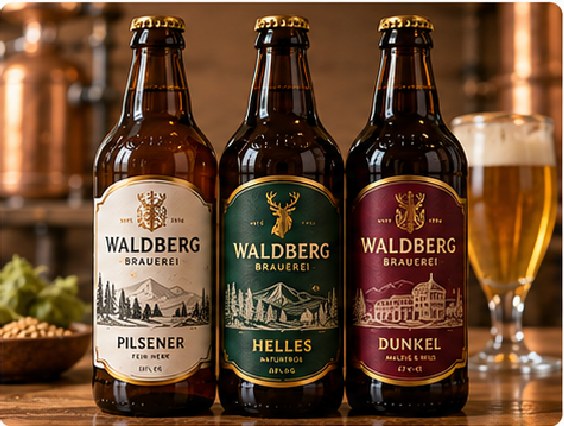
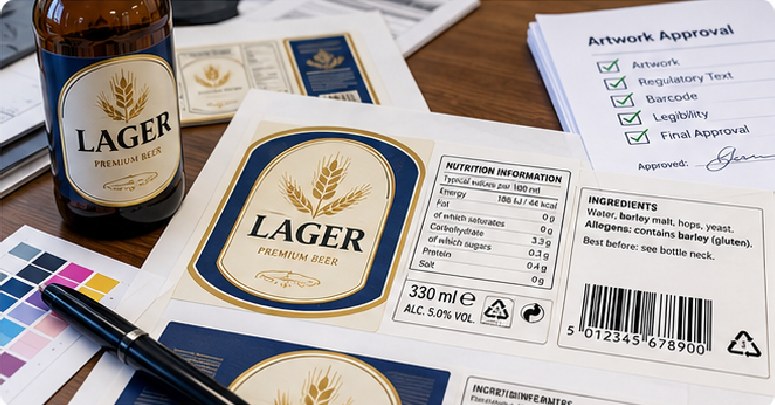
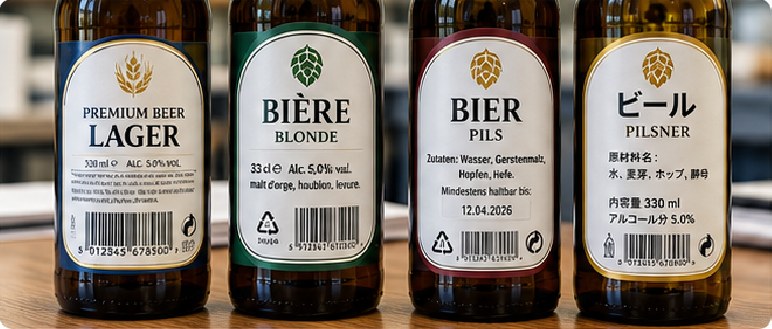
No single beer-label specification automatically covers the United States, European Union, United Kingdom, Canada, Australia and every other market. Artwork, warnings, language, recycling marks and documentation can differ. Philiton requests the destination market during RFQ review so manufacturing and document requirements can be planned early. Final market-entry responsibility stays with the brand or legally responsible entity, while Philiton is responsible for producing the approved specification correctly. Market requirements should therefore be settled before final artwork approval, not after labels have entered production.
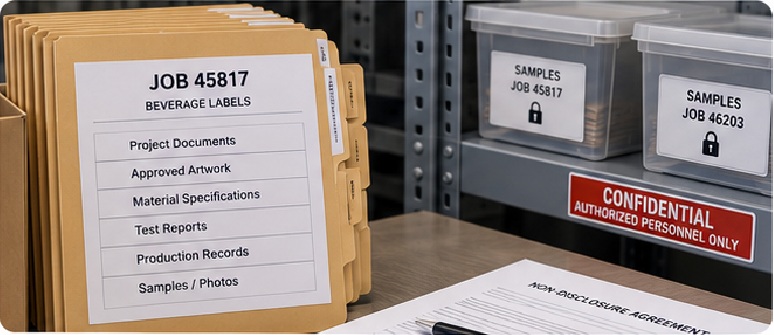
For repeat and enterprise programs, artwork, specification, material and tooling records can support batch traceability and investigation of quality issues. Philiton can work under a customer NDA or mutually agreed NDA for confidential launches and branded packaging. Branded samples, production photos and case details are not automatically published. Rejected or obsolete branded labels are segregated from accepted production and handled according to the risk and project requirements. Confidential artwork and production images are not used publicly without authorization or sufficient anonymization.
A useful quotation starts with enough information to choose the right material, adhesive, print route and roll setup. Send the artwork even if it is not production-ready; Philiton can review dieline, bleed, white ink, foil or emboss layers, barcode placement and other manufacturing details before sampling. For chilled or wet applications, include the real bottle or can type and describe when labels are applied, how cold the package becomes and whether condensation or ice exposure is expected. Standard digital samples can often be produced in 1-3 business days after specifications are confirmed, while normal bulk production commonly takes about 5-10 business days after approval and material readiness.
Please include:
For all inquiries, please feel free to reach out at:
Our team will answer your inquiries within 12 hours.
Your information will be kept strictly confidential.
We will contact you within 24 Hours, please pay attention to the email with the suffix“@philiton.com”.
For all inquiries, please feel free to reach out at:
We will contact you within 24 Hours, please pay attention to the email with the suffix“@philiton.com”.
For all inquiries, please feel free to reach out at:
We will contact you within 24 Hours, please pay attention to the email with the suffix“@philiton.com”.