Your Trusted Labels & Stickers Manufacturer from China!

Custom Bath and Body Labels

Labels engineered for wet bathrooms, oily formulas, curved containers and premium presentation.

  • Manufacturing since 2016 with Shenzhen and Dongguan production operations.
  • 12,000+ m² manufacturing footprint and 200+ employees.
  • 91 technical, skilled production and quality personnel combined.
  • Many standard custom label projects can start from around 500 pcs.

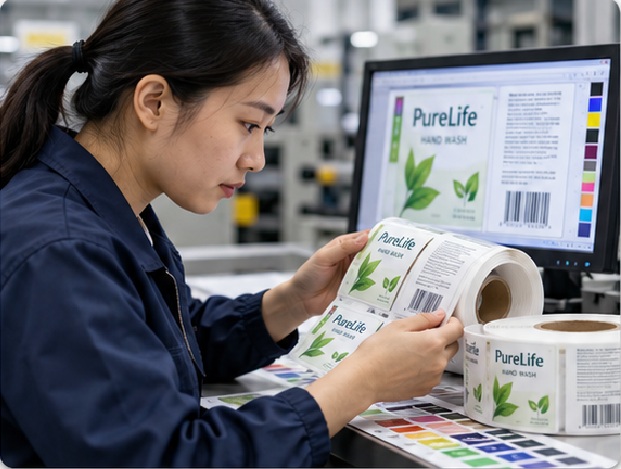
From material and adhesive review to white ink, foil, embossing, die cutting, roll conversion and inspection, Philiton builds label programs around the package, formula exposure and labeling method.
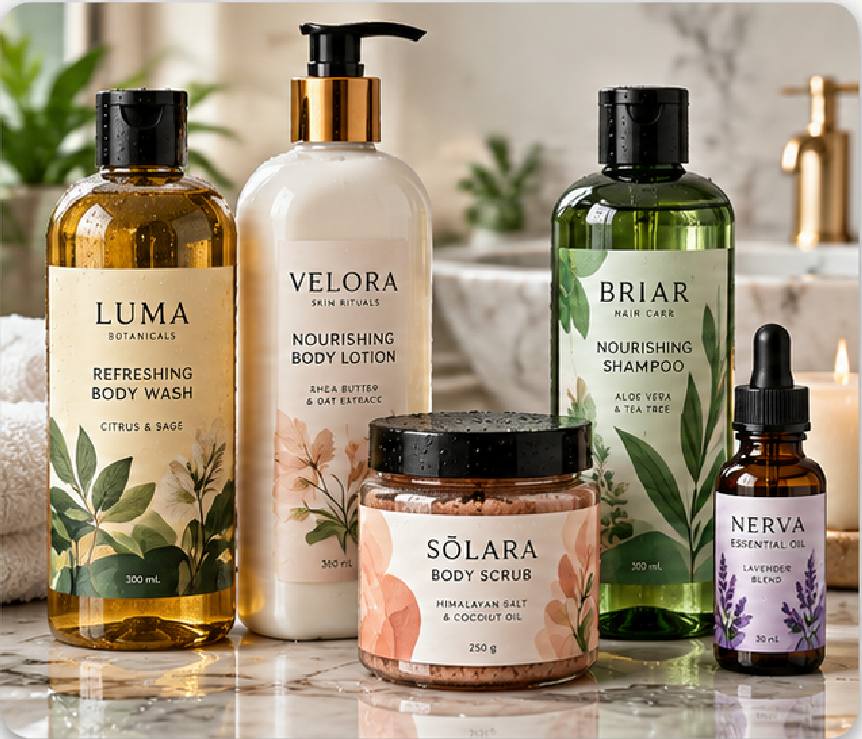
Custom Bath and Body Labels

Bath & Body Label Programs for Different Brand Teams

Bath and body projects change quickly as formulas, scents, sizes, channels and production volumes grow. Philiton structures the label program around the operating needs behind each launch.

Growing Beauty Brands

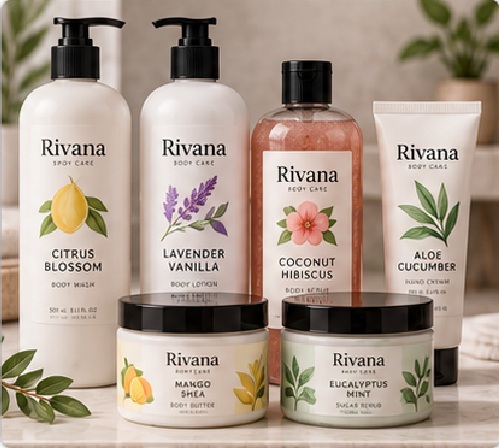
Growing brands usually need several scents or formulas without committing every SKU to a large first run. Philiton can combine digital printing, shared material specifications, separate artwork control and project-level finishing to support launch quantities while keeping a clear route toward repeat production. Early reviews focus on container material, label size, water or oil exposure, brand color, finish and hand or machine application so later scale-up does not require rebuilding the specification from the beginning.

Established Consumer Brands

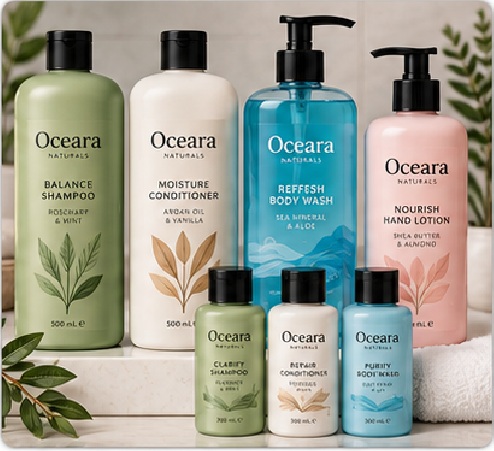
Mature brands normally place more weight on repeatability than on a single attractive sample. Philiton can lock approved artwork, material, adhesive, finish, die line, roll direction and packing requirements as production references. Multi-SKU orders are separated by artwork and quantity while compatible specifications may share material and production setup. Brand color, white ink, foil, embossing, varnish or lamination are reviewed on the intended construction because the final substrate and surface protection can change visual appearance.

Private Label & Contract Manufacturers

Private label operations often handle several brand owners, frequent artwork changes and different bottle families on the same production floor. Philiton can review each program by SKU, container, label format and applicator requirement instead of treating all artwork as one generic job. Roll direction, core diameter, maximum roll diameter, gap, pitch, liner width and labels per roll can be defined before mass production, reducing avoidable relabeling or applicator setup problems after goods arrive.

Packaging & Procurement Teams

Procurement teams need enough technical detail to compare suppliers without turning every RFQ into a long engineering exercise. Philiton can quote from a structured set of inputs: size, quantity, SKU count, container surface, exposure conditions, material preference, finish, application method, roll configuration and delivery destination. Quotations can then separate standard materials from special procurement, tooling, premium finishing and shipping. The result is a specification-led conversation rather than a unit-price comparison built on different constructions. 
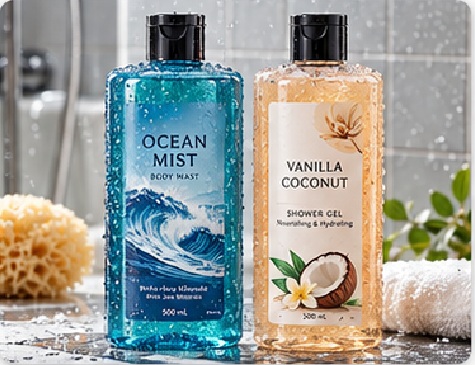
Bath & Body Label Types Across a Complete Product Line

Philiton supports labels for daily-use wash, care, grooming and spa products, with material and finish choices adjusted to the formula, container and retail positioning of each SKU.
Body Wash & Shower Gel Labels

Body Wash & Shower Gel Labels

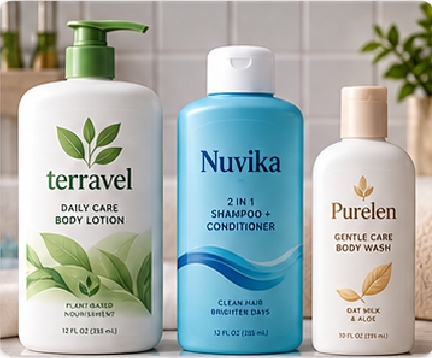
Body wash and shower gel packaging regularly meets splashing water, steam, wet hands and repeated bathroom handling. White or clear BOPP is commonly evaluated for rigid bottles, while flexible PE film may be considered for squeezable packs. Permanent adhesive selection depends on PP, PE, HDPE, PET or glass surfaces, bottle curvature and application conditions. Matte, gloss, clear, metallic or foil-accented finishes can be built into the same program after adhesion and exposure needs are defined.
Body Lotion & Moisturizer Labels

Body Lotion & Moisturizer Labels

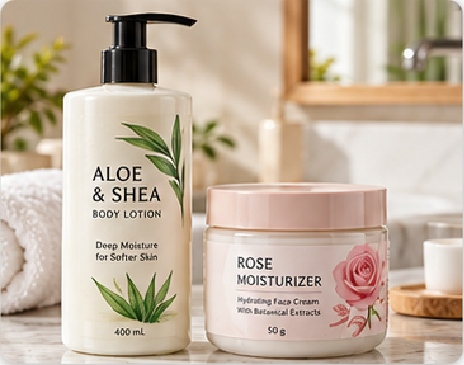
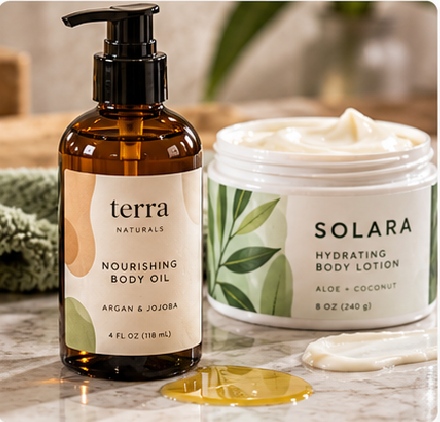
Lotion packaging combines frequent handling with possible contact from creams, oils and residues around pumps or caps. Philiton can develop front, back or wrap labels for PET, HDPE, PP and glass containers, including clear no-label-look structures and opaque white constructions. Protective varnish or lamination is selected when rub, moisture or formula contact is expected. For larger product families, artwork versions can be controlled by scent, formula, language, size or market while keeping a common material platform.
Body Scrub & Jar Labels

Body Scrub & Jar Labels

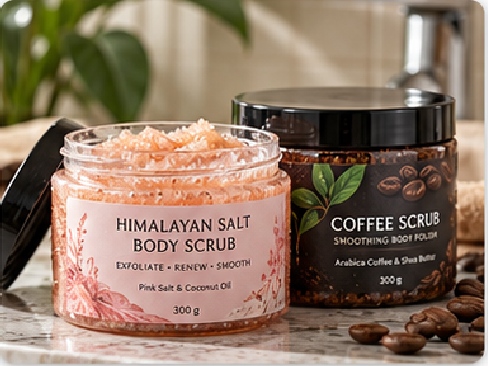
Body scrub labels often sit on PET or PP jars that are opened with wet or oily hands. Label stiffness, edge shape and adhesive need to work with curved jar walls, while the print surface may require protection from oil, water and repeated rubbing. Philiton can supply lid labels, side labels, wrap labels and tamper seals in matching visual systems. Material testing on the actual jar is recommended when the formula contains oils or when the jar surface has texture or mold-release residue.
Soap & Bath Salt Labels

Soap & Bath Salt Labels

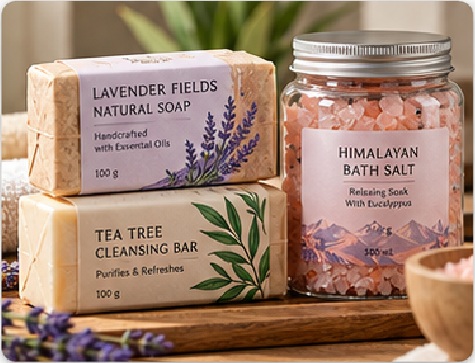
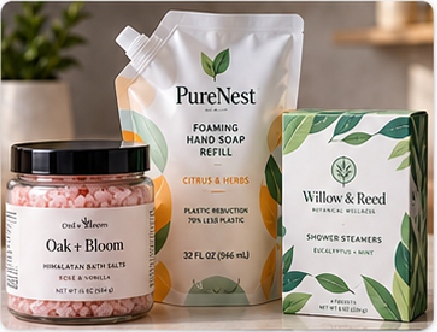
Soap, bath salts and bath bombs allow more variation in presentation, including coated paper, textured paper, synthetic paper and film. Dry retail packaging may favor tactile paper stocks, while products exposed to bathroom humidity or direct splashing generally need a more moisture-resistant construction. Philiton can produce belly bands, jar labels, pouch labels, seals and decorative stickers, with foil, embossing, matte varnish or other finishes added when the packaging structure can support them reliably.
Shampoo & Conditioner Labels

Shampoo & Conditioner Labels

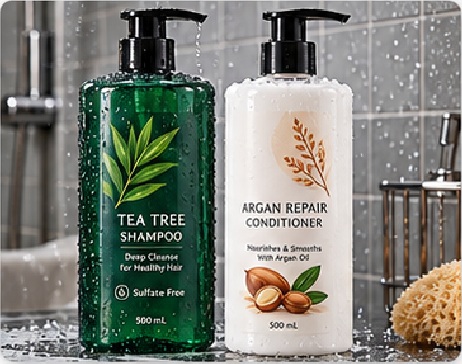
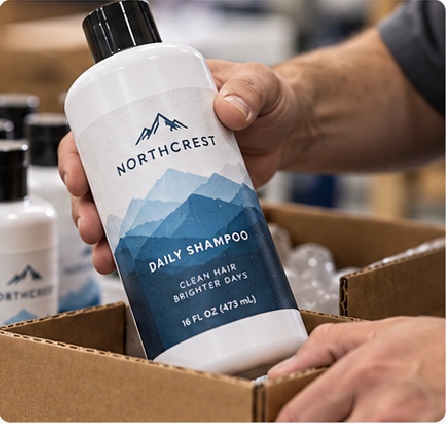
Shampoo and conditioner bottles create a demanding combination of wet handling, curved plastic, flexible walls and long bathroom exposure. BOPP or PE films are common starting points, but the final construction depends on bottle resin, diameter, squeeze behavior, label width and adhesive performance. Philiton can review labels for front-and-back layouts or full wrap formats, then define die cutting, liner, unwind direction and roll quantity for manual, semi-automatic or automatic labeling.
Essential Oil & Grooming Labels

Essential Oil & Grooming Labels

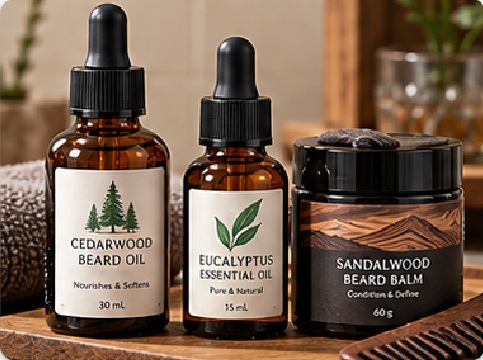
Essential oil, beard oil, hair oil and grooming products often use small glass or plastic bottles where label diameter and edge lift become important. Small text, fine foil details, opaque white layers and barcode or QR placement also require early artwork review. Philiton can evaluate thinner, more conformable films for tight curves and can separate premium decoration from areas that need clean legibility. Samples on the actual bottle are especially useful before a multi-SKU release.

Container Formats That Change Label Construction and Performance

A bath and body label is only reliable when its face material, adhesive, geometry and delivery format fit the package. Philiton reviews the physical container before locking the specification.
Rigid PET Bottles

Rigid PET Bottles

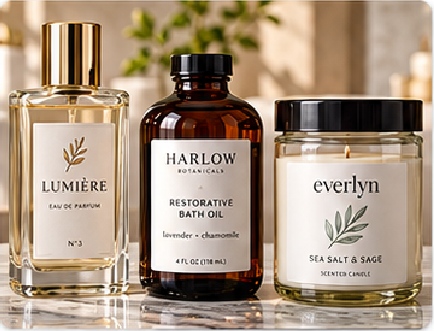
PET bottles offer smooth surfaces and strong shelf presentation, making them suitable for clear BOPP, white BOPP, PET and premium film constructions. Clear labels may create a no-label look, but container color, surface gloss and trapped air can affect appearance. White ink can be used selectively under printed areas where opacity is needed. Bottle curvature, label panel dimensions and exposure to oils or moisture still need review before the adhesive and surface protection are finalized.
HDPE & PP Bottles

HDPE & PP Bottles

HDPE and PP are common in personal care packaging, but both can present lower surface energy than glass or PET. Stronger tack alone is not always enough; surface texture, mold-release residue, curvature, application pressure and service conditions influence adhesion. Philiton can evaluate thinner BOPP or PE constructions with adhesives suited to lower-energy plastics. Actual bottles are preferred for adhesion checks when edge lift, rough surfaces or heavy product handling are expected.
Squeezable PE Containers

Squeezable PE Containers

Flexible containers need labels that can move with the package rather than resist deformation. PE face stock or other conformable films may be better suited than a stiff material when bottles are repeatedly squeezed. Label width, corner radius and adhesive cohesion also affect whether edges stay down during use. Philiton reviews the degree of flexing, bottle resin, label panel and application method, then confirms the structure through representative samples before a larger order is released.
Glass Bottles & Jars

Glass Bottles & Jars

Glass gives strong transparency and premium visual impact but exposes every defect in a clear label. Dust, moisture films, bubbles, white-ink registration and adhesive clarity can become visible. For shower or sink environments, condensation and water exposure also matter. Philiton can develop clear BOPP or PET, opaque film, paper or textured options depending on the desired look, then test adhesion and appearance on the finished bottle or jar rather than relying on flat material samples alone.
Tubes & Small Diameters

Tubes & Small Diameters

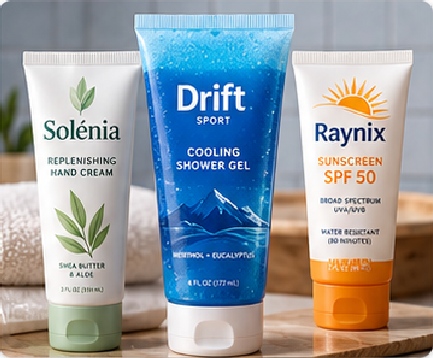
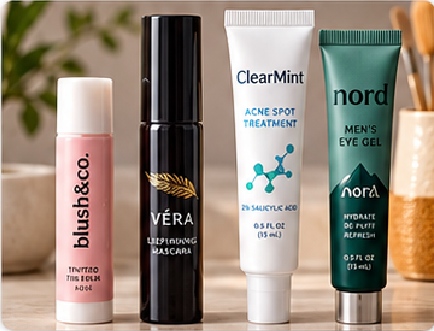
Tubes, lip-balm-style packs and narrow grooming bottles place continuous mechanical stress on the label. A thick, stiff face stock may try to return to a flat shape and lift at the edges even when the adhesive performs well on a flat test panel. Philiton can reduce risk through thinner or more conformable materials, suitable permanent adhesive, controlled label width and rounded corners. Tight-curvature applications should be evaluated on the final diameter before tooling is locked.
Jars, Pouches & Secondary Packs

Jars, Pouches & Secondary Packs

Bath salts, scrubs, powders, refill formats and gift sets may use jars, pouches, cartons or secondary packs rather than standard bottles. Philiton can combine primary product labels with seals, lid labels, variable information, carton stickers or promotional labels while keeping visual elements aligned across the range. Material choice follows the actual surface and exposure: dry cartons may use paper, while wet jars or refill pouches generally call for film structures and protection suited to moisture and handling.

Six Failure Risks to Resolve Before Bath & Body Production

Wet environments, oily formulas and curved plastic expose weaknesses quickly. Philiton treats the likely failure mode as an engineering input before material, adhesive and finishing are approved.

Water & Condensation

A label described as “waterproof” still needs a complete construction that can tolerate the intended environment. Face stock, ink, coating or lamination, adhesive and the package surface all contribute. Bathroom steam, splashing and condensation can attack paper fibers, soften some finishes or reduce adhesion at an edge. Philiton therefore distinguishes between occasional splash exposure, repeated wet handling and more severe contact, then selects a film or protected paper route and verifies the assembled label under representative conditions.

Oil & Formula Contact

Body oils, scrubs, lotions, essential oils and grooming formulas can reach the label around caps, pumps or hands. The risk is not limited to adhesive failure: oils can affect print, foil, coatings and surface appearance. Philiton can select film structures and protective finishes designed for better oil and handling resistance, but final suitability should be checked against the real formula or a representative exposure condition. Projects with aggressive oils should include a defined wipe, rub or dwell evaluation before production approval.

Edge Lift on Curves

Edge lift often comes from several factors acting together: low-surface-energy plastic, small bottle diameter, overly wide labels, stiff face stock, insufficient tack, contamination or low application pressure. Philiton reviews the complete geometry rather than specifying “strong glue” as a universal answer. A thinner BOPP or PE construction, higher mandrel-hold adhesive direction, reduced label width or adjusted corner geometry may all contribute. Curved-container sampling helps expose slow lift that a flat peel check can miss.

Wrinkles, Bubbles & Tunneling

Wrinkles and bubbles can appear when labels are applied over curved or irregular walls, when flexible packaging moves after application, or when air and contamination remain under the face stock. Clear labels make small defects more visible. Philiton reviews container shape, label stiffness, liner release, application method and label dimensions before converting. For clear no-label-look work, cleanliness during sampling, printing, rewinding and packing also matters because dust or scratches that are invisible on opaque stock can become obvious on a transparent bottle.

Rub & Surface Damage

Labels move through slitting, rewinding, packing, transport, filling lines, retail handling and repeated consumer use. Matte finishes, foil, dark solids and high-gloss surfaces can show scuffing differently. Philiton can combine suitable ink systems with varnish, lamination or other surface protection according to the expected friction and formula exposure. Rub checks should focus on the finished construction rather than ink alone, because foil adhesion, curing, film surface and protective layers all affect the result.

Application-Line Mismatch

A label can print perfectly and still fail in production when core size, unwind direction, roll diameter, liner width, gap, pitch or winding tension does not match the applicator. Philiton locks machine-related specifications before mass production for roll-applied programs. Automatic and semi-automatic lines can also need black marks, perforations or specific sensing conditions. Early equipment information avoids receiving a roll that fits the artwork but not the labeling machine, reducing stoppage and emergency rewinding after delivery.

Bath & Body Application Matrix for Faster Material Decisions

Use product conditions to narrow the construction before choosing decorative effects. Final performance is confirmed against the actual container, formula exposure and application process.

Product / PackMain Surface or FormatTypical ExposureStarting Material DirectionAdhesive / Structure FocusMain Validation
Body Wash BottleHDPE / PP curved bottleWater, steam, wet handsWhite or clear BOPP; PE for more flexLSE-compatible permanent adhesive, conformabilityContainer adhesion + wet handling
Lotion Pump BottlePET / HDPELotion residue, rubbingWhite / clear BOPP, PETPermanent adhesive + protective finishFormula contact + rub
Body Scrub JarPET / PP jarOil, water, repeated openingBOPP / PETOil-resistant construction, edge designOil exposure + edge lift
Shampoo / ConditionerHDPE / PE squeeze bottleWater, flexing, steamBOPP or PE filmFlexible face stock + permanent adhesiveSqueeze / mandrel hold
Essential OilGlass / small plastic bottleOil, tight curveThin BOPP / PETSmall-diameter hold, print protectionBottle wrap + oil exposure
Bath Salt / Bath BombJar, pouch, cartonHumidity varies by packFilm, synthetic paper or paperMatch moisture level and tactile goalPackage-specific exposure
Soap / GroomingWrapper, box, bottleDry retail to wet bathroomPaper or film by usePrint finish + handling resistanceHandling + moisture level
Tamper SealCap / neck / closureOpening, handling, moistureFilm or security structureDie line, adhesion, evidence goalApplication + opening behavior

Choose Bath & Body Label Materials by Real Use Conditions

Philiton sources and converts common paper and film label stocks. Material selection starts with moisture, oil, flexibility, transparency, durability and finish requirements rather than appearance alone.

Material FamilyBest Fit in Bath & BodyWater / Oil BehaviorFlexibilityVisual StrengthWatch Points
White BOPPBody wash, lotion, shampoo, jarsStrong moisture resistance; oil performance depends on full constructionMediumClean opaque print, matte or glossAdhesive must match PP/PE/HDPE surface
Clear BOPPClear bottles, premium lotion, oilsStrong moisture resistanceMediumNo-label look; selective white ink possibleDust, bubbles, bottle color and adhesive clarity are visible
PE FilmSqueeze bottles, flexible containersGood moisture resistance; exposure must be verifiedHighSoft, conformable surfacePrint and finishing route must suit flexible face stock
PET FilmRigid premium bottles, durable identificationDurable and dimensionally stableLower than PEHigh clarity, stable premium surfaceHigher stiffness can increase edge stress on tight curves
Synthetic PaperMoisture-prone packs needing paper-like appearanceMore water tolerant than ordinary paperMediumPaper-like print feel with added durabilityExact grade and finish need project review
Coated / Textured PaperDry soap, bath salts, cartons, gift rangesNeeds protection or alternative when repeatedly wet or oilyLow to mediumNatural, tactile, premium paper characterNot automatically water- or oil-resistant

Adhesive Engineering for HDPE, PP, Glass and Flexible Packaging

Bath and body packaging combines low-energy plastics, tight curves, molded texture, flexible walls and wet environments. Philiton selects adhesive direction together with face stock and package geometry.

HDPE, PP and Tight Curves Need More Than Stronger Glue

Many personal care bottles use HDPE or PP because the materials are light, durable and suitable for molded packaging. Adhesion can be more demanding because surface energy may be lower than on glass or PET. Mold-release residue, surface texture, contamination and curvature can further reduce wet-out. Philiton therefore reviews resin, label panel, diameter, label width, corner shape and application pressure before selecting the adhesive route. For curved PP packaging, a thin BOPP or PE face stock can reduce the mechanical force trying to pull the label flat. A permanent adhesive designed for lower-energy surfaces and strong mandrel hold may then be evaluated. Rough HDPE can need a more conformable film and a higher-tack or thicker adhesive layer. Squeezable LDPE or PE containers often benefit from a flexible PE face stock so the label can move with the package instead of fighting repeated deformation. A sample on the real bottle is more informative than a flat material card when the project involves low-surface-energy plastic, small diameters, heavy texture or repeated squeezing. Philiton can use actual containers or representative substrates during the sample stage to observe initial tack, edge behavior, wrap performance and handling before the specification is frozen. Twenty-four-hour edge observation can also reveal slow lift that is not visible immediately after application.

Glass, PET and Wet Environments Need Clean Surfaces and Controlled Exposure

Glass and PET generally provide smoother surfaces, but bath and body conditions create different risks. Condensation, water films, oils, dust and fingerprints can interfere with adhesion or show through clear materials. A clear label on glass may need attention to adhesive clarity, trapped air, white ink placement and bottle cleanliness. A premium lotion label on PET may need more emphasis on abrasion protection and formula contact than on initial tack. Philiton separates application conditions from service conditions. A label may be designed to survive a humid bathroom after bonding but still perform poorly if applied to a wet bottle or at a temperature below the adhesive’s minimum application window. Application temperature, surface cleanliness, dwell time, storage conditions and intended life therefore form part of the specification review. For oil-rich formulas, the adhesive and printed surface are considered together. BOPP or PET with a suitable permanent adhesive and protective varnish or lamination may be a stronger starting route than unprotected paper. Exact performance remains project-specific, so significant oil, alcohol or chemical exposure should be declared before sample approval rather than discovered after filling. Filling-line contamination, silicone residues and bottle-cleaning methods should also be shared when they could change surface condition before labeling. 

Build Resistance Into the Complete Label, Not One Material

Moisture, oils and friction affect different layers of a label. Philiton combines face stock, ink, adhesive and protective finishing according to the actual exposure path.
Water & Bathroom Moisture

Water & Bathroom Moisture

Film face stocks such as BOPP, PET and PE are natural starting points when labels must resist repeated splashing or humid bathroom conditions. The adhesive still needs to suit the bottle resin and the label should normally be applied to a clean, dry surface. For paper aesthetics, a coating or lamination can improve resistance, but protected paper should not be described as equivalent to every film construction. Philiton defines the expected exposure first, then selects the most appropriate structure and sample route.
Oil & Product Formula

Oil & Product Formula

Body oils, beard oils, scrubs and lotion residues can attack more than the adhesive. Printed color, foil, varnish and matte surfaces may change after repeated contact. Philiton can use BOPP or PET, compatible ink systems and protective finishing where required, then test against the actual formula or a representative medium. Formula exposure should be included in project inputs whenever leakage, pump residue or oily hands can reach the label, especially on premium finishes where small visual changes are easy to notice.
Abrasion & Daily Handling

Abrasion & Daily Handling

Labels experience friction during rewinding, packing, filling, transport, shelf handling and daily use. A finish selected only for appearance can become scratched, polished or scuffed after repeated contact. Philiton evaluates varnish, lamination, foil adhesion, curing and face-stock behavior as a combined system. Dark solid areas, metallic surfaces, clear films and soft-touch effects may need different protection levels. Finished samples can be rubbed or handled under representative conditions before the production reference is approved. 
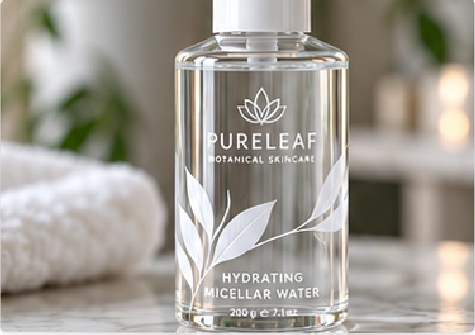
Premium Finishes for Bath & Body Packaging Without Guesswork

Premium effects should support brand positioning without compromising legibility, adhesion or production stability. Philiton reviews the decorative layer together with material, white ink, die cutting and surface protection.
Clear No-Label Look

Clear No-Label Look

Clear BOPP or PET can create a clean, direct-print appearance on transparent or colored bottles. Philiton can use selective white ink to keep chosen graphics opaque while leaving other areas transparent. Bottle color, gloss, seams, air bubbles and surface cleanliness influence the final look, so approval on the intended container gives a more reliable result than screen artwork alone.
Matte & Gloss Finishes

Matte & Gloss Finishes

Matte surfaces can soften the visual character of skincare and body care packaging, while gloss finishes increase color depth and reflectivity. Philiton can use varnish or lamination depending on the construction and durability requirement. The final choice should also consider rubbing, oils and filling-line handling, because a finish selected only for appearance may show scuffing or residue differently in real use.
Hot Foil Accents

Hot Foil Accents

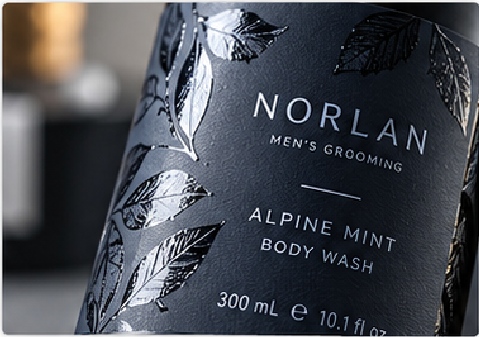
Foil is well suited to logos, borders, names and selected premium details on gift, spa and luxury ranges. Philiton can combine foil with digital or conventional printing, but minimum line width, fine text, large solid areas and registration need review before tooling. A production-oriented sample is useful when foil sits close to die-cut edges or must remain stable through rewinding and repeated handling.
Emboss & Deboss

Emboss & Deboss

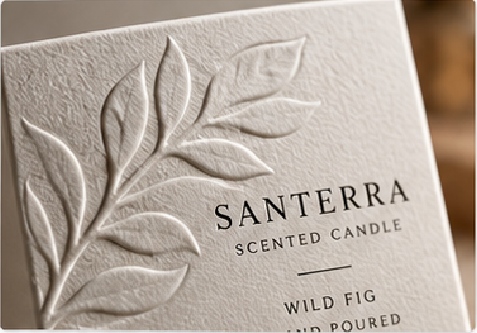
Raised or recessed elements create tactile differentiation without adding another printed color. Philiton can evaluate embossing or debossing on suitable paper or film structures, with the die area and surrounding artwork designed for repeatable pressure. Very fine detail, large embossed zones and tight spacing to cut lines require early engineering review. Roll pressure during rewinding also needs control so raised details are not crushed.
Spot UV & Screen Effects

Spot UV & Screen Effects

Spot UV, screen ink and raised coatings can highlight selected graphics or create tactile contrast against matte backgrounds. Philiton reviews coating thickness, registration, curing, flexibility and roll winding before production. Heavy effects may change how labels sit on small diameters or how finished rolls build in diameter, so decoration and application requirements should be considered together rather than as separate purchasing decisions.
Metallic & Holographic Options

Metallic & Holographic Options

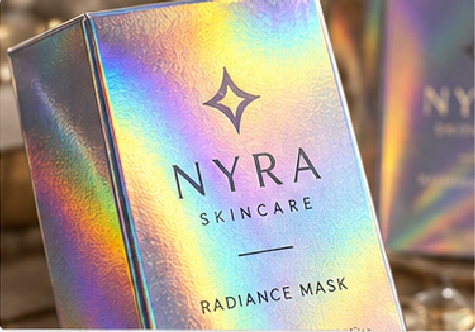
Metallic films, foil and holographic effects can support special editions, gift ranges or anti-copy visual features. White ink can block metallic shine under selected colors while leaving other areas reflective. Philiton can combine base printing with metallic or holographic elements, but material sourcing, tooling and minimum order conditions may differ from standard BOPP. The selected structure should be sampled before a large multi-SKU release.

Clear Labels and White Ink Need Container-Level Approval

Transparent bath and body packaging can look exceptionally clean, but transparency exposes bottle color, adhesive appearance, dust, trapped air and registration. Philiton controls clear-film artwork and production as a layered system.

Use White Ink to Control Opacity, Not as a Decorative Afterthought

On clear BOPP or PET, process colors can become weak or change character when the background is transparent, amber, colored or filled with a dark formula. Philiton can build a separate white-ink layer under selected graphics, full areas or text to restore opacity. Other areas can remain clear to preserve the no-label look. Artwork therefore needs a defined white layer rather than a verbal note added after prepress. The same principle applies to metallic materials. Without a white underbase, metallic shine can show through color and create a reflective effect. With white under selected areas, color can appear more conventional while other areas remain metallic. Philiton reviews white-ink coverage, color, fine detail and registration together because small alignment errors are more visible on transparent packaging. Container approval is strongly recommended. A clear label viewed on a white proof card does not predict how the same print will look on clear PET, frosted glass, amber glass or a colored PP bottle. Philiton can place the printed sample on the actual container and evaluate opacity, transparency, bubbles, surface appearance and edge behavior before bulk production. The review can also confirm whether fine reversed text, barcode contrast and white-ink coverage remain readable after the container is filled.

Keep Clear Films Clean Through Converting, Rewinding and Packing

A transparent label can reveal handling defects that would disappear on opaque stock. Dust, liner marks, scratches and winding pressure can influence the finished appearance. Philiton controls slitting and rewinding parameters so the roll stays stable without excessive compression. Premium clear labels can be packed with clean inner protection to reduce abrasion and contamination before they reach the filling or labeling line. Die-cut geometry also matters. Sharp internal corners, narrow bridges or overly large wrap areas can create lift or stress on curved bottles. A label that visually disappears should still be engineered as a physical component. Size, corner radius, overlap, bottle seam location and application pressure should be confirmed before the die line becomes the production reference. For multi-SKU transparent programs, the same clear material and adhesive can often support several designs when technical requirements remain compatible. Each artwork still needs its own version control, white layer, quantity and approval. The result is a cleaner production platform without treating every scent or formula as an unrelated specification. Roll labels and cartons can also be identified by SKU so visually similar transparent variants stay separated through packing, receiving and filling-line staging. Clear-film rolls can receive protective inner packing when surface cleanliness and scratch control are important to the finished appearance.

Keep Multi-SKU Bath & Body Launches Consistent and Traceable

Scent families, multiple sizes, regional text and seasonal artwork can turn one product launch into dozens of files. Philiton controls each SKU without losing the efficiency of shared specifications.

Artwork Version Control

Every SKU keeps its own approved artwork, quantity and identification even when materials and finishing are shared. File names, revision status, white-ink layers, foil layers, barcodes and regulatory text are checked before release. A scent change or wording revision is not treated as a casual replacement because an outdated file can create an entire obsolete roll. Locked approvals reduce the risk of mixed versions entering printing or packing.

Shared Material Platforms

When several SKUs use the same face stock, adhesive, liner, finish and roll configuration, Philiton can evaluate them as one technical platform while retaining separate artwork control. Shared specifications can simplify material planning and help later reorders remain consistent. Different bottle sizes, formulas or application lines may still require separate constructions. The goal is to share what is genuinely compatible rather than forcing every product into one material for purchasing convenience.

Brand Color & Finish References

Color should be evaluated on the final label construction because clear film, white ink, matte lamination, gloss varnish and metallic surfaces change appearance. Philiton can use approved samples as production references for repeat work. Premium elements such as foil or embossing also need stable tooling and placement. When a line contains multiple scents or formulas, common brand elements are controlled consistently while variant colors remain tied to their specific approved artwork.

SKU Packing & Reorder Control

Multi-SKU orders need separation beyond the printing press. Philiton can identify rolls and cartons by SKU, quantity and relevant production information so receiving teams can distinguish similar variants quickly. Repeat orders are reviewed against the approved material, artwork, die line, color target, roll direction and packing requirement. When nothing changes and materials are available, repeat production can often move faster, while revised specifications are treated as a new controlled release.

Sampling Closes Material, Color and Application Risks Before Scale

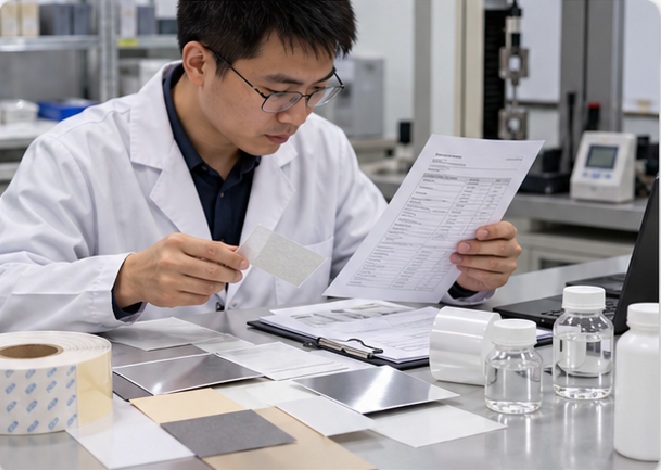
Philiton uses sampling as an approval process rather than a presentation step. Standard physical samples are commonly completed in 2-4 business days when artwork, material and tooling conditions are ready; complex finishing commonly takes 3-7 business days.

Requirement & Container Review

Sampling starts with the information that can change performance: label size, container resin or glass type, curvature, squeeze behavior, water or oil exposure, application temperature, expected service conditions, application method, quantity, SKU count and desired finish. Actual bottles or representative substrates are valuable when the surface is HDPE, PP, textured, flexible or small in diameter. The goal is to choose a construction worth sampling, not to print the artwork on the first available material.

Blank Material & Adhesive Check

A blank sample can isolate adhesion and conformability before print and premium finishing add cost. Philiton can place candidate materials on the intended bottle or jar and observe tack, edge behavior, wrap, bubbles and flexibility. Blank testing is especially useful for low-surface-energy plastics, oily environments, tight curves and squeezable packs. A material that looks perfect in a swatch book can still lift, wrinkle or resist deformation after application.

Printed Appearance Sample

Once the construction is credible, the printed sample checks artwork scale, color, white ink, transparency, small text, die line and surface finish. A digital sample may be used for many short-run structures, while some final mass-production methods can require different setup, plates, tooling or specialty materials. Any known difference between the sample route and intended bulk route should be identified during approval rather than hidden behind a generic “sample matched” statement.

Finish & Formula Exposure Review

Foil, embossing, spot UV, matte surfaces and other premium effects can be reviewed on the intended label material. Oil-rich or wet-use products should also include representative exposure checks where needed. Philiton can evaluate print rub, surface change, foil stability, adhesive behavior and visual appearance after contact. Severe conditions should be agreed in advance because “water resistant” or “oil resistant” does not describe one universal test across every formula and package.

Production Sample & Approval Reference

For technically demanding or larger programs, a production-oriented sample can lock the complete specification: artwork version, size, material, adhesive, printing route, color target, finishing, die cut and roll configuration. Approved samples or signed specifications then become the production reference. A failed sample is useful when it identifies edge lift, weak white ink, excessive foil area, wrong unwind or another issue before thousands of labels are produced.

Mass Production Release

Bulk production begins after commercial terms are confirmed, artwork or sample approval is complete, and required materials or tooling are available. Changes after approval can reset prepress, material or production preparation. Standard custom labels commonly require around 5-10 business days for production after conditions are met; larger orders commonly require around 7-15 business days, while complex multi-SKU programs can extend to 10-20 business days or be scheduled in agreed batches.
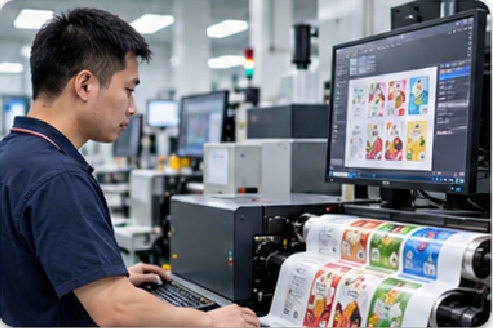
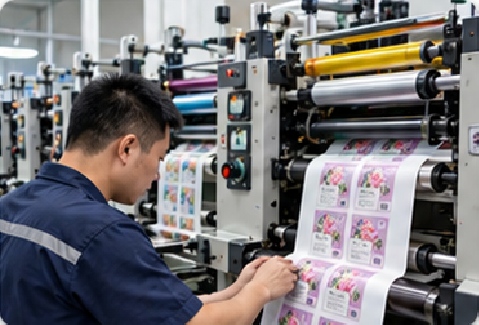
Printing and Production Routes Built Around Volume and Finish

Philiton combines digital, flexographic, screen, UV and specialty converting so the production route can change as a bath and body program grows without changing the underlying approved specification unnecessarily.
Digital Printing for Launches, Multi-SKU Programs and Frequent Artwork Changes

Digital Printing for Launches, Multi-SKU Programs and Frequent Artwork Changes

Digital printing is a core route for low-MOQ launches, prototypes, multiple scents and designs that change more frequently. For many standard digital label projects, around 500 pcs can be a workable starting point, subject to size, material, die cutting, finishing and the number of SKUs. Digital production reduces the need for conventional plates and allows several versions to move through prepress quickly when they share compatible materials and finishing. For bath and body programs, digital printing is especially useful when a brand is testing 5, 10 or more SKUs but does not want every scent to carry a large first order. CMYK artwork, images, gradients and variable elements can be handled efficiently. Clear films may require white ink depending on equipment and design. Premium effects such as foil, embossing, varnish or other post-print finishes are evaluated separately because the decoration can add tooling, material or setup requirements. Philiton still treats every SKU as a controlled artwork. Digital efficiency does not mean combining files without identification. Quantity, revision, white layer, die line and packing remain linked to the correct SKU. As volumes grow, the production team can review whether keeping the digital route or moving a stable high-volume design to flexographic printing creates a better cost and scheduling structure.
Flexographic Printing for Repeating Roll Programs and Higher Volumes

Flexographic Printing for Repeating Roll Programs and Higher Volumes

Flexographic printing becomes attractive when a design is stable and production moves into longer or recurring roll-label runs. Higher output and roll-to-roll efficiency can lower unit cost at scale, but plates, setup and color preparation create a different cost structure from digital. Philiton therefore selects the process according to total quantity, SKU distribution, material, colors, finishing and reorder pattern rather than applying one printing method to every bath and body job. A growing program may start digitally for market launch, then move suitable high-volume SKUs to flexo once artwork and demand stabilize. Smaller variants can remain digital if that gives better inventory control. Shared brand colors, materials and quality references are maintained across the chosen route, with sample approval used when a process change could alter visual appearance. Flexographic production also integrates naturally with roll conversion. Die cutting, waste stripping, slitting and rewinding can be planned around the applicator specification. Core, unwind, gap, pitch, roll diameter and labels per roll are confirmed so the finished product arrives as a usable packaging component, not simply printed material on a roll. Stable repeat work can reuse approved plates, tools and production references when specifications remain unchanged, while any material or artwork change is reviewed before release.
Specialty Finishing, Converting and Final Release

Specialty Finishing, Converting and Final Release

Bath and body labels often combine base printing with opaque white, foil, embossing or debossing, spot or screen effects, lamination, varnish, holographic elements, die cutting and controlled rewinding. Each added process introduces its own registration, material and handling requirements. Philiton reviews the production sequence before approval so one premium effect does not create a later problem in die cutting, winding, label dispensing or abrasion resistance. After printing and finishing, labels move through die cutting, waste stripping, slitting and rewinding according to the order format. Quality checks focus on the approved construction and the actual risk profile: color, registration, white ink, finish placement, dimensions, edge quality, adhesion, roll direction, core, roll diameter and SKU identification as relevant. Standard shipping preparation commonly takes around 1-2 business days after FQC release; large or multi-SKU packing commonly takes around 2-4 business days. International transit is quoted separately because delivery time changes with destination, channel, season, customs and final-mile service. Samples commonly move by express courier, while production orders can be arranged by express, air, sea or other agreed methods. Freight and transit estimates are confirmed at quotation or shipment planning rather than presented as one fixed global promise. Packing plans can also separate urgent launch quantities from later replenishment batches when production and shipping schedules need staged delivery. 

Roll, Packing and Delivery Specifications for Filling-Line Readiness

Philiton can supply bath and body labels in roll, sheet or individual formats. Roll programs are configured around the applicator, SKU handling and receiving process before finished goods are packed.

SpecificationPhiliton Control PointWhy It Matters in Bath & Body Production
Label Size & ShapeFinal die line, corner radius, wrap length and cut toleranceControls fit, edge stress and presentation on curved bottles or jars
Unwind DirectionInside/outside wound and leading edge confirmed from machine requirementPrevents labels feeding in the wrong orientation on applicators
Core DiameterCommon cores available; exact diameter confirmed from applicatorA roll can be unusable even when the label itself is correct if the core does not fit
Maximum Roll DiameterSet from machine and packing limitsControls labels per roll, changeover frequency and physical fit on the line
Gap & PitchSet for die cutting and machine indexingAffects sensor detection, dispensing and print-to-cut registration
Liner Width / Number AcrossMatched to converting and applicator requirementPrevents web-width or sensor-position issues
Labels per RollDefined by line preference, roll OD and SKU quantitySimplifies line replenishment, counting and warehouse handling
Roll Tension & End FaceControlled during slitting and rewindingReduces telescoping, edge damage, liner distortion and pressure on premium finishes
SKU IdentificationRolls and cartons separated by artwork, quantity and relevant production IDReduces mix-ups between scents, sizes and regional versions
Inner ProtectionClean bag, wrap or other protection selected by productHelps protect clear, matte, foil and premium surfaces from dust and abrasion
Cartons / PalletsPacking based on roll size, weight, destination and shipment methodProtects rolls while supporting receiving and storage
Shipping RouteCourier, air, sea or other agreed channel quoted by destinationTransit time and landed logistics depend on route, customs and final-mile requirements

Quality Control Focused on Bath & Body Failure Modes

Philiton uses incoming, in-process, final and outgoing checks according to project risk. Inspection is linked to what can fail on the bottle, in the filling line or during daily use.

Material & Adhesive Verification

Incoming material identity, face stock, adhesive direction, liner and relevant supplier information are checked against the released specification. For demanding surfaces or exposure conditions, approved samples and project testing become more important than generic material names. Material substitutions should not be treated as invisible changes when they can influence opacity, stiffness, adhesion, surface finish or die cutting.

Color & White Ink Control

Brand colors are evaluated on the actual label construction because clear film, white ink, laminate, varnish and metallic surfaces can change appearance. White ink needs correct placement and registration under selected graphics. Approved artwork and samples provide the reference for production. Multi-SKU projects also require version checks so a correct color does not end up on the wrong scent or regional artwork.

Print & Registration Inspection

Text, fine graphics, barcode or QR elements, spot colors, white layers and specialty effects are checked for legibility and alignment. Transparent and metallic constructions can make registration errors more visible. Philiton can use visual inspection according to the project and production route, while critical variable data needs additional source and uniqueness controls beyond appearance alone.

Die Cut & Dimension Control

Label width, height, shape, corner radius, gap, pitch and cut position influence both appearance and dispensing. Cuts that are too deep can damage the liner; cuts that are too shallow can create dispensing problems. Tight curves can also make sharp corners more prone to lift. Dimensional checks therefore connect converting quality with the actual container and applicator requirement.

Adhesion & Container Fit

For HDPE, PP, PE, glass, PET and small-diameter packs, the final container is the strongest reference for adhesion and wrap behavior. Checks can include initial tack, edge lift, mandrel hold, bubbles, wrinkles and deformation under squeezing. Conditions are defined per project rather than reduced to one universal peel number for every surface and environment.

Water, Oil & Rub Review

Wet-use and oil-rich products may require representative exposure and rub checks. Philiton evaluates the finished construction, including ink, foil, coating or lamination, rather than assuming a film face stock automatically protects every printed layer. Results can guide changes in material, adhesive or protection before a full production release.

Roll Specification Inspection

Finished rolls are checked for core, roll direction, roll diameter, web condition, end-face quality, labels per roll and other agreed parameters. Winding tension matters because excessive pressure can distort liners or premium raised finishes, while loose winding can cause telescoping. Applicator-sensitive programs should include machine-related parameters in the released specification and final packing identification.

Final SKU & Packing Check

Before shipment, SKU identity, quantity, roll labels, carton marks and agreed packing are checked so similar scent or size variants remain separated. Large multi-SKU programs can require more packing time because every roll and carton must match the correct artwork and quantity. OQC and shipping preparation begin after production and FQC release rather than being treated as part of press output alone.

Cosmetic Label Content and Compliance Responsibilities Stay Clearly Defined

Philiton can manufacture labels carrying ingredient lists, warnings, directions, barcodes and market-specific text, while the legal content and required claims remain controlled by the brand or its appointed regulatory adviser.
Philiton Controls Reproduction, Legibility and Approved Artwork in Production

Philiton Controls Reproduction, Legibility and Approved Artwork in Production

  • Bath and body labels may carry INCI ingredient names, warnings, directions, net contents, company information, barcodes, batch areas or other regulated content. Philiton can reproduce brand-approved text and artwork with controlled size, print quality and file version. Prepress review can identify technical issues such as missing fonts, weak contrast, insufficient bleed, unreadable small text, unsuitable barcode placement or layers that conflict with white ink and finishing.
  • The production responsibility is to manufacture against the approved file and agreed specification. If a label needs a larger information area, Philiton can evaluate back labels, wrap formats, multi-layer structures or extended-content formats where suitable. The choice depends on container size, required information and application method. Multi-market programs should keep each language or regulatory version as a separately approved artwork even when materials and design systems are shared.
  • Philiton does not replace legal review. The brand, product responsible party or regulatory adviser confirms which ingredient declarations, claims, warnings, symbols, language and market information are legally required for the intended country and product category. Material declarations or third-party reports can be coordinated when a project calls for them, but no blanket certification claim should be applied to every bath and body label construction without the relevant supporting documentation.
Performance and Sustainability Claims Need Construction-Specific Evidence

Performance and Sustainability Claims Need Construction-Specific Evidence

  • Terms such as waterproof, oil resistant, recyclable, FSC, recycled content, RoHS, REACH, food contact or other material-related claims can only be used responsibly when the selected material and project documentation support them. Philiton sources paper, films, adhesives, foils and specialty substrates from external qualified suppliers, so declarations and certificates are tied to the actual supplied construction rather than assumed across the entire material category.
  • For water, oil, alcohol or chemical exposure, product-level suitability is also condition-dependent. A film label may offer strong moisture resistance but still require the correct ink, protective layer and adhesive for a specific formula. A label that remains attached in a humid bathroom may perform differently when directly wiped with essential oil or alcohol. High-risk claims should therefore be validated using the intended container, representative exposure conditions and an approved sample.
  • Philiton can support documentation exchange, sample verification, inspection records and project-specific testing routes when requirements are defined. Procurement teams should send the target market, any required material declarations, testing standards, retailer requirements and product-specific compliance instructions at the RFQ stage so the manufacturing route can be reviewed before artwork and materials are locked. When several countries share one visual system, separate approved artwork versions should still be maintained for language, warning, ingredient and legal-information differences.

Representative Bath & Body Project Cases

The scenarios below illustrate how Philiton can structure bath and body label programs using confirmed manufacturing routes. Quantities and brand profiles are representative planning examples, not disclosed client histories.
United States Body Care Brand - 24,000 Labels

United States Body Care Brand - 24,000 Labels

A growing U.S. body care brand plans six SKUs across body wash, lotion and body scrub, with 4,000 labels per SKU. The program uses HDPE bottles and PP jars, so Philiton starts with white BOPP and an adhesive route suitable for lower-energy plastics. Lotion and scrub formulas create possible oil contact, so matte surface protection and representative rub checks are included. Artwork versions are separated by scent while shared material and finish specifications simplify production. The brand sends empty containers for adhesion review, approves printed samples, then releases the six-SKU roll order with defined core, unwind and labels-per-roll specifications.
Australia Private Label Manufacturer - 36,000 Labels

Australia Private Label Manufacturer - 36,000 Labels

An Australian private label manufacturer prepares nine personal-care SKUs for three brand owners, covering shampoo, conditioner, body wash and hand lotion. Quantities average 4,000 labels per SKU, but artwork, bottle sizes and color systems vary. Philiton divides the work into shared technical families rather than forcing one material across every pack. Squeezable PE bottles are reviewed with more conformable film, while rigid PET bottles use white or clear BOPP according to the brand look. Each file receives independent approval and SKU identification. Packing separates rolls by brand, formula and size so the filling team can stage production without opening mixed cartons.
Germany Premium Spa Range - 18,000 Labels

Germany Premium Spa Range - 18,000 Labels

A German premium spa range launches three 6,000-piece SKUs for bath oil, body scrub and bath salts. The visual direction combines clear-film areas, opaque white graphics and selected gold foil. Philiton reviews the glass bottle and PET/PP jar formats separately because oil exposure, transparency and curvature create different risks. The oil SKU receives a film and protective-finish route with formula exposure review, while the bath-salt pack can use a more tactile structure if the environment remains dry. White-ink and foil layers are separated during artwork preparation, production-oriented samples confirm registration and container appearance, and the final rolls are packed by SKU with controlled unwind direction.

Bath & Body Labels Frequently Asked Questions

Yes. Philiton can build moisture-resistant constructions using suitable films, inks, adhesives and protective finishing. “Waterproof” should still be defined by exposure. Occasional splashes, repeated wet handling, bathroom condensation and direct soaking are different conditions. The label should be tested on the intended container when moisture performance is important, especially on PP, PE or HDPE bottles where adhesion can also be affected by surface energy and curvature.
White or clear BOPP is a common starting point for many rigid bottles, while PE film can be more suitable for flexible or squeezable packaging. PET may be selected when greater dimensional stability or durability is required. The final choice depends on bottle resin, curve, squeeze behavior, water exposure, finish and desired appearance. Philiton reviews the full construction instead of assigning one material to every shampoo or body wash bottle.
Suitable film, ink and protective finishing can improve resistance to oils and repeated handling. Oil exposure can affect print, foil, varnish and adhesive differently, so the intended formula should be disclosed before approval. For oil-rich products, Philiton recommends testing the finished label against the actual formula or a representative medium, especially where leaks, pump residue or oily hands can reach the printed surface.
Yes. HDPE, PP and PE packaging can be supported, but lower surface energy, texture, mold-release residue, curvature and flexibility may require a more suitable adhesive or face stock. Thin BOPP or PE materials can help on some curves and flexible bottles. Actual container samples are recommended when adhesion is critical because a flat material test cannot fully reproduce small-diameter stress, squeezing or molded surface conditions.
Yes. Clear BOPP or PET can use white ink under selected graphics, under full printed areas or as white design elements. White ink controls opacity and prevents container color from weakening process colors. The white layer should be prepared during artwork setup. Philiton recommends reviewing clear labels on the actual bottle because transparency, adhesive appearance, surface gloss, bubbles and container color all influence the final result.
For many standard custom label and sticker projects, around 500 pieces can be a workable starting quantity. Actual MOQ depends on label size, material, adhesive, print process, finishing, tooling and the number of SKUs. Standard digital projects generally offer more flexibility than jobs requiring special materials, dedicated plates, custom foil tools, holographic structures or other specialized setup. Multi-SKU projects are reviewed by both total volume and per-artwork requirements.
Standard physical samples are commonly completed in about 2-4 business days after artwork, material and tooling conditions are ready. Complex finishing commonly takes about 3-7 business days. Standard production commonly requires around 5-10 business days after approval and material readiness. Larger orders often require around 7-15 business days, while complex multi-SKU programs can extend to 10-20 business days or be scheduled in agreed batches.
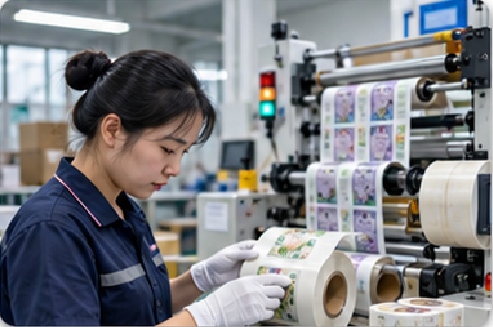
Yes. Philiton can confirm roll direction, inside or outside wound orientation, core diameter, maximum roll diameter, gap, pitch, liner width, number across, labels per roll and other machine-related requirements. Perforations or registration marks can also be considered when the applicator requires them. Sending the machine specification or a photo of the current roll helps reduce the risk of producing a correct label in the wrong roll configuration.
Yes, when the SKUs use compatible material, adhesive, finishing and technical specifications. Each design still keeps its own approved artwork, quantity and identification. Shared material platforms can improve planning while separate version control reduces mix-ups. If one formula uses a different bottle resin, stronger oil exposure or a different labeling machine, Philiton may recommend a separate construction rather than forcing every SKU into the same specification.
Philiton can arrange samples by express courier and production orders by express, air, sea or another agreed route. Shipping preparation commonly takes around 1-2 business days after standard FQC release and around 2-4 business days for larger or multi-SKU packing. Transit time is quoted by destination and route because customs, season, carrier capacity and final-mile service can change the schedule. Freight is confirmed using the shipment size, weight, destination and required Incoterm.

Send Your Bath & Body Label Specifications for Review

Philiton can prepare a more accurate material route, sample plan and quotation when the project inputs describe the real package instead of only the artwork. Send the current design file if available, along with container information and the intended use environment. For adhesion-sensitive projects, empty bottles, jars or representative substrates can be reviewed before the final material is approved. Standard projects can move from artwork review to physical sampling quickly, while special materials, premium finishing, complex multi-SKU programs or dedicated tooling need additional preparation.

Please include:

  • Product type: body wash, lotion, scrub, shampoo, soap, oil or other item.
  • Label size, shape and quantity for each SKU.
  • Container material: PET, HDPE, PP, PE, glass, tube, jar or pouch.
  • Exposure: water, steam, oil, alcohol, abrasion or other contact.
  • Artwork files, Pantone references and required white-ink or foil layers.
  • Preferred finish: matte, gloss, laminate, foil, emboss, spot UV or clear no-label look.
  • Application method: hand applied, semi-automatic or automatic.
  • Roll requirements: core, unwind, gap, maximum roll diameter and labels per roll if known.
  • Target market and any required material declarations or testing documents.
  • Delivery country, postal code or destination port for freight planning.

For all inquiries, please feel free to reach out at:

Get In Touch

  • Our team will answer your inquiries within 12 hours.

  • Your information will be kept strictly confidential.

Get a Fast Quote for Custom Labels & Stickers

We will contact you within 24 Hours, please pay attention to the email with the suffix“@philiton.com”. 

For all inquiries, please feel free to reach out at:

Ask For A Quick Quote

We will contact you within 24 Hours, please pay attention to the email with the suffix“@philiton.com”. 

For all inquiries, please feel free to reach out at:

Get a Quote Today!

We will contact you within 24 Hours, please pay attention to the email with the suffix“@philiton.com”.