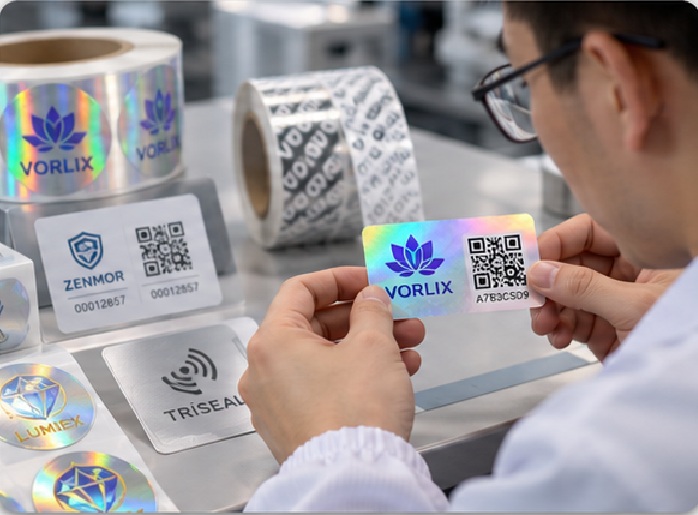
Strengthen existing labels with layered physical and digital security without rebuilding the entire packaging system.
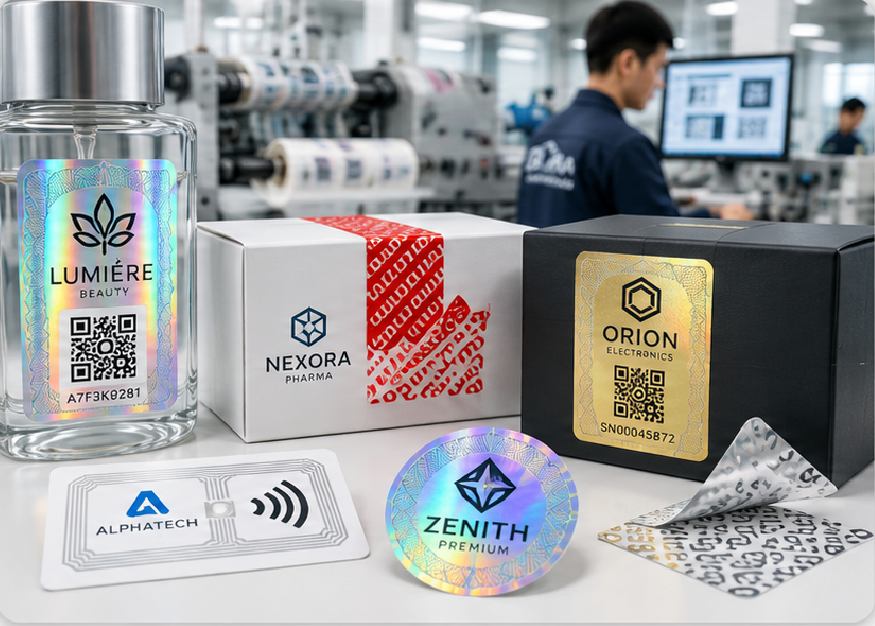
A stronger label begins by defining what must be stopped, who verifies authenticity, where failure can occur, and how the security function must behave across packaging, distribution and product use.
| Threat | What Goes Wrong | Upgrade Direction | Philiton Manufacturing Focus |
|---|---|---|---|
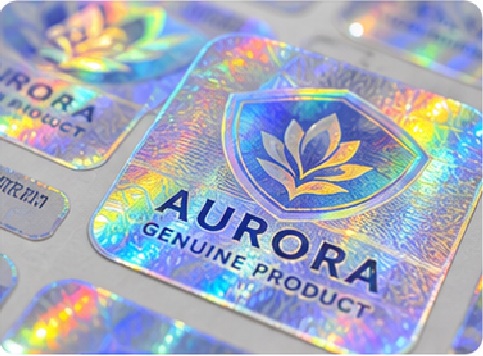
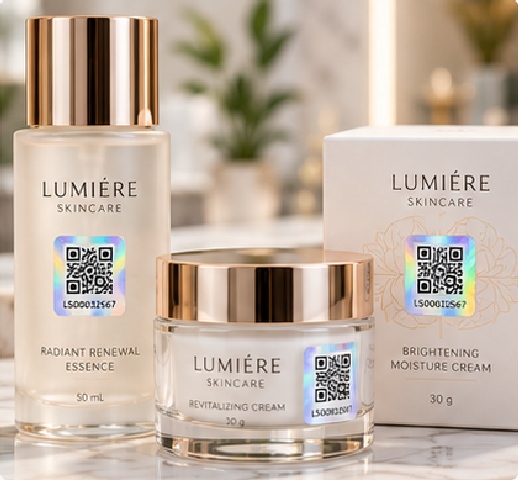
| Counterfeit reproduction | Graphics and visible marks are copied onto fake goods | Add harder-to-reproduce visual features plus unique identity | Holographic effects, specialty printing, serialization, variable QR |
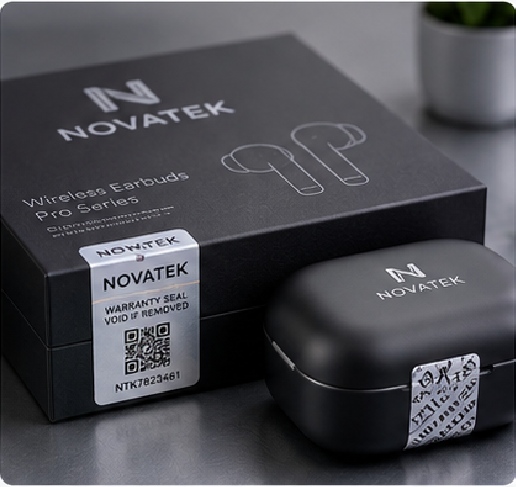
| Tampering | Package is opened or altered without obvious evidence | Add opening evidence at the closure or access point | Tamper-evident, VOID, destructible or security-seal construction |
| Label transfer | Genuine label is removed and placed on another product | Make removal leave damage, residue pattern or label destruction | Adhesive selection, VOID behavior, destructible face material, die-cut design |
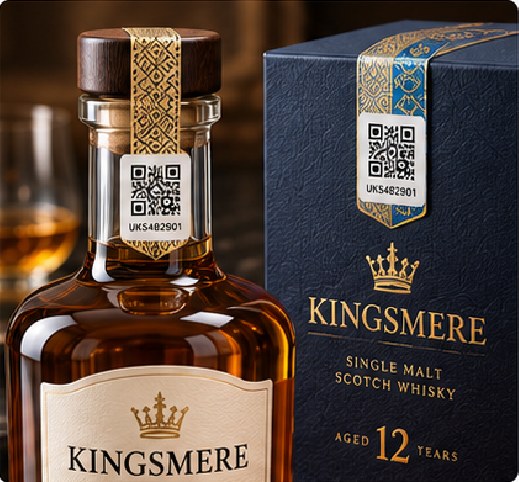
| Refill | Genuine container is reused with non-genuine contents | Combine opening evidence with item identity | Security seal plus serialized QR, RFID or NFC where suitable |
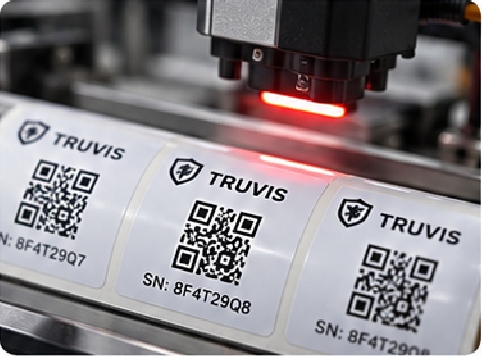
| Duplicate code | One valid code is copied across many fake units | Move from static codes to unique variable identity | Unique QR, serial number, Data Matrix, variable-data verification |
| Diversion | Genuine goods move into unauthorized channels | Add item-level or batch-level traceable identity | Serialization, QR, RFID/NFC integration and controlled data printing |
| Warranty misuse | Labels or codes are reused to support false claims | Tie physical evidence to unique identification | Tamper construction plus unique code or smart-label option |
Replacing everything is rarely the first move. A better route identifies the present weakness, keeps useful parts of the existing construction, and adds only the security layer needed for the new risk.
| Current Label | Common Weakness | Upgrade Route | Key Inputs Needed |
| Plain printed label | Easy visual reproduction and no authenticity check | Add security print, holographic effect, tamper function or unique identity | Artwork, packaging surface, risk type, quantity |
| Generic hologram only | Visible deterrence but limited item-level verification | Add custom security design, serialization, QR or tamper layer | Existing hologram, verification user, package material |
| Static QR code | Same code can be copied repeatedly | Convert to unique QR or serialized Data Matrix | Data format, code size, destination URL/system, scan rules |
| Ordinary permanent seal | May peel or transfer without useful evidence | Evaluate VOID, destructible or tamper-evident structure | Closure design, surface, peel direction, use temperature |
| Serial number only | Manual checking is slow and difficult at scale | Add machine-readable variable code or RFID/NFC | Number logic, database responsibility, scan/read method |
| RFID/NFC without physical evidence | Digital identity may not show package opening or label transfer | Combine smart identity with tamper construction | Inlay/chip requirement, placement, package material, read environment |
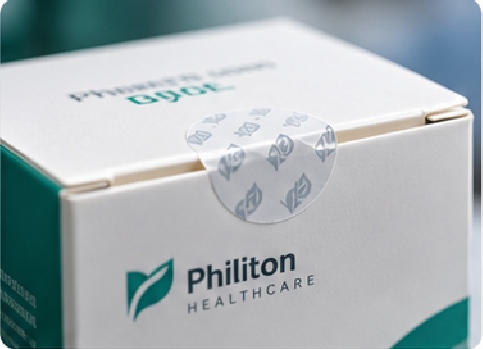
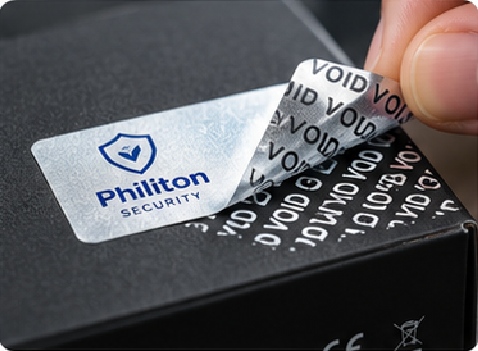
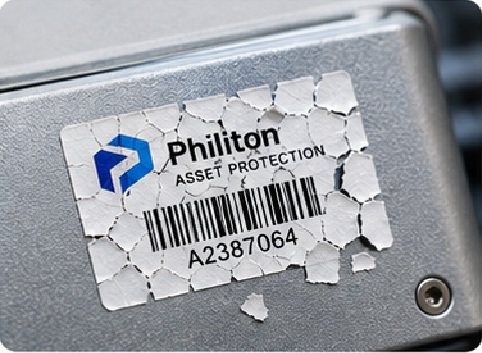
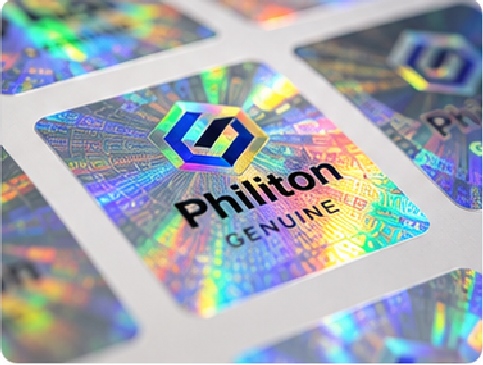
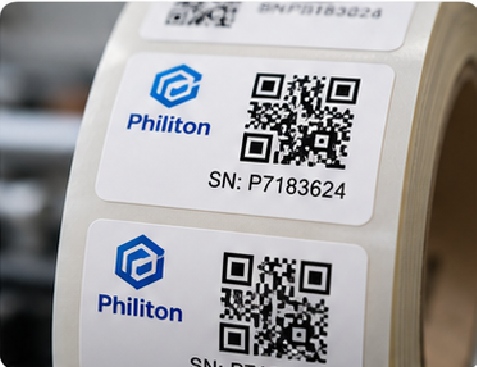
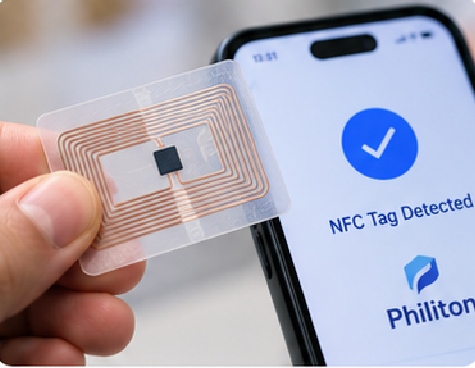

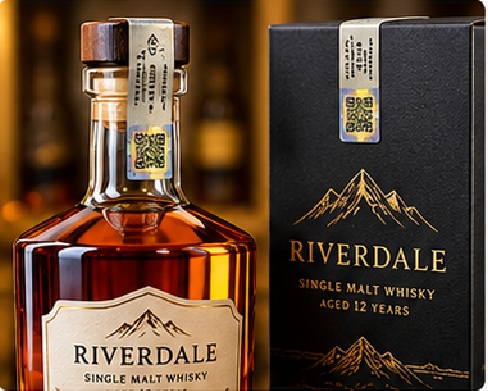
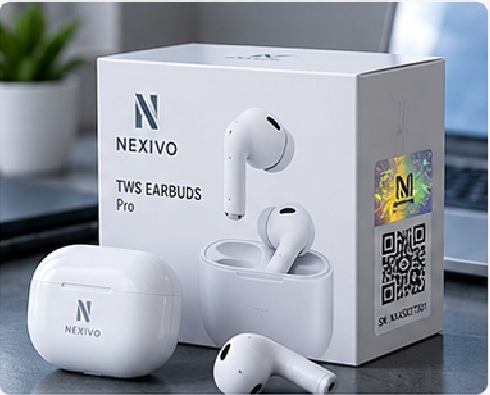

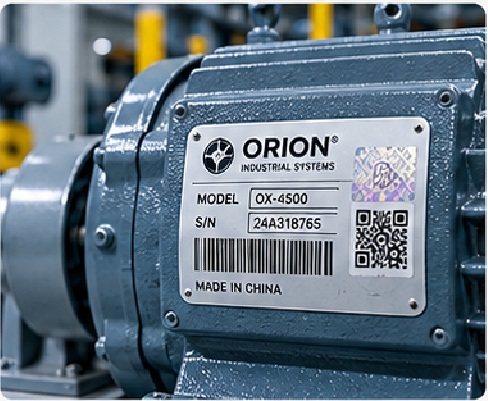
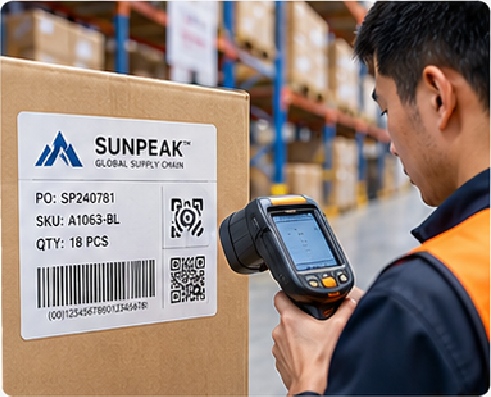
Aggressive security structures can create new production problems if release force, stiffness, die-cut depth or label geometry is ignored. A fragile face material may break during matrix stripping or automatic dispensing. A thick holographic construction may affect tight-radius application. A strong adhesive may cause edge ooze or excessive residue. Philiton reviews converting and application requirements before production release.
The approved sample becomes the physical reference for appearance, structure and expected removal behavior. Production inspection then focuses on measurable points such as print registration, die cut, code readability, roll format and visible construction consistency. Destructive performance testing is carried out according to the agreed sampling method rather than on every label, with acceptance limits documented before batch release. Retention samples can also support repeat-order comparison when required.
Philiton sources qualified labelstocks and adhesives externally, then matches face material, adhesive, print, security function, package surface and converting route to the application instead of using one universal stock.
| Application Condition | Material / Structure Direction | Adhesive Consideration | Validation Focus |
|---|---|---|---|
| Smooth glass or coated metal | Film, paper or specialty security construction depending on design | Bond strength and clean application on low-contamination surface | Peel behavior, tamper evidence, edge lift, visual finish |
| PET / PP / PE containers | Film or security stock selected for curvature and surface energy | Adhesive chemistry matched to plastic and use environment | Initial tack, dwell, curved-surface lift, moisture or oil exposure |
| Coated carton or paperboard | Paper, film, VOID or destructible structure | Coating compatibility and fiber tear / transfer behavior | Opening evidence, print quality, carton damage level |
| Small curved caps or necks | Thin, flexible face stock with suitable die geometry | Strong enough to hold radius without uncontrolled lifting | Mandrel behavior, edge lift, removal evidence, placement tolerance |
| Electronics / assets | Destructible, VOID, durable film or smart-label construction | Long-term bond to plastic, metal or coated housing | Transfer resistance, serial readability, abrasion, RFID/NFC function where used |
| Cold, wet, oily or chemical exposure | Material and adhesive selected from actual service condition | Application temperature and contamination control are critical | Adhesion, peel, rub, scratch, color and agreed environmental tests |

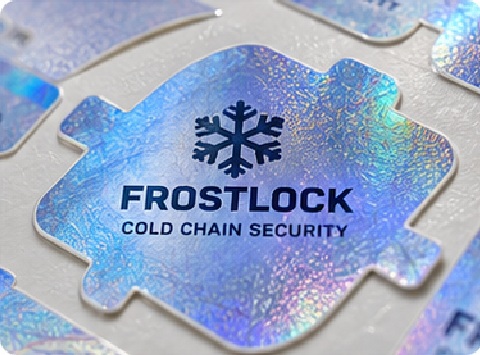
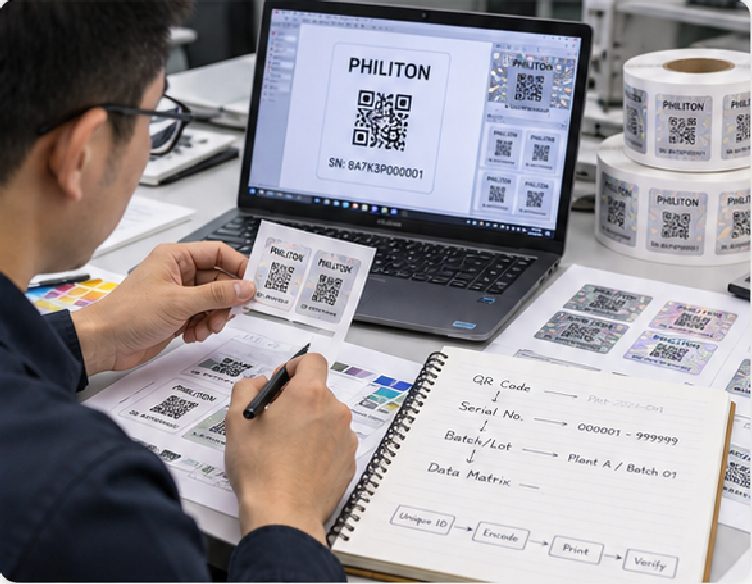
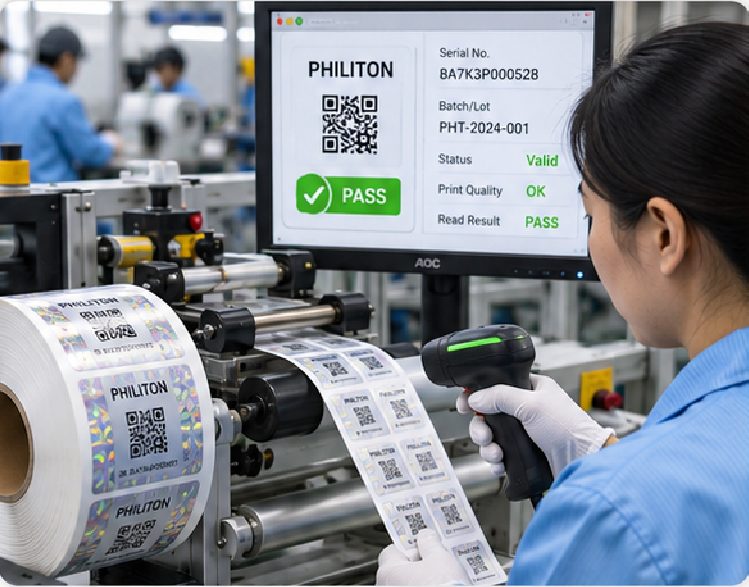
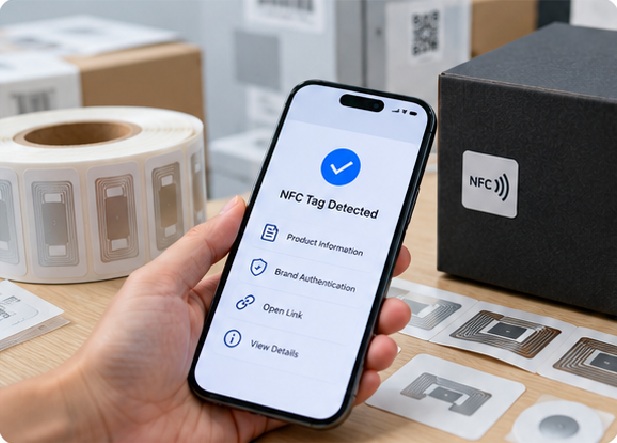
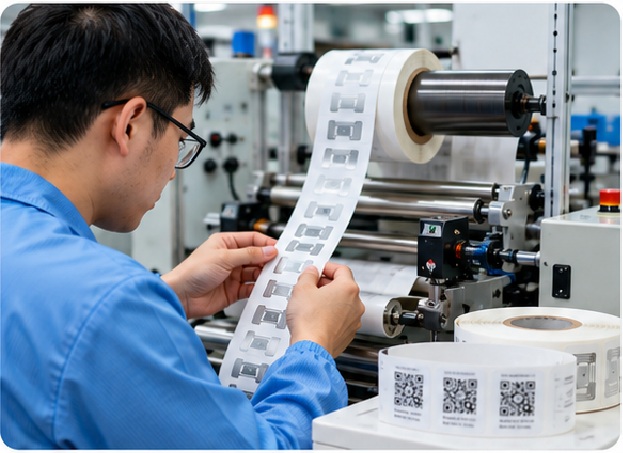
Electronic performance is only one part of a finished security label. Inlay placement, adhesive coverage, face material, die-cut clearance, antenna protection, roll tension and rewind conditions can affect conversion and use. When a smart label also needs VOID, destructible or tamper evidence, the physical and electronic structures must be engineered together.
Philiton operates a dedicated RFID/NFC converting, encoding and verification area of approximately 350 ㎡ within its manufacturing system. Smart-label approval should include both print/appearance review and functional testing under the application conditions relevant to the final product.
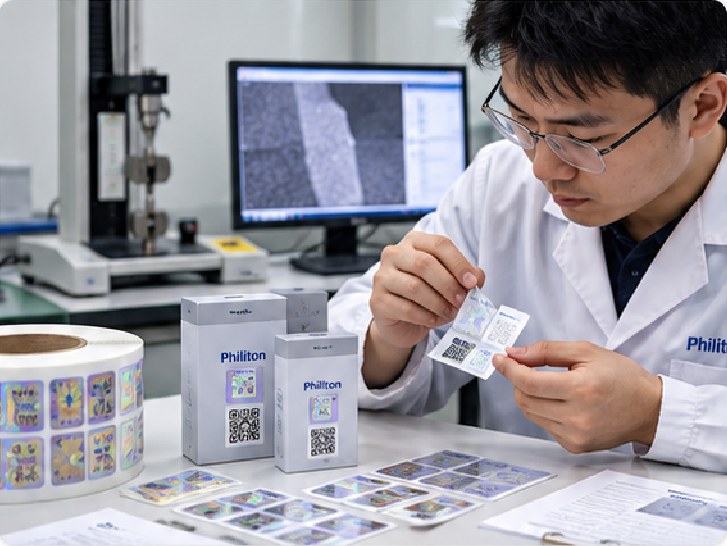
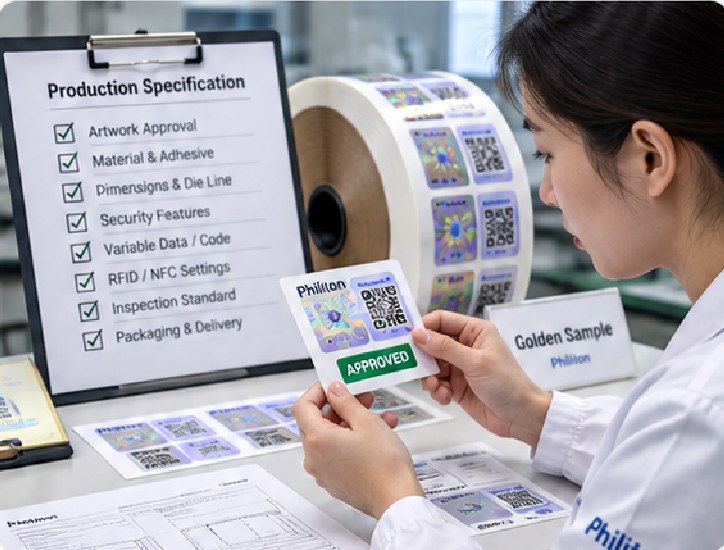
A security sample is useful only when its critical details are documented for repeat manufacturing. Approval should identify what is visual, what is functional and how each point will be checked later. Philiton can convert the approved sample into production instructions covering material, adhesive, dimensions, print, security finish, variable data, die cutting, roll format, RFID/NFC settings where applicable, inspection and packing.
For enterprise programs, Golden Sample, batch control, quality records and project-specific documentation can be included when required. Production lead time is confirmed after sample approval and material readiness, with complex security and smart-label programs scheduled according to their actual process chain.
Philiton keeps core converting stages within its manufacturing system so security artwork, variable data, special finishing, die cutting, smart-label processing, rewinding and inspection can be coordinated as one controlled job. Philiton operates approximately 7,200 ㎡ of core production and converting space within a 12,000+ ㎡ manufacturing system. The scale supports both flexible development runs and repeat production without treating anti-counterfeit work as a separate outsourced step. Standard printed labels and highly complex security programs do not share one fixed production time. Philiton confirms lead time after material, tooling, data, smart-component and approval requirements are clear, helping procurement teams plan from an executable process route rather than a generic delivery promise.
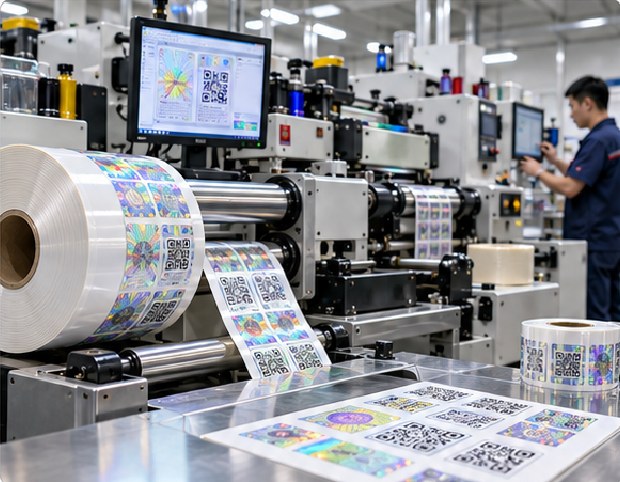
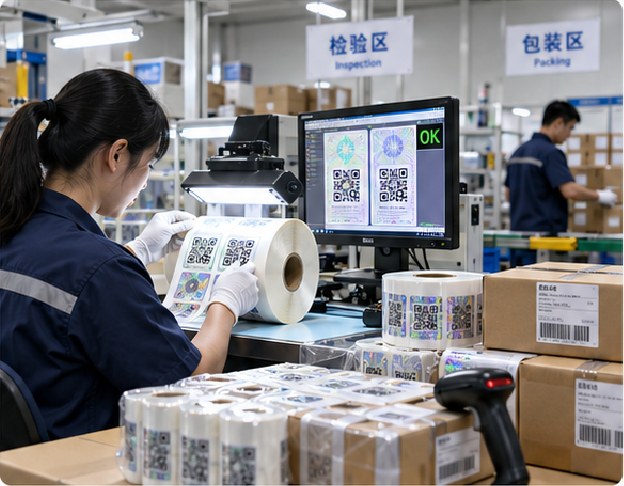
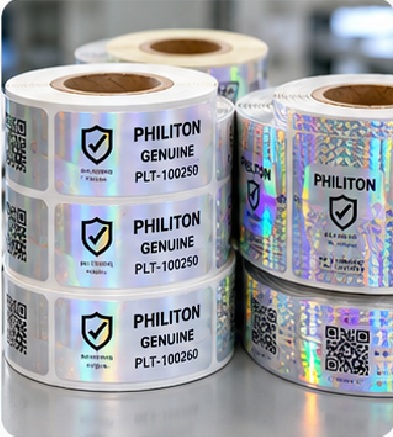
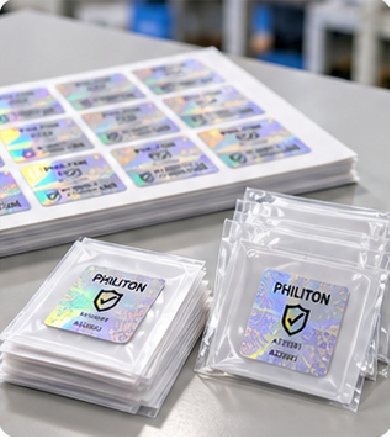
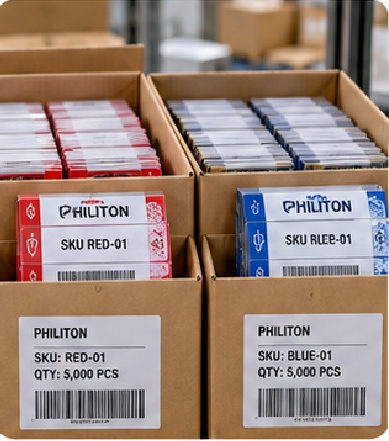
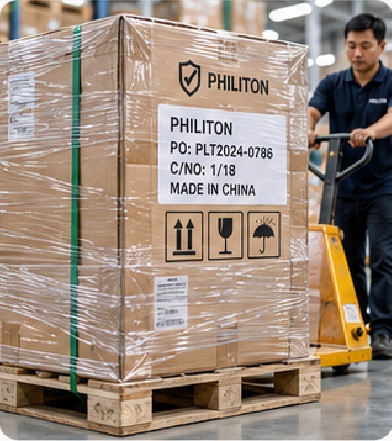
Philiton operates manufacturing facilities in Shenzhen and Dongguan with more than 12,000 ㎡ of combined manufacturing space. Approximately 7,200 ㎡ is dedicated to core production and converting, supported by warehouse, sampling, QC, laboratory, RFID/NFC, UV/UV DTF, packing and finished-goods areas. Base raw materials are externally sourced from qualified suppliers rather than claimed as in-house raw-material production.
A dedicated RFID/NFC converting, encoding and verification area of approximately 350 ㎡ supports smart-label work. Philiton can handle RFID/NFC printing, converting, encoding and functional verification according to project specifications. Specific chip, inlay, frequency, read distance, memory structure and encryption capability are confirmed for each program rather than presented as fixed across all smart-label applications.
Send Philiton the existing label, packaging details and the weakness you need to solve. Our team can review whether the next step should focus on tamper evidence, transfer resistance, holographic or specialty security printing, unique QR and serialization, RFID/NFC, material and adhesive changes, or a combination of layers. The review is most useful when the current package and production method are included, because security performance depends on the real surface, label position, removal direction and downstream application. Many standard label projects can start from around 500 pieces, while complex anti-counterfeit and smart-label programs are confirmed by material, tooling, component and process requirements. Please also identify who will verify authenticity, whether codes connect to an external platform, and whether the finished labels must run on existing automatic equipment. Sampling and production timing are quoted after the construction is defined rather than forced into one generic schedule. Once the specification is clear, Philiton can organize artwork, sampling, manufacturing, inspection, packing and global shipment preparation through one coordinated project flow.
Please include:
For all inquiries, please feel free to reach out at:
Our team will answer your inquiries within 12 hours.
Your information will be kept strictly confidential.
We will contact you within 24 Hours, please pay attention to the email with the suffix“@philiton.com”.
For all inquiries, please feel free to reach out at:
We will contact you within 24 Hours, please pay attention to the email with the suffix“@philiton.com”.
For all inquiries, please feel free to reach out at:
We will contact you within 24 Hours, please pay attention to the email with the suffix“@philiton.com”.