Philiton manufactures custom hot foil labels for premium packaging, brand decoration, and multi-SKU programs.
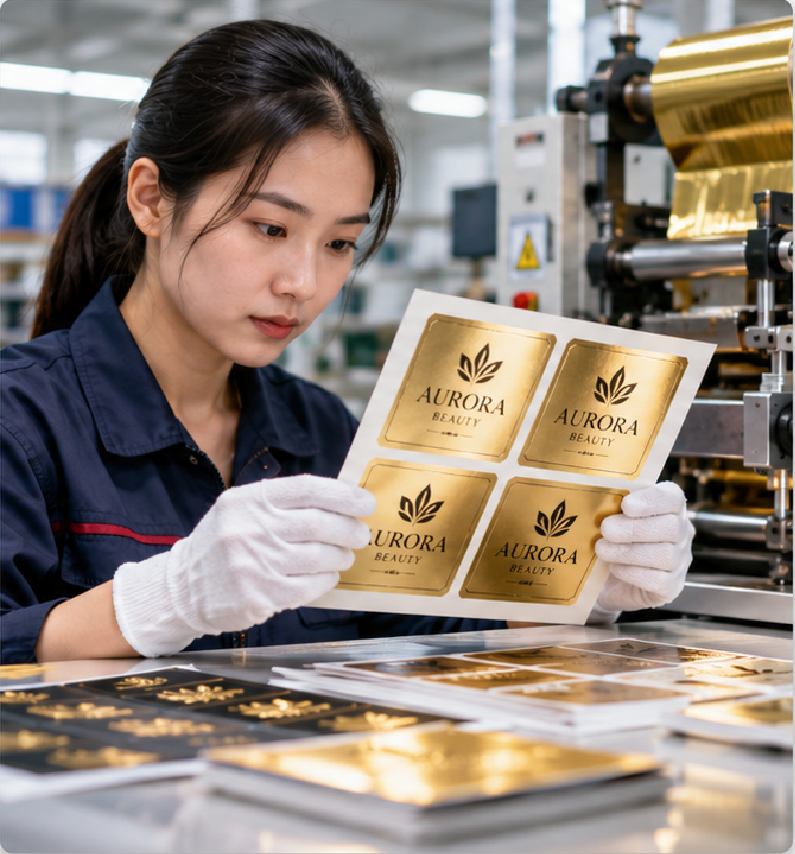



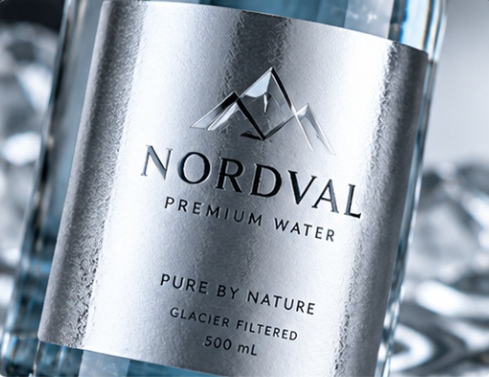



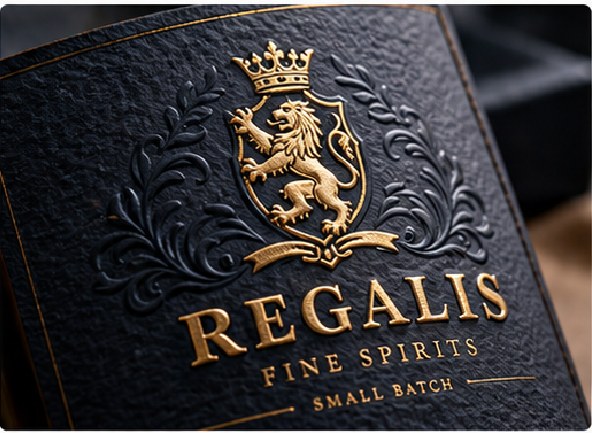
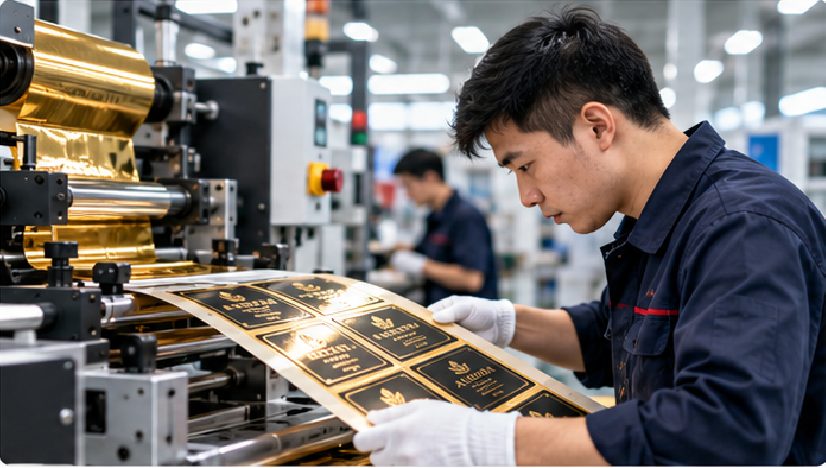
A production-ready hot foil label begins before the press. Philiton reviews the finished label size, shape, foil location, print colors, material, adhesive, delivery format, and application method. Foil elements are separated from CMYK, Pantone, white ink, emboss, and dieline information so every process has a controlled production layer. Tooling is prepared according to the approved foil artwork, while material and foil compatibility are checked against the intended process route.
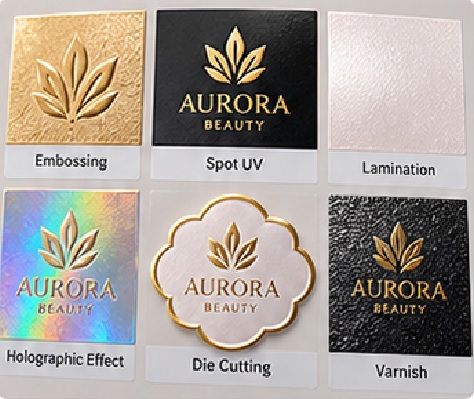
The label may be printed before or around the foil operation depending on the construction. After foil stamping, additional finishing such as embossing, varnish, lamination, Spot UV, die cutting, waste stripping, slitting, and rewinding can follow. Each extra operation changes what must be controlled. Foil-to-print registration matters when a metallic border meets printed artwork; foil-to-emboss registration becomes critical when relief must sit inside a metallic area; die-cut position matters when foil approaches an edge or custom shape.
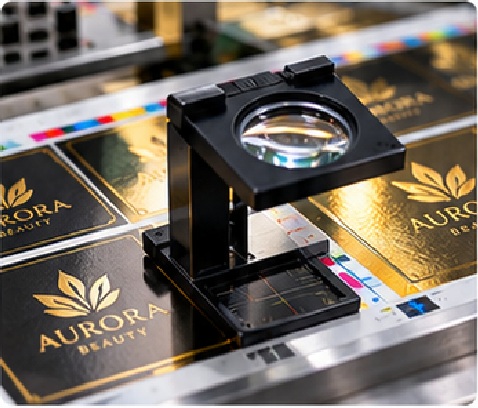
The finished product is then inspected for transfer completeness, edge quality, scratches, registration, foil appearance, die cut, size, and delivery specifications. Roll orders continue through slitting and rewinding to the approved core, direction, quantity per roll, and packing requirements. When automatic labeling is planned, the liner, gap, pitch, roll diameter, and winding direction are confirmed as production specifications rather than being left to packing-stage assumptions.





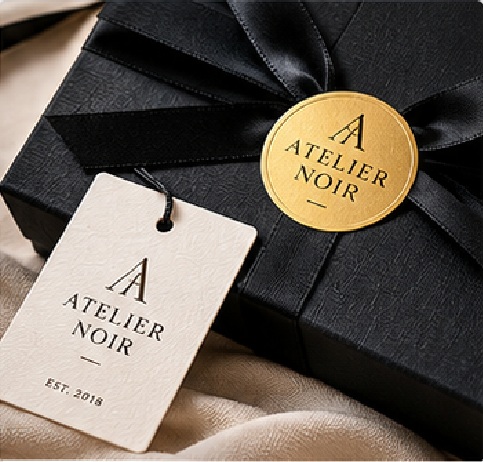
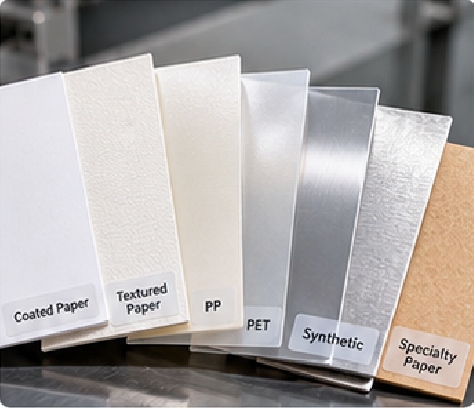
Material selection affects foil transfer, edge clarity, texture, durability, labeling performance, and the visual contrast around metallic areas. Sampling is recommended when the construction is new.
| Material | Why It Is Used | Hot Foil Considerations | Sample Priority |
| Coated Paper | Smooth print surface, broad packaging use, strong color reproduction | Usually a favorable surface for fine foil detail; coating and ink sequence still require confirmation | Recommended for new foil or finish combinations |
| Textured Paper | Premium tactile character for wine, spirits, tea, candles, gifting | Texture can reduce transfer uniformity or soften very fine detail; actual stock should be tested | High |
| Uncoated / Kraft Paper | Natural, artisan, organic visual direction | Absorbency and roughness can influence printing and foil edges; moisture resistance may require separate treatment | High |
| Synthetic Paper | Paper-like appearance with improved durability | Heat response, coating, print system, and foil compatibility vary by construction | High |
| PP / BOPP | Common film for bottles, cosmetics, food, beverages | Surface treatment, film stability, coating, heat, and curvature must be reviewed | High for new constructions |
| PET / Polyester | Dimensional stability and durable premium appearance | Coating, surface energy, foil adhesion, and heat exposure need project verification | High |
| Laminated Surfaces | Added scuff, moisture, or visual protection | Not every lamination surface accepts hot foil equally; finishing order can change adhesion and appearance | Essential before bulk production |
Both routes can create metallic effects. The better choice depends on substrate, artwork area, visual target, overprinting, tooling, order structure, and finishing sequence.
| Decision Factor | Hot Foil | Cold Foil |
|---|---|---|
| Transfer Principle | Heat and pressure transfer foil through a physical stamping die | Foil transfers through a printed adhesive or curing route without the same direct hot-stamp mechanism |
| Strong Use Case | Concentrated logos, names, borders, crests, fine premium accents | Larger metallic areas, integrated roll production, metallic backgrounds, or foil-overprint concepts |
| Textured Paper | Often a strong route when the stock and detail are sampled | Rough or absorbent surfaces can reduce smooth mirror appearance |
| Heat-Sensitive Materials | Requires careful material validation | Can be considered where direct hot pressure is unsuitable, subject to the full construction |
| Foil Overprinting | More limited depending on the route and design | Useful when transparent color is intended over a metallic base |
| Emboss Pairing | Strong premium combination; separate tooling and registration required | Possible in broader finishing workflows but planned differently |
| Tooling | Hot foil normally requires a foil stamping die or plate | Cost structure differs and is not identical to traditional hot-foil tooling |
| Large Metallic Coverage | Can be produced, but large areas may increase transfer and uniformity risk | Often considered for larger continuous metallic graphics |
| Fine Detail | Can deliver sharp localized detail when artwork, material, and tooling are suitable | Detail depends on adhesive, curing, substrate smoothness, and press route |
| Selection Rule | Choose when tactile premium accents and localized metallic detail fit the design | Choose when metallic area, overprint freedom, material, or production route favors cold transfer |
Very thin lines, tiny reverse text, dense patterns, zero-clearance borders, and large solid metallic areas can all increase hot-foil risk. Instead of publishing one universal minimum line width, Philiton reviews the actual material, foil, tooling, artwork scale, label size, and finishing sequence. A detail that works on smooth coated paper may behave differently on heavily textured stock or a film with a specific surface coating.
Registration must be designed, not assumed. Foil that touches printed artwork exactly can expose small positional differences that would be invisible on a separated design. Metallic borders placed too close to the die cut can also become visually uneven if normal converting tolerance is ignored. When embossing is added, the foil, relief, and printed image must share a realistic registration plan rather than a zero-tolerance digital mockup.
Philiton checks foil-to-print relationships, foil-to-cut spacing, nearby reverse areas, text size, material texture, and any overlapping finishing layers before tooling. Electronic proof approval confirms content and positioning, while a physical finishing sample confirms transfer quality, metallic appearance, edge definition, and the interaction between foil and the chosen substrate. For families with several SKUs, the same engineering rules can be applied across the range while each artwork remains separately approved. This keeps shared specifications efficient without hiding SKU-specific differences in foil position, copy, color, or die-cut geometry.

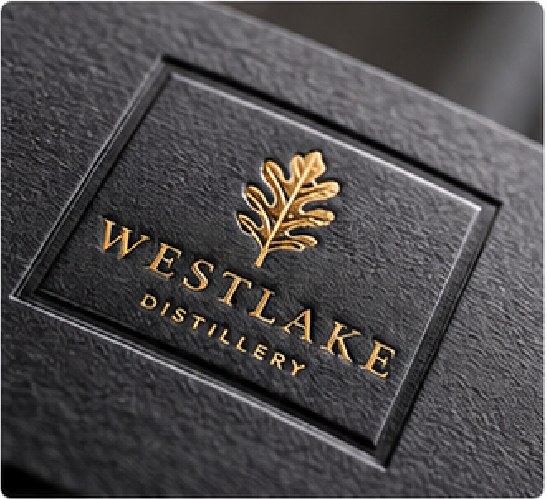




Philiton’s internal planning ranges distinguish sampling from mass production. Blank material or swatch preparation can often be handled in about 1-2 working days when stock is available. Standard printed samples commonly fall around 3-5 working days. Complex finishing samples involving hot foil, embossing, special die cutting, or specialty materials are commonly planned around 5-7 working days after artwork, material, and process confirmation. Special foil sourcing or new tooling can extend that range. Bulk production starts after the commercial order is confirmed, the approved artwork and specification are locked, and required materials and tooling are available. Many regular production orders are planned in roughly a 7-15 working day manufacturing window. Large, multi-SKU, or more complex programs can require about 10-20 working days or staged delivery. Special materials can add separate procurement time. These ranges are planning references, not unconditional promises. Quantity, SKU count, foil coverage, embossing, material sourcing, tooling, inspection, packing, approval speed, and shipping method all affect the final schedule. Philiton confirms the production plan in the project quotation and order documentation. International courier, air, or sea transit is planned separately from manufacturing time, and time waiting for artwork or sample approval is not counted as active production. This separation helps launch teams distinguish factory lead time from the full in-hand timeline.
Repeat production needs a reference system. Philiton can retain approved artwork and specification records so later orders are reviewed against the previous construction instead of being rebuilt from memory. The production reference can include material description, foil selection, tooling, approved sample, print colors, finishing sequence, dieline, roll format, core, direction, quantity per roll, and packaging requirements. For premium metallic work, batch review should pay particular attention to foil tone, brightness, surface texture, edge definition, registration, scratches, and transfer completeness. Different foil batches, material lots, or surface treatments can alter visual appearance even when the artwork is unchanged. Significant substitutions therefore require review rather than being treated as equivalent automatically. Philiton’s quality organization covers incoming inspection, in-process control, final inspection, outbound quality checks, and in-house testing capability. Automatic vision inspection can be used where appropriate to the project. The release standard remains the approved specification and agreed acceptance criteria, not a generic statement such as “premium quality” or “zero defects.” Packing condition is also checked because telescoped rolls, crushed cores, moisture exposure, or uncontrolled abrasion can damage an otherwise acceptable metallic finish during transport. Quality therefore continues through packing and shipment preparation. For long-running programs, inspection records and approved references can also support corrective review when a later batch shows a visible change, giving the team a concrete basis for comparing material, foil, tooling, process, and handling conditions.
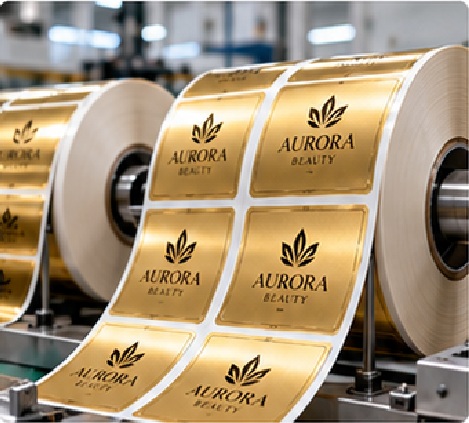
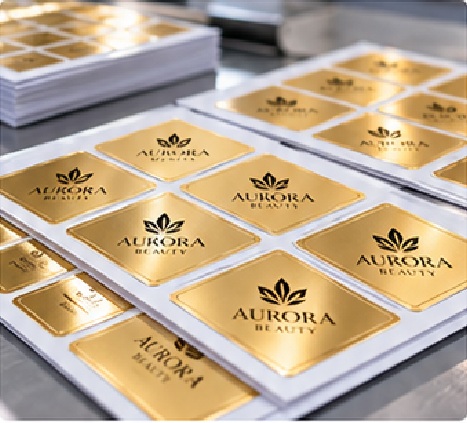

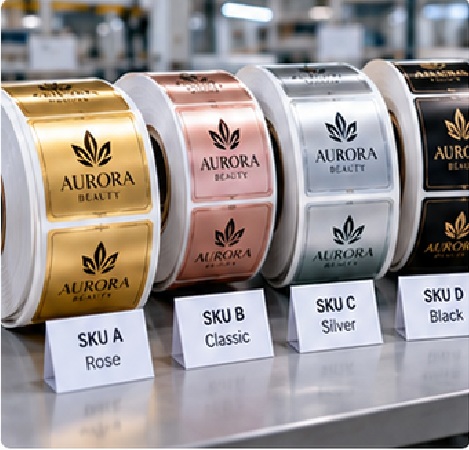

Philiton keeps production decisions tied to the approved artwork revision rather than the latest file found in an email thread. Foil, emboss, white ink, dieline, color, and variable-data layers should remain clearly identified. A reorder is reviewed for any artwork or specification change before release. Even a small logo edit can affect foil tooling, registration, die position, or the surrounding print relationship.
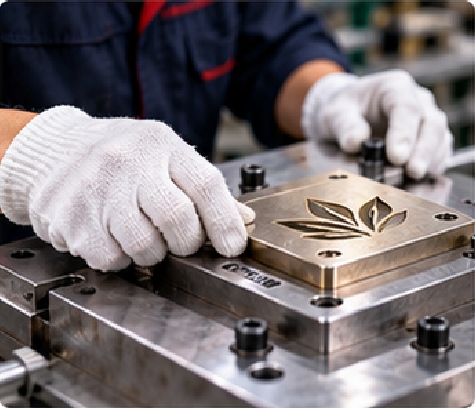
Foil dies, emboss tools, dielines, and process history are valuable project assets. When specifications remain unchanged and tooling is still suitable, repeat production can avoid unnecessary redevelopment. Philiton reviews tooling condition, material availability, production route, and previous settings before a reorder. Historical information speeds preparation, but it does not remove the need for current order review, first-piece checks, and quality release.
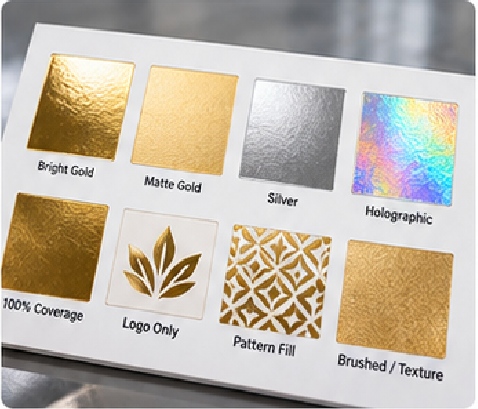
Metallic appearance can change when foil batch, supplier, substrate, coating, or background color changes. Repeat programs should therefore retain an approved physical reference and the corresponding material and foil description where possible. Philiton compares new production against the approved appearance and flags meaningful material substitutions for review instead of assuming two similar-looking foils or papers will perform identically.
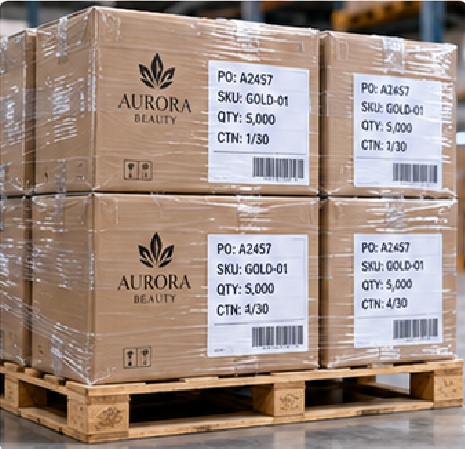
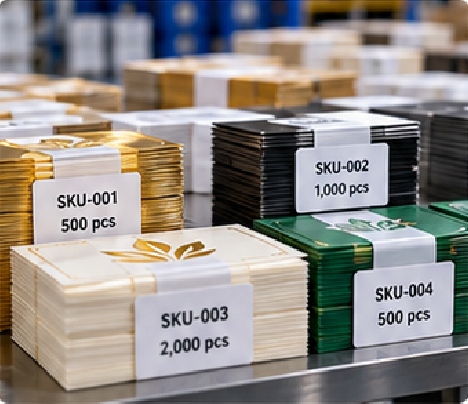
Premium programs often grow into multiple fragrances, flavors, shades, sizes, markets, and seasonal versions. Consistency requires each SKU to retain its own approved artwork, quantity, packing identity, and QC reference while common specifications are controlled across the family. Philiton can organize rolls, sheets, cartons, and shipment identification by SKU and batch, supporting repeat orders without turning a growing product range into an artwork and packing-control problem.
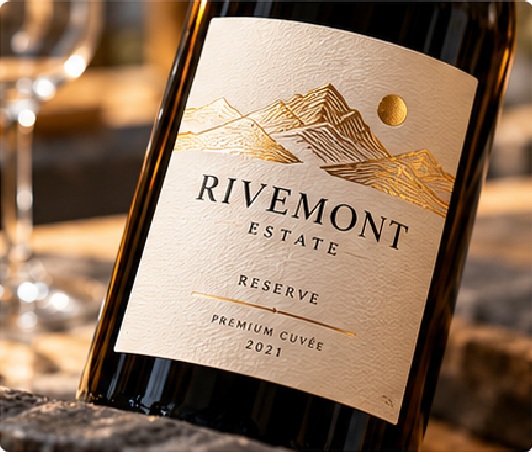



Send Philiton enough information to understand the label as a production item, not only as artwork. A useful quotation starts with the finished size, quantity, number of SKUs, package or application surface, material preference, metallic area, foil direction, and any secondary finish such as embossing, Spot UV, varnish, or lamination. If the material or foil route is still open, mark it as “please recommend” and include a bottle, jar, box, pouch, or product photo. Artwork can be AI, PDF, EPS, PSD, CDR, or another workable production reference. For automatic application, include roll direction, core, maximum roll diameter, or applicator information when available. Philiton can then review material, tooling, artwork, sample route, packing, and production planning before issuing the final project quotation.
For all inquiries, please feel free to reach out at:
Our team will answer your inquiries within 12 hours.
Your information will be kept strictly confidential.
We will contact you within 24 Hours, please pay attention to the email with the suffix“@philiton.com”.
For all inquiries, please feel free to reach out at:
We will contact you within 24 Hours, please pay attention to the email with the suffix“@philiton.com”.
For all inquiries, please feel free to reach out at:
We will contact you within 24 Hours, please pay attention to the email with the suffix“@philiton.com”.