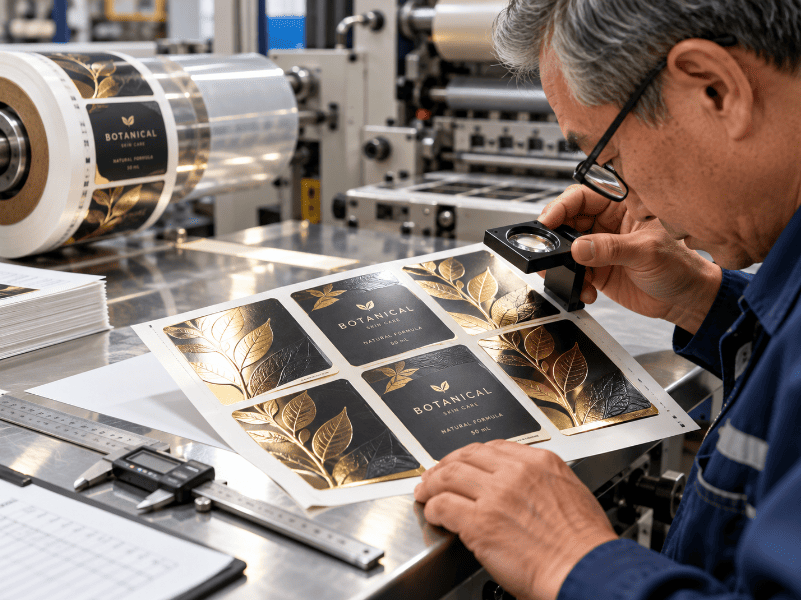
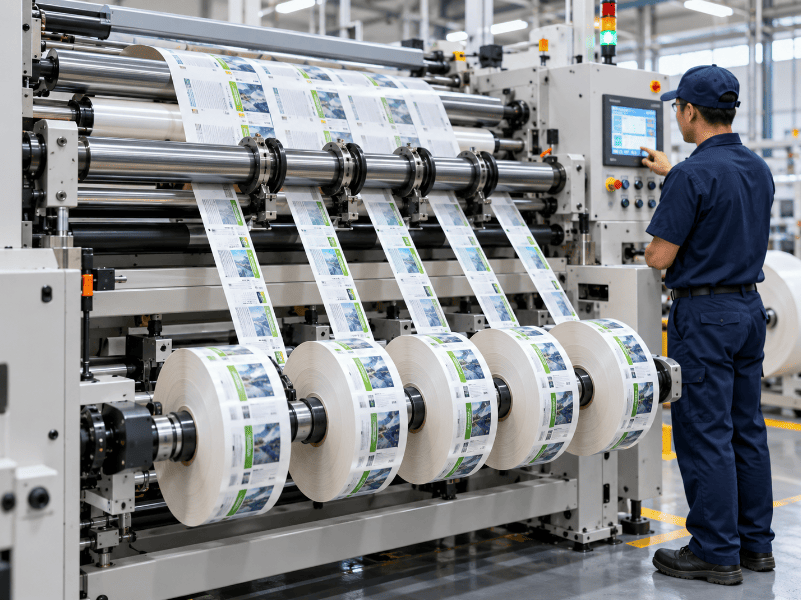
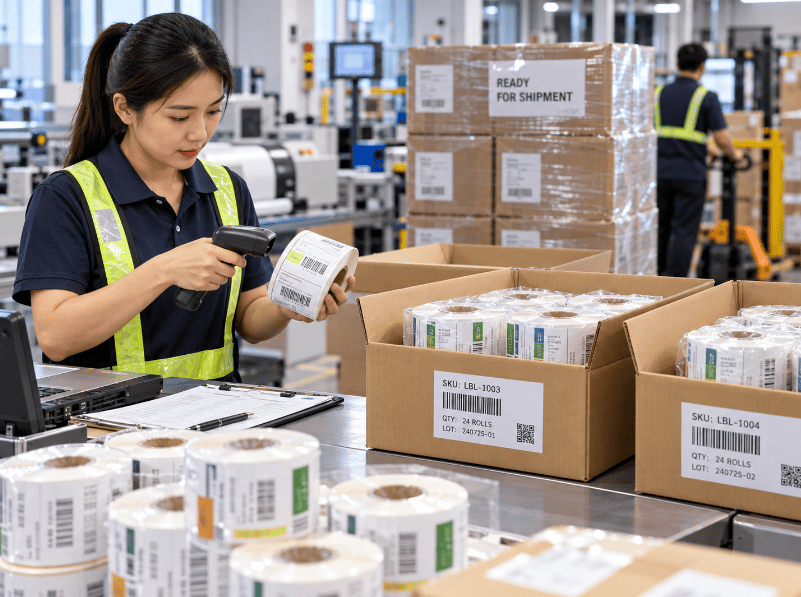
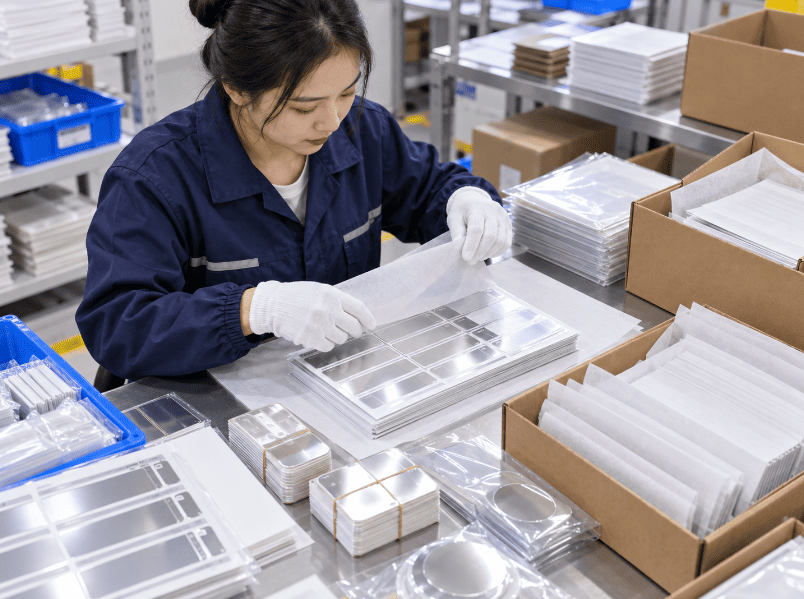
Your Trusted Labels & Stickers Manufacturer from China!

Custom Labels for Manufacturers

Engineered label production for manufacturers that need reliable application, machine compatibility, traceability, consistent quality and repeat supply across changing production volumes.
Philiton supports manufacturing programs from specification review and sampling through repeat mass production.

  • Founded in 2016
  • 12,000+ m² manufacturing operations in Shenzhen and Dongguan
  • 200+ employees, including 91 technical, skilled production and quality personnel
  • Around 500 pcs starting quantity for many standard custom label projects
Custom Labels for Manufacturers

Built for Manufacturing Teams With Repeat Label Requirements

Philiton works with factories and production organizations where labels function as product components, identification media, packaging elements and production-line materials rather than simple decorative stickers.

OEM and ODM Factories

OEM and ODM operations often manage labels for several brands, product families and specification versions at the same time. Philiton supports projects where artwork, material, adhesive, SKU, barcode data and roll configuration must remain separated and controlled throughout production. Shorter digital runs can support product launches or changing versions, while stable programs can move into repeat production. Manufacturing records, approved samples and confirmed roll specifications help reduce mix-ups when the same factory manages many end-brand requirements.

Contract Manufacturers

Contract manufacturing programs often depend on labels arriving in the correct format before filling, assembly or final packing begins. Philiton reviews label size, application surface, printing method, finishing, roll direction, core requirements and shipment schedules as part of the production specification. Multi-SKU orders can be separated by item number, artwork version or destination. Projects can begin with sampling and pilot quantities before production volumes increase, avoiding a forced change of manufacturing partner when the end brand scales.

Brand-Owned Production Plants

Manufacturers operating their own production plants usually need stronger control over repeatability than a one-time promotional label order. Philiton can work from approved artwork, golden samples, roll specifications and application requirements to create repeat production references. Procurement, packaging, quality and operations teams can align around one confirmed specification covering material, adhesive, color, die-cut structure, barcode or serial data, winding and packing. Repeat orders can then follow the approved production record unless a controlled change is requested.

Industrial Product Manufacturers

Industrial labels may remain on equipment, components, housings, cartons or assets throughout manufacturing, installation and service. Philiton can match paper, film, adhesive, printing, protective finishing and identification methods to the actual surface and operating environment. PET, synthetic films, thermal materials, barcode structures, serial numbers and durable constructions are available according to project needs. Performance claims are confirmed against the selected material, surface, exposure conditions and required testing instead of being assumed from appearance alone.

Manufacturing Labels Must Work Beyond the Printing Press

A successful manufacturing label must apply correctly, remain readable, carry the right data and arrive in a production-ready format every time a line needs replenishment.

Line Compatibility

A well-printed roll can still create downtime when winding direction, core diameter, maximum roll diameter, pitch, gap or liner width does not match the applicator. Philiton treats roll construction as part of the finished product. For automatic and semi-automatic lines, specifications can include inside or outside winding, unwind direction, label orientation, sensor gap, perforation, black mark, number across and roll quantity. Equipment information or an existing roll sample helps reduce avoidable setup problems before production begins.

Durable Performance

Label construction should reflect where the label is applied and what happens after application. A smooth carton, painted metal panel, glass bottle and low-surface-energy plastic component do not require the same adhesive system. Water, oil, abrasion, chemicals, refrigeration, heat and outdoor exposure can also change the material decision. Philiton evaluates face material, adhesive, printing and protective finishing around the real use condition, with application sampling and appropriate tests used when performance carries operational risk.

Traceable Identification

Manufacturing labels increasingly carry information beyond a fixed logo. Philiton supports barcodes, QR codes, serial numbers, batch information, variable text, sequential data and RFID/NFC-related projects according to the required workflow. Data preparation, printing or encoding and inspection must stay aligned so a visually acceptable label does not leave production with incorrect information. Projects requiring scanning or electronic verification can include defined inspection steps before rolls are packed and released for shipment.

Repeat Supply Control

Manufacturing programs rarely end with one order. Artwork versions change, forecasts move, additional SKUs appear and replenishment dates become linked to production schedules. Philiton maintains approved specifications for repeat jobs, including material, printing route, finishing, die-cut configuration, roll requirements and packing instructions. Production can scale from shorter runs into regular medium- or high-volume orders. Change points should be identified before release so an updated design, material substitution or machine requirement does not silently enter a repeat run.

Label Formats for Different Manufacturing Functions

Philiton produces label constructions around the job the label must perform, from permanent product identification and production data to packaging branding and smart identification.
Product Identification Labels

Product Identification Labels

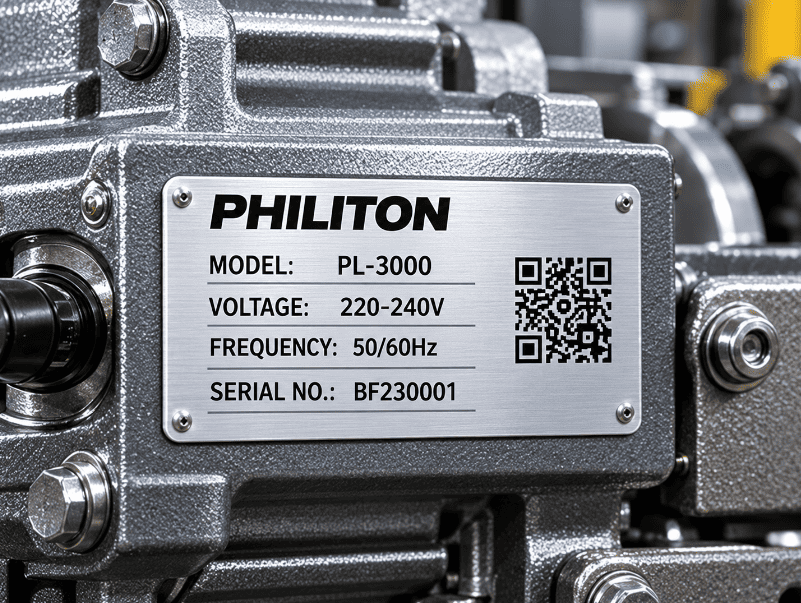
Product identification labels carry model names, ratings, part references, manufacturing details, instructions or fixed product information. Construction can range from paper and synthetic labels to PET and other film structures depending on service life and surface conditions. Philiton can supply sheets, individual pieces or production rolls, with custom sizes and shapes created around the available labeling area. Projects requiring long-term identification can add suitable protective finishing after material and environmental requirements are reviewed.
Barcode and Serial Labels

Barcode and Serial Labels

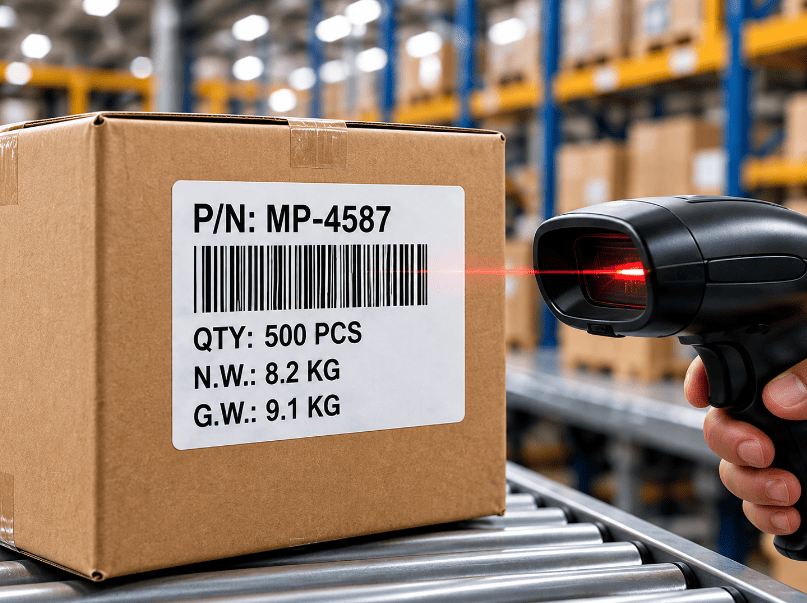
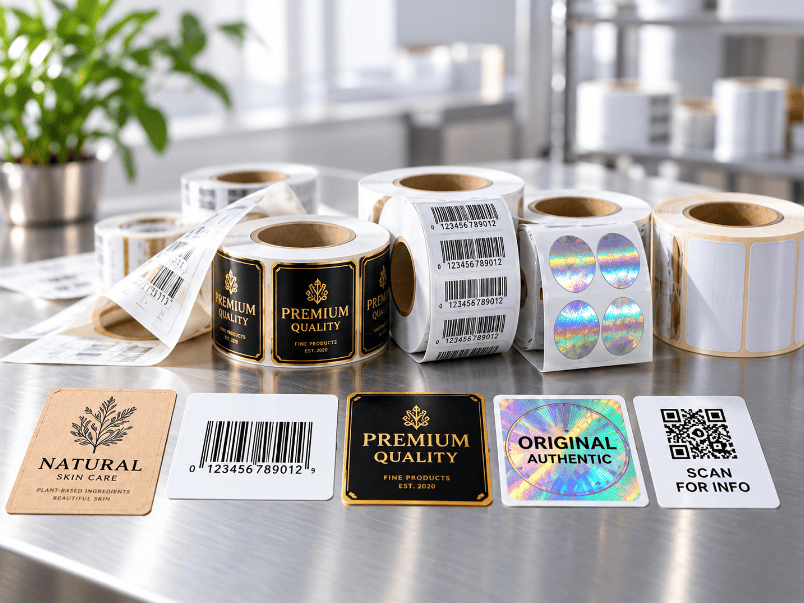
Barcode and serial labels support inventory, work-in-process identification, product tracking, warehouse movement and finished-goods control. Philiton can produce static barcodes, variable barcodes, QR codes, sequential numbers and other variable-data combinations. Readability depends on print contrast, dimensions, quiet zones, surface finish and final application conditions, so high-reflective decorative areas should be separated from critical scanning areas when necessary. Roll sequence and packaging can also be controlled when later operations depend on data order.
Warning and Safety Labels

Warning and Safety Labels

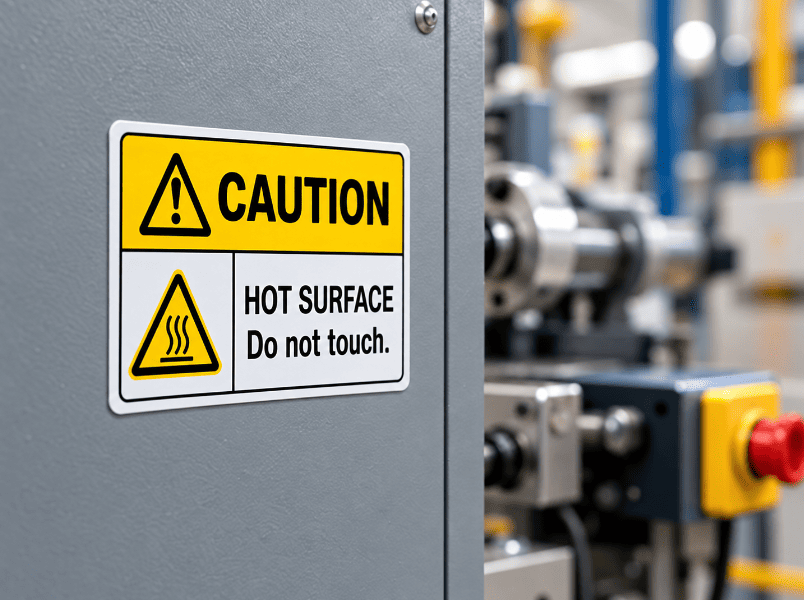
Warning, instruction and hazard communication labels need clear information, stable printing and a construction suited to the product or operating environment. Philiton can combine durable film, suitable adhesive, contrasting graphics and protective finishing according to the application. Adhesive selection matters on textured, painted, powder-coated or plastic surfaces. Regulatory wording and symbols should come from the manufacturer or applicable project requirements; Philiton focuses on converting approved content into a producible, durable and traceable label specification.
Durable Industrial Labels

Durable Industrial Labels

Durable labels are used on equipment, electronics, automotive-related components, tools, housings, machinery and other products exposed to handling or demanding environments. PET and other synthetic materials can be combined with permanent adhesives, lamination, coating, screen printing or other processes where appropriate. Abrasion, water, oil, alcohol, chemical or temperature requirements are reviewed individually because no single construction covers every condition. Sample testing helps separate genuinely suitable structures from materials selected only by appearance.
Brand Packaging Labels

Brand Packaging Labels

Manufacturers producing branded goods still need color, finishing and presentation to remain consistent across production runs. Philiton supports paper, BOPP, PET, transparent films, metallic materials and other packaging labelstocks with digital, flexographic, screen, UV and specialty finishing routes. Foil, embossing, debossing, lamination, holographic effects and selective surface treatments can be integrated where appropriate. Multi-SKU programs can use common structures while artwork versions remain separately controlled for filling, packing and distribution.
RFID and NFC Labels

RFID and NFC Labels

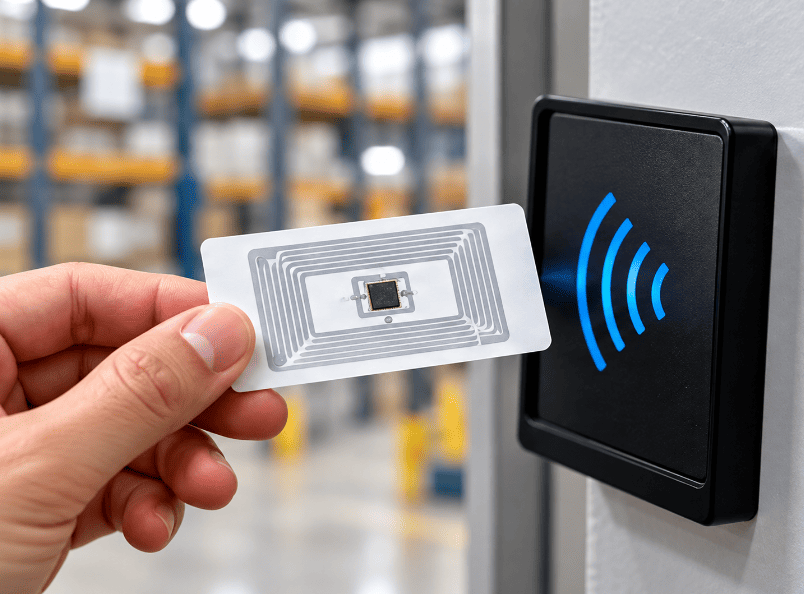
RFID and NFC projects combine printed label construction with electronic components and data requirements. Philiton can support projects involving inlays, encoding, printing, die cutting, converting and read/write verification according to the selected application. Performance must be confirmed around the chip, antenna, label size, mounting surface, orientation, reader and operating environment. Metal and liquid applications require particular attention. Chip models, read distance and electronic specifications are therefore confirmed during project development rather than treated as universal values.

Match Label Construction to the Manufacturing Application

Surface, exposure, identification function and application equipment all influence the final construction. Philiton uses project conditions to narrow the material, adhesive, print and delivery format.

Manufacturing ApplicationTypical SurfaceMain Label FunctionConstruction ConsiderationsCommon Delivery Format
Equipment identificationPainted metal, plastic housingModel, rating, product IDDurable film, permanent adhesive, abrasion protectionRoll or sheet
Electronic componentsPlastic, metal, coated partsSerial, barcode, warningSmall-format precision, PET or synthetic material, data readabilityRoll
Bottles and containersPET, HDPE, glass, metalBranding, ingredients, traceabilityContainer shape, moisture, squeeze or refrigeration conditionsRoll
Cartons and shipping casesCorrugated board, coated cartonSKU, logistics, barcodeAdhesion to board, scan contrast, thermal or printed dataRoll or stack
Automotive-related partsMetal, engineered plasticsPart ID, warnings, traceabilityDurable adhesive, oil/abrasion exposure reviewRoll
Industrial assetsMetal, plastic, painted surfacesAsset number, QR, instructionsService life, cleaning, environment, readable dataRoll or sheet
Warehouse and WIPCarton, tote, rack, containerRouting, inventory, variable dataThermal transfer or printed data, scanner compatibilityRoll
Smart identificationProduct, carton, assetRFID/NFC tracking or authenticationInlay, mounting surface, encoding, read verificationEncoded rolls

Material and Adhesive Selection Starts With the Application

Philiton sources labelstocks and adhesives from qualified external supply channels, then converts the selected construction through printing, finishing, die cutting, inspection and production control.
Match Face Material to Surface, Environment and Service Life

Match Face Material to Surface, Environment and Service Life

  • Material selection begins with the function of the finished label rather than a material name on a quotation. Paper stocks can suit many indoor packaging and information applications, while BOPP and other films are widely used where moisture resistance, flexibility or a cleaner packaging appearance is required. PET is often considered when dimensional stability, durability or industrial use becomes more important. Thermal materials, synthetic papers, metallic films, transparent films, holographic materials and other specialty substrates can be selected for specific printing, identification or visual requirements.
  • Surface comes first: Glass, coated carton, stainless steel, painted metal, PET, HDPE, PP and textured plastics present different bonding conditions. Philiton asks what the label will actually touch before recommending a construction.
  • Environment changes the decision: Water, oils, alcohol, cleaners, abrasion, refrigeration, heat or outdoor use can alter face material, ink, laminate and adhesive requirements. A structure selected for an indoor carton should not automatically be copied onto an industrial component.
  • Service life matters: Temporary warehouse identification, retail packaging and permanent equipment marking carry different durability expectations. Protective lamination or coating can be added when printed graphics require additional resistance.
  • Visual requirements remain part of engineering: Clear, white, metallic, matte, gloss or textured materials can influence white ink, color appearance, barcode contrast and finishing compatibility.
  • Final selection is confirmed around the real surface and operating condition instead of relying on generic labels such as “waterproof” or “industrial grade.”
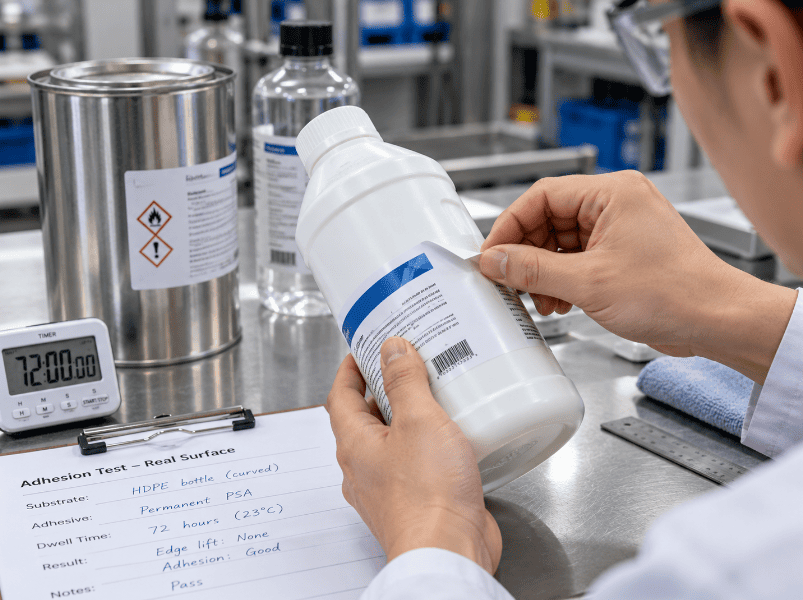
Adhesive Performance Must Be Verified on the Real Surface

Adhesive Performance Must Be Verified on the Real Surface

  • Adhesive choice is closely linked to substrate chemistry, surface texture, application temperature, dwell time and long-term exposure. A strong initial grab does not automatically mean strong long-term holding power, while an adhesive with moderate initial tack may build stronger bonding after sufficient dwell.
  • Philiton can evaluate adhesive behavior through project-specific testing paths including peel adhesion, loop tack, shear or holding performance and release-force checks. Environmental testing can also be combined with adhesion review when water, oil, alcohol, chemicals, refrigeration or temperature changes are relevant.
  • Initial application: Labels applied manually at room temperature behave differently from labels applied automatically to a cold, dusty or moving surface.
  • Surface energy: Some plastics create more difficult bonding conditions than glass, metal or coated paperboard. Material and adhesive trials can reduce the risk of edge lift or complete detachment.
  • Curves and small diameters: A label wrapped around a narrow container or cable creates continuous lifting force at the edge. Facestock stiffness and adhesive holding strength must work together.
  • Liner release: Automatic dispensing also depends on controlled release from the liner. Excessive release force can disturb peeling, while unstable release may create feeding problems.
  • When adhesion is critical, Philiton recommends testing the proposed construction on the actual product or a representative surface before mass production.

Roll Specifications Must Match the Production Line

Philiton treats winding, liner and converting details as functional production specifications, helping manufacturers avoid rolls that print correctly but cannot run reliably on existing equipment.

Define Machine Requirements Before the Roll Is Produced

Automatic application introduces mechanical requirements that do not exist with hand-applied stickers. Philiton can review applicator information, printer model, existing roll samples or a manufacturer-supplied roll drawing before production specifications are released.
  • Roll direction: Label orientation and unwind direction determine how artwork reaches the peel plate and product. Inside or outside winding alone is not always enough; orientation should be confirmed visually or against the equipment specification.
  • Core diameter: Core size must fit the reel holder. A roll built on an incompatible core may never reach the production line even when every printed label is correct.
  • Maximum roll diameter: Larger rolls can reduce changeovers, but only when the machine and packing method allow the additional diameter and weight.
  • Gap and pitch: Stable spacing supports sensing and repeat application. Irregular pitch can interfere with dispensing accuracy.
  • Liner width: The liner must provide suitable margins around the die-cut label while remaining compatible with the applicator path.
  • Sensor requirements: Clear constructions, special liners or certain machine setups may require a defined sensor gap, black mark or other detection method.
Philiton can record confirmed roll parameters with the approved production specification so repeat orders follow the same application setup.

Converting Quality Directly Affects Feeding and Dispensing

Printing is only one part of a production roll. Die cutting, stripping, slitting and rewinding determine whether the finished material feeds smoothly through an applicator or thermal-transfer printer.

  • Die cutting: The cutting process must cleanly separate the label shape without damaging the release liner. Excessive cutting pressure can weaken the liner and create breaks during dispensing.
  • Slitting: Roll edges should remain clean and stable. Poor slitting can create rough edges, adhesive contamination or inconsistent web tracking.
  • Rewinding: Tension must be controlled so rolls do not telescope, become excessively tight or distort the liner. Raised finishes, thicker films and special constructions may require additional attention during rewinding.
  • Splices: Projects can specify how splices are handled or identified where uninterrupted operation is important.
  • Labels per roll: Consistent roll quantities make replenishment, line planning and inventory easier. Quantity can be set according to roll diameter, label dimensions and machine requirements.

Providing Philiton with the existing roll, a photograph of the loaded machine, core dimensions and applicator specification often removes more uncertainty than a drawing of the label alone.

Printing and Functional Processes Matched to Production Needs

Philiton combines printing, finishing, variable data and smart-label processes according to order quantity, SKU structure, durability, appearance and identification requirements.

Production RouteStrong FitTypical Manufacturing UseKey Control Points
Digital printingShorter runs, multiple SKUs, frequent artwork changesPilot launches, regional versions, multi-SKU programsArtwork version, color reference, variable content
Flexographic printingStable roll production and repeat volumePackaging, logistics and recurring production labelsRegistration, color, material, roll consistency
Screen / UV processesCoverage, special inks or surface effectsIndustrial labels, white ink, selective effectsInk adhesion, curing, registration
Foil / emboss / debossPremium branding and tactile featuresBranded packaging, product identificationPosition, pressure, surface protection
Variable data printingUnique or changing informationSerial numbers, barcodes, QR codes, batch dataData mapping, duplication, readability, sequence
RFID / NFC convertingElectronic identification and trackingInventory, asset, authentication and smart-label programsInlay position, encoding, read/write verification

Send the Right Data Before Label Engineering Begins

A complete specification reduces quotation revisions, sampling delays and production uncertainty. Philiton can work from existing labels, technical drawings, product samples or a structured project brief.

Application Details Needed Before Material and Adhesive Selection

The first engineering questions describe where the label goes and what happens after application. Artwork alone cannot answer those questions.
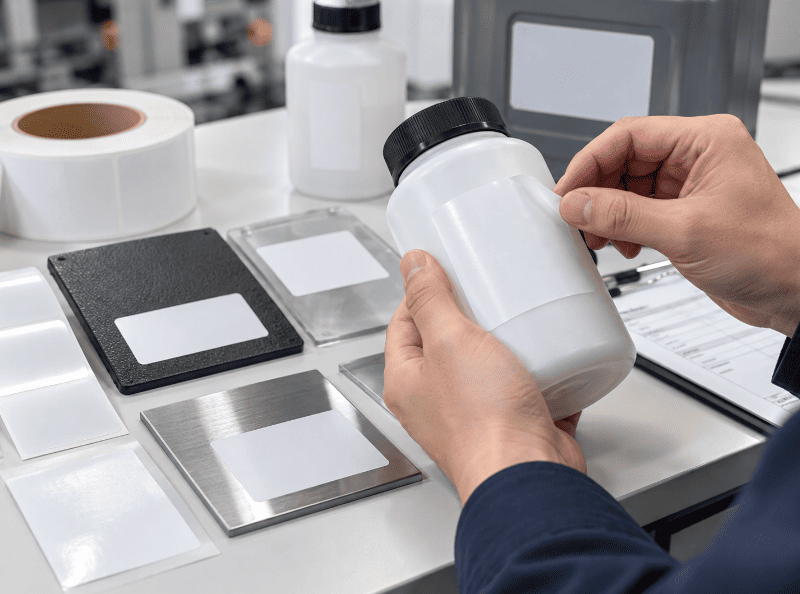
  • Application surface: Identify the actual material such as glass, coated carton, stainless steel, painted metal, PET, HDPE, PP or another plastic. Photographs and a physical sample are useful when the surface is textured, curved or treated.
  • Label location and size: Provide the available labeling area, finished label dimensions and shape. For wrapped, recessed or narrow-diameter applications, product dimensions help Philiton review edge lift and fit.
  • Application environment: State whether labels face moisture, refrigeration, heat, oil, alcohol, cleaners, chemicals, abrasion or outdoor exposure. Performance requirements should be specific to the application.
  • Application temperature: A label applied to a room-temperature container and a label applied in a cold filling area may require different adhesive behavior.
  • Required service life: Temporary WIP identification, shipping labels and permanent equipment labels should not be specified in the same way.
  • Functional requirement: Clarify whether the label is decorative, informational, tamper-evident, scannable, serialized, writable, thermal-printable or electronically readable.
With these inputs, Philiton can narrow candidate structures before a paid or production-representative sample is prepared.

Machine, Artwork and Supply Data Needed for Production Release

Manufacturing labels also need data connected to equipment, order planning and final delivery.
  • Application method: Confirm manual, semi-automatic or automatic application. Automatic lines should include machine model or relevant reel and sensor requirements where available.
  • Roll specification: Send core diameter, maximum roll diameter, winding direction, label orientation, liner width, gap, pitch, labels per roll and any splice restrictions already used on the line.
  • Artwork: Vector files are preferred for final production. Include approved text, Pantone references where required, white-ink layers, foil areas, barcode specifications and dielines.
  • Data files: Variable-data projects should define field structure, sequence, file format, duplicate rules and any required mapping between label, roll, carton or product.
  • Quantity and SKU count: Give expected quantity by design rather than only one total number. Multi-SKU structure can influence printing route, setup cost and packing.
  • Replenishment pattern: Annual demand, expected order frequency or a near-term forecast helps Philiton choose a production route that works beyond the first purchase.
  • Destination and required date: Shipping country, delivery location and target date allow manufacturing and logistics planning to begin with the quotation.

Sampling Should Remove Risk Before Mass Production

Philiton uses different sample levels for appearance, material, application, finishing and production approval rather than forcing every project through the same sample route.
Blank Material Check

Blank Material Check

A blank material sample is useful when adhesive behavior, surface compatibility or material feel matters more than graphics at the first stage. Candidate constructions can be applied to the real component, container or representative panel before printing investment begins. The test can focus on initial tack, dwell, edge lifting, surface conformity or removal behavior. Blank sampling is especially useful for industrial surfaces, refrigeration, curved products and difficult plastics where artwork approval alone cannot prove whether the chosen label construction will remain attached.
Digital Printed Sample

Digital Printed Sample

Digital sampling allows artwork, dimensions and general visual appearance to be checked without preparing a full conventional production setup. Common digital samples can often be produced in about 1–3 business days after artwork, material and process details are confirmed. Typical quantities are around 10–50 pieces per design, depending on the project. Digital samples work well for new products, several SKUs, branding review, barcode layouts and early-stage packaging decisions, while highly process-sensitive effects may require a more production-representative sample.
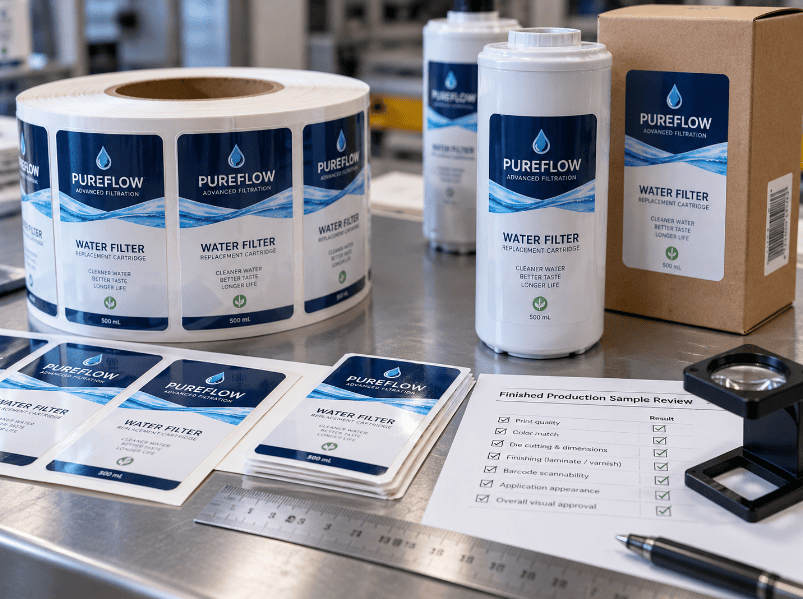
Finished Production Sample

Finished Production Sample

Printed and finished samples can include die cutting and relevant finishing so the final label can be reviewed closer to production conditions. Standard printed or finished samples are commonly around 3–5 business days, while foil, embossing, screen printing, special die cutting or specialty materials may require about 5–7 business days. Sample quantities often fall around 10–100 pieces. RFID, security, custom holographic or special constructions can require approximately 5–10 business days depending on component and process availability.
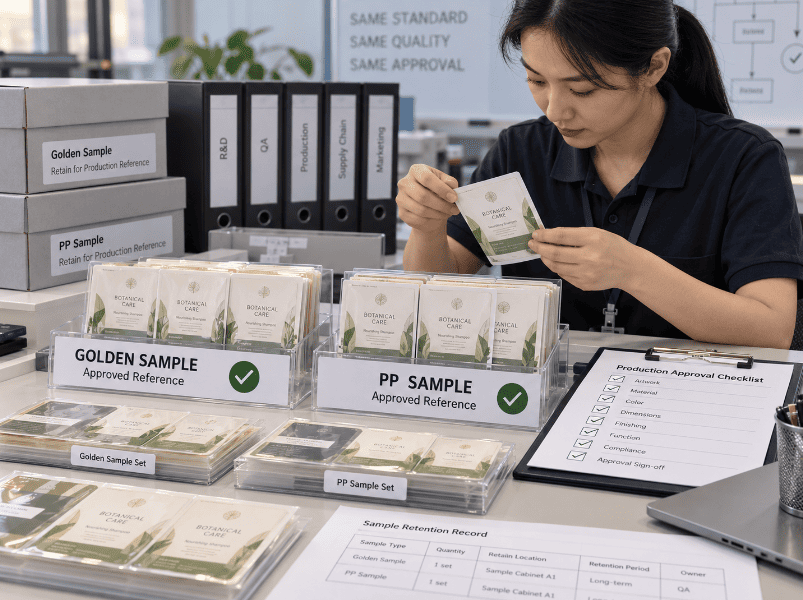
Golden and PP Samples

Golden and PP Samples

Higher-risk or repeat manufacturing programs can use PP samples or a golden sample as the approval reference before bulk production. PP samples commonly use about 10–50 pieces or another agreed quantity and can take around 3–7 business days depending on construction. Golden samples are normally retained in several approved sets so production, quality teams and the manufacturer can refer to the same standard. Color, material, dimensions, finishing, roll specifications, variable data and functional requirements should be frozen before the mass-production release.

Scale From Pilot Quantities Into Repeat Manufacturing Programs

Philiton combines flexible starting quantities with equipment, personnel and quality infrastructure capable of supporting higher volumes, multiple SKUs and recurring production schedules.

Start With Manageable Quantities, Then Scale Production

For many standard custom label and sticker projects, Philiton can begin at around 500 pieces per design or SKU. Final MOQ depends on material, printing route, special tooling, security structure, RFID components and other project variables. A manageable starting quantity is useful when a manufacturer is launching a new product, validating several SKUs, changing packaging or testing a new application. Digital production can reduce traditional plate setup for suitable short-run work, making design changes and smaller SKU batches easier to manage. Growth does not require a change to a completely different supply model. Philiton also supports recurring orders at 5,000, 50,000, 500,000 pieces and higher production levels when the project reaches that scale. Printing method and manufacturing route can be reviewed as volume grows so setup cost, production efficiency, material usage and quality control stay appropriate to the order profile. Repeat programs can retain approved artwork, material construction, die-cut information, roll specifications and packing instructions as controlled production references. Forecast information and order history can then help organize future manufacturing schedules. The goal is not to force a pilot order into a mass-production process. Philiton selects the manufacturing route around current volume while preserving a path for later scale.

Lead Time Begins After Specifications and Approvals Are Frozen

Production timing becomes meaningful only after a project is ready to manufacture. An incomplete artwork file, unapproved sample or undecided material can delay a program before formal production has started.
For many standard label families, normal production after sample, artwork and material approval is commonly around 7–15 business days. Special materials, complex finishing, unusually large orders, RFID components, custom security features or dedicated tooling are scheduled according to the actual production route.
The production clock should therefore be separated into clear stages:

  • Specification review: Size, material, adhesive, quantity, SKU, print, finish and roll requirements are confirmed.
  • Artwork approval: Text, color references, variable information, barcode areas, dielines and special layers are frozen.
  • Sample approval: When sampling is required, mass production does not proceed while approval remains open.
  • Material and tooling preparation: Specialty substrates or dedicated dies, foil dies, embossing tools and other project-specific resources may add preparation time.
  • Manufacturing and QC: Printing, finishing, converting and inspection follow the released specification.
  • Shipping preparation: Standard orders commonly require about 1–2 business days for final quantity checks, packing and dispatch preparation; large multi-SKU or special palletized shipments can require around 2–4 business days.

International transit is planned separately from factory production time.
Manufacturing Control Continues Through Every Production Stage

Philiton combines artwork preparation, printing, specialty processes, converting, inspection and packing within an integrated manufacturing workflow designed for both flexible runs and repeat volume.
Artwork and Prepress

Artwork and Prepress

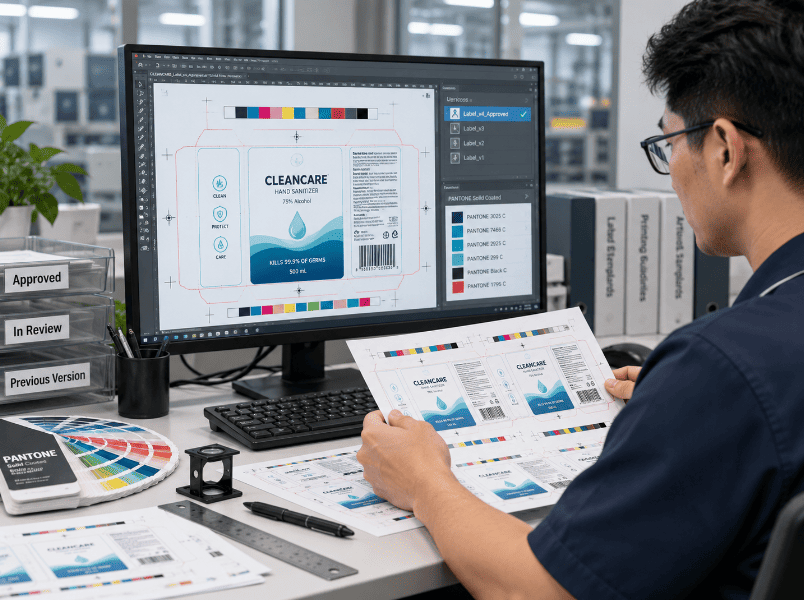
Production begins by converting approved design files into controlled manufacturing artwork. Philiton reviews dimensions, dielines, print layers, white ink, spot colors, foil or emboss areas, barcode placement and variable-data fields according to the project. Version control matters when several SKUs look similar but contain different product information. Files are released only after production information is sufficiently defined, helping prevent an obsolete design or an unapproved revision from reaching printing.
Material Release

Material Release

Labelstocks, films, papers, adhesives, liners, foils and specialty substrates are sourced from external supply partners according to the required construction. Philiton does not treat raw material selection as a separate commodity purchase; selected materials must work with printing, finishing, converting and final application. Before production, the required construction is matched to the released job specification. Projects with demanding adhesion or durability requirements can add material sampling or incoming verification before the full run begins.
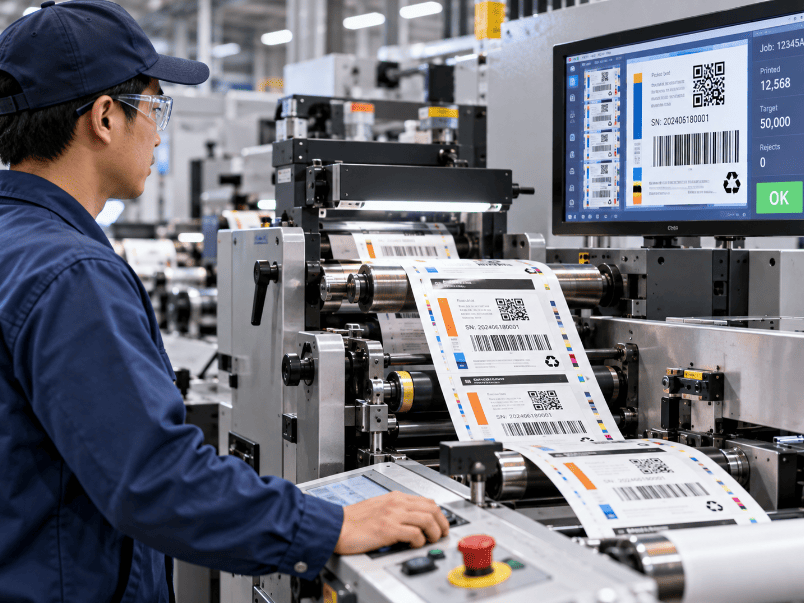
Printing and Data

Printing and Data

Digital, flexographic, screen, UV and other available production processes are selected around quantity, SKU mix, substrate, color, data and finishing requirements. Variable-data work adds another control layer because each printed label may contain different information. Barcode, QR, serial or other data projects require both graphic production and data accuracy. Production settings are monitored during the run rather than waiting until finished rolls are packed before discovering a print, registration or data problem.
Finishing and Die Cutting

Finishing and Die Cutting

Lamination, coating, foil, embossing, debossing, holographic effects and other finishing steps are integrated according to the released construction. Die cutting then controls the final label shape, edge and gap while protecting the liner beneath. Excessive cutting pressure can damage backing material and later interrupt dispensing. Process checks therefore focus not only on visual appearance but also on whether the converted web remains suitable for stripping, slitting, rewinding and final application.
Slitting and Rewinding

Slitting and Rewinding

Wide printed webs are slit into the required roll widths and rewound according to confirmed production-line specifications. Philiton can control core size, roll direction, label orientation, liner width, roll quantity and maximum roll diameter according to the approved setup. Rewinding tension is managed to reduce telescoping, deformation and unstable feeding. Special surface effects or thicker materials may require additional attention so the finishing is not damaged by excessive roll pressure during converting.
Inspection and Packing

Inspection and Packing

Finished material passes through final inspection and order verification before release. Checks can cover print appearance, dimensions, die cutting, color, barcode or variable data, roll direction, core and packaging information according to the project. Philiton uses IQC, IPQC, FQC and OQC stages as different control points rather than one final visual check. Approved rolls are separated, identified and packed by SKU or required delivery grouping before shipment preparation begins.

Quality Control Targets Manufacturing Risks Before Shipment

Philiton organizes quality control from incoming material through in-process inspection, finished-goods release and outgoing verification, with additional testing selected around the actual project risk.

Manufacturing RiskPhiliton Control PointWhat Can Be CheckedWhy It Matters
Wrong material enters productionIQCMaterial identity, appearance, relevant incoming specificationPrevents an incorrect substrate or construction from moving downstream
Print shifts during a runIPQCRegistration, print appearance, color reference, process stabilityReduces batch variation before converting
Die cut damages linerIPQC / FQCCut quality, gap, dimensions, liner conditionProtects automatic dispensing and roll integrity
Barcode or variable data is unusableData / vision inspectionReadability, content, sequence or duplication rules as specifiedProtects identification and traceability
Adhesion is unsuitableSample / laboratory validationPeel, tack, holding or application behavior where requiredReduces lifting or detachment after application
Wrong winding reaches production lineFQC / OQCRoll direction, orientation, core, roll dimensionsAvoids applicator setup failure and downtime
SKU versions become mixedProduction and packing controlArtwork version, SKU identity, roll and carton labelsProtects multi-SKU packing and replenishment
Final shipment differs from release standardOQCQuantity, packaging, identification and dispatch informationPrevents the last handling stage from creating a production problem

Compliance Documentation Must Follow the Actual Label Construction

Philiton handles compliance and documentation at project level, linking evidence to the selected material, application and sales market instead of applying one certificate claim across unrelated products.

Documentation Follows the Actual Material and Finished Construction

A material document is useful only when it corresponds to the substrate, adhesive, coating, ink or component actually selected for production. Philiton can coordinate material declarations, available supplier documentation, internal production records and third-party testing when required by a project. FSC-related material evidence, RoHS or REACH documentation, food-contact information, UL-related requirements and other industry-specific records are not treated as automatic coverage for every label made in the factory. Availability must be checked against the exact material and construction. For manufacturing procurement, early disclosure of documentation requirements is important because compliance can influence both material selection and development timing. Replacing a standard film with a specific documented substrate after sampling may require a new material review or another approval sample. Philiton therefore asks for the target market, product category, application, required declaration or standard, and any specified test method during development. Existing supplier evidence can be reviewed first. Where new third-party testing is required, timing and cost are confirmed separately. The same principle applies to performance language. A material should not be called chemical resistant, freezer suitable or high-temperature capable without linking the claim to the actual construction and test conditions relevant to the project.

Production Records Support Repeat Orders and Supplier Review

Manufacturing organizations often need more than a certificate PDF. Stable sourcing also depends on records showing what was approved and what entered production. Philiton can structure repeat projects around released artwork, material construction, production route, approved samples, roll specifications, SKU identification and inspection requirements. A golden sample or approved production reference can be retained when a program requires stronger batch consistency.

  • Material traceability: Material identity and relevant production information can be linked to the job record according to project requirements.
  • Artwork control: Released versions reduce the risk of an old warning, regulatory statement, barcode or product code returning in a repeat order.
  • Quality records: Inspection or test requirements can be agreed according to risk, including dimensional checks, appearance, barcode, adhesion or electronic verification where relevant.
  • Supplier review: Manufacturers requiring factory assessment, special documentation or project-specific qualification should communicate those requirements before formal production planning.
  • Change management: A different substrate, adhesive, chip, print process or roll specification should be evaluated before it is substituted into a repeat program.

Compliance becomes more reliable when commercial, engineering and quality requirements are connected to one controlled specification rather than collected after the labels are already produced. 
Packing Is Designed Around Storage, Handling and Replenishment

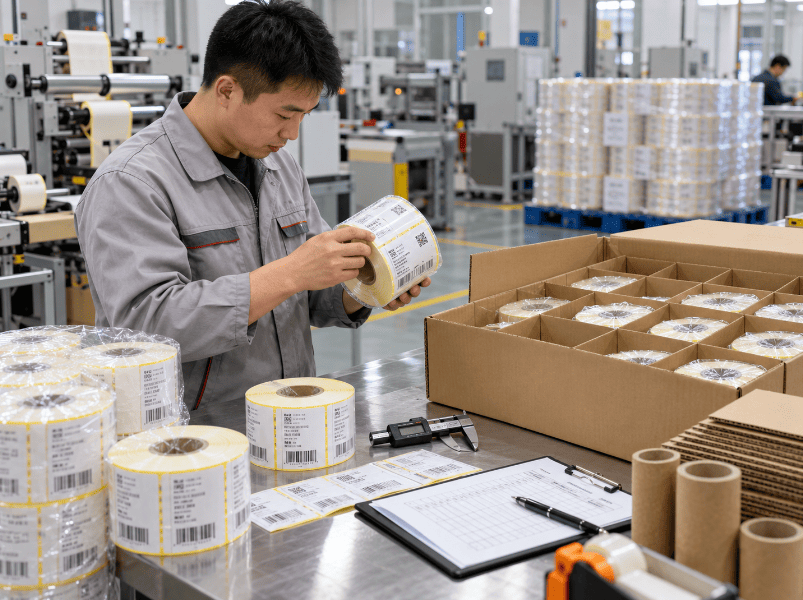
Philiton can deliver rolls, sheets, individual pieces, stacked labels or custom packing, with manufacturing programs organized around SKU separation, roll protection and warehouse identification.
Production Roll Packing

Production Roll Packing

Roll labels can be packed according to approved core, roll diameter, winding direction and label quantity requirements. Roll identification can include SKU, design reference, quantity or other agreed information so production teams can distinguish visually similar materials before loading an applicator. Protective wrapping and suitable carton arrangement help reduce edge damage, contamination and telescoping during handling. For long-term programs, keeping the same roll and packing specification also simplifies line setup and replenishment planning.
Sheet and Piece Packing

Sheet and Piece Packing

Not every manufacturing operation requires roll application. Labels can also be supplied in sheets, stacks or individual pieces when assembly staff apply them manually or when downstream kitting requires separated units. Packing quantity can be organized around the way the production team consumes the labels rather than forcing one generic pack size. Protective interleaving, bags, bundles or cartons can be selected according to label surface, finishing and handling requirements, especially when metallic, embossed or high-gloss surfaces are sensitive to friction.
Multi-SKU Separation

Multi-SKU Separation

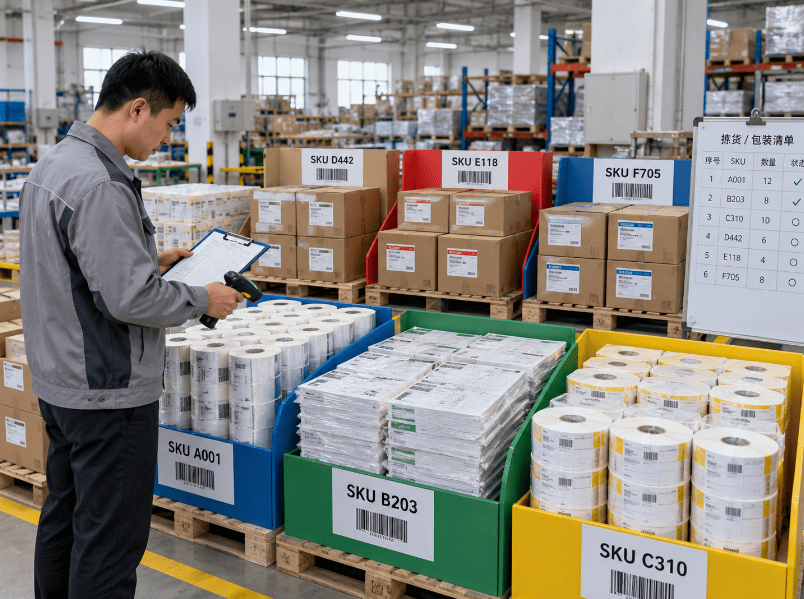
Multi-SKU production requires clear physical separation after manufacturing. Philiton can group rolls, sheets or pieces by design, item number, production version or destination according to agreed packing instructions. Inner identification and outer-carton information reduce the risk of similar artwork entering the wrong production or packing station. When several SKUs share one shipment, a packing list and clear carton grouping are more useful than combining everything into the smallest possible carton without regard to warehouse handling.

Export Shipment Protection

Export Shipment Protection

Export packing is selected around shipment size, transport route, material sensitivity and destination requirements. Cartons can be reinforced, moisture protection added where necessary, and larger programs prepared for palletized handling according to the shipment plan. After production and final QC, standard orders commonly require around 1–2 business days for quantity confirmation and shipment preparation. Large multi-SKU, multi-destination or special palletized programs can require roughly 2–4 business days before dispatch. International transit remains separate from factory production timing.
Representative Manufacturing Projects Managed Through Philiton Workflows

The examples below use anonymized project structures and representative order quantities above 1,000 pieces to show how Philiton can manage specification, sampling, production, inspection and replenishment.
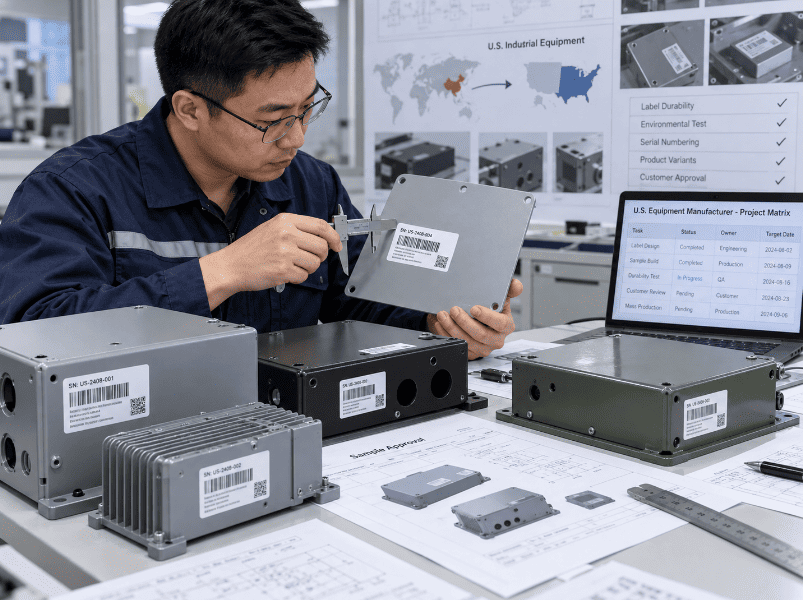
U.S. Equipment Manufacturer

U.S. Equipment Manufacturer

A United States industrial equipment producer required approximately 24,000 durable identification labels across six product variants. The labels were planned for painted metal housings and included fixed product information plus serialized data. Development started with the application surface, finished dimensions, service conditions and roll requirements rather than artwork alone. Philiton prepared a PET-based candidate construction, reviewed variable-data files and produced samples before production release. The approved specification recorded material, printing, die cut, sequence rules, winding direction and packing by SKU. Final rolls were separated by product variant to simplify warehouse receipt and assembly-line replenishment.
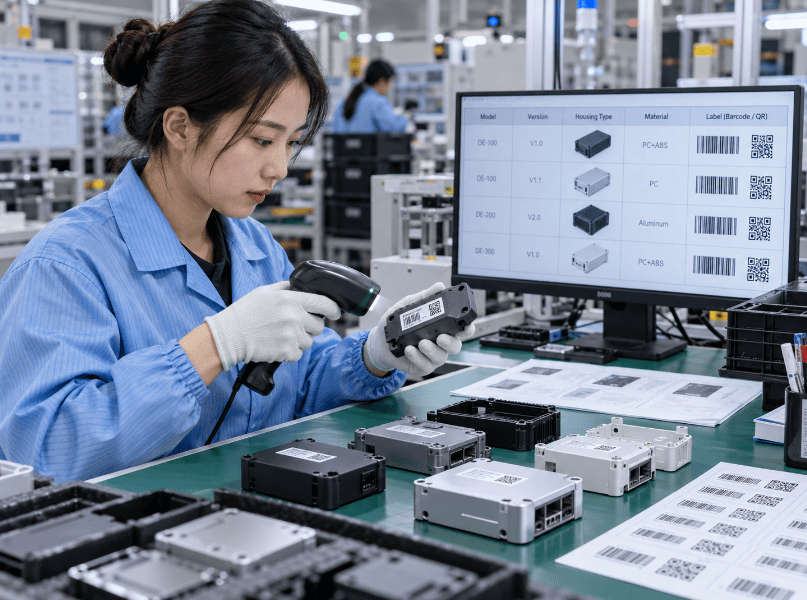
German Electronics OEM

German Electronics OEM

A German electronics OEM program was structured around approximately 36,000 labels covering 12 SKUs for plastic and metal product housings. Several artworks were visually similar, while barcode and QR information changed by product version. Philiton organized artwork release by SKU, reviewed the label position and roll configuration, then prepared printed samples for dimensional and scanning checks. Digital production supported early version verification before the repeat-volume route was finalized. Production control focused on version separation, barcode readability, die-cut consistency, roll orientation and carton identification so the receiving team could route each SKU directly to the correct assembly program.
Australian Contract Manufacturer

Australian Contract Manufacturer

An Australian contract manufacturer required approximately 48,000 BOPP roll labels divided across eight consumer-product SKUs. Production involved moisture exposure during packing and automatic application, making container surface, adhesive choice, label dimensions, gap, liner width and winding direction important development inputs. Philiton reviewed the existing applicator setup and prepared finished samples before the full run. Artwork versions were released separately while the common material construction remained controlled across the program. Finished rolls were packed by SKU and roll quantity, giving the manufacturer a repeatable replenishment format for later production orders without rebuilding the complete specification each time.

Frequently Asked Questions About Manufacturing Labels

Many standard custom label and sticker projects can start at around 500 pieces per design or SKU. Final MOQ depends on substrate, adhesive, tooling, printing route, finishing, RFID components, security structures and other project requirements. A standard digital label and a custom holographic or RFID construction should not be expected to share one fixed MOQ.
Common digital samples can take around 1–3 business days after specifications are confirmed. Standard printed or finished samples are commonly around 3–5 business days. More complex foil, emboss, screen, specialty-die-cut or material projects can take about 5–7 business days, while RFID, security or special structures often require about 5–10 business days. Courier transit is additional.
For many standard label families, production after artwork, sample and material approval is commonly around 7–15 business days. Specialty materials, large volumes, complex finishing, custom security structures, RFID components or dedicated tooling can require a different schedule. Production timing is confirmed after specifications are frozen rather than promised before key materials and processes are known.
Yes. Philiton can review roll direction, inside or outside winding, core diameter, maximum roll diameter, gap, pitch, liner width, label orientation, number across, perforation and sensor requirements. An equipment specification, existing roll sample or clear photographs of the current roll and machine help engineers confirm the delivery format before production.
Yes. Recommendations can be based on application surface, environment, service life, application temperature, container shape, printing requirements and labeling method. Philiton sources label materials externally and manages selection, printing, converting and validation. For difficult surfaces or performance-sensitive applications, material samples and application testing are recommended before bulk production.
Yes. Philiton supports variable text, serial numbers, barcodes, QR codes and other variable-data projects. The data structure, file format, sequence rules and required verification method should be defined before production. Scanning performance also depends on label dimensions, contrast, surface finish and final application conditions, so critical code areas are reviewed as functional elements rather than decorative graphics.
Each SKU can be linked to an approved artwork version, quantity and packing instruction. Similar designs should remain separately identified during production and packing. Common materials or production structures can be shared where appropriate, while variable artwork and product information remain controlled by SKU. Rolls or cartons can then be identified for easier receipt, storage and line replenishment.
Yes. Philiton can support RFID/NFC-related label projects involving printed construction, inlays, converting, encoding and verification according to the program. Chip model, antenna, label dimensions, read distance, mounting surface and reader conditions must be confirmed individually. Metal, liquid and other challenging environments require application-specific development rather than a universal read-performance promise.
Available documents depend on the actual material, construction and target requirement. Philiton can coordinate relevant supplier documentation, material declarations, production records and third-party testing where needed. FSC, RoHS, REACH, food-contact, UL-related or other compliance references are used only when the selected material or project has corresponding evidence; they are not presented as blanket coverage for every product.
Keeping the approved artwork, material structure, die-cut information, roll configuration, SKU identification and packing requirements stable makes replenishment much easier. Philiton can use previous approved production information as the repeat-order reference. Any change to material, size, data, artwork, adhesive, winding or machine requirements should be identified before release so the production specification can be reviewed and updated.

Send Your Manufacturing Label Specifications to Philiton

A useful quotation starts with enough production information to define the label rather than guessing from artwork alone. Send Philiton the available specification, existing roll, product photograph, drawing or application notes. A standard project with complete core information can often be quoted within approximately 2–8 business hours; RFID, security, special testing or complex constructions may require 1–2 business days or longer for component and process confirmation.

Please include:

  • Label size, shape, quantity and number of SKUs
  • Product or component surface
  • Operating environment and required service life
  • Manual, semi-automatic or automatic application method
  • Machine model or existing roll specification when available
  • Preferred material, adhesive or finish if already specified
  • Core size, winding direction and maximum roll diameter when known
  • Barcode, serial, QR, RFID or variable-data requirements
  • Artwork or current label photos
  • Shipping destination and required delivery date

Philiton will review the manufacturing route, sampling needs, MOQ, production timing, packing and quotation around the actual specification.

For all inquiries, please feel free to reach out at:

Get In Touch

  • Our team will answer your inquiries within 12 hours.

  • Your information will be kept strictly confidential.

Get a Fast Quote for Custom Labels & Stickers

We will contact you within 24 Hours, please pay attention to the email with the suffix“@philiton.com”. 

For all inquiries, please feel free to reach out at:

Ask For A Quick Quote

We will contact you within 24 Hours, please pay attention to the email with the suffix“@philiton.com”. 

For all inquiries, please feel free to reach out at:

Get a Quote Today!

We will contact you within 24 Hours, please pay attention to the email with the suffix“@philiton.com”.