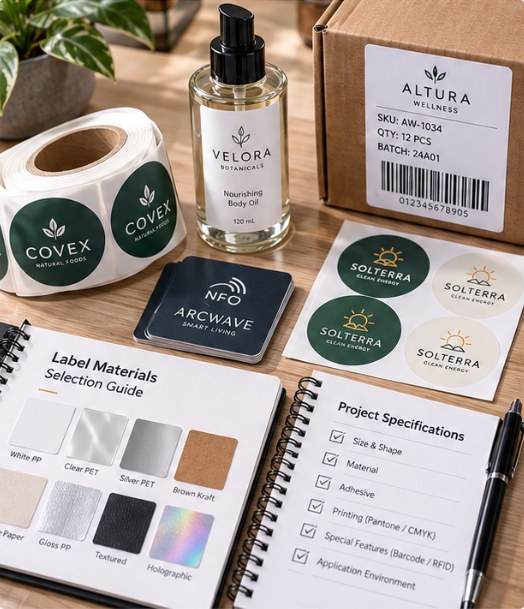
Industry-specific label manufacturing built around real products, surfaces, environments, application methods and repeat production requirements.
Philiton matches label materials, adhesives, printing, finishing and delivery formats to operating conditions across consumer, industrial, logistics and smart-label programs.
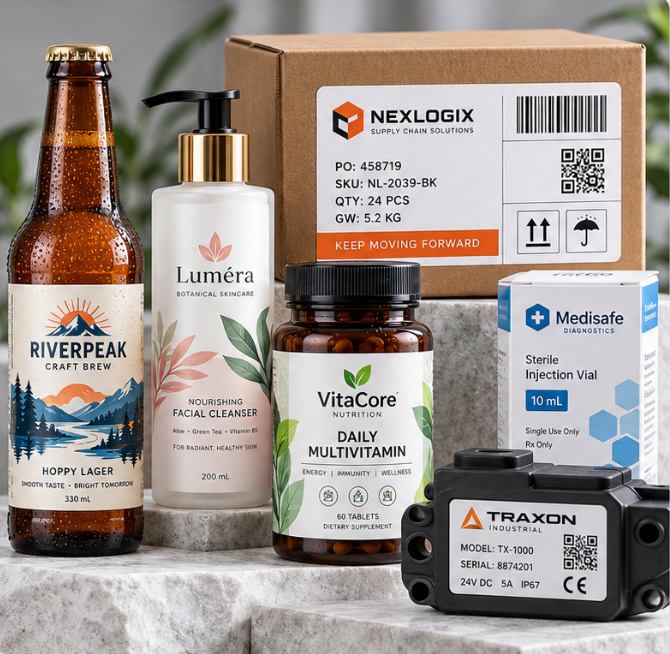
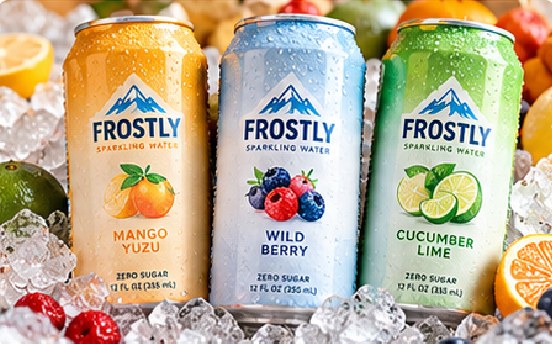
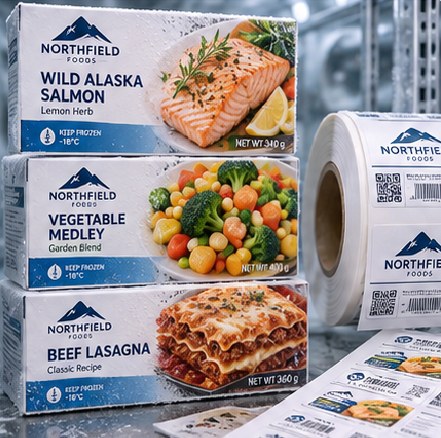
Food and beverage labels may face refrigeration, freezer storage, condensation, wet filling areas, oils, curved containers and high-speed application. Philiton reviews the package material, application temperature and service environment before recommending paper, BOPP, PET or other constructions. Roll specifications can be matched to labeling equipment, while barcode, ingredient, lot or variable information is controlled through approved artwork and production records. Food-contact claims are evaluated by the actual contact condition and material evidence.

Cosmetic and personal-care packaging often combines premium appearance with water, oil, alcohol and frequent handling. Clear-film no-label looks, opaque white areas, metallic accents, foil, embossing, spot effects and protective finishes can be developed around the container shape and formula exposure. Philiton checks how material color, transparency, white ink and lamination affect brand color, then uses a physical sample when appearance or resistance cannot be judged reliably from a screen proof.

Wine and spirits programs often depend on paper texture, metallic accents, embossing, premium tactile contrast and accurate front-and-back label coordination. Philiton can combine textured papers, foil, emboss/deboss, varnish, spot effects and specialty shapes, while checking whether the selected stock also suits chilled bottles, moisture or storage conditions. Fine foil detail, deep embossing and layered finishes should be proven on the intended material before production because surface texture and pressure can change the result.

Supplement labels commonly combine dense information, several flavors or strengths, barcode or QR data and repeated replenishment across many SKUs. Philiton can manage shared material systems with separate artwork approvals, color references and SKU packing rules. Film constructions may be selected for moisture or handling resistance, while premium finishes can be added without losing required text clarity. Any regulatory wording remains based on the approved artwork supplied for the destination market.
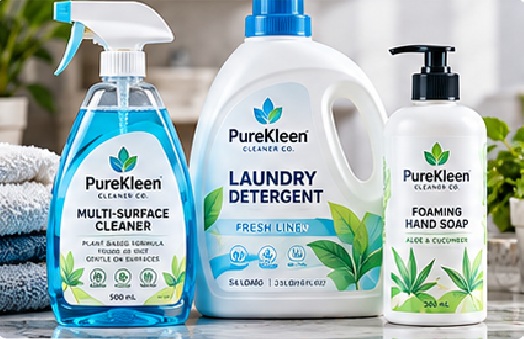
Home-care and household labels may encounter cleaners, oils, moisture, squeezing, curved bottles and repeated hand contact. Philiton evaluates container material and exposure before choosing the face stock, adhesive and surface protection. PE or other flexible films may be considered for squeezable packaging, while BOPP or PET may suit more rigid containers depending on the performance target. Chemical exposure must be defined by the actual liquid, concentration, contact time and test method rather than a generic durability claim.
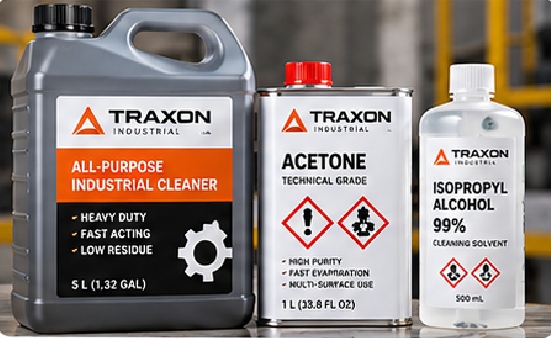
Chemical labels may require durable films, high-tack adhesives, abrasion protection, variable data and clearly controlled hazard information. Philiton can manufacture to approved regulatory artwork and support project-specific material documents or testing where required. PET and other synthetic constructions are common starting directions for durable identification, but resistance still depends on the complete face stock, ink, protective layer, adhesive, substrate and exposure condition. Any special chemical-resistance target should be validated under defined conditions.
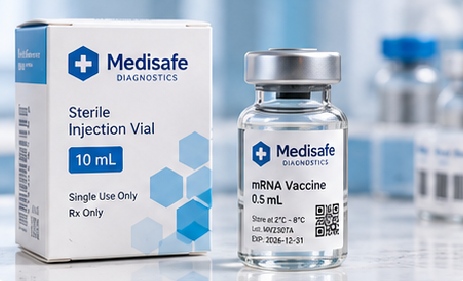
Healthcare and medical-related labeling may involve product identification, packaging labels, variable information, barcode or QR requirements, tamper evidence and controlled documentation. Philiton can support defined label specifications, artwork version control, variable-data production and inspection. Device-specific regulatory claims, UDI content, validated materials or quality-system requirements must be confirmed for the exact product and market. Projects with tighter documentation needs should define acceptance criteria before sampling and mass production.
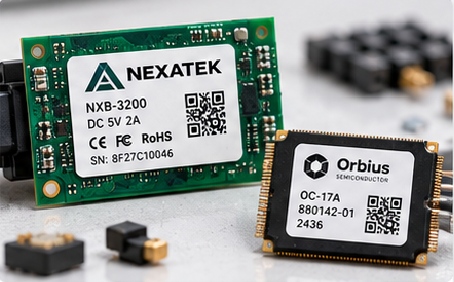
Electronics labels frequently need compact text, serial numbers, QR or barcode readability, durable PET constructions, tamper evidence or traceability. Philiton can combine printed graphics with variable data and controlled die cutting, then verify layout, scan performance and roll or sheet format. Heat, abrasion, chemicals, low-surface-energy plastics and small application areas can change material and adhesive requirements. Engineering review should begin with the substrate, expected lifetime, handling environment and identification function.
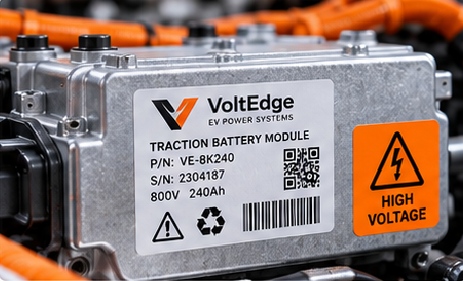
Automotive and EV-related labels can include component identification, cable labels, warning labels, serial data, battery or equipment labels and durable traceability. Material and adhesive selection may need to consider plastics, metal, oils, heat, abrasion and long service periods. Philiton supports durable synthetic stocks, variable data and controlled converting, while project-specific standards or extreme performance requirements remain subject to material documentation and testing. Roll, sheet or individual formats can be prepared around the assembly process.
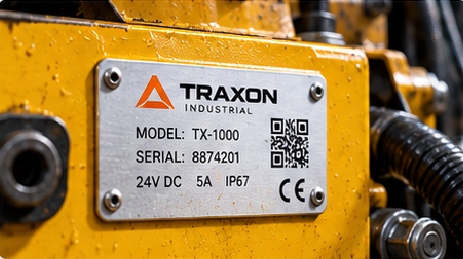
Industrial labels often prioritize durability, traceability and line compatibility over decorative appearance. Equipment, tools, assets and components may require PET or other synthetic stocks, stronger adhesives, thermal-transfer compatibility, protective lamination, serial numbers or barcodes. Philiton checks size, substrate, environment, scanning method and application process before locking the construction. Production control can include first-article approval, variable-data verification, die-cut inspection and roll configuration checks before release.
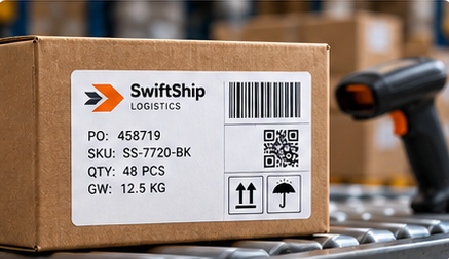
Logistics programs rely on readable data, predictable dispensing and controlled quantities. Direct thermal, thermal-transfer, barcode, inventory, shipping, pallet and warehouse labels may be supplied in rolls or fanfold formats depending on printers and applicators. Philiton reviews core size, roll direction, maximum roll diameter, gap, pitch, perforation or black marks where equipment requires them. Variable-number projects also need sequence control, reprint rules and carton-level identification so data remains traceable after slitting and packing.

Retail and e-commerce programs can combine branding stickers, product labels, pricing, barcode, fulfillment, tamper-evident and promotional labels across many SKUs. Digital production is useful when artwork changes frequently or volumes are divided among variants. Philiton can coordinate shared materials, separate SKU approvals, barcode or QR checks and packing by design. Growth programs can later shift suitable repeat items to higher-efficiency production while keeping the approved appearance, dimensions and functional requirements under controlled specifications.
| Industry | Common Applications | Typical Exposure / Risk | Material Direction | Key Function | Main Validation |
|---|---|---|---|---|---|
| Food & Beverage | Bottle, jar, pouch, refrigerated packs | Moisture, condensation, cold, oil | Paper / BOPP / PET by use | Product info, barcode, roll application | Adhesive, application temperature, wet handling |
| Cosmetics | Bottle, jar, tube, premium packs | Water, oil, alcohol, curved surfaces | Clear/white BOPP, PET, specialty stocks | Brand color, white ink, premium finish | Formula exposure, color, edge lift |
| Wine & Spirits | Glass bottle, gift packaging | Chilling, moisture, premium appearance | Textured paper, film, metallic options | Foil, emboss, tactile finish | Material/finish compatibility, wet-bottle behavior |
| Supplements | Bottle, pouch, cartons | Handling, dense text, many SKUs | Paper or film by environment | Variable versions, barcode/QR | Artwork version, text clarity, SKU control |
| Chemicals | Containers, drums, industrial packs | Chemicals, abrasion, moisture | PET / durable synthetic films | Warnings, traceability, durable print | Defined chemical exposure, adhesion, legibility |
| Healthcare | Packaging and product identification | Documentation, variable data, tamper risk | Project-specific paper/film structures | Barcode/QR, tamper evidence, controlled text | Approved specification, data and document scope |
| Electronics | Components, devices, cable, assets | Heat, abrasion, plastics, small areas | PET / synthetic constructions | Serial, QR, barcode, security | Scan quality, adhesive, dimensional control |
| Automotive & EV | Components, battery, cable, equipment | Heat, oil, abrasion, long service | Durable film + selected adhesive | Warnings, serial, traceability | Environment, adhesion, variable-data accuracy |
| Industrial | Equipment, tools, asset identification | Chemicals, abrasion, outdoor/indoor handling | PET / synthetic / specialty stocks | Durability, barcode/QR, serial data | Surface, exposure, scan and die-cut control |
| Logistics | Shipping, inventory, warehouse, pallet | Handling, printer/applicator compatibility | Thermal or thermal-transfer stocks | Barcode, variable data, dispensing | Core, winding, gap/pitch, data sequence |
| Retail | Product, pricing, promotion, fulfillment | Handling, multi-SKU changes | Paper, BOPP, thermal by task | Branding, barcode, tamper, price | SKU version, color, scan and packing |
| E-commerce | Product labels, seals, shipping, returns | Frequent version changes, fulfillment | Paper/film/thermal by task | Branding, QR, fulfillment data | Artwork versions, quantity and carton identification |
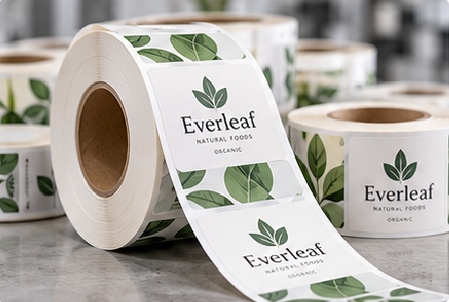
Roll labels support hand dispensing, semi-automatic and automatic application. Philiton can define roll direction, inside or outside winding, core size, maximum roll diameter, gap, pitch, web width and quantity per roll. Roll configuration should be locked before production rather than decided during packing, because an incorrect winding direction or core can stop an applicator even when the printed label itself is visually correct.

Packaging labels cover bottles, jars, boxes, pouches, tubs and other branded packs. Material and adhesive choices depend on the package substrate, curvature, filling process, moisture, oils and storage environment. Philiton can combine paper or film materials with white ink, lamination, varnish, foil, embossing and specialty shapes. Production samples are recommended when premium appearance, curved containers or exposure conditions create uncertainty.

Bottle and jar labels must balance artwork, curvature, surface energy and application conditions. Glass, PET, PP, PE and HDPE can require different adhesive behavior, especially when bottles are chilled, wet or squeezed. Philiton reviews container photos or physical samples, label dimensions and application method, then develops paper or film constructions. Clear labels also require control of white ink, adhesive clarity and surface cleanliness.
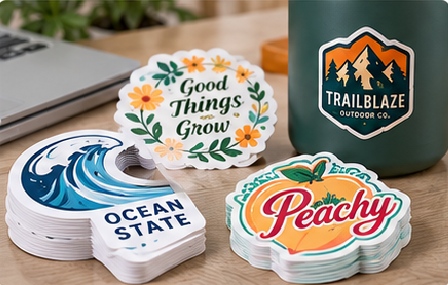
Die-cut stickers can be supplied as rolls, sheets or individual pieces with custom contours. The cutting route depends on size, shape, quantity, liner and delivery method. Fine points, narrow bridges and highly complex outlines should be checked for stripping and handling stability. Philiton can pair die cutting with paper, BOPP, PET, vinyl/synthetic stocks, holographic materials or protective lamination depending on the application and required durability.

Clear labels create a no-label-look effect on glass or transparent plastic, but visual quality depends on more than a clear face stock. White ink controls opacity and color support; adhesive clarity, surface cleanliness, bottle color and trapped air affect the finished appearance. Philiton can develop clear BOPP or PET directions, review white-ink layers and recommend physical samples before bulk production for premium packaging.
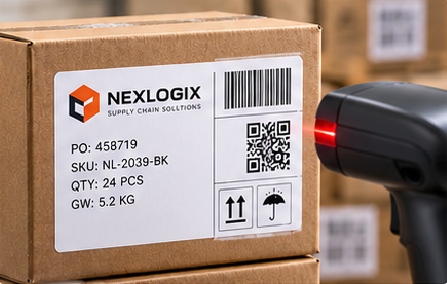
Barcode and QR labels require stable contrast, correct quiet zones, readable dimensions and protection from distortion or reflective effects. Philiton can print fixed or variable codes and inspect them against approved data. A phone scan alone does not define industrial barcode quality, so projects can include agreed verification methods. Curved surfaces, metallic areas, small sizes and lamination choices should be considered before artwork approval.
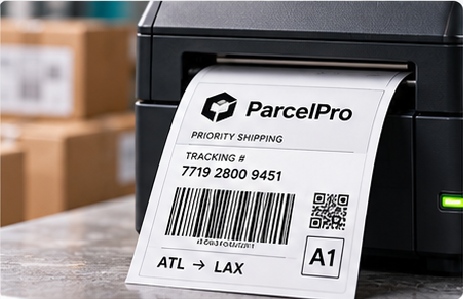
Direct thermal labels suit short- to medium-life information where no ribbon is used, while thermal-transfer labels are selected when longer durability, abrasion resistance or broader material choice is required. Philiton can provide roll or fanfold formats around the printer or applicator specification. Core, roll diameter, gap, pitch, black marks and face-stock compatibility should be confirmed before mass production.
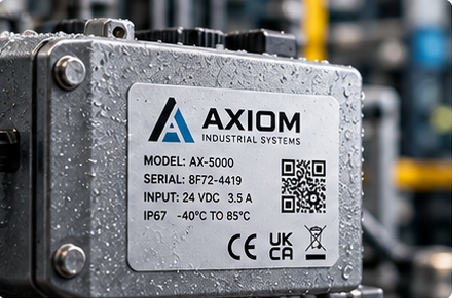
Industrial durable labels may combine PET or other synthetic face stocks with selected adhesives, protective laminates and thermal-transfer or UV printing. Typical uses include equipment, components, tools, electronics and assets. Philiton evaluates surface type, temperature, abrasion, oils, chemicals and required lifetime before recommending a construction. Specific performance claims remain tied to the selected material system and agreed validation conditions.
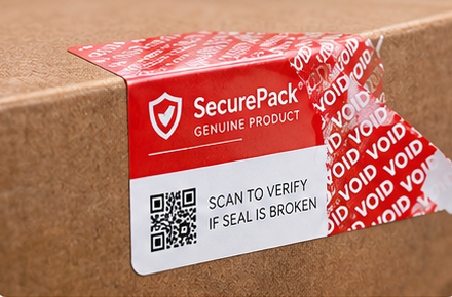
Tamper-evident labels can use VOID, destructible, eggshell, security film or other structures according to the removal behavior required. Philiton can combine security substrates with printed graphics, serial data, QR codes or holographic effects. Performance depends on the application surface, dwell time, adhesive and security construction, so sample testing on the actual substrate is important before a sensitive program is released.

Holographic labels can support decorative branding, authentication cues or tamper-oriented structures. Philiton can work with stock holographic materials and evaluate custom security hologram projects where separate origination, tooling or upstream minimums may apply. White windows, printed colors, barcodes and variable data can be combined when contrast and scan requirements are protected. Physical proofing is recommended for optical effects that are difficult to judge on screen.

RFID and NFC label projects can combine printed branding, barcode or QR data with inlays, encoding and read/write verification. Frequency, chip/inlay, antenna size, application surface, metal or liquid interference, encoding format, serialization and roll format all affect the construction. Philiton supports converting, printing, encoding and verification according to the project specification; exact inlay and performance targets are confirmed per program.
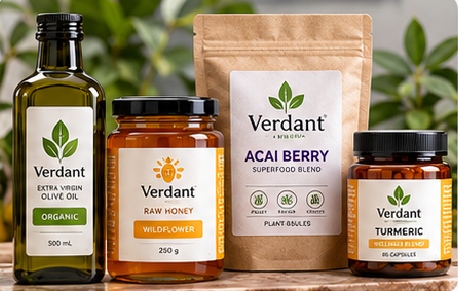
Multi-SKU programs help brands manage flavors, sizes, languages, strengths, seasonal designs or regional versions under one coordinated material and production plan. Compatible SKUs can share face stock, adhesive and some setup, while every artwork remains separately approved and identified. Philiton can use digital production for frequent changes and smaller runs, then evaluate more efficient repeat routes as selected SKUs reach stable volume.

Coated papers are a strong starting point for dry consumer packaging where cost, print quality and conventional appearance are important. Gloss, semi-gloss or matte surfaces can support process color, spot colors and many decorative finishes. Paper is not automatically the best choice for condensation, oils or prolonged wet exposure, so Philiton reviews the package and environment before finalizing the grade, adhesive and protective coating or varnish.

Uncoated, kraft-look and textured papers are used when tactile character, natural appearance or premium wine and fragrance presentation is more important than a perfectly smooth surface. Texture changes ink laydown, foil edge definition and embossing behavior. Philiton can evaluate printing, foil and emboss combinations on the intended stock, while any recycled, FSC or other environmental claim must be supported by the actual material documentation selected for the project.
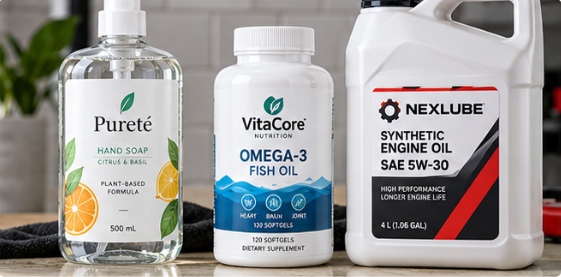
White BOPP is widely used for moisture-resistant consumer packaging, bottle labels and general film applications. It offers a clean white printing surface and good compatibility with many roll-label programs. Performance still depends on the adhesive, inks, finish, container and exposure. Philiton can pair white BOPP with lamination or varnish, foil, white/spot layers or variable data according to the visual and functional target.

Clear BOPP and clear PET are used for transparent packaging and no-label-look designs. The face stock alone does not create a seamless result: adhesive clarity, white ink, printed color, surface cleanliness, bottle color and trapped air all matter. Philiton reviews the artwork for white-ink zones and recommends physical samples when transparency, metallic decoration or premium color reproduction is critical.
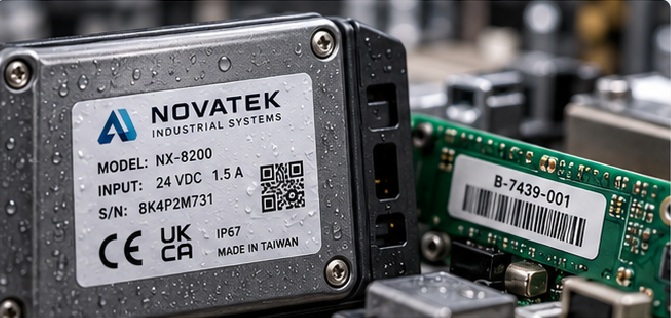
PET is a common direction for industrial, electronics, asset and high-durability identification because it offers dimensional stability and supports robust printing and protective layers. The exact grade, adhesive and surface protection still need to match temperature, abrasion, chemical exposure and substrate. Philiton can combine PET with variable data, barcode or QR printing, thermal-transfer compatibility and selected laminates for controlled identification programs.
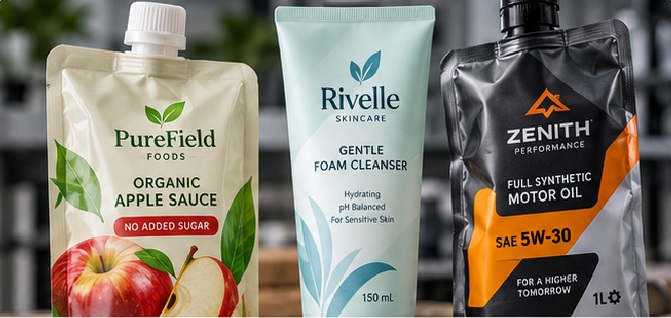
PE and other flexible films are useful where the package itself bends or squeezes. A rigid label on a flexible bottle can wrinkle, lift or resist the container movement, so material flexibility becomes part of the engineering decision. Philiton can evaluate PE film directions for squeezable personal-care, household or food packaging, then match adhesive, printing and protective finishing to the final container and use environment.
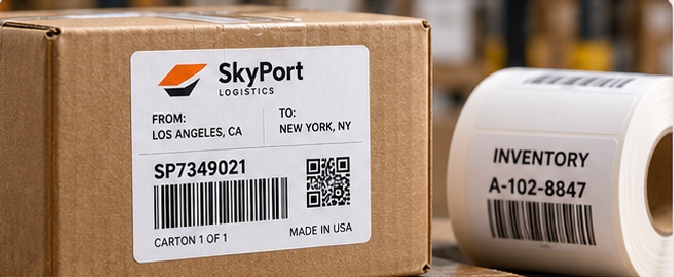
Direct thermal and thermal-transfer-compatible papers or films serve logistics, retail, warehouse and industrial identification. Selection depends on required image life, abrasion, heat, moisture and whether a ribbon will be used. Philiton can prepare roll or fanfold formats, variable information and printer-related marks while confirming core, winding, pitch and sensor requirements. Long-life or harsh environments generally need more durable constructions than standard direct thermal stock.
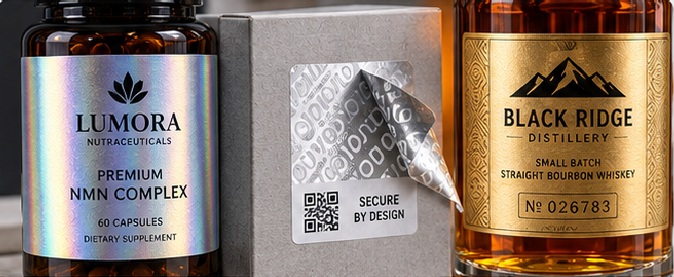
Metallic, holographic, destructible, VOID, specialty synthetic and other functional stocks can add premium appearance, tamper evidence or identification features. Availability, supplier minimums and performance vary by exact construction. Philiton sources these materials through qualified external suppliers and focuses on selection, converting, printing, finishing, inspection and project validation. Physical samples and project-specific documentation are especially important before high-risk security or regulated applications move into production.

Hot foil uses controlled heat, pressure and tooling to transfer metallic or specialty foil to selected areas. It is effective for fine logos, premium accents, textured papers and combinations with embossing. Material surface, foil area, detail size and pressure window can affect edge definition. Philiton recommends a physical finishing sample when fine lines, textured stock or tight registration with printed graphics makes the final appearance difficult to predict digitally.

Cold foil can integrate metallic effects with roll-to-roll printing and may suit larger areas or colored overprint effects. The exact route depends on adhesive/coating, curing, substrate and the press configuration. Philiton evaluates cold foil against the visual goal, quantity, material and later finishing sequence instead of treating it as a direct substitute for hot foil. Samples help compare reflectivity, edge detail, overprint color and compatibility with lamination or varnish.

Embossing raises a selected area; debossing presses it inward. Both create tactile structure and can be paired with foil for logos, seals and premium typography. Tooling position, pressure, paper or film behavior and back-side deformation must be controlled. Philiton checks registration against approved artwork and evaluates whether the substrate can hold the relief without cracking, excessive distortion or interference with dispensing and application.
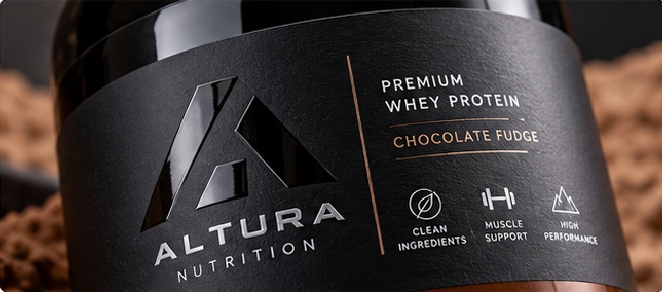
Spot UV creates gloss contrast on selected areas, while raised UV adds a stronger tactile element. These effects are often used on beauty, supplements, wine, gift and premium retail labels. Surface energy, curing, film or laminate compatibility and registration affect stability. Philiton reviews whether the effect adds useful hierarchy or creates unnecessary thickness, friction or automatic-labeling risk, then confirms the result with a physical sample when needed.

White ink is essential on clear, metallic and holographic stocks when color opacity, readable text or controlled windows are required. It may sit below CMYK colors, form selective opaque zones or support barcode contrast. Philiton prepares white-ink layers during prepress and checks registration, density and interaction with the face stock. The same artwork can look very different on white, clear, kraft or metallic material, so approved physical appearance remains the production reference.

Holographic films and effects can provide visual movement, premium decoration or security cues. Printed colors and opaque white can be used to open or block holographic areas. Barcodes and QR codes need stable contrast and should not be placed over highly reflective backgrounds without verification. Philiton can evaluate stock holographic materials and more specialized security projects, with custom origination, upstream minimums and performance confirmed before production.
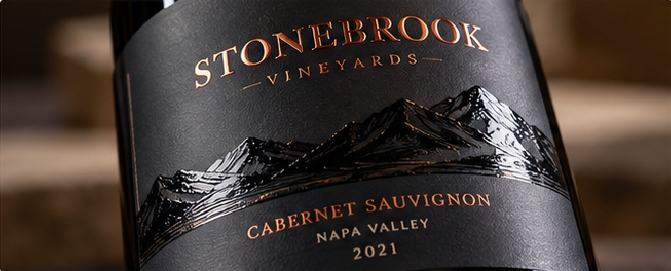
Gloss, matte, soft-touch and protective surface treatments influence both appearance and durability. Lamination can add strong surface protection; varnish can protect selected or full areas with less film thickness. The correct route depends on material, print method, chemical exposure, finishing order and automatic application. Philiton checks film adhesion, coating consistency, bubbles, wrinkles, scratches and compatibility with later foil, UV, die cutting or thermal-transfer requirements.

Custom die cutting shapes the finished label or sticker and affects stripping, dispensing and edge stability. Circles, rectangles, ovals and simple contours are straightforward, while narrow points, sharp internal corners or highly complex shapes can reduce converting stability. Philiton reviews the dieline before tooling, confirms kiss-cut or full-cut requirements and can use digital cutting for selected development work before a production die is justified.
| Printing Route | Typical Quantity / Program | Best Fit | Main Strength | Key Watch-Out |
| Digital Printing | About 500 to 20,000+ depending on size and specification | Launches, multi-SKU, frequent revisions, samples | Low setup, variable versions, strong CMYK workflow | Unit economics can change as stable volume grows |
| Flexographic Printing | Typically medium to very high repeat volumes | Roll labels, stable repeat programs, spot colors | High efficiency, consistent roll production, inline options | Plates/setup and stable specification matter |
| Letterpress | Selected medium-run paper or film label work | Fine label printing and stable spot-color work | Controlled repeat printing for suitable constructions | Process choice depends on artwork, material and quantity |
| Screen Printing | Selected short to medium programs | Opaque white, specialty inks, thick ink effects | Strong coverage and specialty visual/functional layers | Slower route; ink thickness and curing need control |
| UV Printing | Short to medium runs on suitable materials | Film, specialty surfaces, white/varnish combinations | Fast curing and strong visual performance | Material surface and adhesion must be confirmed |
| Variable Data Inkjet | From pilot quantities to very large data programs | Serial numbers, barcodes, QR, unique identifiers | Fast changing data with print-to-data control | Source data, uniqueness, reprint and verification rules |
| Thermal / Thermal Transfer | Operational consumables and identification | Logistics, retail, warehouse, industrial identification | On-demand variable printing at point of use | Stock and ribbon/print-head compatibility affect performance |
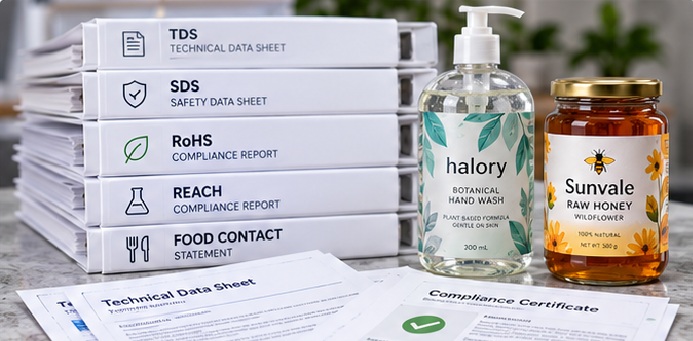
Philiton can support project-specific material documentation such as TDS, SDS, supplier declarations or available test reports when required. A document is only relevant to the material, sample, method, date and scope stated in the record; changing face stock, adhesive, ink, laminate, foil or supplier can require another review. Environmental or sustainability claims such as FSC, recycled content or other certified attributes should only be used when the actual purchased construction carries the required supporting evidence.

Philiton prints approved regulatory artwork and checks production feasibility, legibility, version, dieline, barcode or variable-data structure. Final legal wording, warnings, claims, translations, registration numbers and market-specific obligations remain the responsibility of the legal product owner or its regulatory adviser. Food, cosmetics, chemicals, medical products and other regulated categories should therefore freeze the approved text before production and control later revisions as formally as a material or tooling change.
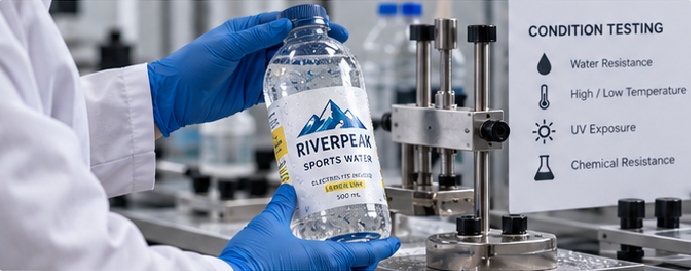
RoHS, REACH, food-contact, heavy metals, CPSIA, Prop 65 or other regulatory and performance topics are not blanket factory certifications. Philiton can support specified material documents or third-party testing when the project defines the target market, material construction and required method. Performance statements such as waterproof, chemical resistant, high temperature or freezer suitable should also be tied to defined exposure and validation. One report should never be stretched to cover every material or application.
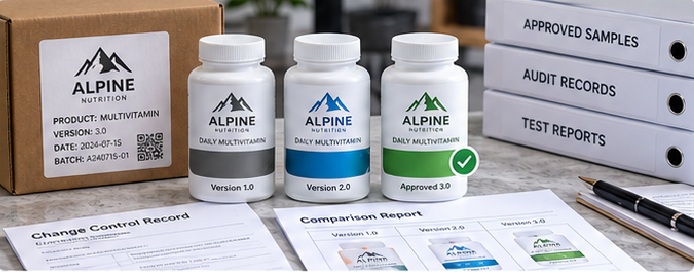
Compliance evidence must remain connected to the exact bill of materials and approved construction. A change in paper, film, adhesive, ink, coating, laminate, foil, inlay or supplier can affect the relevance of previous reports. Philiton therefore treats material and artwork changes as review triggers when compliance or controlled documentation matters. Certificates, audit records and third-party reports are distinguished from ordinary internal QC; no certification should be presented as current unless the entity, scope and validity can be verified for the project.
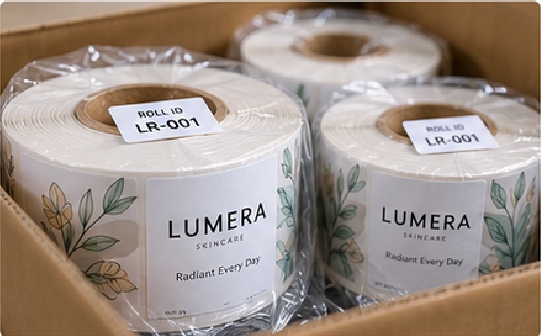
Finished rolls are packed to reduce crushing, moisture exposure, telescoping and unwanted unwinding during storage and transport. Core, roll diameter, labels per roll and winding direction are checked before packing. Multiple roll sizes should not be mixed casually because roll weight and carton pressure can affect handling. Philiton can mark each roll or carton with SKU, quantity and batch information when required, giving receiving teams a clearer path from the shipment back to the approved production specification.
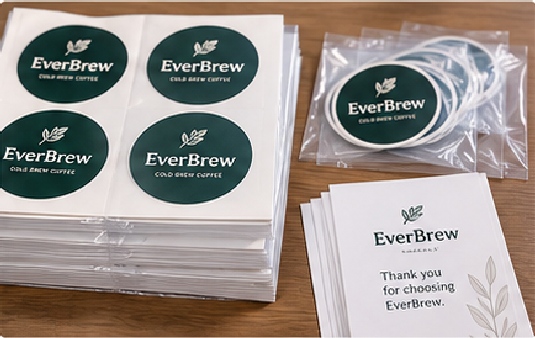
Sheet labels and individual stickers require flatness, edge protection and clear quantity control. Pack size can be organized by SKU, design or operating unit so receiving teams do not need to count or sort mixed artwork before use. Protective bags, separators or suitable cartons can be selected around the product format. For die-cut pieces with exposed edges, metallic surfaces or premium finishes, packing should prevent rubbing and deformation rather than simply minimize carton volume.
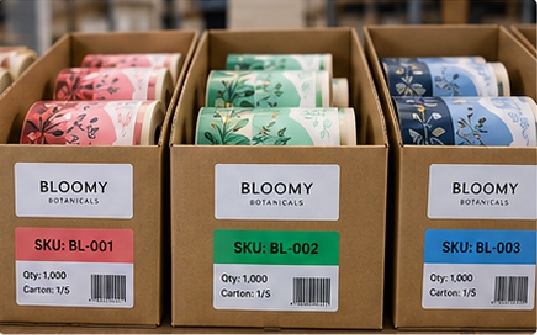
Multi-SKU orders are kept identifiable through artwork approval, production records and packing. Each SKU can be assigned its own quantity, roll or pack count, carton identification and packing rule. Compatible designs may share a shipment, but they should not lose identity during consolidation. Philiton can prepare mixed-SKU cartons or pallets when a warehouse requests them, provided the sorting and identification rules are confirmed before packing. Clear separation reduces receiving errors and makes shortages or reorders easier to trace.
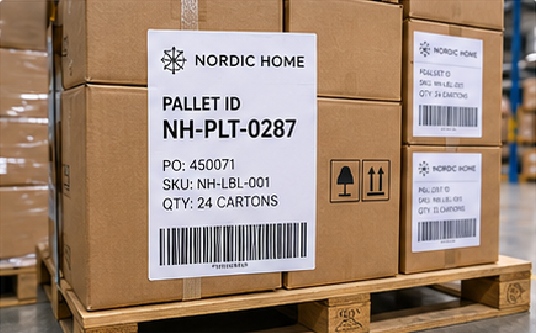
Outer-carton and pallet marking can include SKU, quantity, PO, batch or destination details according to the receiving requirement. Large brands, fulfillment centers and contract manufacturers often have appointment, pallet, barcode or carton-label rules that should be provided before shipment. Philiton can align packing information with those instructions so label rolls do not arrive technically correct but operationally difficult to receive. Special marks or warehouse routing instructions remain project-specific.
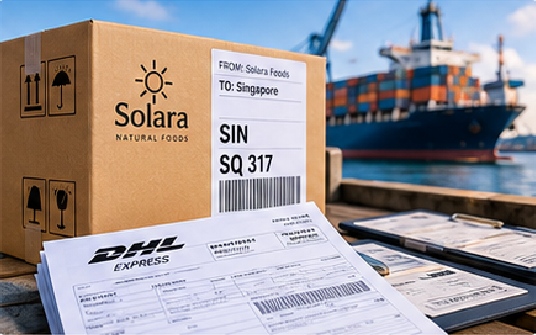
Samples and urgent small shipments are often suitable for international courier, while air or sea freight can be arranged according to shipment size, urgency and destination. Production lead time and transit time are treated separately: fast courier service does not shorten artwork approval, material procurement, printing or QC. The selected Incoterm determines freight, customs, duties and local delivery responsibility, so EXW, FOB, DAP or DDP terms should be written in the quotation rather than assumed from the transport method.
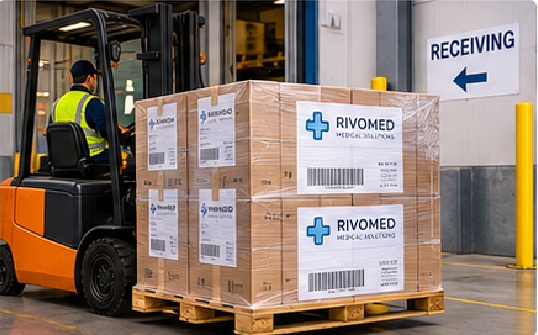
Direct delivery to a warehouse, fulfillment center, contract packer or other receiving location can be arranged when destination, receiving rules, carton/pallet marking, appointments and customs information are known. For programs serving several locations, Philiton can pack by SKU or destination and coordinate shipping documents around the commercial agreement. Confidential or channel-partner programs can also define neutral packing and branding rules before shipment so the logistics presentation matches the agreed relationship.
Philiton was founded in 2016 and operates manufacturing facilities in Shenzhen and Dongguan, China. The combined manufacturing and operating footprint is over 12,000 ㎡, with more than 200 people across production, technical, quality, commercial and support functions. Ninety-one technical professionals, skilled machine operators and quality personnel support artwork, prepress, color, process engineering, digital printing, flexographic printing, screen printing, RFID/NFC, die cutting, slitting, foiling, embossing, inspection and testing. Raw materials such as labelstocks, paper, films, adhesives, foils, specialty substrates and RFID/NFC components are sourced externally according to project requirements. Philiton’s manufacturing value is created through selection, prepress, printing, converting, specialty finishing, inspection, testing and production management. The in-house production system covers digital, flexographic, letterpress and screen routes, UV-related printing, variable data, foil, emboss/deboss, lamination/coating, die cutting, waste stripping, slitting/rewinding, automated inspection, laboratory testing, packing and shipment preparation. The result is a manufacturing platform that can support brand packaging, product identification, industrial traceability, security and smart-label programs without presenting raw-material manufacturing as an in-house capability.
For many standard custom labels and stickers, the practical starting quantity is around 500 pieces per design or SKU, although material, process, tooling, finishing, RFID inlay, security structure and number of SKUs can raise the workable minimum. Smaller launch programs often use digital production because artwork changes and multiple versions can be handled without the same conventional setup burden. As repeat quantities increase, Philiton can review whether flexographic or another production route provides better efficiency while preserving the approved appearance, dimensions and functional requirements. Scale is managed through specification continuity rather than a one-time promise about maximum capacity. Approved artwork, material routes, tooling, roll configuration, sample references and quality records become the basis for later orders. Larger or multi-SKU orders receive material planning, production scheduling and packing coordination appropriate to the total area, number of rolls and inspection workload. The same structure also supports confidentiality, white-label manufacturing, blind shipping and direct warehouse delivery when those requirements are agreed in advance. Brands can therefore start with a manageable development or pilot quantity and keep the same manufacturing partner as selected SKUs grow into recurring production.

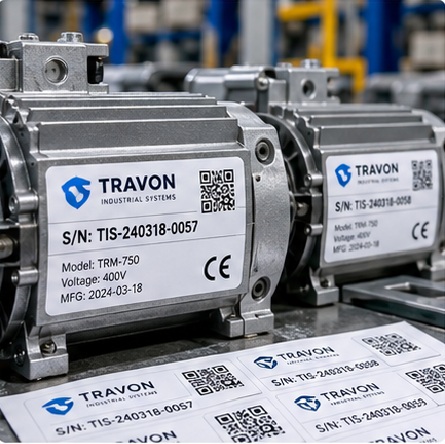
Illustrative scope: a German equipment manufacturer, 60,000 durable PET labels with serial numbers and QR codes. The labels are applied to mixed metal and plastic surfaces and require controlled variable data, abrasion protection and clear traceability. Philiton reviews substrate type, size, adhesive direction, protective finish, code dimensions and source-data rules before sampling. Variable-data production includes uniqueness control and reprint logic so accepted serials are not duplicated. FQC checks appearance, dimensions and scan results; OQC verifies roll configuration, quantity, batch identification and cartons before shipment. Any extreme chemical or temperature requirement would be validated separately against the exact material system.
Philiton can review an existing specification or build a workable label direction from the application. For a useful quotation, send the information already available; unknown technical fields can be marked “Not sure – please recommend.” A complete input helps Philiton compare material, adhesive, printing, finishing, tooling, roll configuration, inspection and delivery before the price is fixed. Photos of the product or container are useful when the surface, curvature or available label area is difficult to describe. Existing samples can also be used as references for color, texture, finish, roll format or a performance problem that needs to be corrected. If the program uses automatic labeling, barcode or QR, variable data, RFID/NFC, regulated wording or special testing, include the equipment, data or documentation requirement as early as possible. Philiton can then separate what is already fixed from what still requires engineering confirmation and return a quotation tied to a producible specification rather than assumptions. Standard quotations for clear specifications are commonly prepared in about 2-8 working hours; complex RFID, security, special-material or testing programs may require 1-2 working days or longer for supplier and technical checks.
Our team will answer your inquiries within 12 hours.
Your information will be kept strictly confidential.
We will contact you within 24 Hours, please pay attention to the email with the suffix“@philiton.com”.
For all inquiries, please feel free to reach out at:
We will contact you within 24 Hours, please pay attention to the email with the suffix“@philiton.com”.
For all inquiries, please feel free to reach out at:
We will contact you within 24 Hours, please pay attention to the email with the suffix“@philiton.com”.